Unknown Habits: Your Guide to the Whitefriars of Perth
In the 21st-century, it is sometimes hard to imagine the enormous effect that the various religious houses had on life (and death) in medieval Scotland. [NOTE: Article contains images of human remains]
Monastic orders were drawn to towns to offer spiritual support to the populace and were often granted land in the burghs. Friaries operated as religious establishments but also related closely with the local people who could attend services in the church.
In towns across the country, friars were instantly recognisable in the streets with their black, white and grey cloaks and soon after they were built, their churches became popular places for burial amongst the townsfolk.
Perth’s Forgotten Medieval Friary
Of the four religious houses in medieval Perth, the Carmelites of Tullilum to the west of the medieval burgh are probably the least understood. Founded in 1262, the friary was later taken over by the Bishops of Dunkeld who moved down to Perth to escape frequent Highland raids on their house (which was unusual in Scotland). It was used as their headquarters from at least the 14th century until it was returned to the friars in 1460 when they went back to Dunkeld.
It is clear from the archaeology that the original friary church was in a very bad state of repair when the Bishops arrived and may have even been abandoned if it had not been taken over.
Archaeology to the Rescue
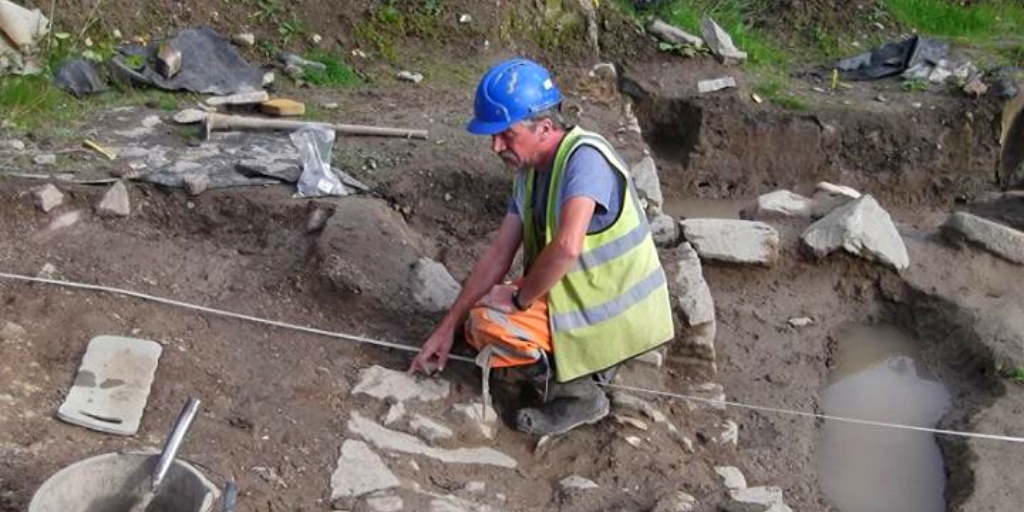
The site of the friary is currently proposed for redevelopment and for 131 weeks from 2014-2018, Derek Hall, archaeologist and ceramic specialist, excavated the threatened area (largely by himself).
When the major area of excavation was finished, the whole of the church and more than 300 human burials had been excavated and the friary’s West Range (guest accommodation) and South Range (kitchen and dining area) investigated.
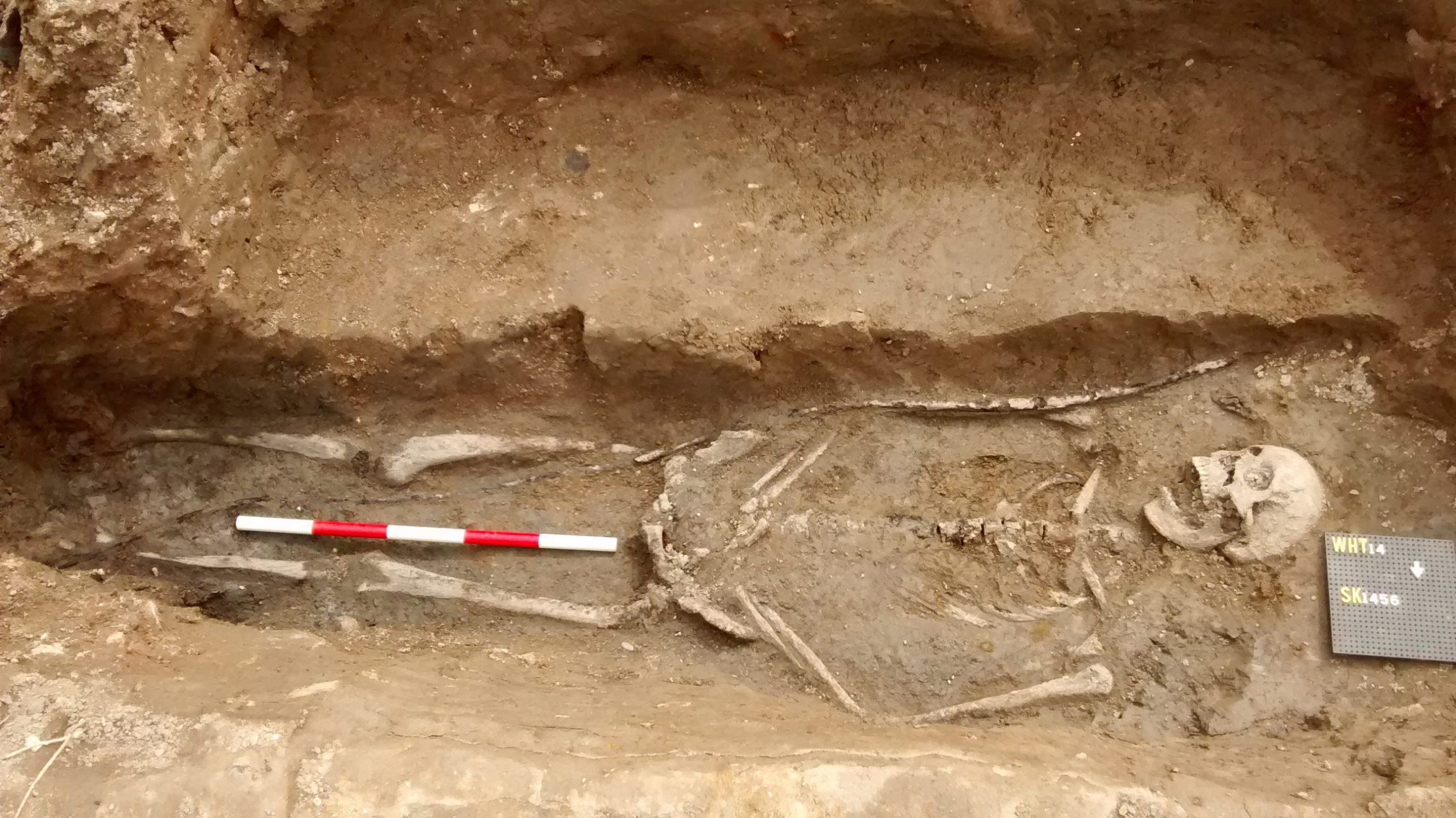
Burial in church with complete wooden staff
Digging into Perth’s Past
Some of the unusual wooden objects found with burials in the church include pieces of wood with the bark still on them which look like staffs (but are not thick enough to be used as such), as well as shorter wooden rods whose function is a mystery.
Derek also unearthed evidence of remarkable archaeological survival such as parts of the church building still standing (up to a metre and a half high) and pieces of window glass, stone and ceramic roof tiles which allow us to imagine what the friary looked like hundreds of years ago. The excavation of the other buildings in the complex (kitchens and guest accommodation) also help us to understand how it operated.
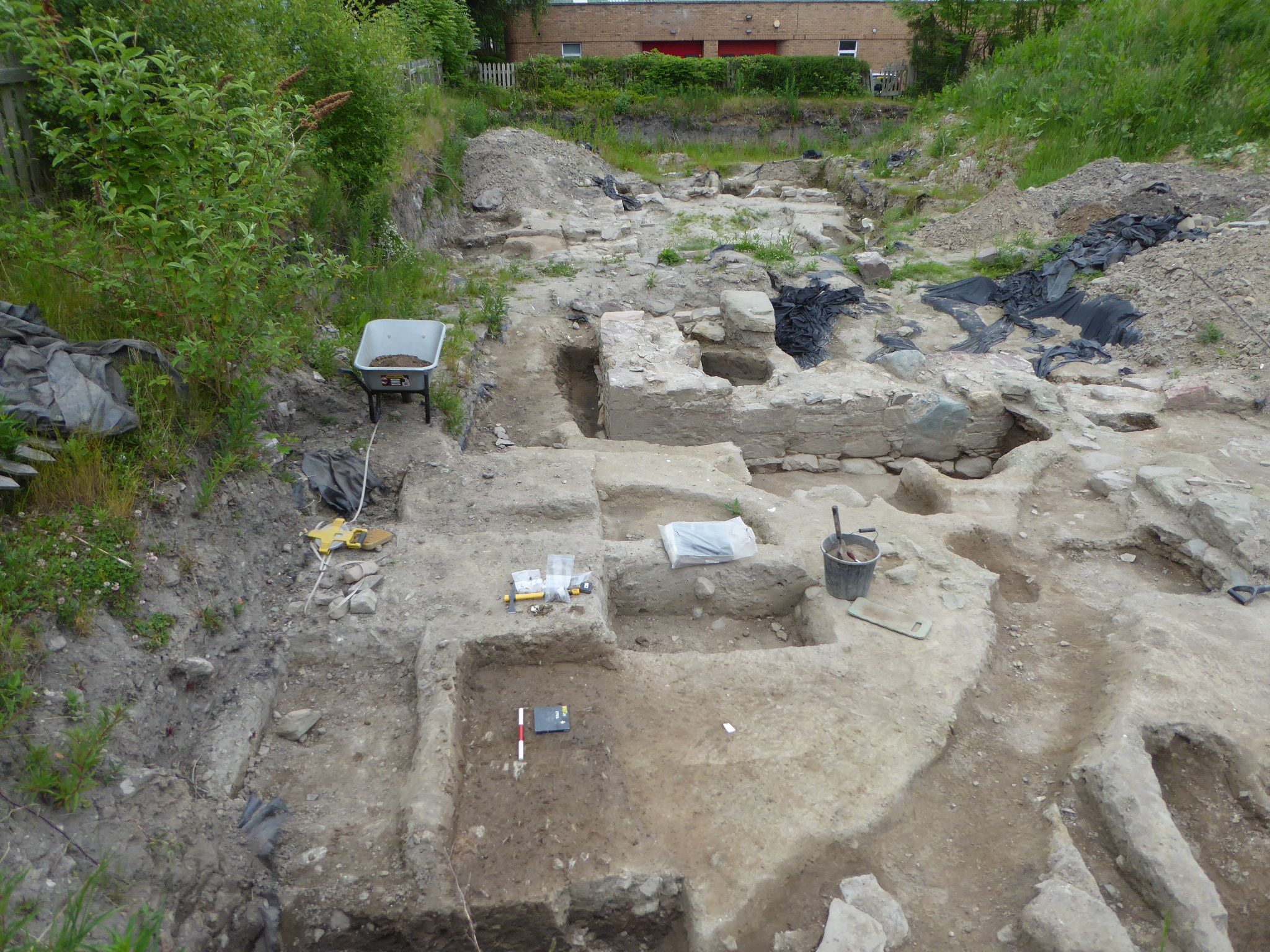
Carmelite church under excavation – general view showing surviving Western end of 13th-century friary church
The friary came to a sudden end in 1559 due to a nation-wide religious conflict known as the Scottish Reformation and eventually completely disappeared from the landscape until its rediscovery in the early 1980’s. But thanks to one dedicated archaeologist, the site’s story didn’t end there.
If you’d like to dig deeper into this story, you can watch Derek’s lecture for the Society of Antiquaries of Scotland which took place on 9 December 2019:
BY DEREK HALL. DEREK STUDIED AT THE DORSET INSTITUTE OF HIGHER EDUCATION, WEYMOUTH WHERE HE GAINED A CERTIFICATE IN PRACTICAL ARCHAEOLOGY (GRADUATING IN 1978). IN 1980 HE JOINED THE URBAN ARCHAEOLOGY UNIT, THE PREDECESSOR OF THE SCOTTISH URBAN ARCHAEOLOGICAL TRUST (SUAT) (PERTH BASED). FROM 1982-1985 HE WAS A SENIOR SUPERVISOR FOR SUAT ON SEVERAL MAJOR EXCAVATIONS BEFORE BEING APPOINTED FIELD OFFICER. IN 1996 HE WAS SECONDED TO HISTORIC SCOTLAND (NOW HISTORIC ENVIRONMENT SCOTLAND) AS AN INSPECTOR OF ANCIENT MONUMENTS, BEFORE RETURNING TO SUAT AS DEPUTE DIRECTOR UNTIL ITS DEMISE IN 2009. SINCE THEN HE HAS BEEN OPERATING AS A SOLE TRADER.
Header Image: Derek Hall (author) on site at Perth Whitefriars explaining building sequence on site
