Breaking New Ground: Archaeology and Mental Health
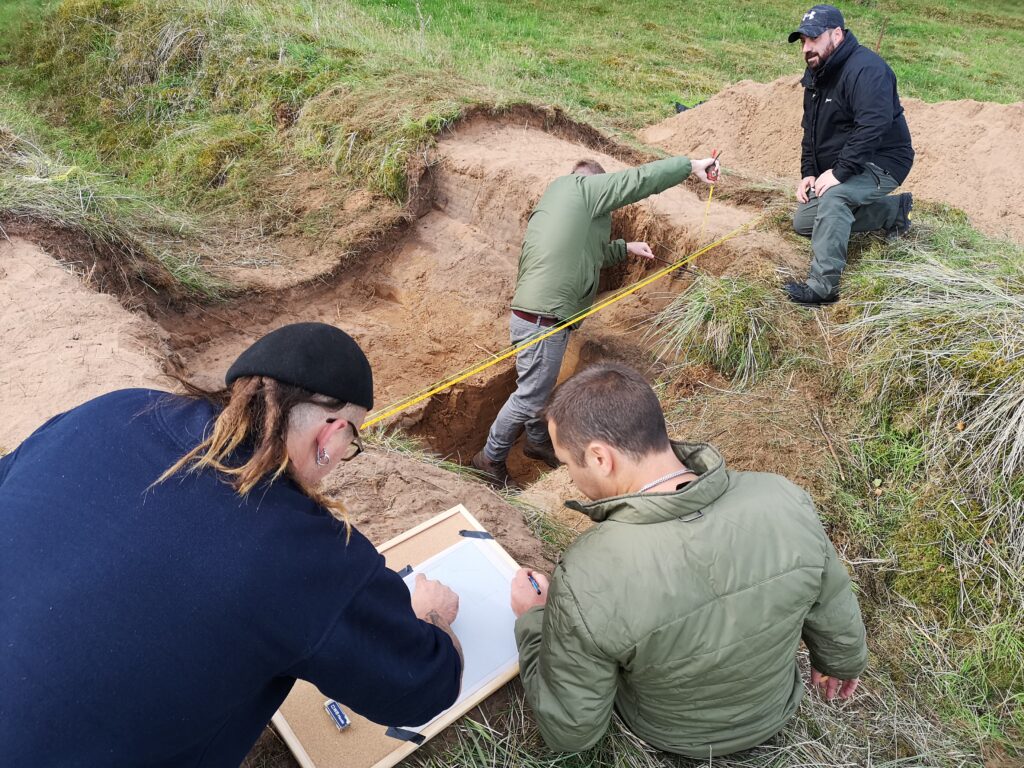
Archaeology isn’t just about digging up stories from the past, it can also help shape our present and future. The opportunities to socialise, learn new skills and spend time outdoors when getting involved in archaeology can positively impact our health and wellbeing, especially for those who have mental health conditions like anxiety or PTSD.
Richard Bennett, founder of Breaking Ground Heritage, a charity which provides support for veterans through heritage projects, shares the story of how archaeology has helped him.
Royal Marines Commando to Community Archaeology
It’s been eight years since I first picked up a trowel for my first archaeological experience. It just happened to be an Anglo-Saxon cemetery on Salisbury Plain called Barrow Clump – how far things have come since then.
In my former life I was a Royal Marines Commando, a job that I had wanted to do since before I can remember. I enjoyed nothing more than going in the field or deploying on operations, knowing that whatever public opinion was, I was doing my part to ensure the safety and security of others. Several unfortunate incidents in Afghanistan cut my career short after only 17 years. I’d like to say that I haven’t looked back but PTSD always rears its ugly head and I’m always looking back, even now.
-
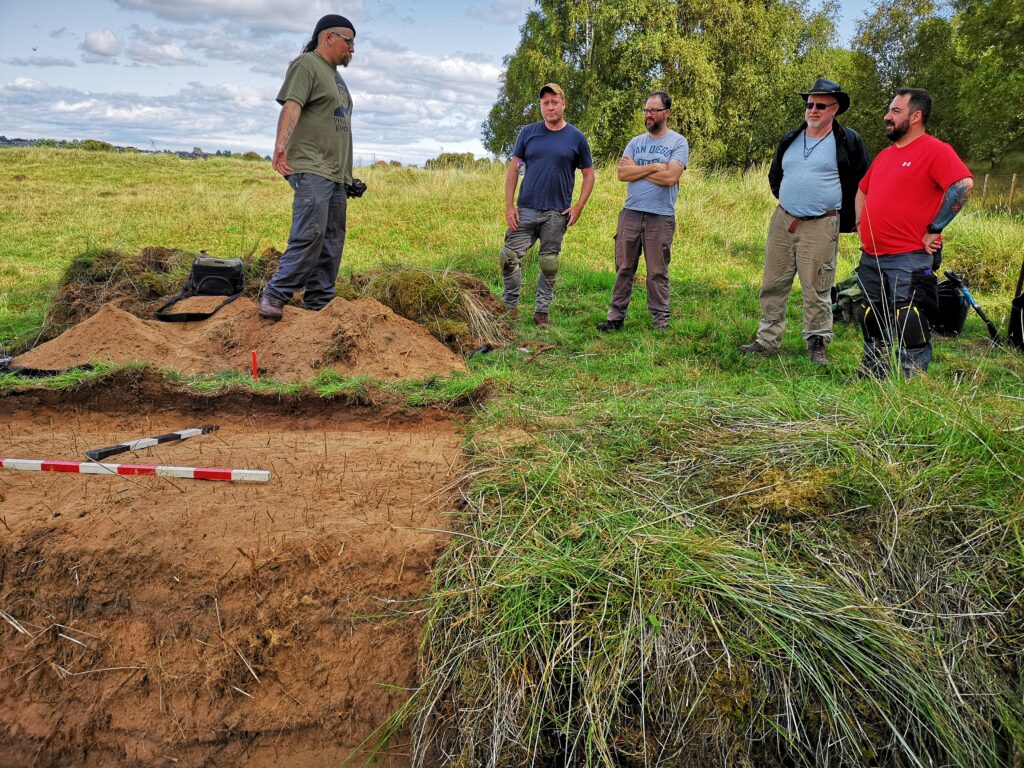
- Participants getting being briefed on the art of site photography (© Breaking Ground Heritage)
-

- The tiger stripes that you can see are actually sandbag revetments that have long since decayed away, leaving nothing but organic decay (© Breaking Ground Heritage)
I was invited along to dig with Operation Nightingale (Op N) and the benefits that it gave me were tremendous. I had lived with nightmares, flashbacks, anxiety and depression for several years at that point and I was slowly withdrawing into myself, isolating from everyone and everything for reasons that I didn’t quite understand.
After a few hours on site at Barrow Clump I could feel myself starting to relax. I got plenty of banter (or that’s what I’m telling myself) about being a Marine (the Army are just jealous) and I slowly started to feel myself again.
It was during my time as a participant on these digs that I could also see the positive effects that it was having on my peers digging alongside me and I could feel that I was starting to feel better too. I started to research PTSD and came across several articles that spoke to me.
They described exactly what I was experiencing and so, just like that, my focus shifted from being a participant on a project to setting up Breaking Ground Heritage (BGH), with a mission to work alongside Op N and help not just with the logistical aspects but to develop wellbeing elements of these projects too. I was keen to see if this ‘positive wellbeing’ aspect of the project could be developed further and there were no shortages of psychologists willing to help us try.
Uncovering Scotland’s WW1 Trenches
During the summers of 2017-2019, we travelled to Barry Buddon near Dundee excavating a landscape that we thought might be of a World War I date (1914-18). We started excavating a feature that we thought looked like a front-line trench.
Before we knew it, we were faced with the unmistakable tiger stripe pattern in the sand. The “tiger stripe” is formed when a sandbag rots away leaving only a black organic stain in its place (we see this a lot when we excavate similar features in France and Belgium.)
-
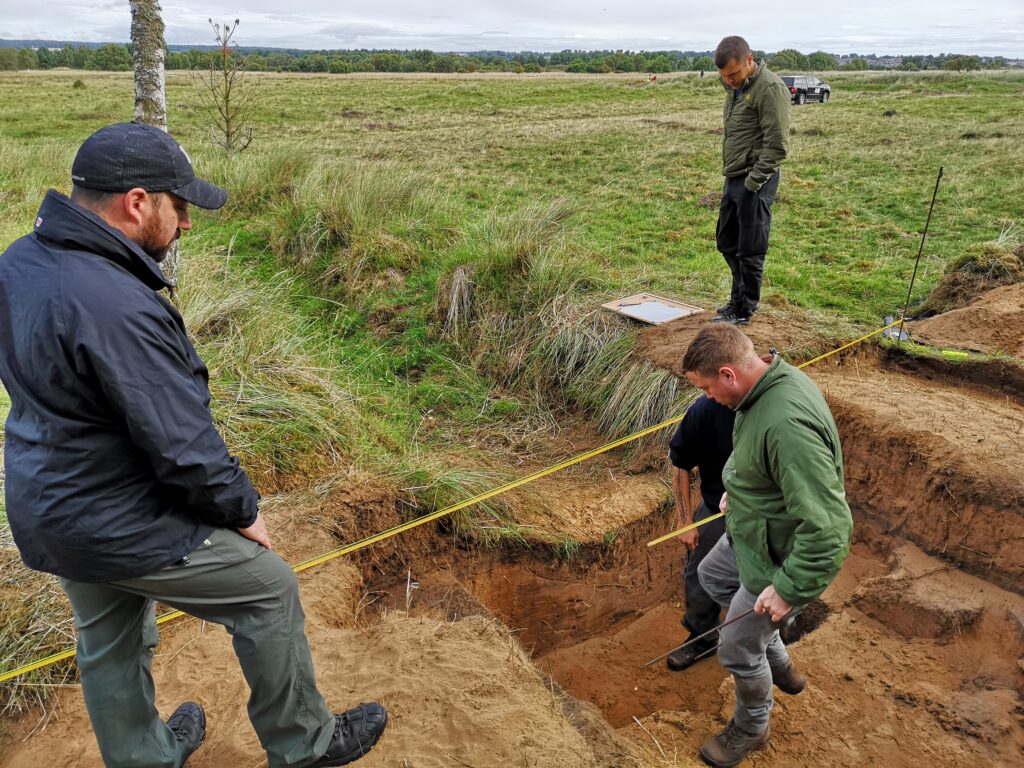
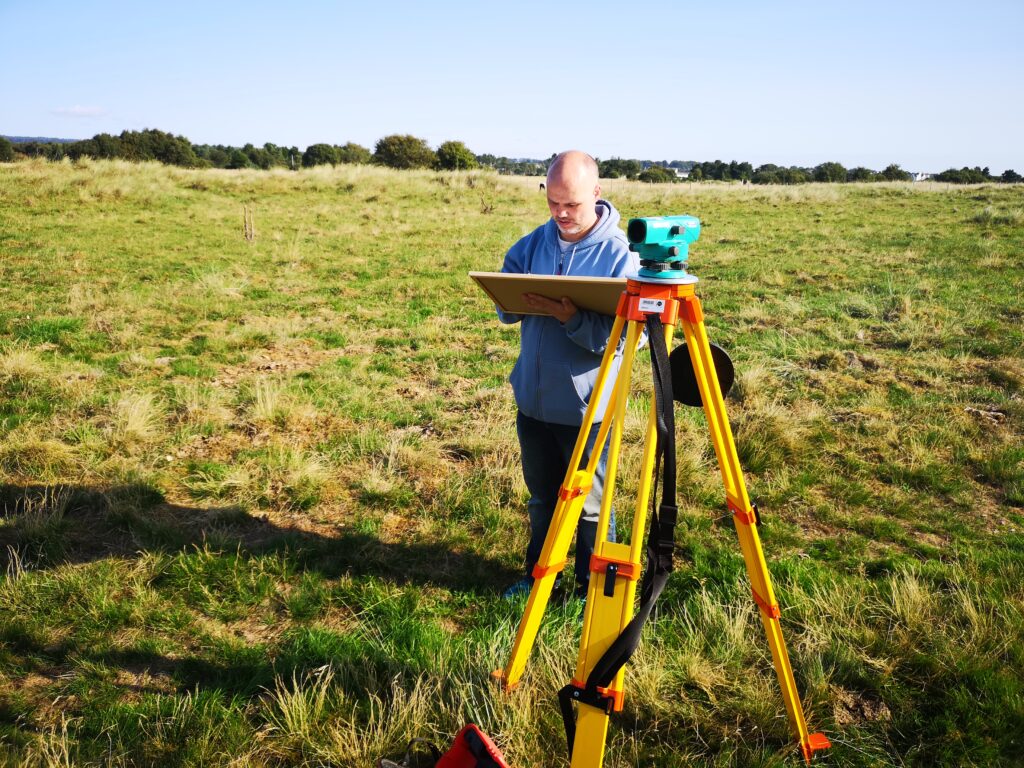
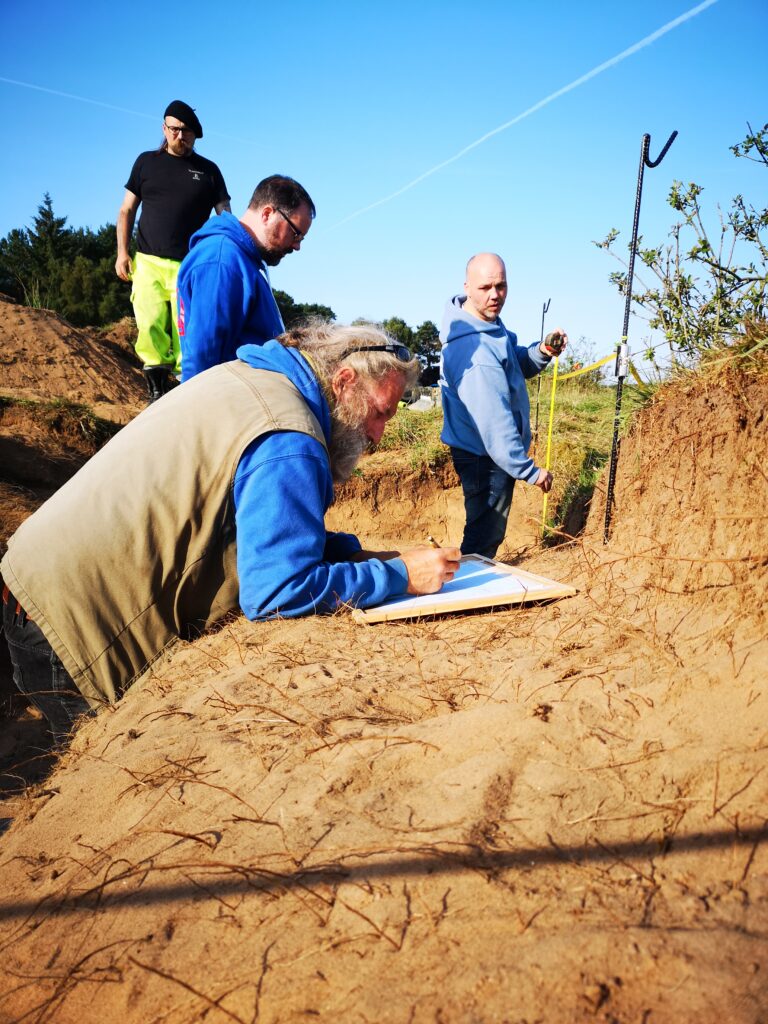
- Planning and recording are key skills in archaeology and participants are encouraged to plan and record all of their own work (© Breaking Ground Heritage)
In between some of these stains we found .303 rounds from a Lee Enfield rifle that meant we were able to date the site (the base of the round is stamped with a place and year of manufacture) – if only all things in archaeology were that simple! We even found several .45 calibre rounds from pistols and several Martine Henry rounds that date from the mid- to late-19th century.
By the end of the project we had uncovered a landscape that was built to mimic a First World War front line. This helps us modern archaeologists dispel the “lions led by donkeys” myth of the First World War. What this shows is that training was actually being undertaken by the troops that deployed to Flanders, as this type of landscape is replicated all around the UK. You can read more about the finds here.
No Veteran Left Behind
For us, this project highlighted the need for interventions for the veteran population in Scotland. We undertake baseline scores in several psychological scales before and after projects to see if involvement with us affects an individual’s wellbeing, anxiety and depression and we have proved beyond doubt that it does.
Our Scottish veterans however, demonstrated much lower levels of wellbeing and higher levels of anxiety and depression, consistently prior to involvement in each year’s excavation, but showed normal (for our average) results at the end – a glimmer of hope.
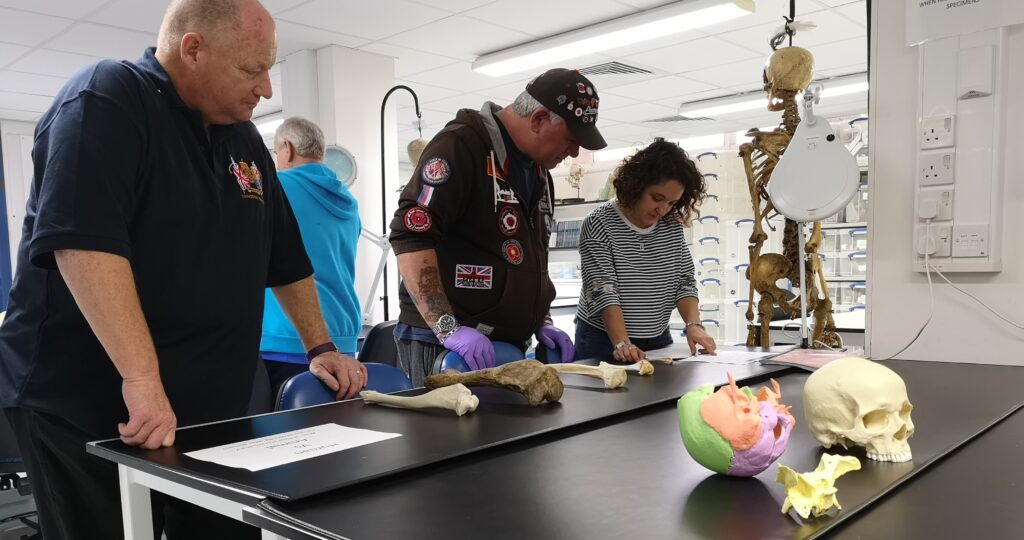
Through Dr Di Swales, the School of Life Sciences at Dundee University hosted human osteology training. Participants are introduced to skeletal remains and are told about key features to age and biologically sex an individual. This is key to what we deliver as it gives participants the chance to see if Further Education/Higher Education is an option for them (Image © Breaking Ground Heritage)
Fast forward to 2020, the infamous year of nothing but doom and gloom. During lockdown we developed our online capabilities and how we deliver meaningful projects to our beneficiaries. During this unprecedented period, we were able to reach some of our participants that were just like me when I started: isolated and not wanting to leave the safety of their own safe space. This seemed like a perfect time to deliver on this need.
Utilising our vast experience in running wellbeing projects and our peer reviewed methodologies[1], we were able to develop a resource called ‘Considerations when working with vulnerable groups in heritage’ that is open source.
What’s Next?
That is always the question that I ask myself. I still have more than half an eye on my demons, and yes this can slow me down at times, sometimes more than I would like to admit.
I was once told by an instructor of mine in the Marines, “no matter how badly things turn out, always try to do a little better than yesterday”. I have stuck to this mantra all my life and it’s what drives me forward today.
-
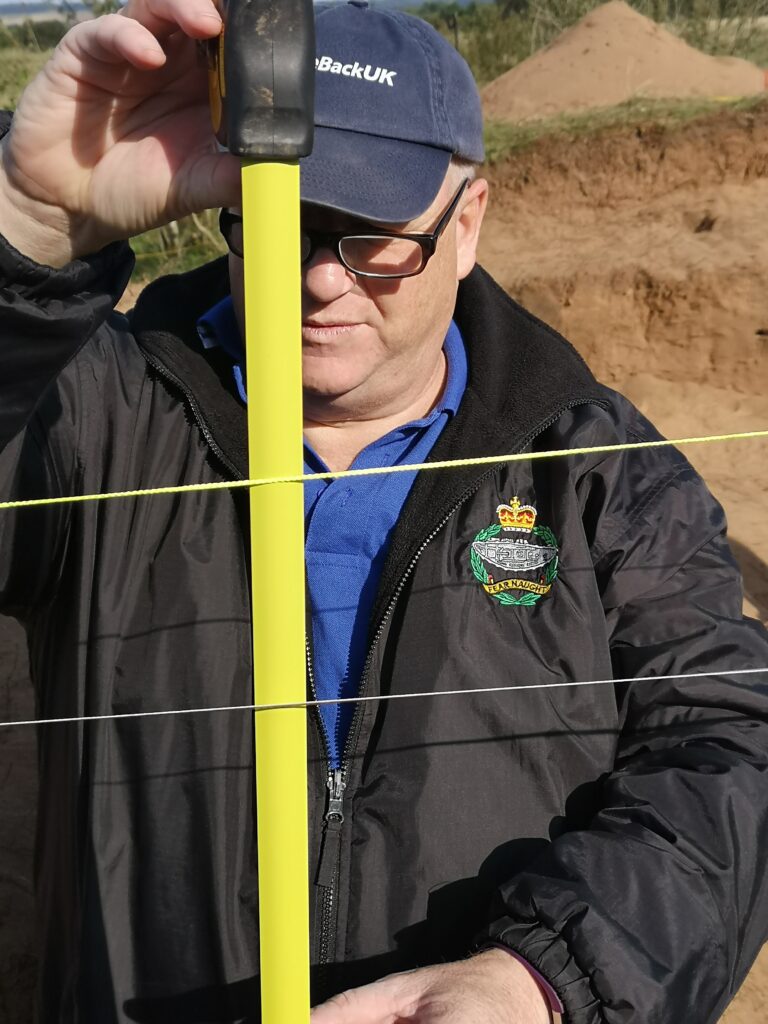
- Building team cohesion helps us rebuild the military “team spirit”, something participants say that they miss the most about leaving the military (© Breaking Ground Heritage)
If you are a veteran or serving member of the military then go onto the Breaking Ground Heritage website and sign up to get involved. For updates from Breaking Ground Heritage, follow them on Facebook and Twitter and read about their other completed projects on their website.
By Richard Bennett, founder of Breaking Ground Heritage. Richard has undergraduate and masters degrees in archaeology and is now undertaking a Masters in Research (MRes) in Psychology.
[1] Everill, P., Bennett, R., & Burnell, K. (2020). Dig in: An evaluation of the role of archaeological fieldwork for the improved wellbeing of military veterans. Antiquity, 94(373), 212-227. doi:10.15184/aqy.2019.85
