Scotland’s Top Archaeological Discoveries of 2020: Coasts and Waters Edition
From lost waterways to underwater bridges, dive into some of the year’s most amazing archaeological stories.
“Fishy” Pictish Diet
In May, we learned that human remains from a 1,430-year-old Highland monastery had revealed new details about the diet of the Picts.
A large-scale study of 137 skeletons buried in Easter Ross shows that the small Pictish community there ate a healthy diet of plants such as barley, with some animal protein such as beef, lamb and pork. However, analysis by Dr Shirley Curtis-Summers, Lecturer in Archaeological and Forensic Sciences at the University of Bradford, showed no evidence that the group ate any kind of fish, despite its availability to these coastal inhabitants, and the fact that the Picts were known seafarers.
It’s thought that fish were considered so special by the Picts that they deliberately avoided eating them.
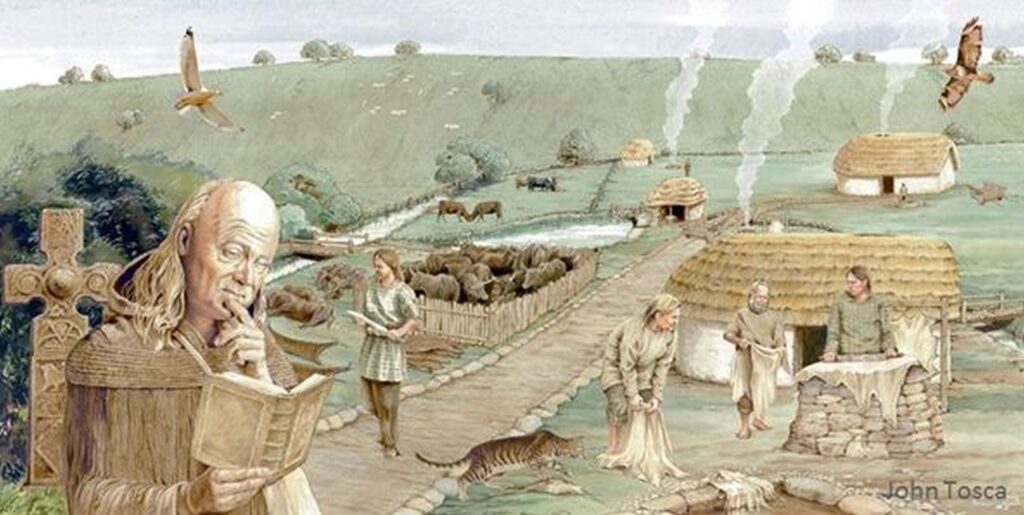
A depiction of daily life at the Pictish-era monastery at Portmahomack in Easter Ross
Lost Viking Waterway
In August, it was announced that a series of inland locations with nautical-themed Old Norse place names had helped researchers discover a lost Viking waterway.
It’s believed that the route connected Orkney Mainland farms to the power bases of the Norse Earls at the Brough of Birsay, a tidal island off the north-west coast. The network would have provided a shallow route through which they were able to haul their boats and heavy goods, such as grain.
To help reveal the canals, the place names were combined with modern scientific methods, remote sensing geophysical mapping (to map a series of now infilled channels) and sediment samples (cored from key sites). The results were a collaboration between the Universities of the Highlands and Islands, St Andrews and Wales and they “will be used in our continued study of how the Norse used and organised the landscape of Orkney.”
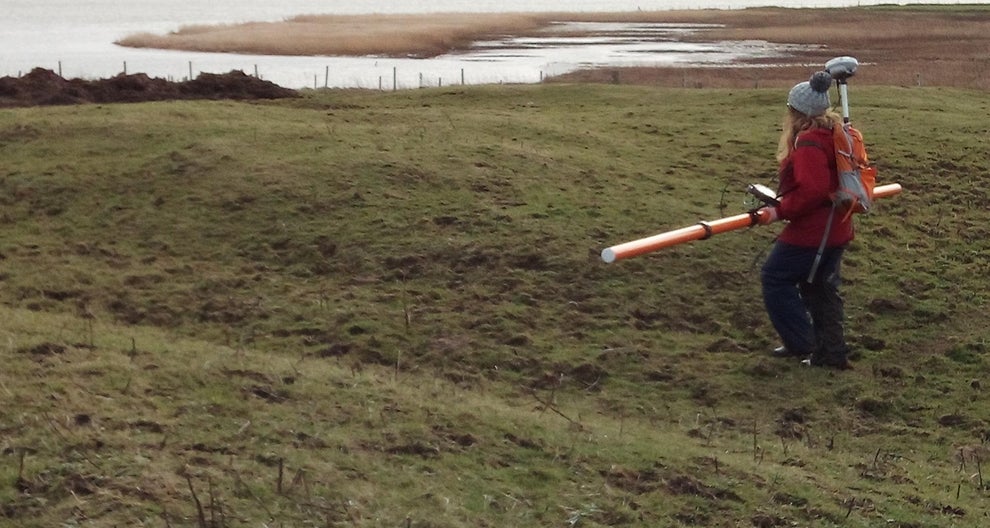
Searching for waterways in Orkney (Image Credit: St Andrews University)
Gold and Copper Clues
After the brutal Viking raids that took place 1,214 years ago, it was traditionally believed that Ì Chaluim Chille (Iona) in Na h-Eileanan a staigh (the Inner Hebrides) was abandoned for hundreds of years.
But after a series of discoveries were made on the island, archaeologists now believe that monastery life continued and a centre for metalwork was established. According to Dr Ewan Campbell, senior lecturer in early medieval archaeology at the University of Glasgow, “it would seem to be the case that if it was abandoned, it was only temporary.”
Finds include a hoard of coins, a gold ring and two copper alloy pins (likely used to fasten clothing) which were discovered by archaeologists and volunteers from The National Trust for Scotland.
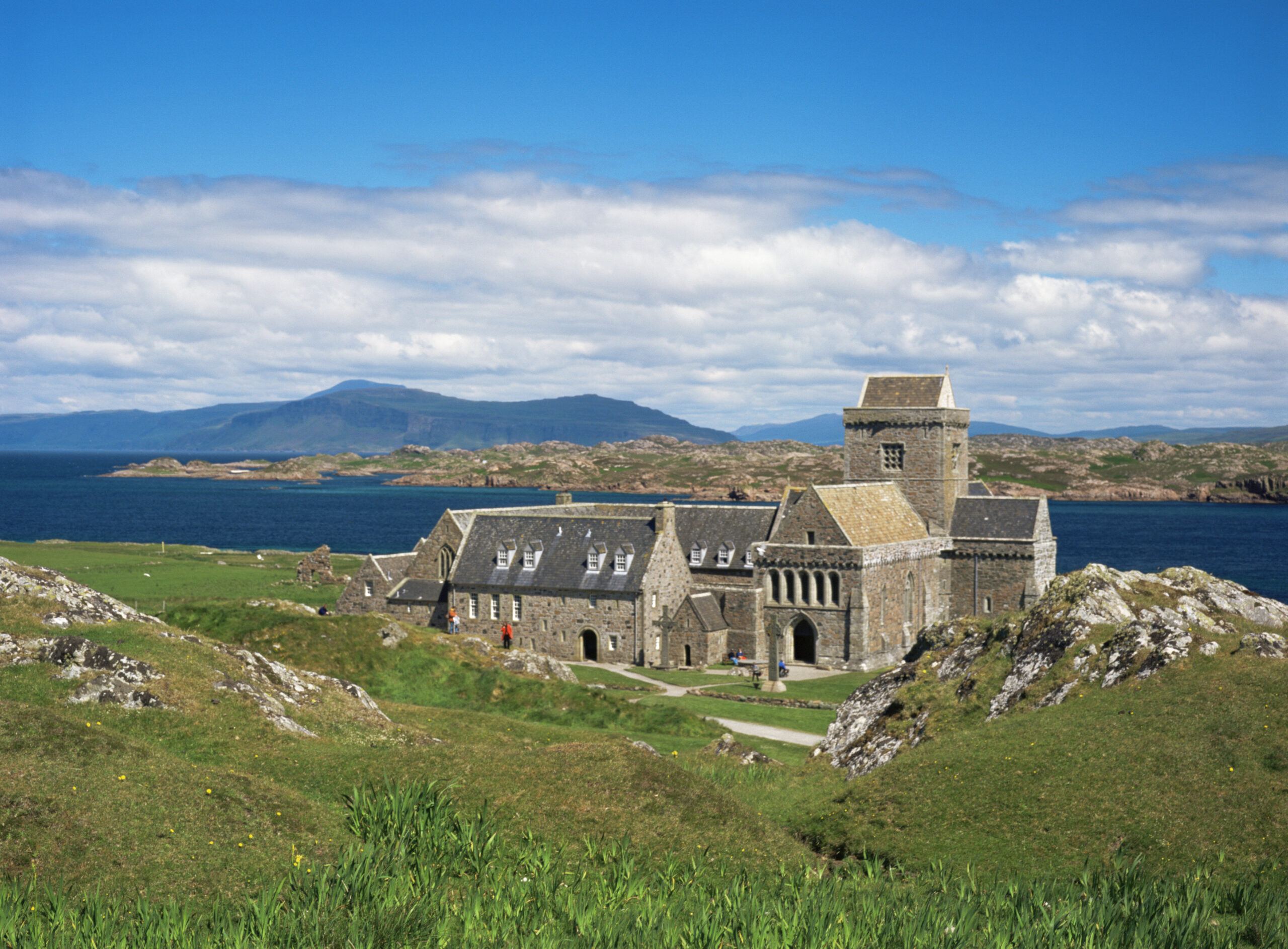
Ì Chaluim Chille (© VisitScotland / Paul Tomkins)
Underwater Medieval Bridge
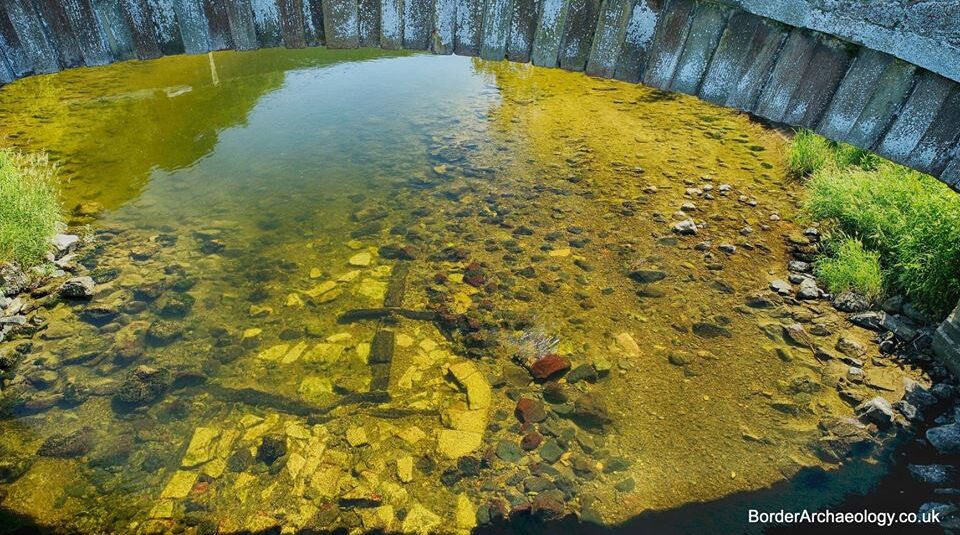
In October, it was announced that one of the “most important structures of medieval Scotland” had been rediscovered after being hidden beneath a Borders river for centuries.
Thanks to radiocarbon dating (a method for determining the age of an object containing organic material), it was confirmed that timber remains retrieved from the River Teviot are the oldest ever to be found in their original position across one of Scotland’s rivers.
Constructed during the reign of David II in the mid-1300s, experts were excited to find that the foundations were built using oak branders, which is the first time they have been found in an archaeological context in Scotland.
Said to be of “historic and strategic national importance”, the bridge would have once carried King James V and later his daughter Mary Queen of Scots across the River Teviot on journeys between Edinburgh and the Scottish border.
An ongoing, community-driven project – in partnership with Historic Environment Scotland, Dendrochronicle, Wessex Archaeology and the CARD fund – led to this exciting discovery.

Richard Strathie (ADHS) Coralie Mills (of Dendrochronicle) and Steph and Bob of Wessex Archaeology outlining the extent of the medieval bridge pier foundation (whilst observing COVID protocols)
Want to keep reading? Dig into 10 artefacts found in Scottish waters.
This story has been produced in support of Scotland’s Year of Coasts and Waters, which is flowing into 2021.