Sword-wielding Women and Scottish Archaeology
Who gets to be a warrior? And why can’t that warrior be a woman?
The image of the warrior woman still fascinates us – but we sometimes have trouble believing she could be more than a rare exception to the rule in a battlefield full of men. Historical and cultural records can worsen this gender bias by erasing traces of these women having ever existed.
Yet, across a range of time periods and cultures, weapon-wielding women emerge – both through history, legend, and the grey areas in between. A look around Scotland’s archaeological heritage shines a light on their stories – and challenges our assumptions about the role of women in Scottish history.
Scáthach, Trainer of Heroes
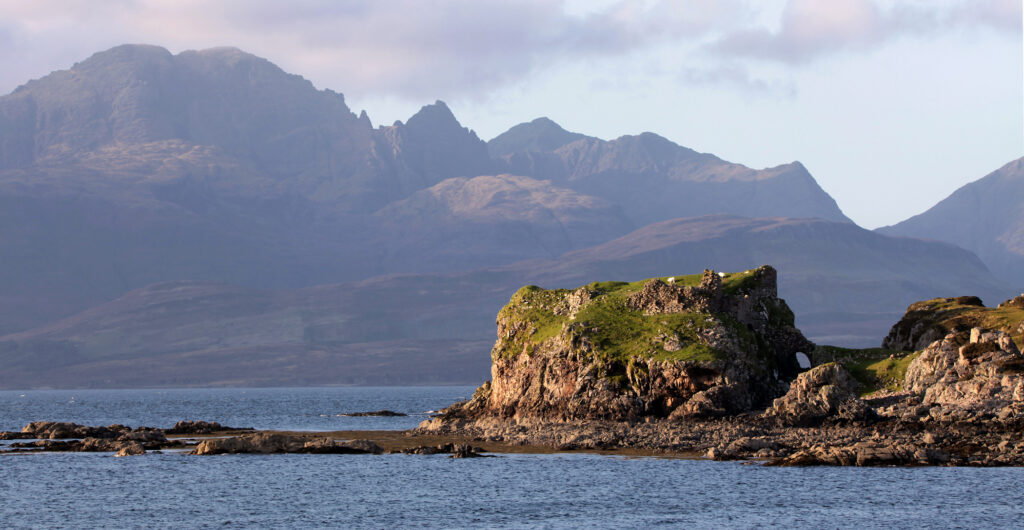
Our quest first leads us to Dùn Sgàthaich (Dunscaith Castle) on An t-Eilean Sgitheanach (the Isle of Skye) on the west coast of Scotland – also known as the “Fortress of Shadows.” Now lying in ruins, it lives on in legends as the home of the warrior woman Scáthach. Also a magician, she made the magical spear Gae Bulg that she would give to her most notorious student – the legendary Cúchulainn from the Ulster cycle of Irish Mythology.
He later would use that very spear to defeat Ferdiad, his one-time friend, and, according to many interpretations, his lover. Scáthach’s training was not a one-time event: she was a regular “coach” for Celtic mythical heroes and her warrior women rivals suggest she was certainly not a unique mythical exception to an all-male rule.
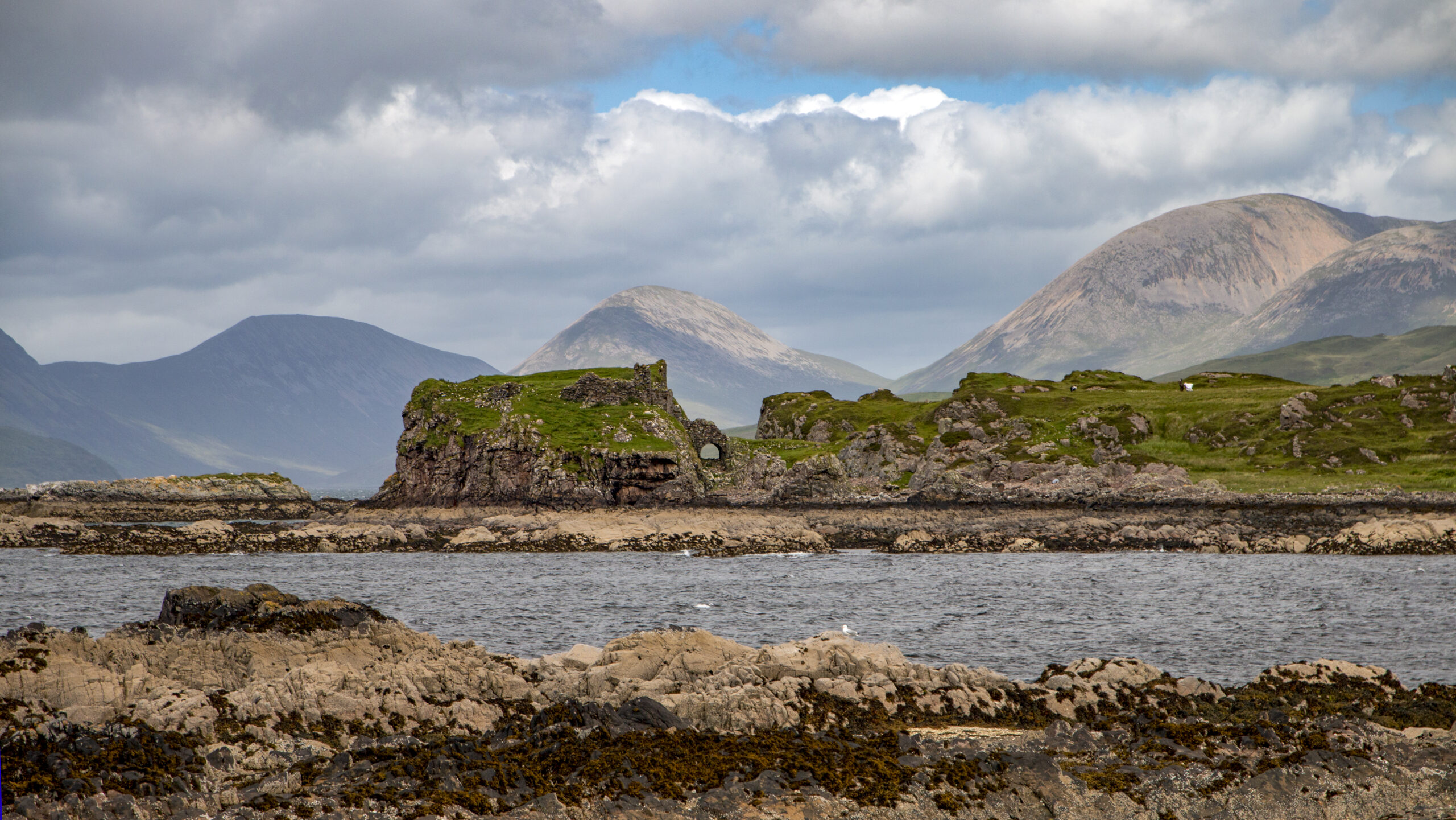
Flickr: Dunscaith Castle. Tokavaig, Skye (CC BY-NC-ND 2.0) – © Amateur with a Camera – https://bit.ly/3uYmwwL
Legend tells that the fortress was surrounded by seven ramparts crowned by iron palisades (a fence or defensive wall) and protected by a pit full of snakes and beaked toads! The real castle was used in late medieval times by the MacDonalds of Sleat, and you can still see the holes for the pivot upon which the drawbridge worked and the remains of a sea-gate.
This later structure probably occupies an older fortified site; originally a vitrified fort – stone and timber enclosures whose walls have been turned into glassy stone through intense heat.
The Demise of Saint Donnán
Travelling further along to the Island of Eigg south of An t-Eilean Sgitheanach gives us another clue as to the presence of warrior women in its Gaelic name: Eileannam Ban Mora, ‘the Island of the Big Women’. Archaeological remains on the island show that the Picts, a group of Celtic-speaking people who settled in parts of Scotland over 1,100 years ago (from around AD 300 until AD 900), lived here.
Remaining texts as well as monumental engraved standing stones scattered across Scotland give a glimpse into Pictish society, while its local folklore leaves us guessing as to the status of fighting women within it.
One story goes that a clan of powerful warrior women resided on An Sgùrr, Eigg’s highest hill. Around AD 617, the Pictish Queen of Moidart sent them to attack the monks converting Eigg’s inhabitants to Christianity. At midnight, lights and strange voices appeared where the monks were killed. They charmed the warrior women, guiding them into the island’s loch…never to be seen again.

An Sgùrr © VisitScotland / John Duncan
Magical lights aside, the legend is directly linked to the martyrdom of Saint Donnán of Eigg, a Gaelic priest who attempted to convert the Picts of Eigg to Christianity. Saint Donnán is said to have built a monastery on Eigg in the 7th century where he and 52 companions were massacred in AD 617. The monastery was probably in the same area as the ruined medieval church on the island.
This location for the monastery is supported by the number of early carved stones which have been found in or near the church. The 8th-century Kildonnan cross slab for example, depicts an incised Christian cross on the front with a Pictish hunting scene on the reverse.
In all versions of this story, a Pict woman ordered Saint Donnán’s execution. If some elements of this tale are rooted in fact, did this imply and include the existence of warrior women?
Pictish Warriors
Engravings from the 1500s based on Roman records which describe the Roman army’s encounters with the Picts almost 1,500 years earlier seem to suggest this too. They represent both men and women as scantily clad and tattooed warriors, while the depiction of Pictish warriors on a standing stone in Angus (see Aberlemno 2 below) shows them fully clothed rather than fully tattooed and in the nude.

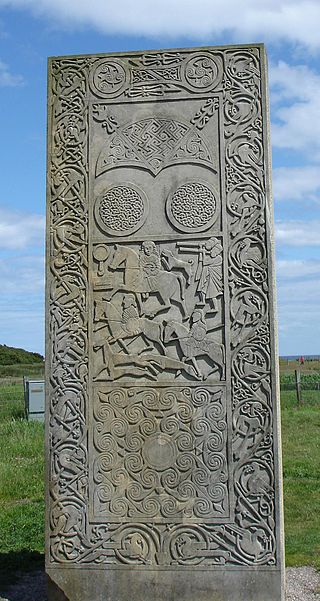
Wikimedia Commons: A Young Daughter of the Picts, public domain – © Jacques Le Moyne de Morgues – http://bit.ly/3edopQf and Wikimedia Commons: [HiltonofCadboll01, CC BY-SA 2.5 – © Deacon of Pndapetzim – http://bit.ly/2O5YdfN
The covering up of their bodies as well as some of their faces makes it hard to describe all the figures on the carved stone as exclusively male. But assuming they are all male until proven otherwise is the reason why so many warrior women’s stories have so often flown under our historical radar.
The 1,200-year-old Hilton of Cadboll Stone (above right) discovered in Easter Ross in the Highlands seems to debunk the idea that traditionally masculine acts such as fighting and hunting were the realm of men alone. It shows a hunting scene in which a more distinctly feminine figure is riding side saddle.

Flickr: Battle details from Aberlemno 2, CC BY-NC-ND 2.0 © Stuart Anthony – http://bit.ly/2T04KHE
While the Picts were being converted to Christianity, a text known as Adomnann’s Law of Innocents was written which barred Pictish women, children and monks from military service. It was created in AD 697, after the legend of St Donnán’s death ordered by the Pictish Queen of Moidart, and the real massacre it was inspired by. Was Adomnann’s Law a preventive measure – or does the law’s very existence suggest women were previously enrolled in the Pictish military?
Looking Through a Different Lens
Many more stories of warrior women in Scotland remain lost today, within records which have not centred their voices and achievements. Uncovering these stories helps us further challenge the idea of a past devoid of powerful, daring and downright brutal women. They help us construct new, expanded histories which can place many women at the forefront of the action, subverting the gender norms and social expectations of their time.
So seek out the warrior woman – in standing stones, castle ruins and old battlefields. She’s often where you would least expect it.
If you’d like to keep reading, check out Five Women in Scottish Archaeology You Need to Know.
By Claire Mead, a curator and educator working with museums and heritage sites to make their collections and programming more inclusive. She has a particular interest in looking at arms & armour and military history from new LGBTQI and women-inclusive perspectives and in uncovering warrior women’s histories, which she talks about on her podcast Bustles & Broadswords. She is also the author of the webcomic Girls’ School of Knighthood. You can find her at @carmineclaire on Twitter or Instagram.
Header Image: Flickr: Dunscaith Castle, Skye, CC BY 2.0 – © Ian McFegan – https://bit.ly/3rx0qPO
