Reigning Archaeology: Top Sites and Artefacts Connected to Mary, Queen of Scots
Mary, Queen of Scots has received the attention of both scholars and popular media for decades, including the recent Reign series and Mary Queen of Scots film. She is most remembered for the tragic circumstances surrounding her life, such as her first husband’s death and her execution on the orders of Elizabeth I of England.
In addition to numerous other sources, archaeology has provided ample information regarding the royal’s life that is incredibly valuable to understanding who Mary was as a person and leader.
_-_Google_Art_Project.jpg)
Mary, Queen of Scots (1542-87)
A Thriving Pottery Industry
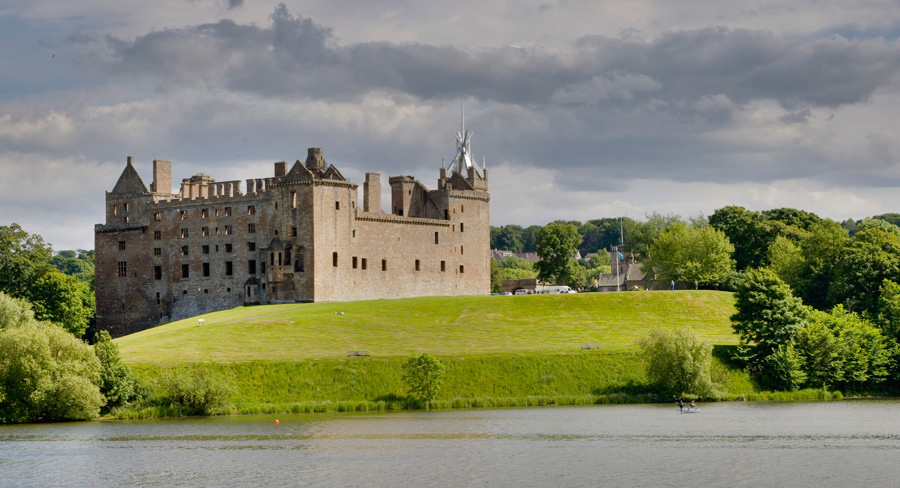
Her story begins at Linlithgow Palace in West Lothian, where she was born in 1542. Excavations have revealed pottery findings at the site ranging from the 13th to 17th centuries and there is even documentary evidence that a potter in Linlithgow was supplying earthenware vessels for the royal use in 1502. It’s possible that some of these objects – many now on display at Linlithgow Museum – were used by Mary as an infant or during one of her visits as an adult.
At nine months old, Mary was crowned at Stirling Castle which remained her residence for almost five years before her departure to France to wed Francis II. Although she wouldn’t have remembered the festivities, archaeologists (including Dr Murray Cook, who supervised their recovery) recently uncovered pottery in a medieval rubbish heap, including sherds from vessels from the 16th and 17th centuries which “could potentially have been used at the time of the coronation of Mary”.

Linlithgow Palace
The Battle of Pinkie: Mary’s Marital Value
Prior to leaving for France, Henry VIII, King of England, had hoped that his son and Mary would become betrothed. When that marriage alliance did not occur, he released a set of military campaigns known as the Rough Wooing. One of the most important battles was the Battle of Pinkie, which took place in 1547 near Musselburgh in East Lothian.
In the mid-19th century, large quantities of human bones, pieces of spears, swords, horseshoes and ‘officers’ epaulettes’ were recovered at the site. More recently, material relating to the battle has been recovered through metal detecting surveys with the help of volunteers, including lead balls, possible case shot, round shot, buttons, buckles and various pieces of horse fittings.
Though the Scots suffered a great deal of material damage and ultimately lost at Pinkie, Mary did not have to concede to Henry VIII’s demands and went on to marry the heir to the throne of France in 1558.

Battle of Pinkie sketch, 1547
Falkland Palace: Beloved Residence of Mary
Falkland Palace in Fife was a prominent place in Mary’s life. Here, she spent time outdoors and relaxed surrounded by architecture that would have reminded her of her childhood in France.
James V, one of the royals responsible for the commissioning of the Palace, gave Marie de Guise this property as part of their marriage settlement. She was incredibly fond of the palace, as evidenced by her deep involvement in its efforts to grandeurise or improve the property. She was the mother to Mary and it’s clear that her likeness for Falkland Palace was inherited by the future Queen.
In early 2016, AOC Archaeology Ltd undertook a program at the site dedicated to tree-ring dating called dendrochronology. The goal was to date some of the original timbers and better understand the structural development of the palace complex.
After taking samples from the oak rafters supporting the roof of the South Range, they discovered that felling took place from 1536 to 1538. Correlations with chronologies (the study of records in order to establish dates of historical events) from Norway, Sweden and Denmark also indicated that all of the wood was imported from Scandinavia, likely as part of “James V’s expansive building programmes”.
The samples taken from the South Range seem to indicate that it was erected a few years later, to account for delays caused by the importation of the timber. This, of course, was just a few years before Mary’s birth in 1542.
It was a well-loved residence of the Stuart family long before the emergence of the Queen, and the archaeological evidence supports the notion that the Falkland Palace was a massive project and investment that took place over many years, perhaps adding to the family’s heightened fondness for the site.

Falkland Palace
The fictional representations of Mary in popular media are of course entertaining, but we can find more truthful accounts from the work of historians and archaeologists.
Want to keep reading? Click here to dig into over 100 archaeology articles.
By Julia Maurer. Julia is pursuing a History and Art History dual degree at Arcadia University and produced this article as part of an internship.
Header Image: Alex Sanz, CC BY 2.0 <https://creativecommons.org/licenses/by/2.0>, via Wikimedia Commons
