Drawing on the past: why do we need illustrations in archaeology?
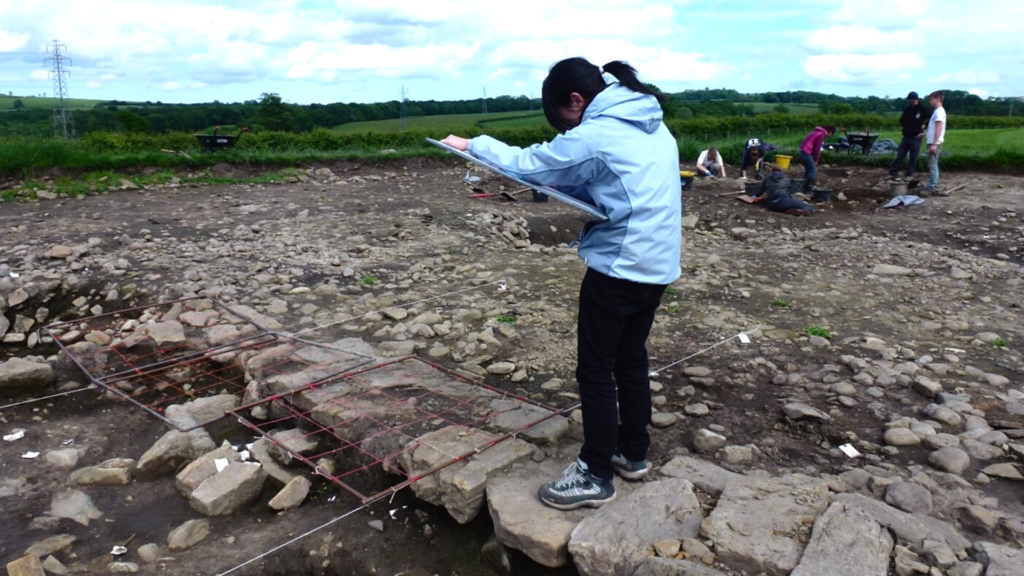
When we excavate archaeology, what we’re doing is a one-off event – we’re taking things out of the ground where they’ve sat for a very long time to better understand how finds and features all came to be there, how they were used and why they were deposited by people in the past.
We only get one chance at this, so it’s essential we take clear and detailed records of what’s exposed and recovered. Whilst written records are vital to make sure we have accurate descriptions for future reference and study, as the old saying goes – a picture can paint a thousand words. This is where the role of the archaeological illustrator comes in!
Drawing during archaeological fieldwork
Archaeologists produce plan and section drawings to show features in situ (how archaeology looks in its original position where found). Plans show a top-down view of the archaeology. Often different phases of archaeology are shown on plans, so we can see where archaeology of different periods is located across an area.

Plan drawing in pencil done in the field
Sections (see below) show a side-on view of archaeology and are important as they can show us the different layers of archaeology, or stratigraphy.
But why do we need drawings when we could take a photo or other record instead? Whilst record shots on cameras are a mainstay of excavation recording practice, sometimes the variations between features can be quite subtle, and difficult to see in a photo. Drawing features sharply helps archaeologists to clearly see and understand the exact arrangement of archaeology on a site.
The way these drawings are done is very standardised across many countries, so anyone can understand what is being shown. It also helps that by being scaled down to fit on a printed page, plan and section drawings can clearly convey the full extent of archaeological features. It’s rare that a photo can fit everything in one frame!
But photographs are also important records to have too, as they show different views to the plan and section drawings, as well as capturing the true-to-life appearance and colours of features, so drawing in the field and photography complement each other very well, and go hand-in-hand.

Section drawing (digitised example)
What do Archaeological Illustrators do?
It’s not just during archaeological fieldwork that drawing and photographs are needed. In fact, the majority of my work as an Illustrator comes in post-excavation – that’s dealing with visual records after excavations have finished.
I produce maps to show site locations, edit plan and section drawings digitally, and draw interpretative plans of archaeological features. I also photograph and draw archaeological finds for publication, and produce 3D models using photogrammetry, for when we need to create even more complex views of artefacts.
A lot of my work is about producing images and figures, which are published in a variety of formats including reports, journal articles and books. It’s essential to produce reports of archaeological excavations, so we have records of what took place. This is so they can be reused and studied in the future.

Pencils compared to original artefact photographed, compared to digital linework of a Roman brooch
How can I get involved in archaeological illustration?
There are many ways to get involved in visualising archaeology. Volunteering on an archaeological dig can give you the opportunity to try a wide range of activities, whether it be plan drawing freshly excavated features or taking photographs of finds.
It’s well worth finding out what is happening around your area – you can find out more on the Dig It! website or get in touch with your local archaeology group. Museums may also have volunteering opportunities to record finds and artefacts.
My top tip for anyone who wants to try illustration is to practice. Brush up on your drawing skills, pick up your camera, or learn how to use digital editing software. There’s so many resources on learning these artistic skills and all can be a lot of fun!
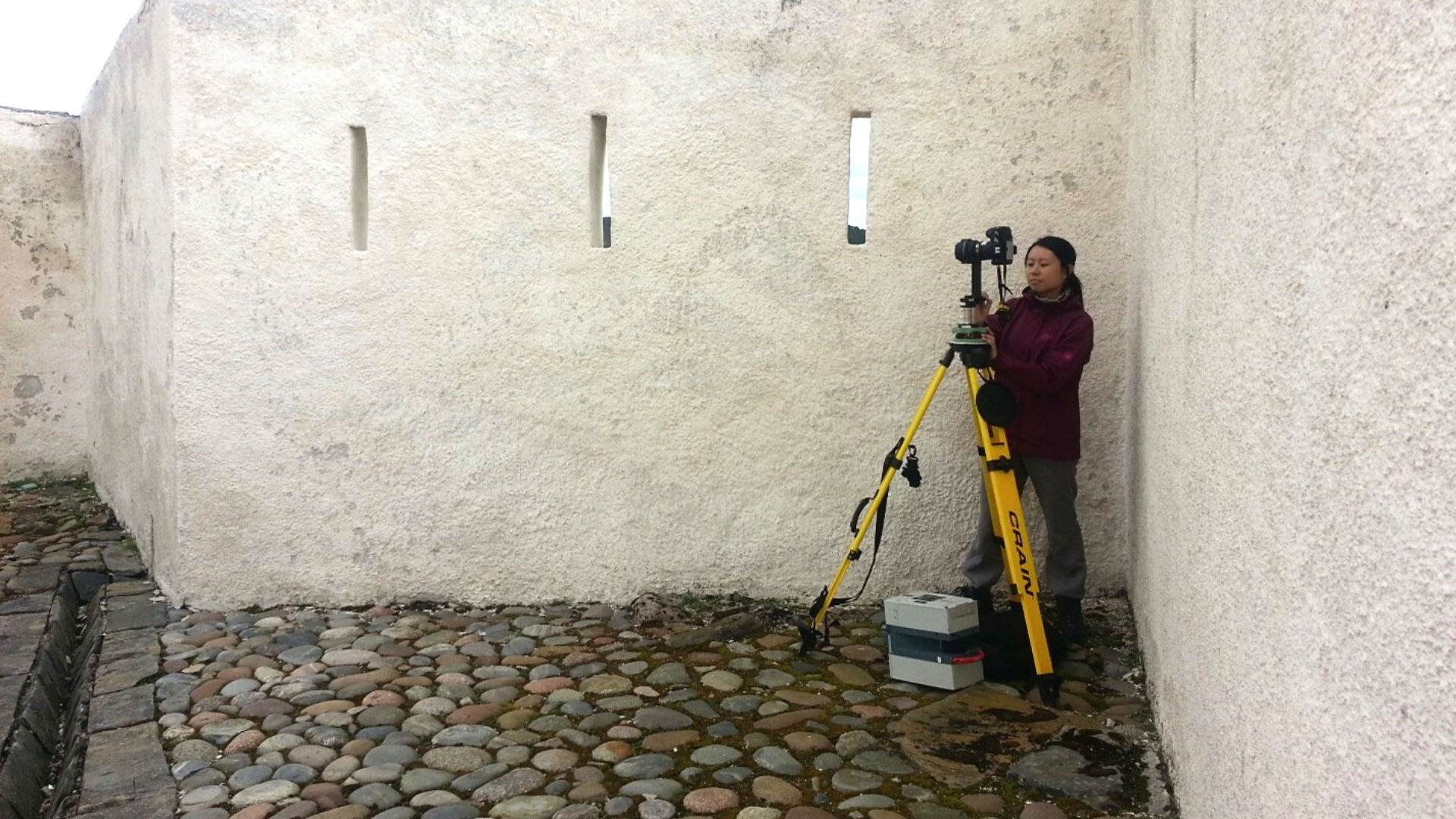
Panoramic photography at Corgarff Castle in Aberdeenshire
