Legacies of Rome: Roman silver and its impact in Scotland
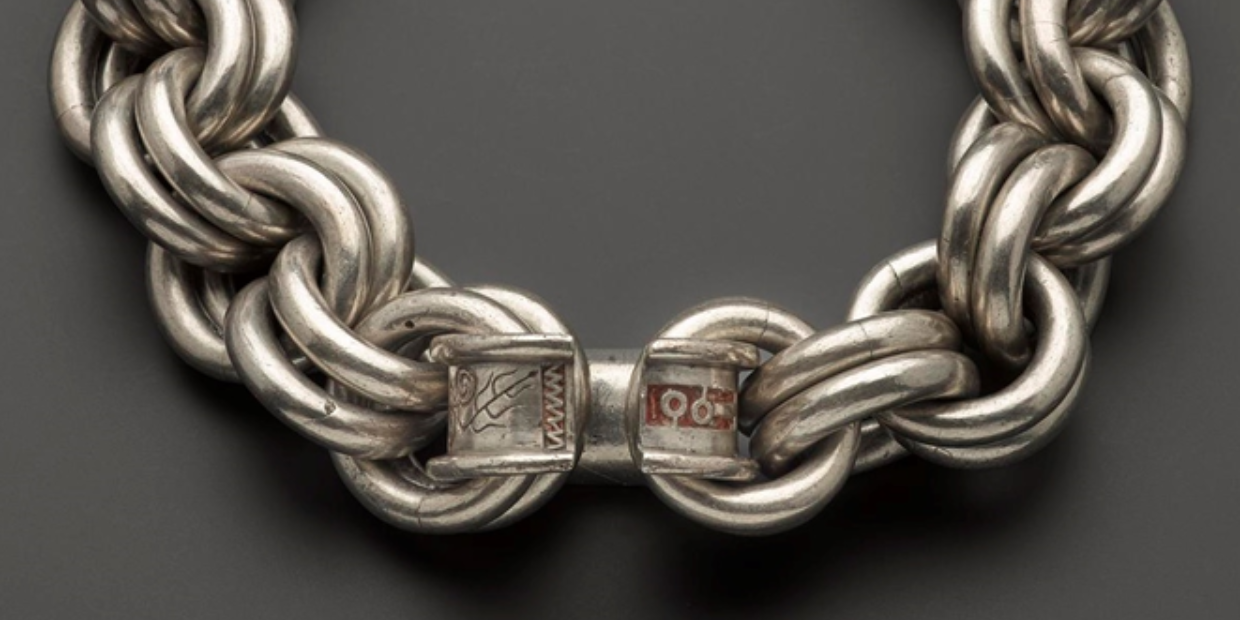
The fourth and fifth centuries AD are elusive periods in Scotland’s history, but recent studies of silver objects at National Museums Scotland are providing exciting new data and theories. On one hand, fresh analysis of the hoard of late Roman hacksilver from the Traprain Law hillfort in East Lothian has revealed new perspectives on this famous find, transforming it from ‘pirate’s loot’ to a story about frontier politics and economic and political turmoil. On the other, new work on the supposedly ‘early Medieval’ hacksilver hoards from Norrie’s Law in Fife and Gaulcross in Aberdeenshire, traditionally dated to the sixth or seventh century, pulls them into context of the Romans and reveals new styles of silver emerging in a changing frontier.
Dr Fraser Hunter, Principal Curator of Prehistoric and Roman Archaeology at National Museums Scotland, will talk about this work, the importance of these studies, how they are allowing us to rethink developments and connections in fifth-century Scotland, and silver’s role as a powerful medium for expressing status and identity.
Biography
Dr Fraser Hunter is the Principal Curator of Prehistoric and Roman Archaeology at the National Museum. His undergraduate degree and PhD are both from Bradford University, and he has worked at the National Museum since 1991. His research work focuses on three key topics: making the most of Iron Age material culture, understanding Iron Age decorative metalwork (“Celtic art”) in its European context and understanding the impact of the Roman world on the peoples of Scotland in its Empire-wide context.
Doors open at 6.45pm
While Dig It! takes every opportunity to ensure that this information is accurate, we advise that you contact the event organiser before attending the event to avoid disappointment. As “39% of transport emissions come from cars” according to Net Zero Nation, Dig It! also encourages you to walk, wheel, cycle or use public transport to arrive at this event if possible.
Accessibility Information
The entrance to Perth Museum from South St John’s Place is accessible by a ramp, with automatic doors at the top providing access to the vennel. The vennel is flat, with no stairs, and visitors to the museum can access both the on-site cafe and the museum from here. Similarly, the streetscape on the north side of St John’s Place provides level, accessible entry to the museum, with automatic doors in use to the vennel. Perth Museum has lift access to all floors. Assistance dogs are always welcome in Perth Museum, in both the onsite cafe and the museum. Fresh water is available. Find out more on the Perth Museum website.
Perth Museum, St John’s Place, Perth, PH1 5SZ
Wednesday 25 March 2026 @ 7:00pm
Price ££8.50; Concession £6 (inc. £1 booking fee)
Uncover More
Keep Exploring
