Building the Buzz for a Bronze Age Burial

In 1987, the remains of an individual buried over 3,700 years ago were discovered at Achavanich in Caithness in the north of Scotland. The site was later rescued and excavated, and although it was mostly forgotten about over the next three decades, Maya Hoole believes it still has much to teach us about Bronze Age Scotland.
Maya, the brains behind the Achavanich Beaker Burial project, explains why social media matters and how she brought Scottish archaeology to the attention of 50 million people:
“I’ve been running the Achavanich Beaker Burial project for around two years now, although originally I never anticipated that it would take on the form it has. I found the record for the site and thought ‘hey, this is nifty, but it’s a shame no one has looked at it in three decades – I wonder if I can do anything?’
I questioned and played with the data and photographs to try and make sense of the collection. I recreated the site plans, located the assemblage and put most of the disjointed pieces of the puzzle back together again. After a while I started talking to other people about it, and they thought it was an interesting site too.
The reaction I got from the audience after I presented at the Highland Archaeology Festival conference was remarkable. It got me thinking: perhaps other people would be interested too – but how to reach them and engage with them?
I began sharing my thoughts and promoting the project on social media, and soon had a wonderful little group of hardcore followers. This small community was fantastic for bouncing ideas off of and discussing ways to develop the project. The community slowly grew and we happily trundled along. A few months later I was delighted to receive a letter from the Society of Antiquaries of Scotland stating that I was receiving the funding I had applied for to carry out new research. Once I started to talk about what I was hoping to achieve, the number of social media followers started to creep up again – word was getting out and people wanted to know more.
I started to collaborate with specialists and the research began to make progress. Then I met Hew Morrison – a forensic artist who trained at the University of Dundee. Hew produced a 2D facial reconstruction and when we shared this through traditional and social media the publicity exploded. It went everywhere! We did not expect it to go as far, as fast or as big as it did. Over 50 million people, on Facebook alone, were reached by the multitude of articles and posts. The projects own social media following suddenly rocketed from 500 followers to over 3,500 across the different platforms.
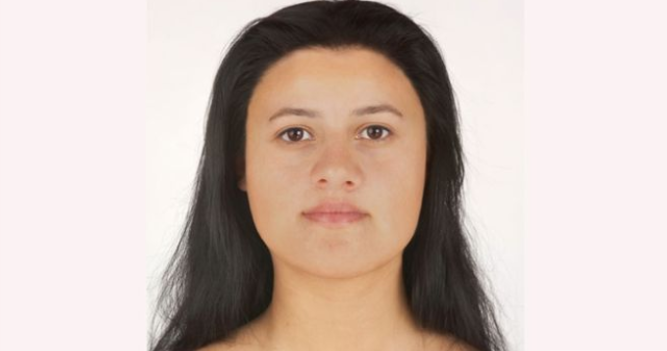
With this many followers and people interested in the project, I started to wonder how I could continue to engage them. So, I asked them: ‘Do any of you have any questions you want answered?’ I wrote blogs, and focused on creating visual content, as well as keeping everyone up-to-date on the ongoing research and posting new content regularly.
My advice to anyone who wants to do research on an archaeological collection that has been forgotten about or neglected would be to go for it! But make sure you share you work, there are thousands of people out there interested in archaeology but, unless they are academics and know how the sector works, they are restricted in how they can engage in new research.
In terms of social media, I cannot stress how important regular posts and creative visual pieces are for engaging with your audience. We live in a fast paced, information heavy age and if you want to capture people’s attention, you’ve got to make it easy for them to understand and fun for them to engage with. It is remarkably rewarding to see people who previously had little or no understanding become heavily engaged and interested in the subject. People want to know more, there is a thirst amongst the global community to learn about Scottish archaeology.
I believe wholeheartedly that people like myself – the academics and professionals working in the sector – are responsible for ensuring that anyone who wants to, no matter who or where they are in the world, are able to learn and engage with Scotland’s archaeology. We are the ones who need to adapt to changes in culture and more so in technology to be present and visible where our audiences are going to find information. They are searching the internet and using social media platforms to engage, so that is where we need to be. ”
By Maya Hoole, Archaeologist and Ava Beaker Burial Project Manager. This article was updated in March 2019. For the latest on the Beaker Burial project, click here.
Image copyrights: Maya Hoole and Hew Morrison
