Three Things You (Probably) Didn’t Know About Scottish Archaeology
By now you probably know that Skara Brae is older than the pyramids and carved stone balls were designed to confuse archaeologists, but did you also know…
1) Museum stores are a great place to chill out
Items that are not currently on display in museums tend to be held in stores. If you’re planning to visit with a guided tour, remember that the thermostatically-controlled temperature is often set for the artefacts, not you.
In Shetland Museum’s store, for example, researchers have been recording objects recovered from two 17th-century Dutch East India Company shipwrecks off the Out Skerries, an archipelago in Shetland. According to Colin Martin, it’s “as chilly as diving on the wrecks!”.
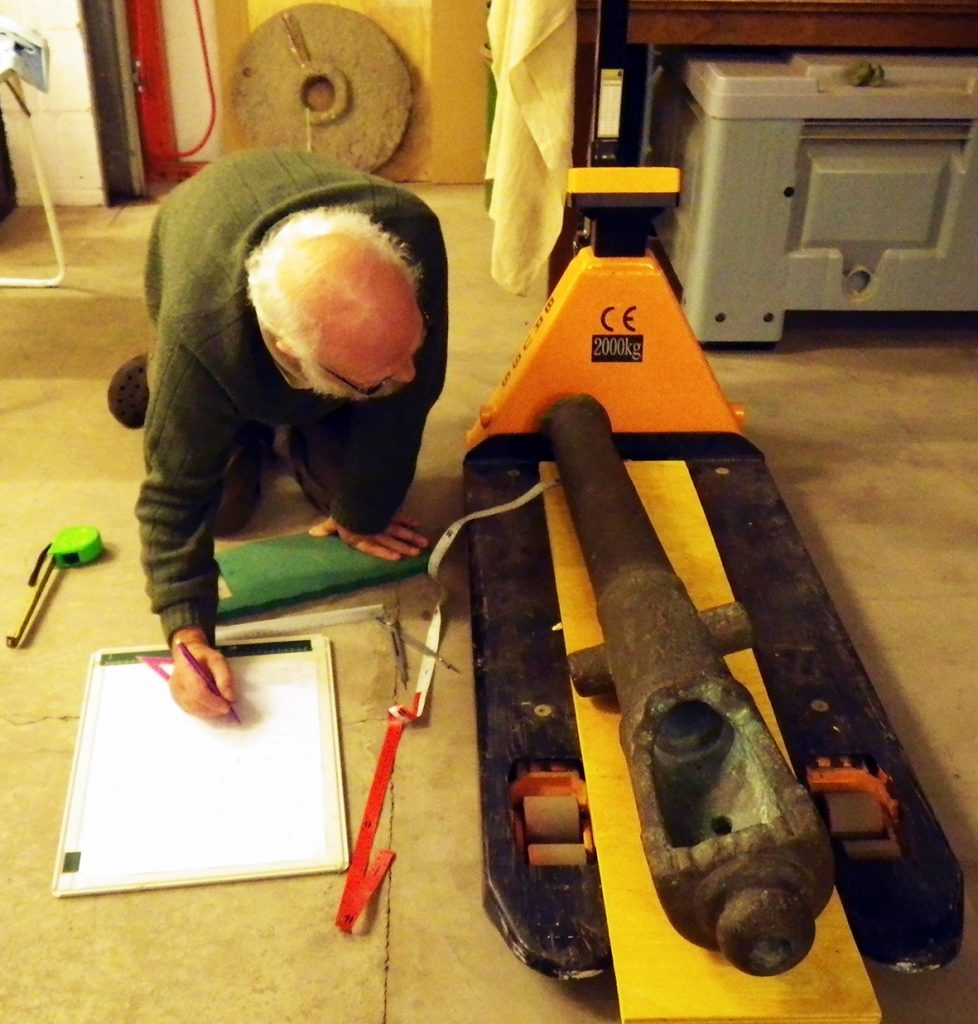
Recording a bronze swivel-gun from de Liefde (Copyright: Paula Martin)
2) Graffiti can help tell a story
The basalt columns in Fingal’s Cave on the Isle of Staffa are covered in historic graffiti recording many of the tourists who’ve visited over the last 200 years. The National Trust for Scotland and the University of Glasgow recorded some of the surprising results while exploring the archaeological potential of the island.
We don’t recommend that you add to the collection…
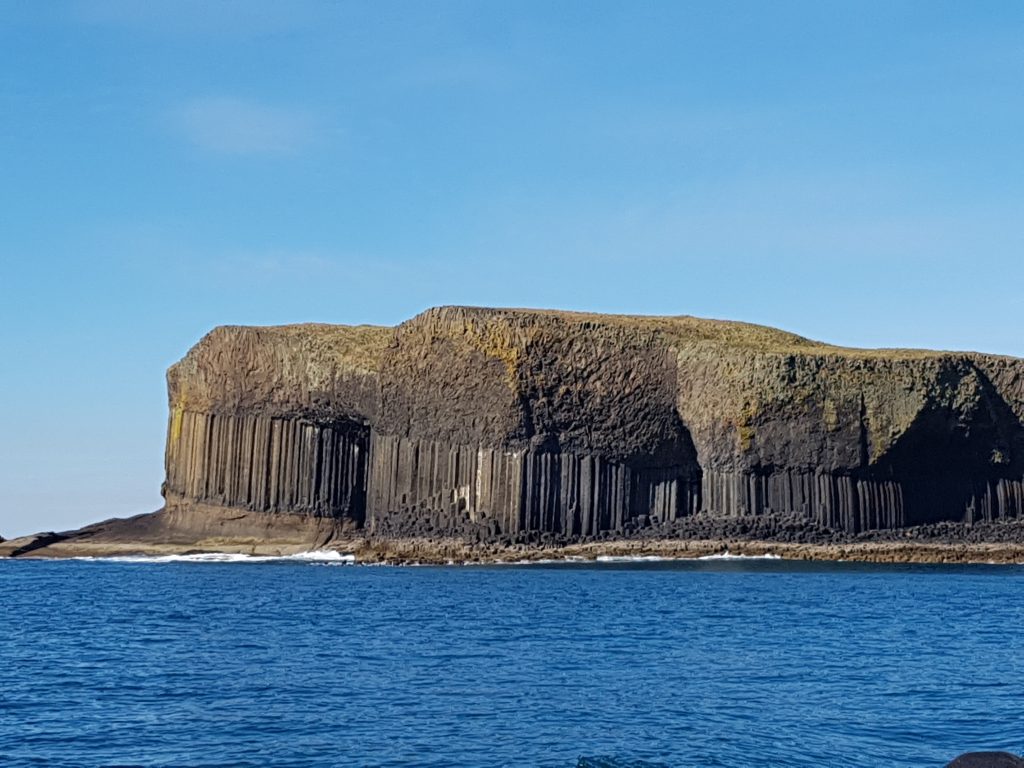
Fingal’s Cave on Staffa (Copyright: The National Trust for Scotland)
3) Underwater archaeology is older than chocolate chip cookies
The first underwater investigation of an archaeological site by an archaeologist was undertaken on a crannog. Rev Odo Blundell was a pioneer in the field when he used diving equipment from workers inspecting a nearby canal to examine Cherry Island, a crannog near Fort Augustus in Loch Ness. He then reported this work in the Proceedings of the Society of Antiquaries of Scotland Volume 43 (1908-09).
Chocolate chip cookies were invented around 1938, in case you were wondering.
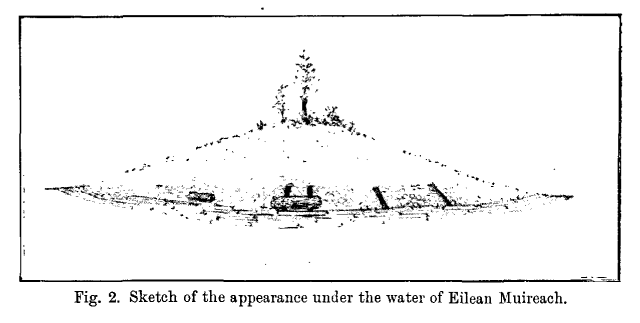
Sketch by Rev Odo Blundell (via PSAS 43)
If you’re feeling inspired by these facts, visit our Events & Digs page to find an activity near you.
Thanks to Dr Colin Martin, Derek Alexander and Dr Michael Stratigos for contributing to this article ahead of Archaeological Research in Progress 2019, a day conference presenting new research findings and best practice in archaeology covering all periods from across Scotland and beyond. It is organised in alternate years by Archaeology Scotland and the Society of Antiquaries of Scotland.
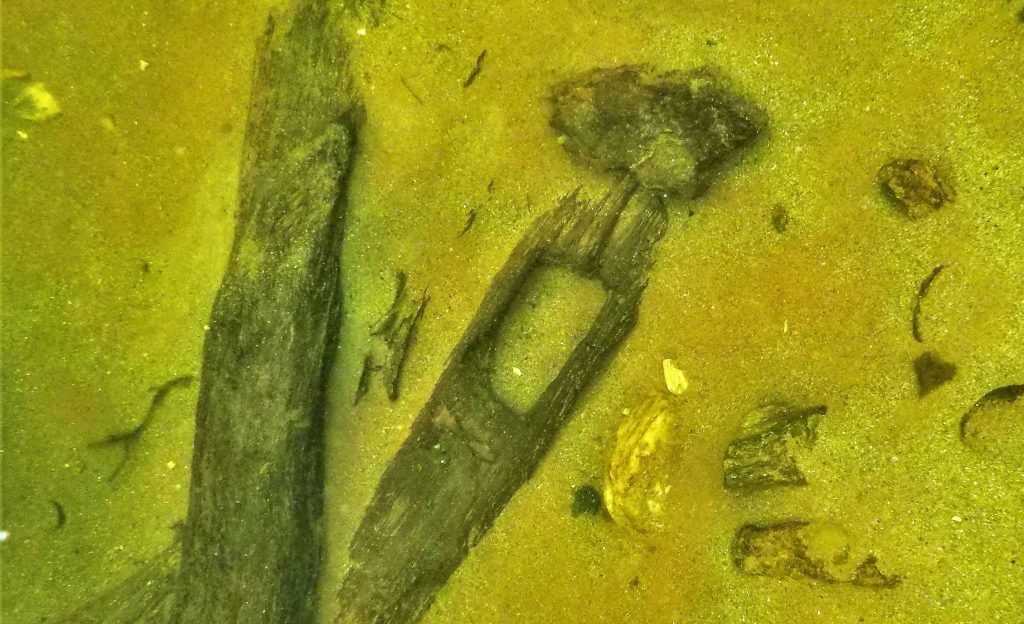
Header Image: Mortised timber at Fearnan Hotel crannog by Michael Stratigos
