Shipwrecks: Scotland’s Sunken Archaeology
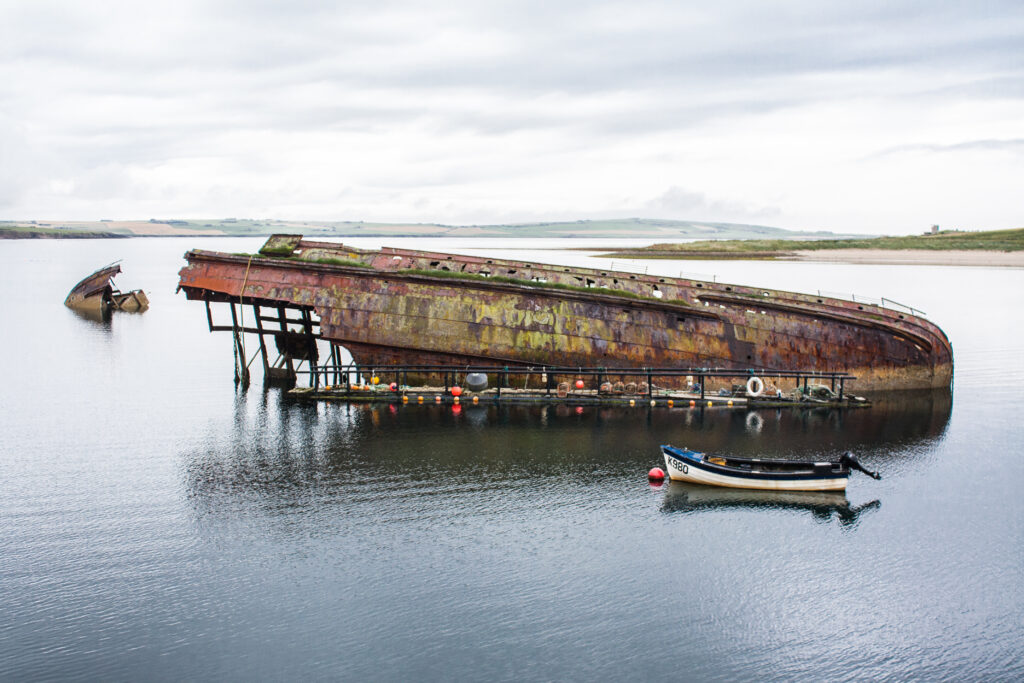
There are over 4,000 shipwrecks recorded in Scottish waters, each with its own story to tell.
Sunken ships
Much of the publicity over the past few years covering wrecks has focussed on the First World War, the most well-known in Scotland being the remains of British and German warships in the anchorage of Scapa Flow, Orkney. These underwater sites have long been documented, and many of them date from the 17th and 18th centuries.
Orkney 100 years ago. 74 valuable warships of the German High Seas Fleet were imprisoned within Scapa Flow. They had been there since November 1918 following the end of the First World War. As peace talks continued in Paris the fate of these ships was yet to be decided. #Scapa100 pic.twitter.com/GfvCUVYfJx
— Orkney Library (@OrkneyLibrary) 17 June 2019
Most wrecks happen when ships run aground in shallow waters. This still happens today and was more common in the days before electronic navigational aids and satellites. For historic sailing ships the English channel was dangerously narrow, and the prevailing south-west wind meant that it was safer to travel ‘northabout’ round the British Isles. For this reason, there are many wrecks around the Shetland archipelago, for example, ships of the Dutch and Swedish East India Companies*, heading for what is now Indonesia. Objects salvaged from such wrecks can be seen in Shetland Museum.
Diving into the past
Salvage divers have long targeted these ships to plunder their large quantities of gold and silver coins, which they were carrying to buy spices and porcelain. The advent of scuba diving in the mid-20th century renewed interest in the wrecks, but by that time most of the accessible artefacts had already been lifted.

Frechen Stoneware (Image Credit: Colin Martin)
However, what remains can tell us much about what was traded, the way the ships were worked and how their crews lived. Whereas most archaeological sites on land only contain scattered fragments of objects in daily use and organic preservation can be poor, wrecked ships are ‘time-capsules’, usually with very good survival of fragile organic materials such as wooden utensils, nuts and seeds, and even fabrics. They can often be closely dated – even to the precise time on a precise day!
One example of such a wreck is Kennemerland, a Dutch East India Company ship wrecked in 1664 on Out Skerries, Shetland. Material from the wreck is scattered over a wide area and not deeply buried, so ceramic and metal finds outweigh others. It had been claimed that such scattered sites had little or no archaeological significance, but in the 1960s a team of student divers proved otherwise. Below are some examples of the types of material which can be found on shipwrecks:

Rope (Image Credit: Colin Martin)

Syringe (Image Credit: Colin Martin)
Salvaging stories
Coils of rope tell the story of how the ship was operated, its cargo is represented by small yellow bricks carried as ballast, which would eventually be used colonists in Batavia (modern Jakarta) to build houses. A pewter syringe hints at medical services on board. Some items, such as the comb, could be trade goods or personal possessions of the crew, and the fragment of a violin bow recalls the pastimes of the crew when off duty.

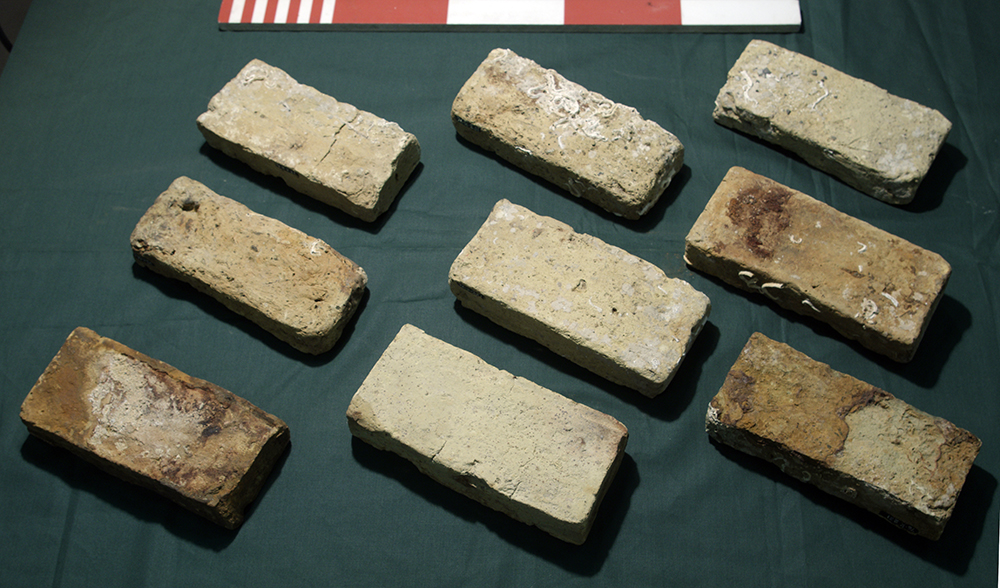
Bricks (Image Credit: Colin Martin)
The goods carried for sale to Britain’s colonies ranged from pocket sundials, tobacco boxes and early golf-club heads, to thimbles and cheap jewellery. Frechen stoneware pots with a face-mask and medallion were common types of containers, particularly for spirits, but some on Kennemerland contained mercury, which was to be used in the processing of metal ores in the East Indies. These are just a few examples of small and often fragmentary objects which have interesting stories to tell.
By Colin Martin, Honorary Reader in Maritime Archaeology at The University of St Andrews, and Paula Martin, Independent Researcher.
Featured Image: Scapa Flow (Image Credit: Shadowgate via Flickr at https://bit.ly/3j6B7zr, CC BY 2.0)
*The East India Companies have been criticised for monopolistic policy, exploitation, colonialism, uses of violence, and slavery.
This article was produced in support of Scotland’s Year of Coasts and Waters 2020-21.

