Scottish Archaeology Meets Myth, Legends and Folklore

Myth, legends and folklore appear throughout Scotland’s history, so it’s not surprising that they’ve been linked to some of the country’s most mysterious sites and monuments.
Pictish Kelpies
Kelpies are malevolent Scottish water spirits which can appear as humans or horses. These stories may have been used to warn people to be wary of strangers and the dangers of water. Some believe that they’re depicted as the Pictish Beast on symbol stones, such as the 1,400-year-old one at Broomend of Crichie in Aberdeenshire.
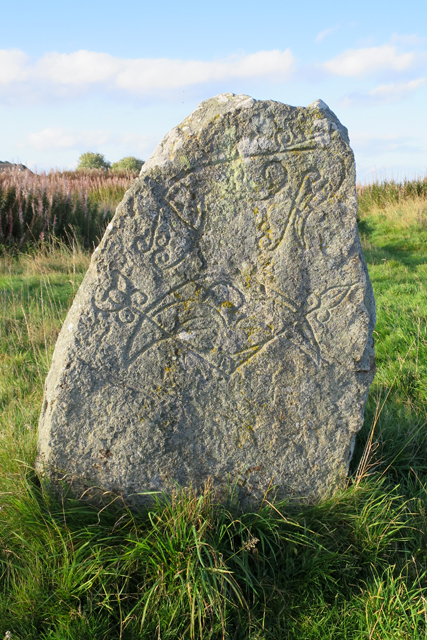
Broomend of Crichie Stone Circle (4) cc-by-sa/2.0 – © Anne Burgess – geograph.org.uk/p/5555392
Away with the Fairies
In 1796, a cist containing human bones was found at a Stirlingshire site known as ‘The Fairy Knowe’. Excavation also uncovered a broch with signs of “violent destruction” by fire, as well as several high-status objects including a spiral finger-ring with “decorative nicks”.
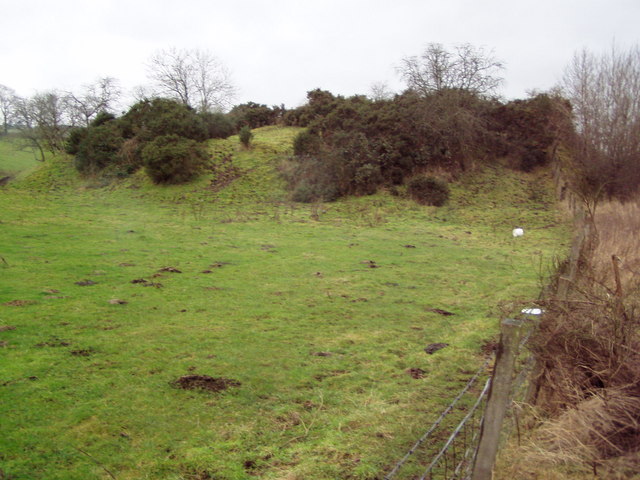
Fairy Knowe (remains of Buchlyvie Broch) from East cc-by-sa/2.0 – © Ewen Rennie – geograph.org.uk/p/1300971
Fallen Eagle
Clach an Tiompain (‘The Eagle Stone’) is a 1,300-year-old Pictish symbol stone in the Highlands. In the 17th century, a seer reportedly predicted that should it fall three times, ships would anchor on the spot. Since it has supposedly fallen twice already, it’s now set in concrete.

cc-by-sa/2.0 – The Eagle Stone, Strathpeffer by Julian Paren – geograph.org.uk/p/5244130
Fairy Tales
The Ghillie Dhu is a male faerie who lives alone in the forest and camouflages himself using leaves and moss. It’s believed that he lives around Gairloch in the Highlands – also home to a prehistoric vitrified fort, medieval island stronghold and “Creag an Fhomhair” (“the Giant’s Rock”).
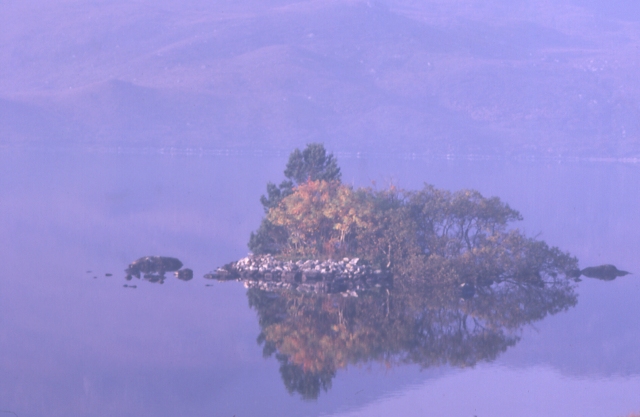
Loch Tollaidh cc-by-sa/2.0 – © Anne Burgess – geograph.org.uk/p/7406
Not Very Neigh-bourly
Spirits resented human interference when stones from the Mains of Hatton Recumbent Stone Circle in Aberdeenshire were removed to form gateposts. Horses seemed to sense their anger and avoided the gate, so the farmer decided to return the stones to their original site. The spirits approved of this change of heart: “while two horses with difficulty dragged each stone downhill to the gate, one only found it easy work to pull a stone uphill from the gate to the circle”.
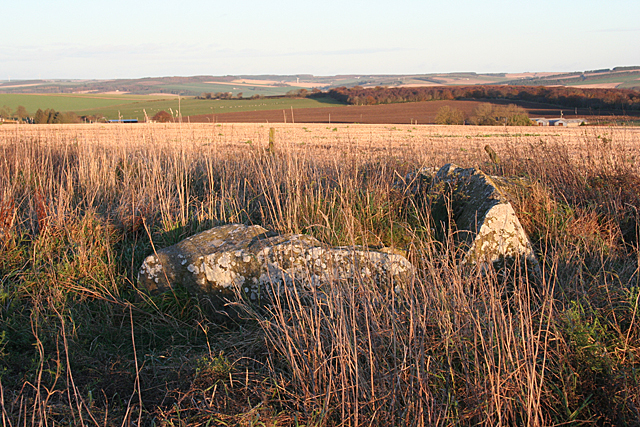
Mains of Hatton Recumbent Stone Circle (2) cc-by-sa/2.0 – © Anne Burgess – geograph.org.uk/p/4743363
Sleeping Giants
The Dwarfie Stane is a 5,000-year-old chambered tomb which was hollowed out before the invention of metal tools. Orcadian legend claims that the residents were giants who once had to gnaw their way out through the roof, but the narrow entrance and two small bed-like spaces inside suggest otherwise.
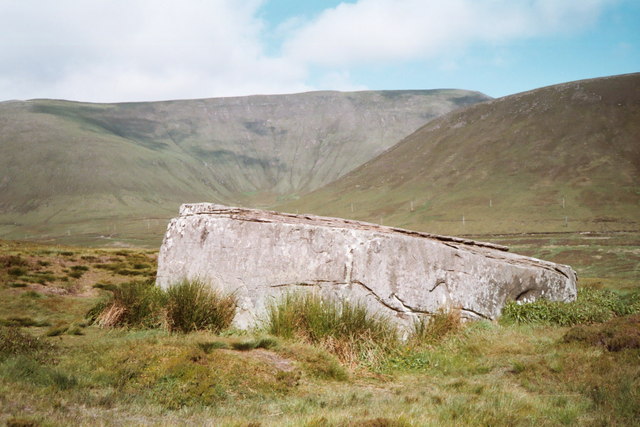
Dwarfie Stane, Hoy cc-by-sa/2.0 – © Catherine Morgan – geograph.org.uk/p/218407
Heart of Stone
According to legend, the Pictish Maiden Stone in Aberdeenshire (carved more than 1,200 years ago) is actually a woman who was turned stone after losing a wager with the Devil. She bet that she could bake bannocks before he could build a road to the top of the nearby hill of Bennachie. He finished the road before the bread was ready and when she fled, he transformed her into the Maiden Stone.

The Maiden Stone cc-by-sa/2.0 – © Bob Embleton – geograph.org.uk/p/3085938
Part of Your World
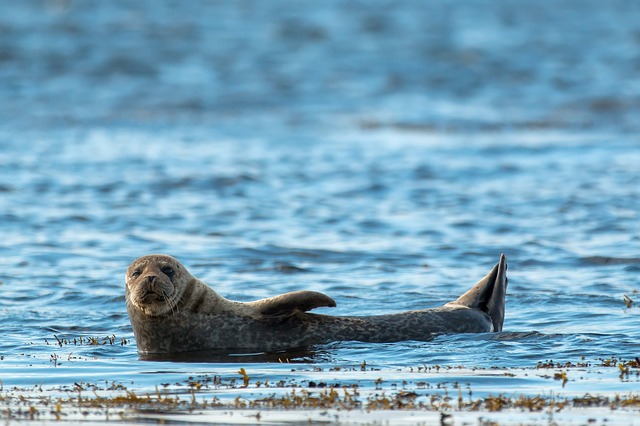
In Scottish mythology, selkies can change from seal to human form by shedding their skin. At 6,000-year-old midden sites (refuse heaps) on Oronsay, archaeologists have found bones from human hands buried alongside those from seal flippers. We know relatively little of how the first people who hunted, fished and gathered plants in Mesolithic Scotland saw the world; it’s tempting to see a prehistoric precursor to this story existing thousands of years ago.
Head for the Hills
The Roman army placed a lookout and signal station on Eildon North Hill in the Scottish Borders almost 2,000 years ago, but we’re not sure who they were watching out for. Hundreds of years later, Thomas the Rhymer was said to have been sitting beneath the Eildon Tree near Melrose when the Fairy Queen whisked him away to a hollow in the hills and off to her world.

The Eildon Hills from Gledswood © Copyright M J Richardson and licensed for reuse under CC BY-SA 2.0
Beware of the Dog ⚠️
It’s said that whoever moves the standing stone near the village of Murthly in Perthshire will find a chest guarded by a black dog. The stone in the legend is probably the large prehistoric monument in the grounds of Murthly Castle. Thousands of years later in the mid-9th century, someone carved a person being chased by a large beast onto a sandstone slab, which was found near the village in 1886.*Please don’t try to move any standing stones (it’s dangerous and illegal).

Sketch via PSAS 42
Personal Trainer
Sgàthach is a legendary Scottish warrior who lived on the coast of An t-Eilean Sgitheanach (the Isle of Skye). The ruins of Dùn Sgàthaich (Dunscaith Castle) are said to stand on the site of her “Fortress of Shadows” where she trained Cú Chulainn, a famous mythological hero. This medieval structure, which does occupy an older fortified site, remains perched on a rock above Loch Eishort with parts of the curtain wall still clinging to the cliff edge.
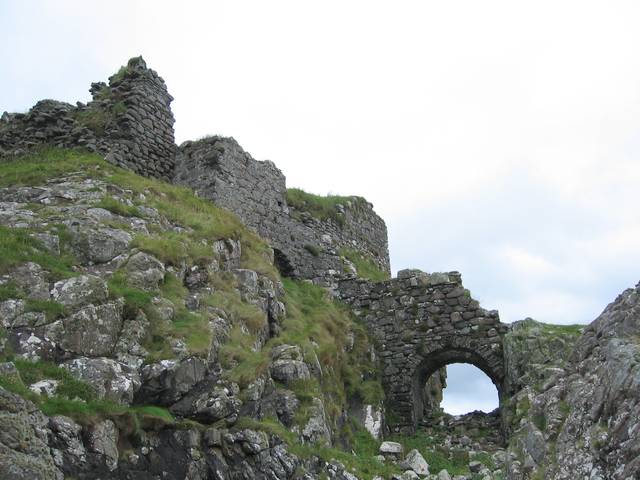
Dunscaith Castle cc-by-sa/2.0 – © John Allan – geograph.org.uk/p/218475
Scotland’s Giant’s Causeway
It’s said that the hexagonal basalt columns on Staffa are the remains of a causeway built by a giant – but he wasn’t the only visitor. Thanks to a burnt grain of hulled barley excavated by National Trust for Scotland archaeologists in 2016, we know that people were probably living on the island 3,800 years ago.

Photo by Graeme Pow on Foter.com / CC BY-NC-SA
Loch Awe-some
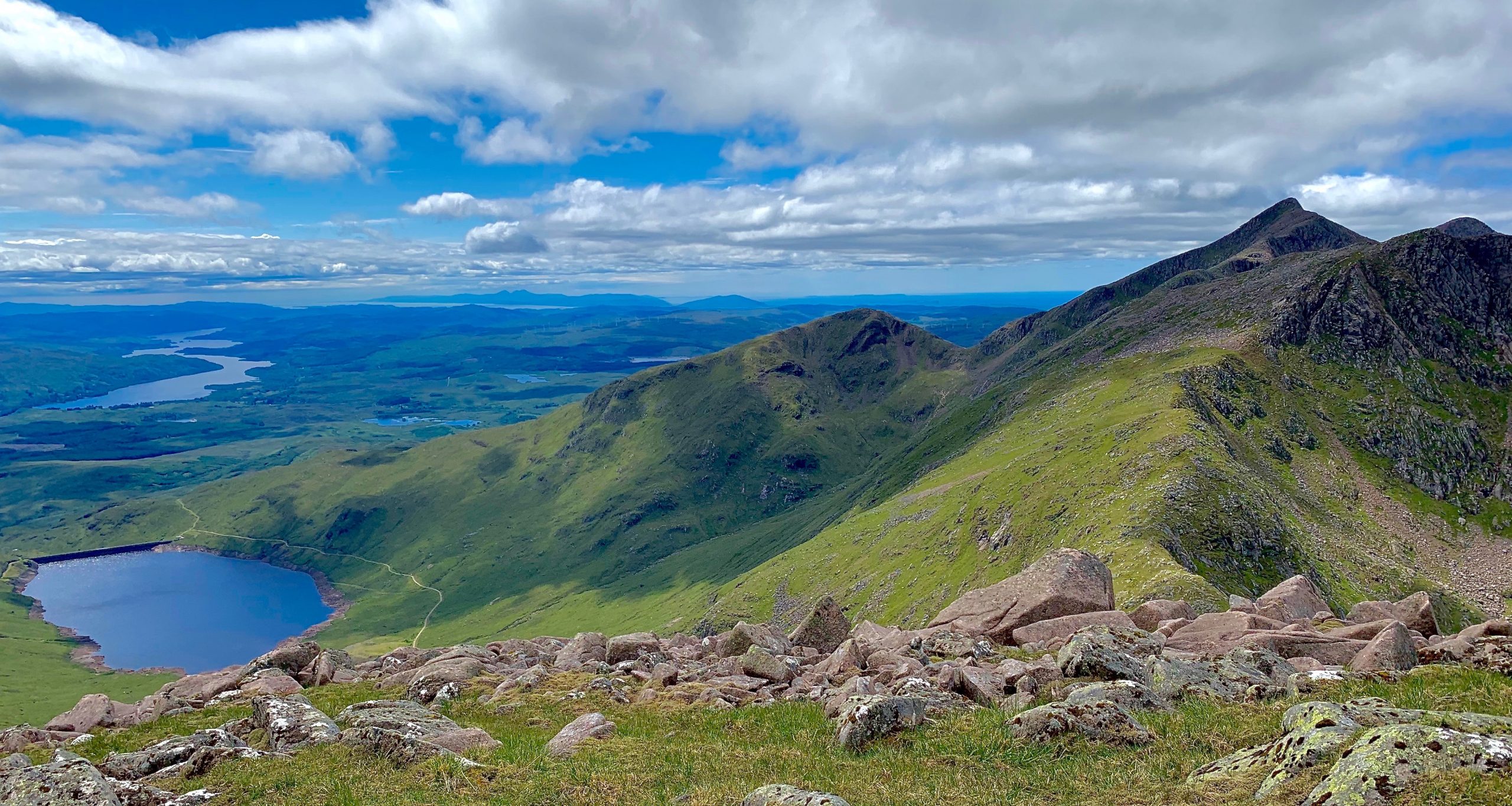
Legend has it that the Cailleach, a divine guardian, watched over a fountain on Ben Cruachan in Argyll. She’d cover the spring with a stone at sundown and remove it at dawn. One evening she fell asleep and the well overflowed forming Loch Awe. Over time, the loch became home to over 20 crannogs (prehistoric water dwellings) and even a few medieval castles. The Cailleach was turned to stone for her negligence, but to this day she still watches over Loch Awe from the top of Ben Cruachan.
What the shell!?
It’s said that a huge boulder in Leith (a port to the north of Edinburgh) was home to a shellycoat, a mischievous bogeyman who rattled around in a seashell coat, until it was moved in the 19th century when work began on the construction of Leith Docks. Early in 2019, archaeologists from AOC Archaeology uncovered part of the docks which reportedly displaced the poor creature, who hasn’t been spotted since.
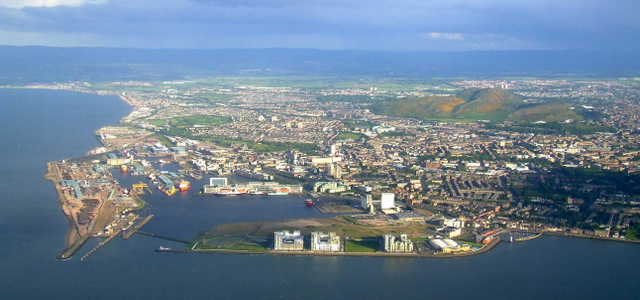
Leith Docks and Arthur’s Seat from the air cc-by-sa/2.0 – © Thomas Nugent – geograph.org.uk/p/2422581
Washing Up
The bean-nighe (or “washerwoman”) spirit is considered to be an omen of death in Scotland. She is found by lochs and rivers washing the clothes of those about to die. If she was caught, she would grant her captor three pieces of knowledge. Dun Buidhe on Loch Dun Mhurcaidh, a probable broch built over 2,000 years ago, is one of the many watery locations where a bean-nighe is said to have performed her morbid work.
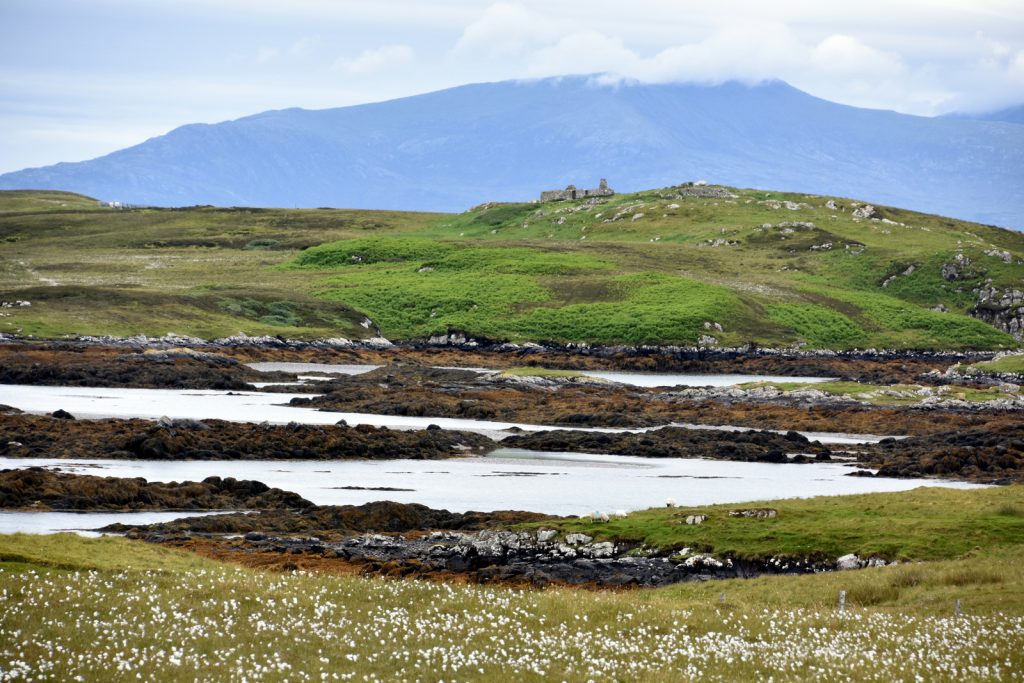
Benbecula (Image Credit: James Stringer via Flickr at http://bit.ly/36WqJE2, CC BY-NC 2.0)
Set in (Shandwick) Stone
Around 1,200 years ago, a stag, boar and other forest animals were carved into Clach a’Charridh (the Shandwick Stone) in the Scottish Highlands. According to legend, it was erected to mark the grave of one of three Norse princes who were wrecked on a reef off Shandwick Bay while pursuing an Earl who had mistreated his wife (their sister).

Wojsyl / CC BY-SA (http://creativecommons.org/licenses/by-sa/3.0/)
Fee-fi-fo-fum
Edin’s Hall Broch in the Scottish Borders was built over 2,000 years ago and is one of the few Iron Age towers in lowland Scotland. Several 19th-century accounts suggest that the name refers to a giant called Etin or Edin who plagued the area until a poor old woman gave someone the answers to his questions about Scottish history…and the axe that eventually killed him.
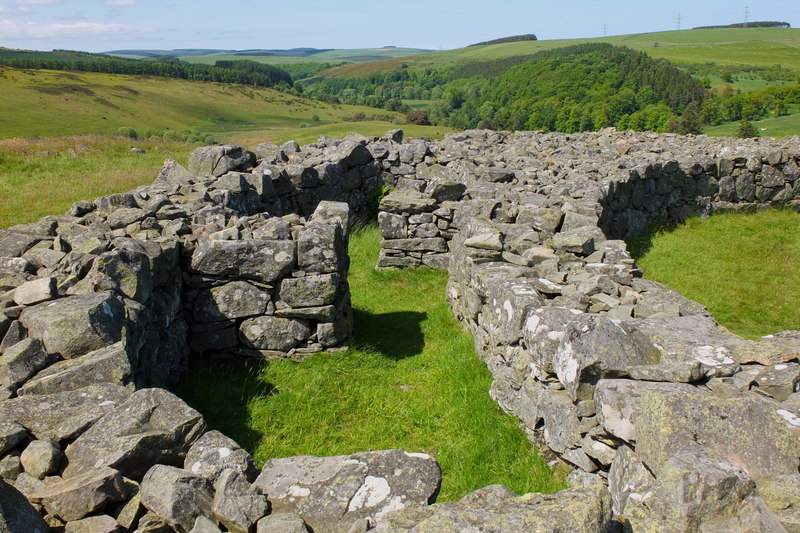
The wall of Edin’s Hall Broch for NT776 © Copyright Jim Barton and licensed for reuse under this Creative Commons Licence
Want to dig into more Scottish archaeology? Sign up to the Dig It! Digest to get stories, events and updates delivered straight to your inbox once a month.
Featured Image: Callanish Stone Circle (Image Credit: Andrew Bennett via Flickr, CC BY 2.0). Some believe that the stones are petrified giants who wouldn’t convert to Christianity, although Historic Environment Scotland’s best guess is that it was a kind of astronomical observatory.
