“Scotland’s Coolest Find?”: Archaeologists Answer Nine of Your FAQs
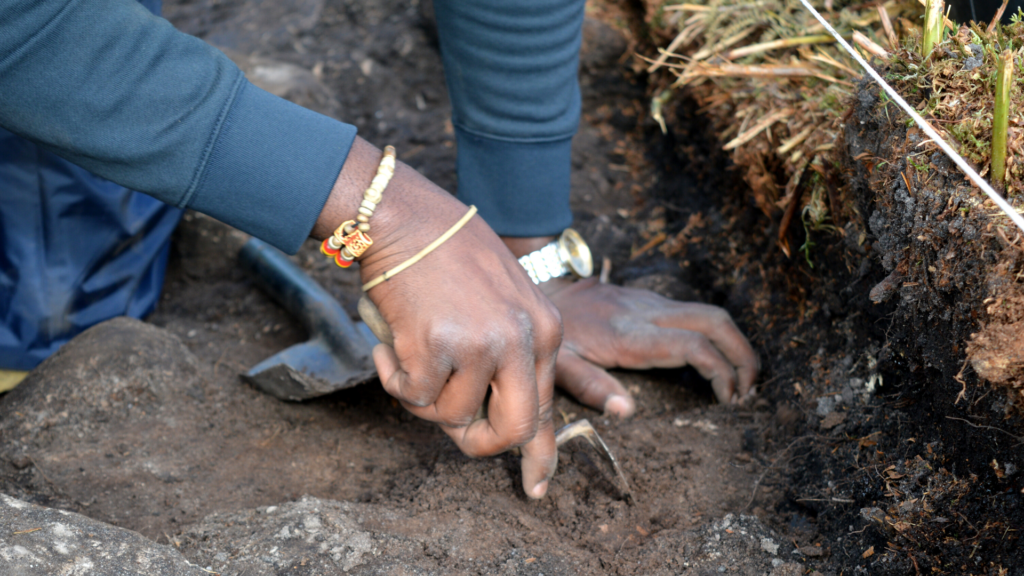
Have you ever questioned what archaeologists do? Whether you need a degree to become one? Or even wondered what music they listen to? We’ve asked six experts all with different backgrounds and experiences for their take on questions often posed to archaeologists.
What is an archaeologist?
“A person who finds pieces of the past and weaves a story from fragments – often using science and deduction to get as close to what actually happened as they can.” – David Connolly, head of British Archaeological Jobs and Resources (BAJR)
“An archaeologist is a person who studies past people by investigating sites where they lived, landscapes they interacted with, and examines material such as artefacts and ecofacts to enrich our knowledge of the past.” – Leanne DeMay, former ScARF Project Officer at the Society of Antiquaries of Scotland (worked in museums and commercial archaeology)
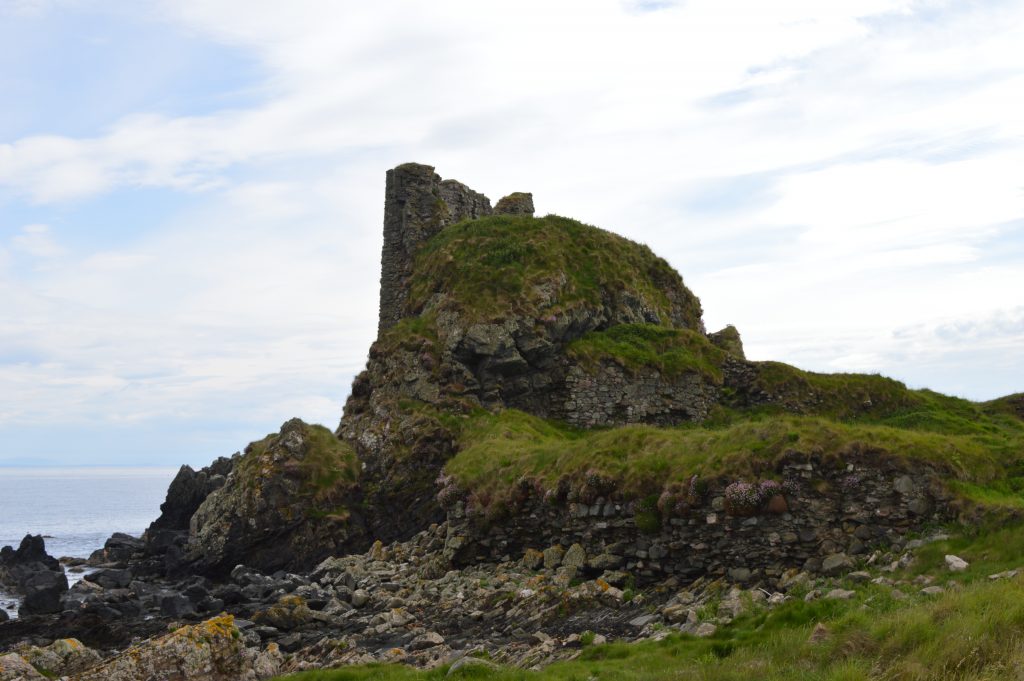
The striking remains of Dùn Naomhaig (Dunyvaig Castle) in Islay
What do archaeologists do?
“They look for clues, whether a pot in the ground or a radioactive isotope in a tooth, to help understand the when, who, what and why of the past.” – David
“We’re trained observers and so all of our methods are about observing, recording and analyzing. But we also interact with our subjects whether living, dead or inanimate.“ – Kenny Brophy, Senior Lecturer in Archaeology at the University of Glasgow
“The world of archaeology is extremely diverse and archaeologists do many things – not all archaeologists dig holes! During my time as a commercial archaeologist I worked on lots of development sites such as housing estates and new roads, evaluating the potential for archaeology – excavating and recording archaeological features if they turned up.” – Leanne
“Often this involves fieldwork – digging up those physical remains – but a lot of archaeology also happens at a desk or in a lab.” – Hannah Genders-Boyd, an early career archaeologist with experience in the UK commercial sector, as a volunteer archaeologist at the Ness of Brodgar, and former Historic Environment Scotland climate change intern
“Use the remains of human activity to tell the stories of our past, and increasingly relate this to our present and future.” – Simon Gilmour, Director of the Society of Antiquaries of Scotland
Where do archaeologists work?
“We work in fields, moorland, laboratory, library and even in the air.” – David
“Theoretically everywhere and anywhere, whether land, underwater or on the surface of the moon. Anywhere where humans have been, which is everywhere. I do my most interesting work in urban places like housing estates and industrial estates for instance.” – Kenny
“Archaeologists work in many different environments – whilst most archaeologists love to get their hands dirty with a trowel every day, some may be museum curators who work with objects, some may be environmental specialists who spend time in the lab looking at seeds, pollen and insects under a microscope to recreate past environments!” – Leanne
“In terms of job options – these include working on excavations in advance of development, surveying and recording sites, managing data and putting planning conditions on new developments, designating sites (for example, as a scheduled monument of national importance), developing educational resources, managing landscapes and sites, researching and writing interpretation pieces (guide books, panels etc), managing projects, studying artefacts, preparing exhibitions, undertaking scientific analysis (for example, radiocarbon dating; undertaking analysis of the environmental remains of past landscapes – pollen etc; using isotopes from bones to study diet and mobility) and much more.” – Rebecca Jones, Head of Archaeology and World Heritage at Historic Environment Scotland (experience in aerial survey, data management and specialises in Roman military sites)
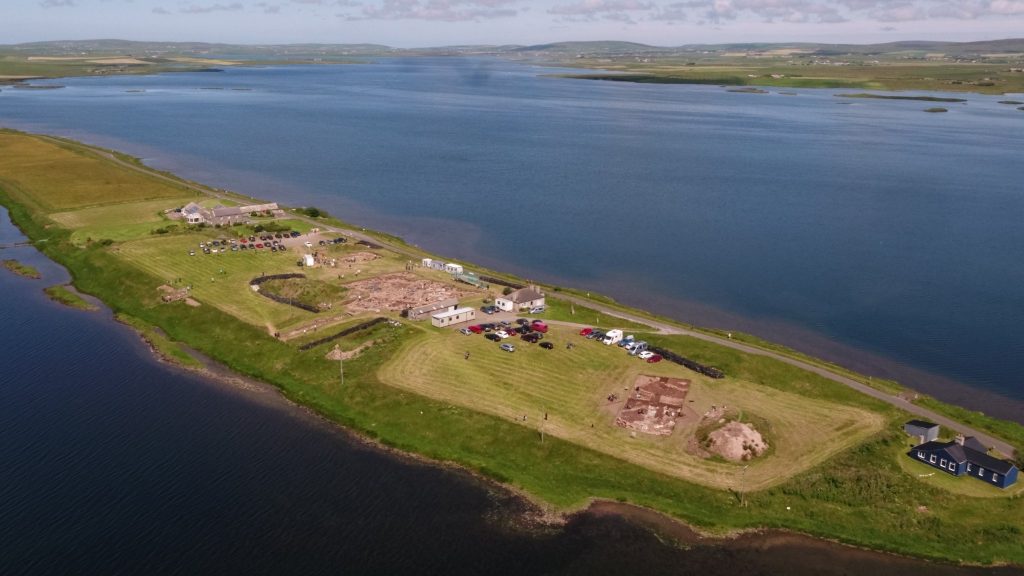
What was your most exciting archaeological find?
“The oldest (at the time) stone house in the world – around 11,500 years old in Northern Iraq. The moment where hunter gatherers decide to put down roots and start farming.” – David
“In terms of archaeological value, the Forteviot dagger cist burial in 2009 as part of the SERF Project. We didn’t really know what would be in the cist when we found it, and in the end it contained the most complete Bronze Age fire-making kit in Europe, tripled the number of known wooden bowls of Bronze Age date in Britain, and identified the first definitive proof for flowers in a prehistoric grave in Britain.” – Kenny
“My most exciting individual find was a beautiful little Roman hand altar – probably a fertility offering from someone c.2000 years ago who wanted a child. I think that intimate, immediate connection with an individual from the past, through an object that has been long buried, is a motivating factor for many field archaeologists.” – Hannah
Do you need a qualification in archaeology to get involved?
“I did a few years at university, but never finished, so it is possible to do well in archaeology without a degree, you do need to be dedicated, and doing the skills passport system, learning on fieldschools will always help. However, nowadays, a degree does help.” – David
“I did a degree in archaeology, but you do not need any form of qualification to get involved at community excavations – as training is usually given.” – Leanne
“I did a degree at Newcastle University but we are keen to encourage people to get involved in archaeology through a myriad of different ways. Scotland’s Archaeology Strategy is all about widening access to archaeology and making it for everyone.” – Rebecca
“I did an undergraduate degree in History & Archaeology at Edinburgh. Currently most firms want you to have a degree for commercial work, but there are ongoing discussions about the potential for archaeology apprenticeships. However, you often don’t need a degree to dig: a lot of field schools and community research digs are happy to teach people on the job so it’s always worth looking into those options.” – Hannah
Where in Scotland should I visit if I’m interested in archaeology?
“Head to the Lammermuirs of East Lothian and then look out over the Lothian plain, where you can visit anything from Mesolithic sites to Prehistoric hillforts, Medieval castles and battles and ancient houses and farms. The story of Scotland plays out on this landscape.” – David
“For accessibility and a wide range of stuff (except Roman!) then I would say Arran and Bute. They have amazing prehistoric and medieval stuff between them. Just to cover the Roman go to Antonine Wall around Rough Castle fort near Bonnybridge. I don’t think anyone needs to travel far to see world class archaeology.” – Kenny
“Orkney is abundant with upstanding Neolithic stonework, Morayshire and Aberdeenshire boast a fantastic selection of Forts, Pictish stones and castles. The Clava Cairns near Inverness are very special – perhaps my favourite site, along with the magnificent brochs in the north and west of Scotland.” – Leanne
“GO TO ORKNEY! Seriously. It’s great and you’ll be tripping over archaeology. Neolithic homes, tombs, brochs, WW1 ships, WW2 bunkers – is there anything it doesn’t have?!” – Hannah
“The islands of Scotland still have some of the best preserved sites and landscapes, and I have always had a soft spot for the Western Isles!” – Simon
Apart from a trowel, brush and fetching hat, what should every archaeologist have in their toolkit?
“Camera and hard-backed blank paged notebook with a good pen!” – David
“I use an old Polaroid camera for an immediate record of what I am doing and I think this is pretty essential kit too. I also have a lucky bouncy ball, a set of dental picks and a ladle in my tool box, all sorts of junk really. ” – Kenny
“Snacks… digging is hungry work!” – Leanne
“A positive attitude!” – Rebecca
“A flask of tea. Especially in Scotland. It’s essential.” – Hannah
What kind of music does an archaeologist listen to?
“Everything from Punk to Classical. I use music to suit my mood or what I am doing, so I often listen to Medieval when I am writing up a report on a castle.” – David
“I love going to concerts and festivals – I will listen to most things!” – Leanne
“Well I’m a folky through and through – but judging by how often my music choices get overruled in the car to site, I reckon I’m in the minority…” – Hannah
What’s the coolest find ever in Scotland, and why?
“The heart of Robert the Bruce – partly because I got to transport it from Melrose Abbey to Edinburgh – and partly because it showed that the past is still relevant to the here and now. Identity and politics are rooted in the past, and archaeology makes sure we don’t misuse it.” – David
“The Cochno Stone. A huge rock-art panel near Clydebank with rich prehistoric carvings and an amazing twentieth century story. It has everything and should be world famous!” – Kenny
“I find recent discoveries of preserved wooden objects fascinating – such as the spindle-turned baton and decorated wooden bowl from Black Loch of Myrton, and the wooden bowl from The Cairns (with evidence of repair- wow!). These objects are incredibly rare and give us a tantalizing peek into the everyday lives of prehistoric people.” – Leanne
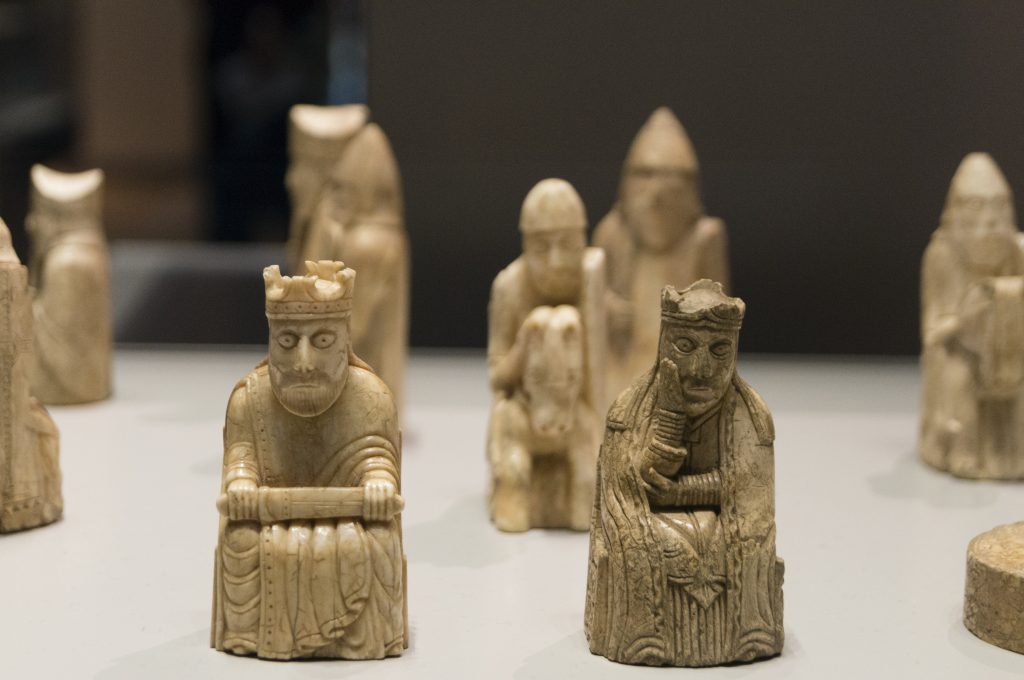
“Too difficult to say! Although having just been on holiday to the Western Isles I love the way in which the Lewis chess pieces have captured the imagination and have almost become part of the landscape even though they are artefacts in a museum.” – Rebecca
“I’d say the Westray Wifey, because it’s one of the earliest depictions of a human figure we have in this country – and that’s exciting for the development of human thought, society, culture, self-awareness, art…so much!” – Hannah
“Brochs – they are genuinely unique to Scotland!” – Simon
Have more questions? Follow Hannah, Simon, Leanne, Rebecca, David and Kenny on social media and ask away!
Featured Image: Jambo! Radio on Arran (Credit: Sally Pentecost)
