Archaeodogs – digging into archaeology
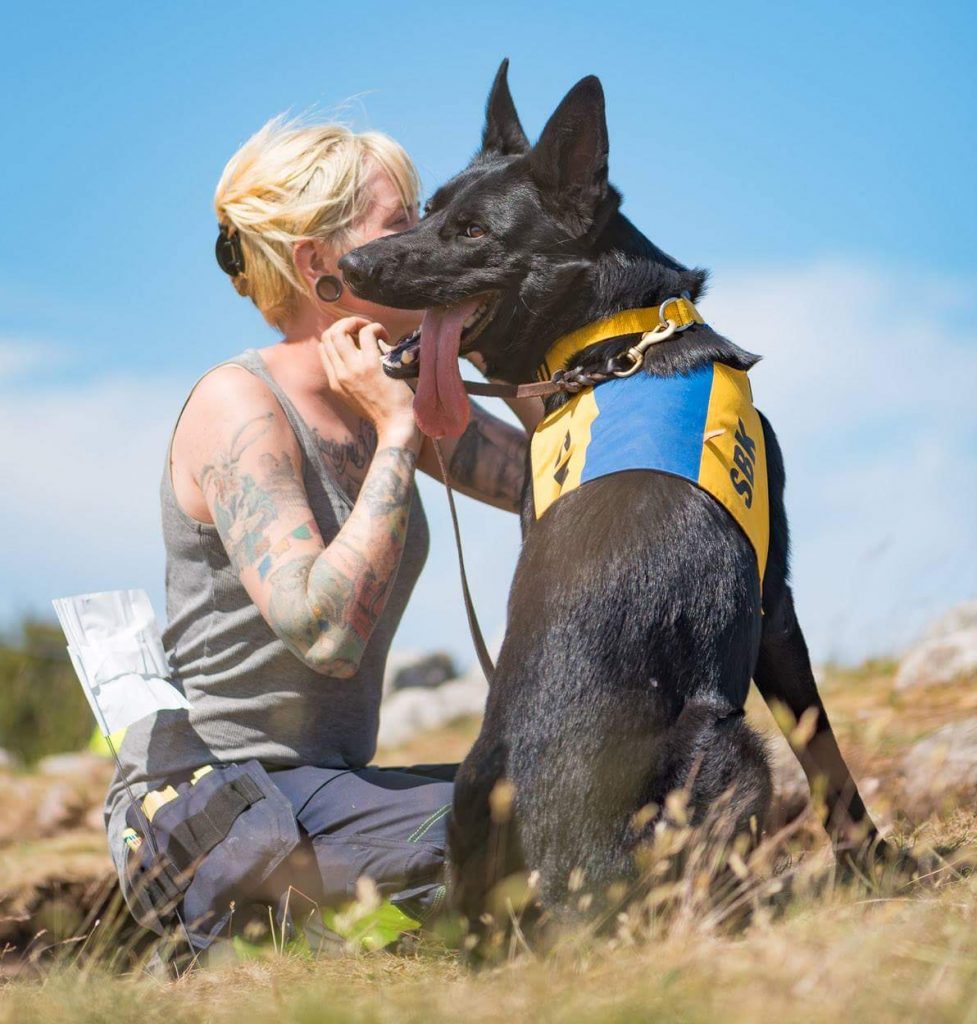
They’re known as “[hu]man’s best friend” (sorry cat lovers), but did you know that dogs are specifically great pals to archaeologists? Whether they’re detecting human remains, working as therapy dogs for archaeology students, or keeping a watchful eye over dig sites, these canine companions are a welcome addition to any excavation.
Indiana Jones
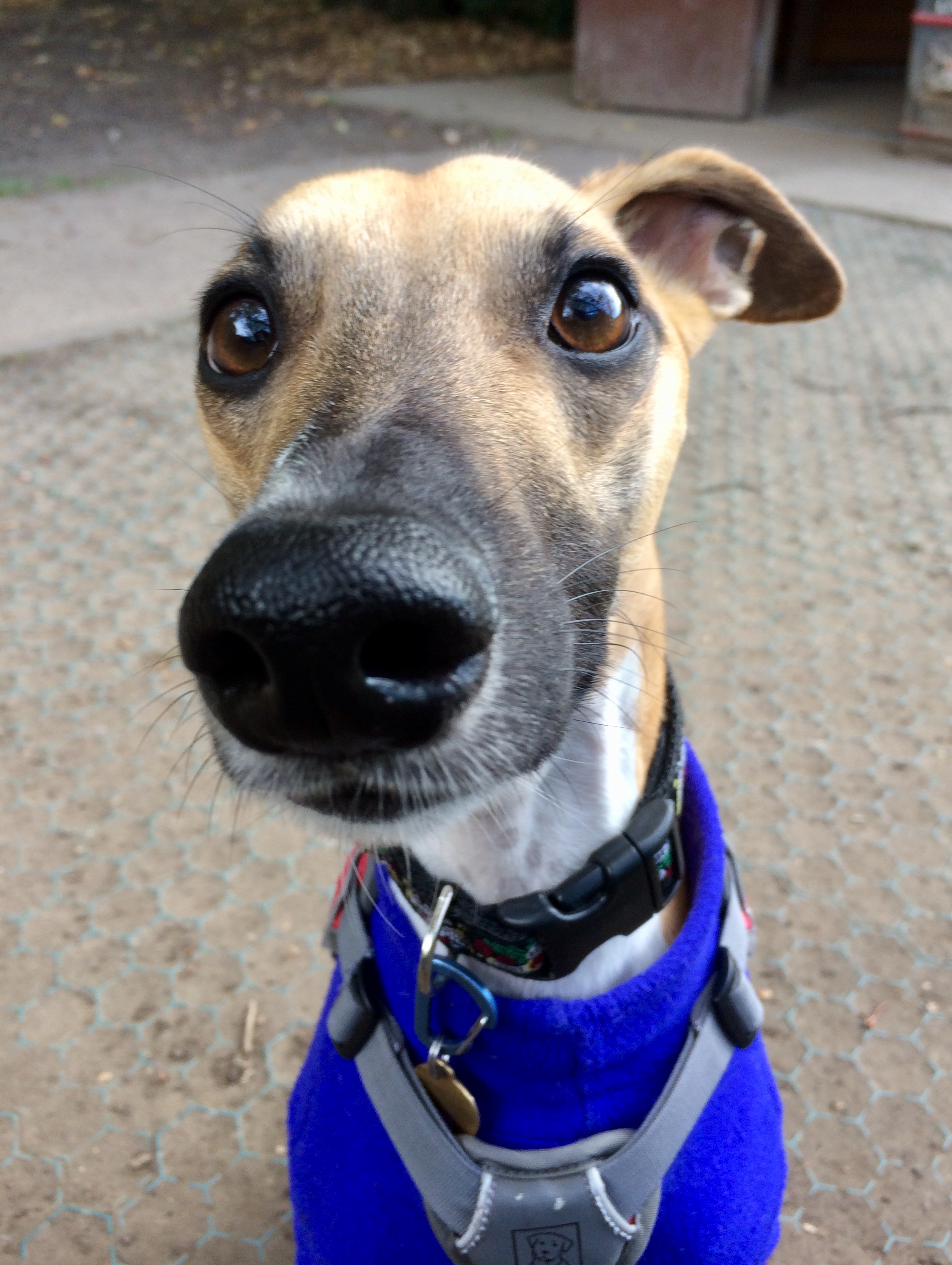
Indy (Image Credit: Charlotte Frearson)
Indiana ‘Indy’ Jones is a three-year-old whippet. He lives with his humans Charlotte Frearson (UCL Institute of Archaeology) and Elena Jones (British Museum) in London.
Indy started his archaeology career accompanying Charlotte on digs as a therapy dog for the team, where they found that he was a natural digger. Indy has located many horse and cow bones (which he fortunately managed not to chew), as well as Victorian pottery. He has also shown new archaeology students how to dig holes (where they are not meant to be) and how to locate traces of ‘ancient foods’ below ground (he is very food motivated).
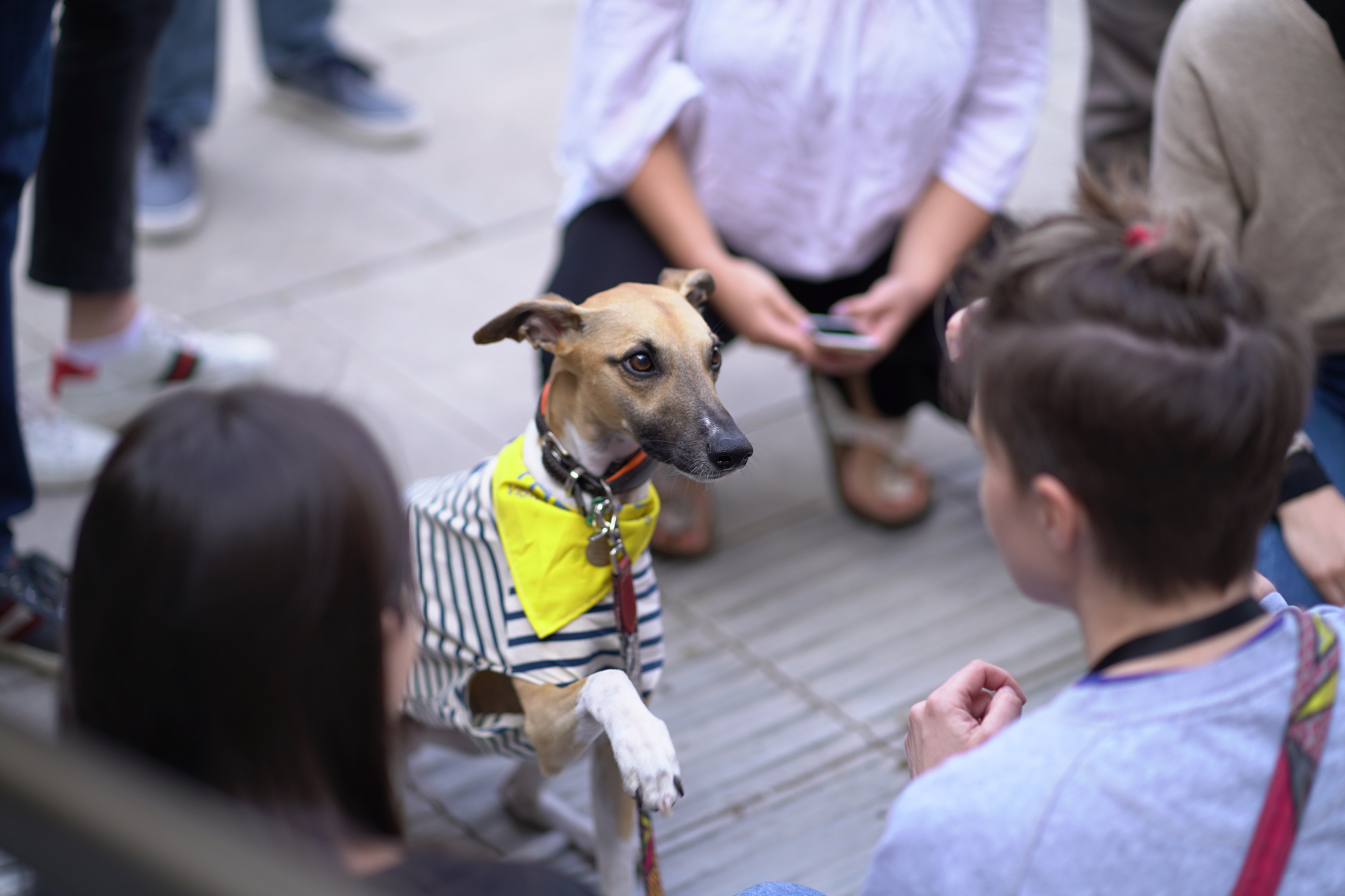
Indy working hard at his day job as a therapy dog at UCL Institute of Archaeology (Image Credit: Charlotte Frearson)
Indy is now a fully assessed therapy dog who works with staff and students from the UCL Institute of Archaeology. His main roles include de-stressing students throughout the year (but especially around exam time) and taking staff and students for walks around the surrounding parks and gardens.
Indy’s next project will be in Highgate Wood (an ancient woodland in North London) in the summer of 2020 – hopefully Indy can help find, and avoid, the rumoured plague pit there.
Fabel and Cassidy
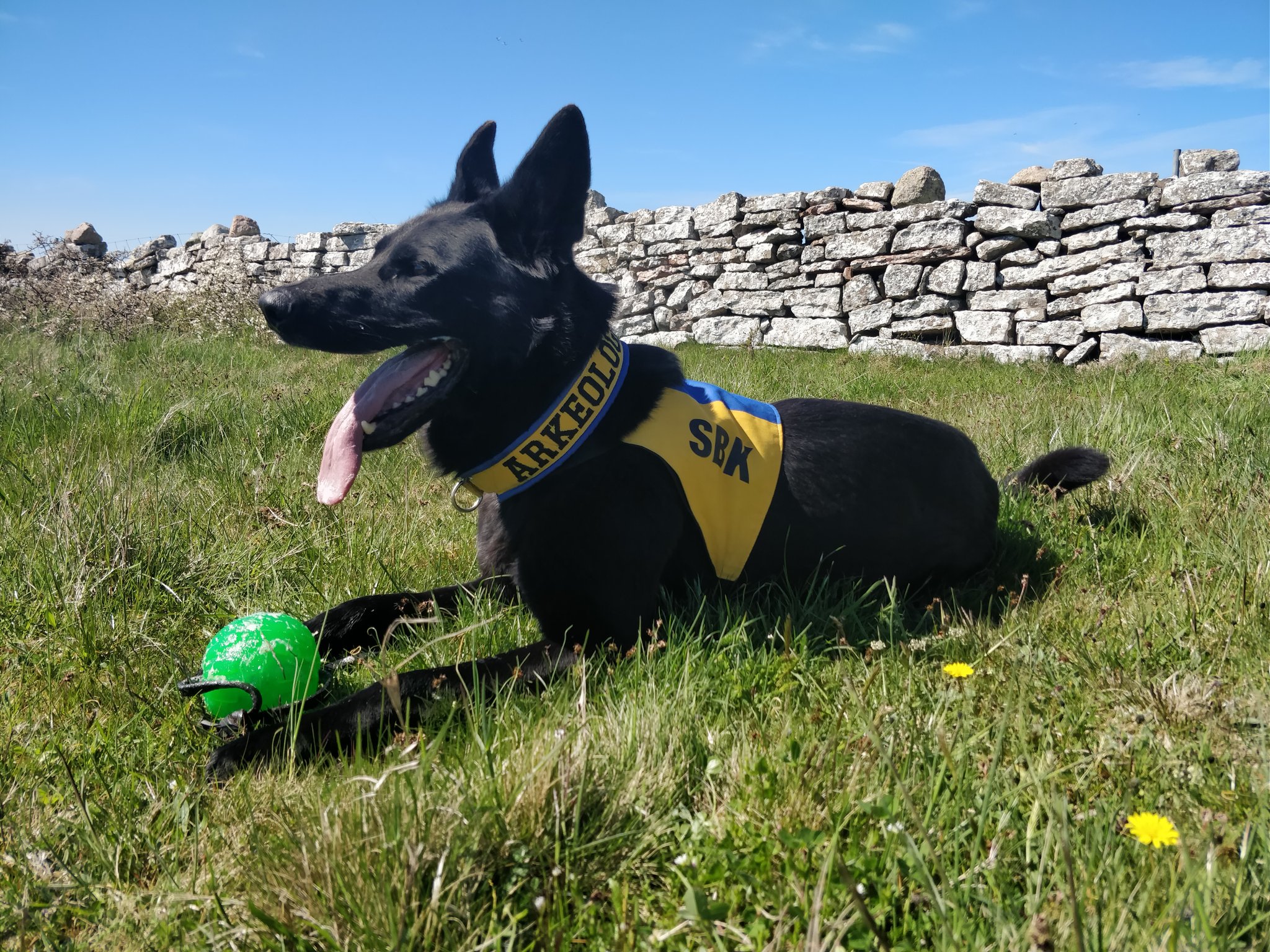
Fabel with his favourite green ball (Image Credit: Sophie Vallulv)
Fabel is a German shepherd specially trained to locate human skeletal remains. He lives in Sweden with his handler Sophie Vallulv and his other canine friends.
Fabel started detection training at about seven months old and began working a year later. He is trained to lie down when he finds the scent of human remains; his ability to sniff out human bone can be affected by temperature and weather, but astonishingly Fabel has successfully detected bones at 1.5 metres below ground.
He is Sweden’s – and most likely the world’s – first and only scientifically tested archaeology dog. He is trained to tell the difference between animal and human bones with an accuracy of 94.2% and his handler even wrote their master’s thesis on using a dog as a tool for finding graves.
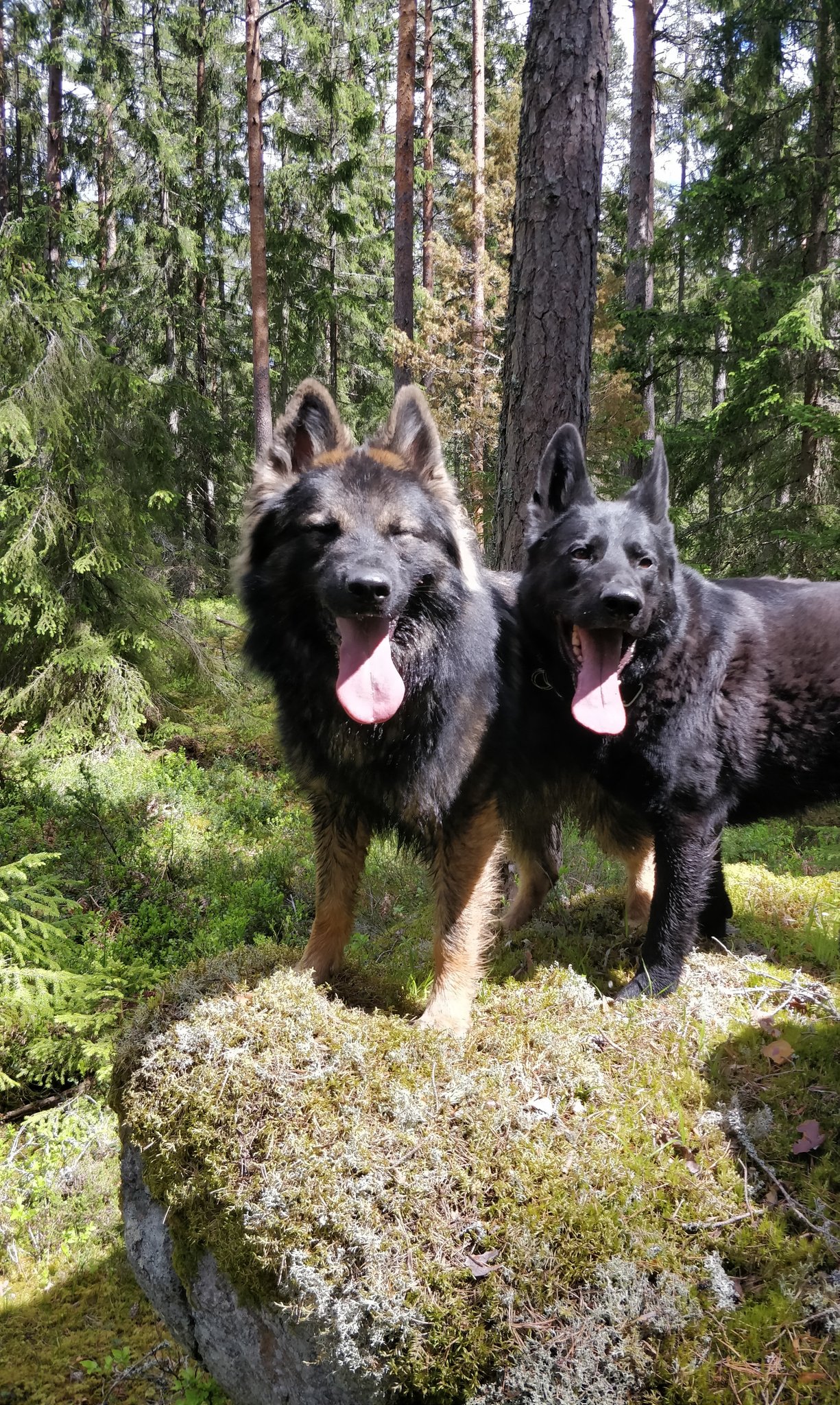
Cassidy (left) and Fabel (right) (Image Credit: Sophie Vallulv)
Fabel has an impressive catalogue of digs on which he’s worked, including a 17th-century silver mining site and an Iron Age ringfort with remains from the 5th century AD, some of which Fabel detected himself.
Sophie is currently conducting tests to determine the oldest bones Fabel can detect, whilst also training Fabel’s friend Cassidy to also be an archaeodog.
Goodbye, Bryn
Farewell Bryn . . . you will be missed by all https://t.co/lfFqZFJUvu pic.twitter.com/lNSc2kacfL
— Ness of Brodgar Excavations (@NessofBrodgar) August 15, 2019
Finally, we pay tribute to Bryn, the canine protector of the Ness of Brodgar prehistoric site in Orkney, who sadly passed away in 2019. Site director Nick Card’s pooch was known as the real director of the Ness, as he kept a watchful eye over the coming and goings of the world-famous dig which attracts thousands of visitors every summer.
Those who visited the Ness will have likely seen Bryn in his favourite spot by the store for the diggers’ sample buckets, or greeting diggers as they began their morning shifts. If you weren’t lucky enough to mtet Bryn, you can give him a virtual pet using the Sketchfab model below.
Have these dogs inspired to go on your own digging adventure? Click here to find an event near you.
