Archaeological Discoveries from Scotland’s 2020 Summer Dig Season Reimagined

A medieval gravestone, servants’ accommodation and a “magnificent” moat have been uncovered and brought to life by three digital artists
Much of this year’s community-led archaeological activities were postponed or cancelled due to COVID-19. However, several groups managed to resume their work with safety regulations in place when restrictions eased.
We’ve captured these moments through our Scotland Digs Digital campaign, which gathered online and offline events for members of the public, as well as providing live updates from groups across the country with the #ScotlandDigsDigital hashtag.
We’ve now revealed a collection of some of the most intriguing finds from the summer, which have been digitally recreated by artists, designers and illustrators based in Scotland.
450-year-old Gravestone
In July, the Kirkmichael Trust in the Highlands announced that they’d uncovered a 450-year-old gravestone, possibly the oldest dated gravestone ever recorded in the Black Isle. Using a surveying technique called photogrammetry, they confirmed that the weather-worn inscription on the slab reads “5th of February 1577” and it commemorates “IHON MAKOILLICH”, or John MacCulloch.
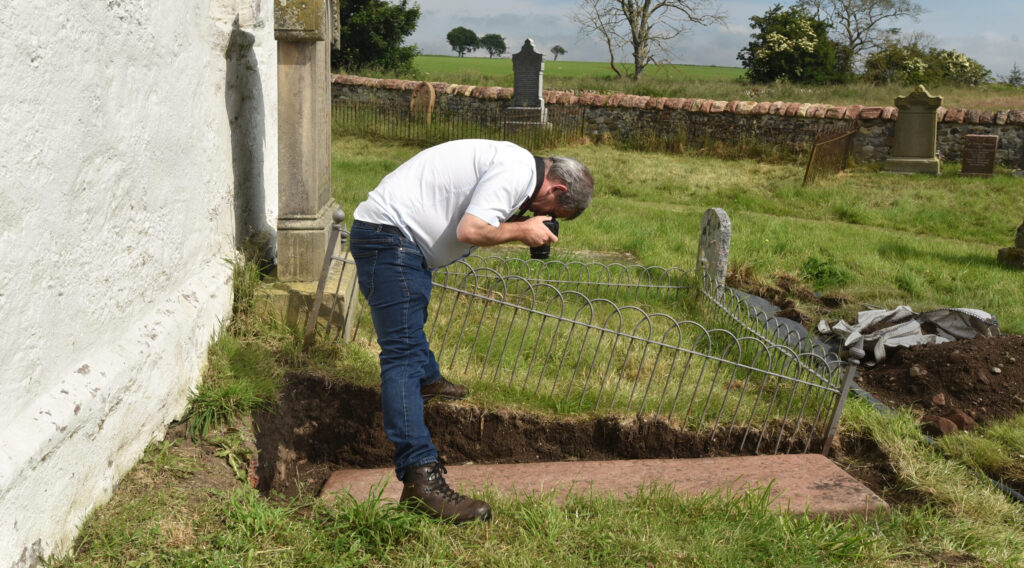
During the summer dig season, the Kirkmichael Trust confirmed that they’d uncovered a grave slab from 1577 using a surveying technique called photogrammetry and shared their findings as part of the Scotland Digs Digital campaign (Image Credit: Andrew Dowsett)
The comic (above) by Stirling-based artist Li Caswell-Sou FSAScot reimagines the stone carver at work in 1577 and a blind child learning through the tactile nature of the carved stone. The scene mirrors the Trust’s own encouragement of visually impaired people in the local community to experience their newly carved medieval stones by touch.
Built in the early 1400s, the Kirkmichael buildings had to be rescued from dereliction and collapse by the local community working through the Kirkmichael Trust. They are now recording, repairing and re-erecting broken gravestones, researching the families behind all the older stones and putting their stories on their website, fixing the dykes and providing essential maintenance.
Victorian Servants’ Accommodation
When COVID-19 restrictions were first lifted, the Edinburgh Archaeological Field Society continued their excavation of the servants’ accommodation (known as the ‘Cottages’) at Cammo Estate, which was once home to one of Edinburgh’s grandest mansions.
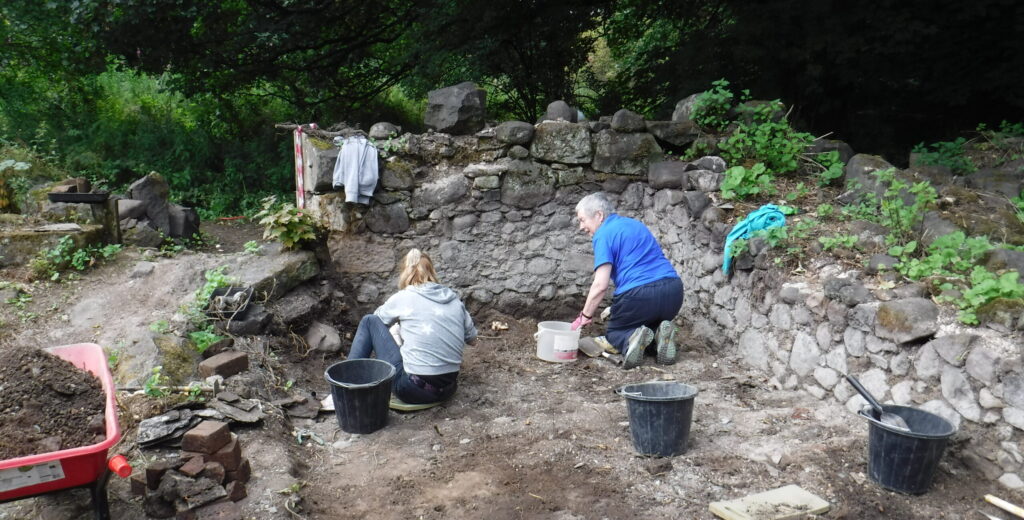
During the summer dig season, the Edinburgh Archaeological Field Society continued excavating Cammo Estate’s servants’ accommodation and shared their progress through the Scotland Digs Digital campaign (Image Credit: Joyce Herriot)
The volunteers have uncovered items including tonic and perfume bottles, false teeth, and cooking equipment which may have belonged to the 70-year-old housekeeper/cook, Margaret Wright, who was left behind when the family from the mansion went off on a world tour around 1911; a scene which has been reimagined by Miranda Stuart, a Glasgow-based illustrator and designer.
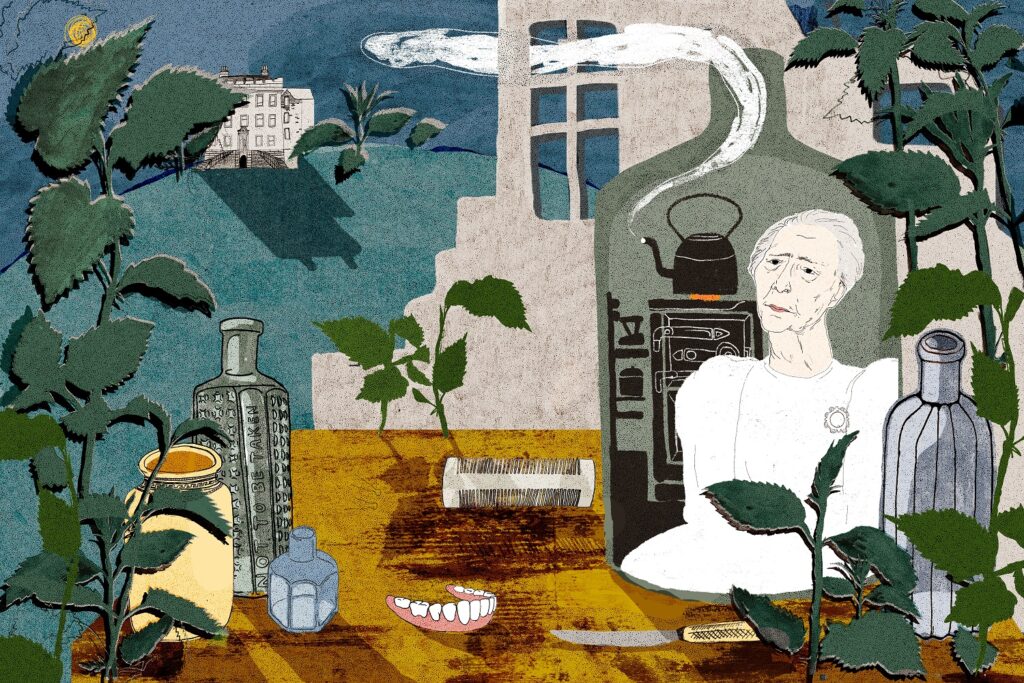
As part of the Scotland Digs Digital campaign, illustrator and designer Miranda Stuart has reimagined a scene from 1911 at Cammo Estate’s servants’ accommodation based on finds made by the Edinburgh Archaeological Field Society during the summer dig season (© Miranda Stuart 2020)
The Society plans to continue excavating once it’s safe to do so and members of the public will be welcome to arrange a visit either as a volunteer or by signing up for a “mini tour”.
A “Magnificent Moat”
In Orkney, volunteers were excavating the Hall of Clestrain when they uncovered new details about the birthplace and family home of John Rae, a 19th-century surgeon who helped map the Arctic coast.
According to Andrew Appleby, President of the John Rae Society, they discovered that “the moat that went around the Hall was a far greater feature than was ever imagined” and that it contained bird bones which hint at John’s wild diet and sherds of rare spongeware pottery that he may have used.
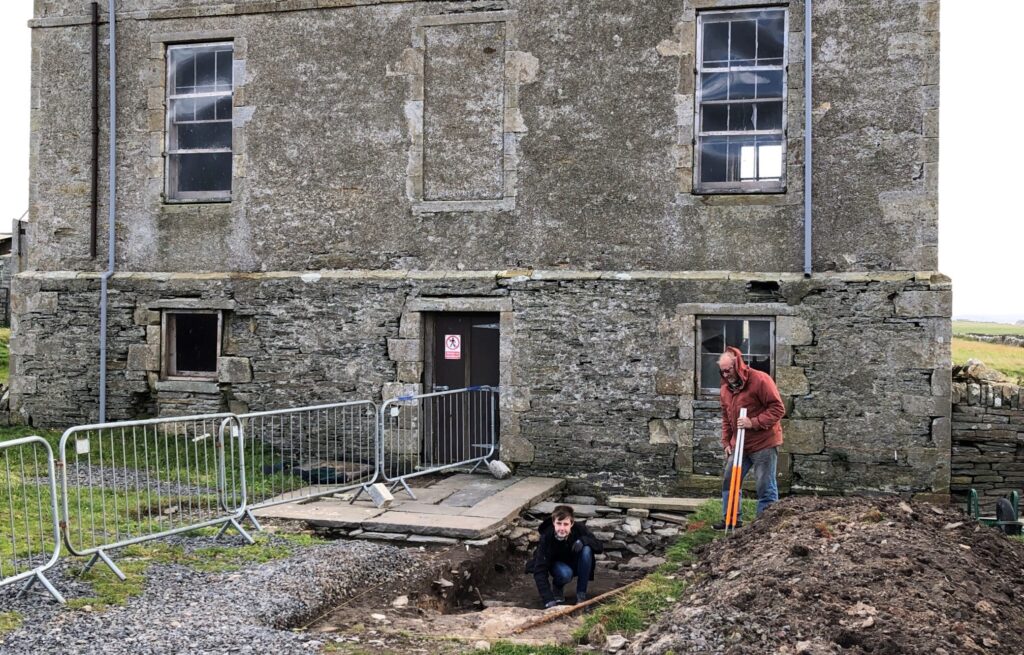
During the summer dig season, the John Rae Society uncovered new details about the famous Orcadian’s childhood and shared their progress through the Scotland Digs Digital campaign (Image Credit: John Welburn ABIPP)
The young John loved to go shooting, fishing and sailing; an education that would serve him well while living off the land in the Arctic with the help of the First Nations, Inuit, and Métis people.
In the scene by Sara Julia Campbell, an Edinburgh-based illustrator, John’s future is reflected in a puddle while playing in the courtyard with two of his older sisters, Janet Love (aka Jessie) and Marion Sibbald, and his mother, Margaret Glen. Discoveries which have been referenced in the illustration include the moat, a large horseshoe, the birds that John may have hunted, and the pottery.
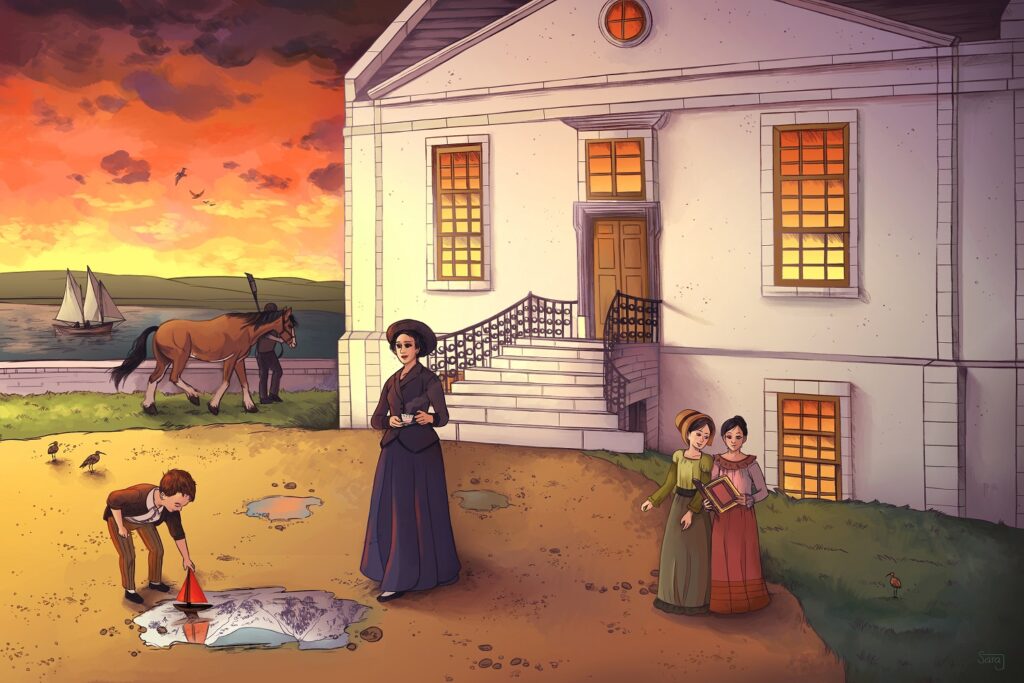
As part of the Scotland Digs Digital campaign, illustrator Sara Julia Campbell has reimagined a 19th-century scene from the Hall of Clestrain based on finds made by the John Rae Society during the summer dig season (© Sara Julia Campbell 2020)
The Society carried out urgent repairs after purchasing the Hall in 2018 and is hoping to turn it into a visitor centre and community resource.
Dr Jeff Sanders, Project Manager at the Society of Antiquaries of Scotland’s Dig It! project, said:
“Scottish archaeology is all about discovering Scotland’s stories and these are the chapters of people’s lives that we sometimes forget about, but that archaeology is uniquely placed to write. Scotland’s Archaeology Strategy emphasises that remains, such as the ones that have been uncovered this year, connect us to the people in the past and we believe that the work of these groups and digital artists have helped to strengthen that connection this summer.”
Amy Eastwood, Head of Grants at Historic Environment Scotland, said:
“The Scotland Digs Digital campaign was a fantastic way to engage people with Scotland’s heritage while sharing stories and updates from the archaeology community during a time when a lot of archaeological work throughout the country was put on hold.
“We are pleased to support the invaluable work being carried out by archaeology groups throughout the country and encourage members of the public to take part in open days, events and tours to find out more about these exciting discoveries and how they help our understanding of Scotland’s past.”
It’s hoped that groups such as the Kirkmichael Trust, EAFS and John Rae Society can once again welcome members of the public to sites across the country with free tours, open days and volunteering opportunities in 2021.
For more information, visit DigItScotland.com/Scotland-Digs

Dig It!, which advertises archaeology events for members of the public throughout the year, is coordinated by the Society of Antiquaries of Scotland and primarily funded by Historic Environment Scotland.
Header Image: © Li Caswell-Sou 2020
