4,000 Years of Archaeology On Foot
The remains of Scotland’s past often lie in wild open spaces, but you don’t always have to drive for miles to find these stories.
In fact, we know of some hidden gems that are just a hop, skip and a jump away from seven of Scotland’s busiest hotspots. Whether you’re a lifelong resident or a tourist for the day, we encourage you to lace up your walking boots or put on your bike helmet and check out our top picks of lesser-known sites in some of Scotland’s biggest towns and cities.
Aberdeen
Baron’s Cairn near Tullos is one of four large stone cairns on the gravel ridge of Tullos Hill which form the remains of a significant Bronze Age cairn cemetery, probably dating to the early 2nd millennium BC (meaning they’re over 3,000 years old).
An Ordnance Survey trig point marks the summit of the cairn, now damaged due to the passage of time and the construction of a look-out point during World War II. There has never been an archaeological excavation of this cairn but it may mark the burial place of a high status member of Pictish society.
The site’s elevated position offers views across the River Dee towards the city centre, and eastwards towards Nigg Bay, taking in both Aberdeen’s industrial and maritime heritage.
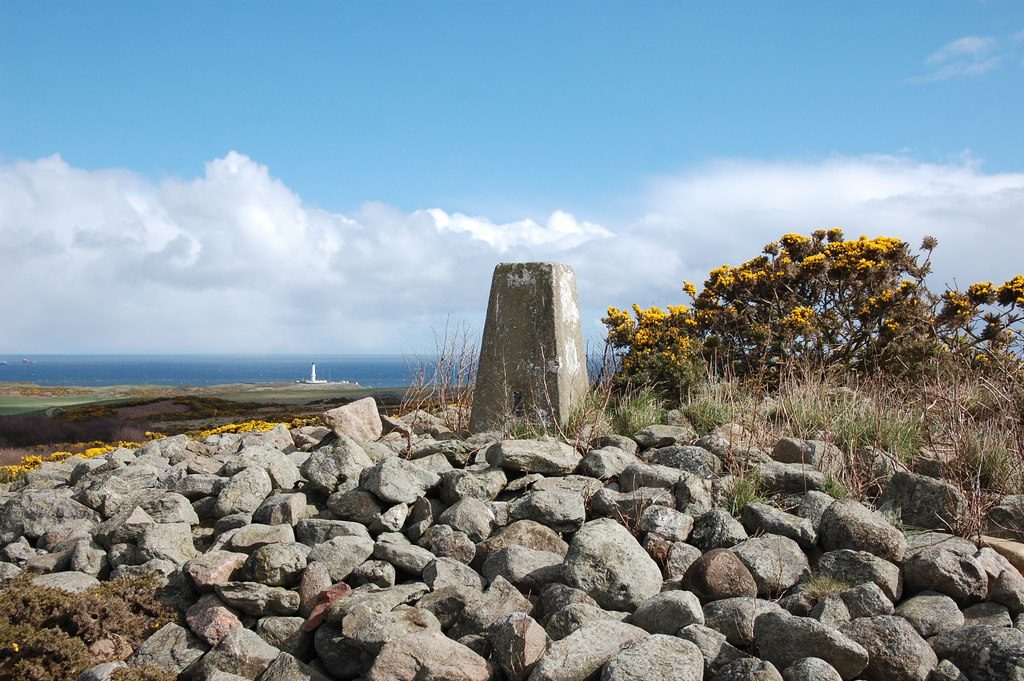
Baron’s Cairn © Bill Harrison (CC-BY-SA/2.0)
Dundee
Dundee Law is an ancient hill formed by prehistoric volcanic activity. Its 572-foot peak is the city’s most distinctive landmark and the spectacular views from the summit extend as far as 45 miles away to Fife, Perthshire and the Sidlaw Hills to the north.
Due to its lofty location, it’s unsurprising that the site has been a defensive point in Dundee for millennia. An Iron Age hillfort once existed here and 3,500-year-old prehistoric graves (dating to about 1500 BC) as well as 1,900-year-old Roman pottery (dating from the 1st century AD) have been uncovered at the site.
The most notable find, a cup-shaped steatite lamp found during the construction of the war memorial now atop the hill, can be seen in the city’s McManus Galleries, and a group of vitrified stones (melted to a point where they form a glass or glaze) said to be from the Law are housed in the same museum.
Edinburgh
There have been several town walls around Edinburgh since the 12th century when it became a royal burgh, though the first building is recorded in the mid-15th century, when the King’s Wall was constructed.
Less than 100 years later, construction began on the more extensive Flodden Wall, following the Scottish defeat at the Battle of Flodden in 1513, in preparation for an English invasion which never materialised. This was extended by the Telfer Wall after several decades.
The walls later became barriers to Edinburgh’s expansion. Roads and buildings like the University of Edinburgh’s Old College were constructed over crumbling sections of the abandoned walls. Part of the Flodden Wall that surrounds Greyfriars Kirk was even destroyed in what is believed to have been a freak lightning strike.
Today, the remains of the walls blend in seamlessly with modern buildings. The few fragments of the Flodden Wall that survive are protected monuments. The portion around Greyfriars Kirkyard is the most well known, but you can also view stretches of the old stones where Drummond Street meets the Pleasance, as well as on Forrest Road.

Flodden Wall © Kim Traynor (CC BY-SA 3.0)
Glasgow
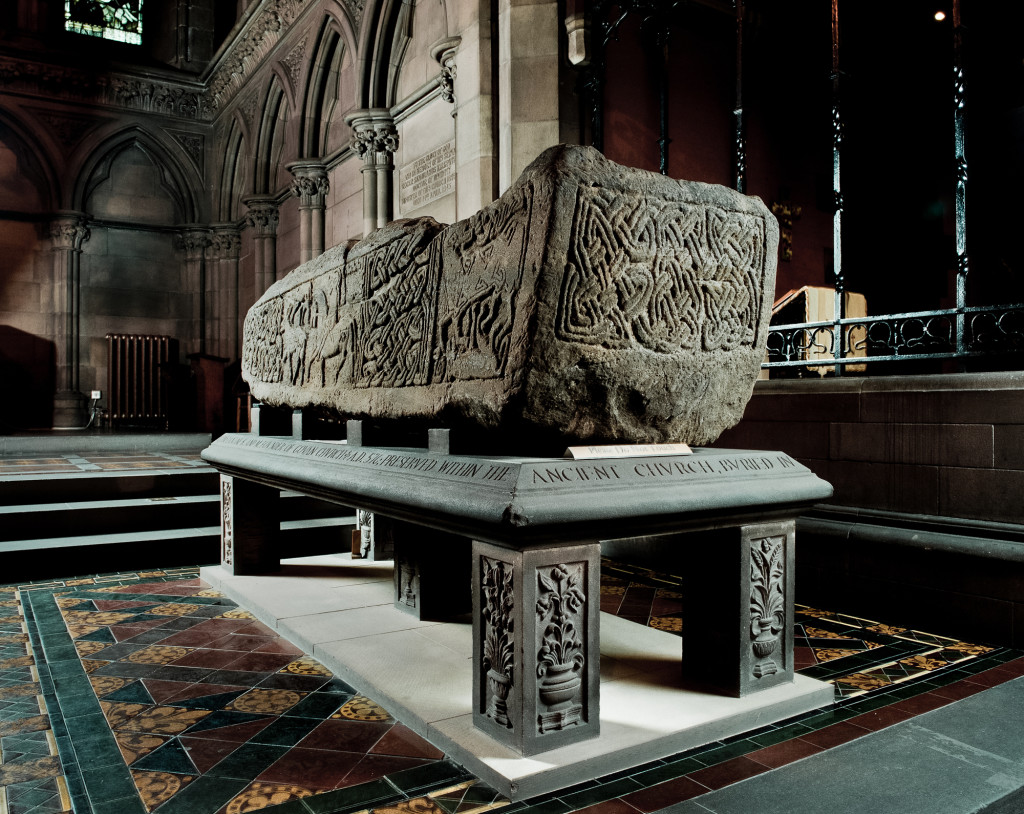
Along the banks of the River Clyde, Govan Old Church houses a unique and astounding collection of early medieval carved stones. Created almost 1,000 years ago (between the 9th and 11th centuries) to commemorate the rulers of the Kingdom of Strathclyde, the 31 monuments which make up the Govan Stones include beautifully carved crosses and cross shafts, and five magnificent hogback stones.
The Govan Sarcophagus, pictured below, is the only one of its kind carved from solid stone from pre-Norman, northern Britain. This astonishing collection is a must-see!
Inverness
The Knocknagael Boar Stone is a large Pictish stone carved around AD 600, featuring the image of a wild boar. Like many of Scotland’s symbol stones, its exact meaning or purpose is a mystery, but this allows the viewer to let their imagination run wild and make up their own story.
The stone is currently housed in the Highland Council Offices in the centre of Inverness.
Why not drop in during your lunch break and see a 1,500 year-old piece of Scottish history?
You’re such a boar!
This bristly #Pictish fella is known as the Knocknagael Boar Stone and you can find him at the @HighlandCouncil offices in Inverness. https://t.co/YxTmVHPVIN pic.twitter.com/cpUemEjOR1— Historic Scotland (@welovehistory) 18 August 2018
Lerwick
Fort Charlotte in the centre of Lerwick is a five-sided artillery fort, built in 1781 and named after the wife of King George III. There has been a military base on this site since at least 1652-3 during the First Anglo-Dutch War. It housed a garrison during the Napoleonic Wars and was later a base for the Royal Naval Reserve.
From 1837-75, it was used as the town jail and courthouse and later a custom house and a coastguard station. Fort Charlotte never saw any hostile action, and not one of its many guns was ever fired in anger. It’s now the base for Shetland’s Territorial Army and is open for visitors to explore freely.

Stornoway
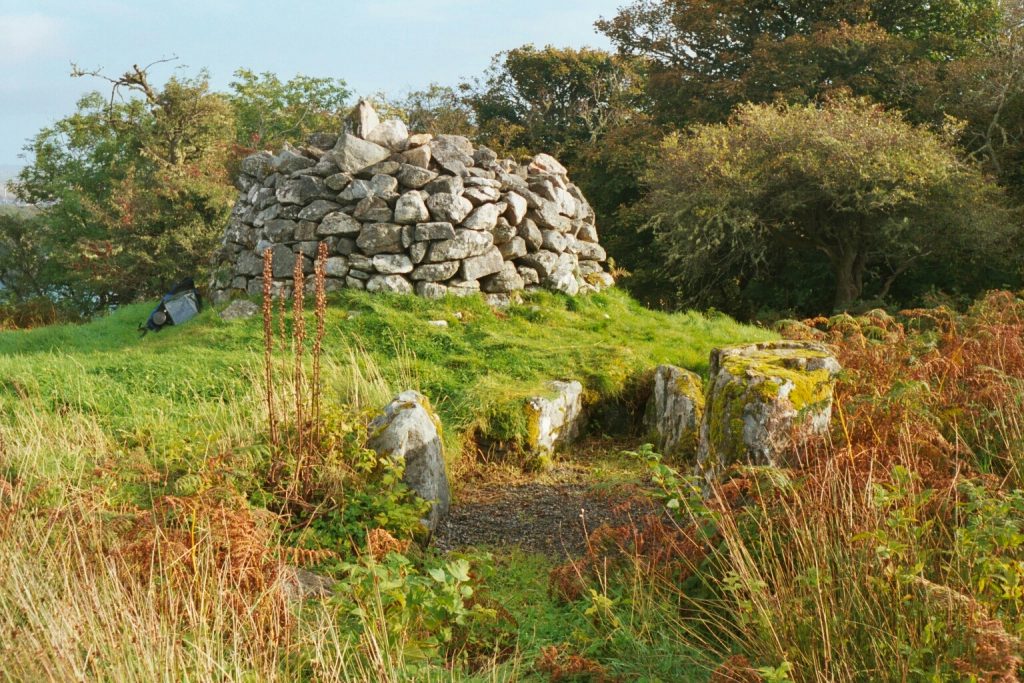
The remains of Cnoc na Croich chambered cairn are part of Lews Castle park, less than an hour’s walk from the centre of Stornoway. This significant funerary site once housed Stornoway’s prehistoric dead.
The circular stone structure in the background of this photo is not part of the cairn, but rather the remains of a modern cairn built in 1902, formed using material from the prehistoric structure. This modern cairn, which originally supported a flagpole, is on the supposed location of the medieval gallows which gives the hill its name, Cnoc na Croich – Gallows Hill.
Just three stones from the original cairn survive, but you can check out an illustrative reconstruction of it by artist David Simon here.
This article is not intended as an exhaustive list and instead is aimed to offer a taste of lesser-known archaeology in your area. More great sites in other areas of Scotland are on their way to our Discover page!
Not close to these seven locations? Check out CANMORE or Pastmap for archaeology near you.
