Burghead, the Picts and the Battle of Dun Nechtain (English)
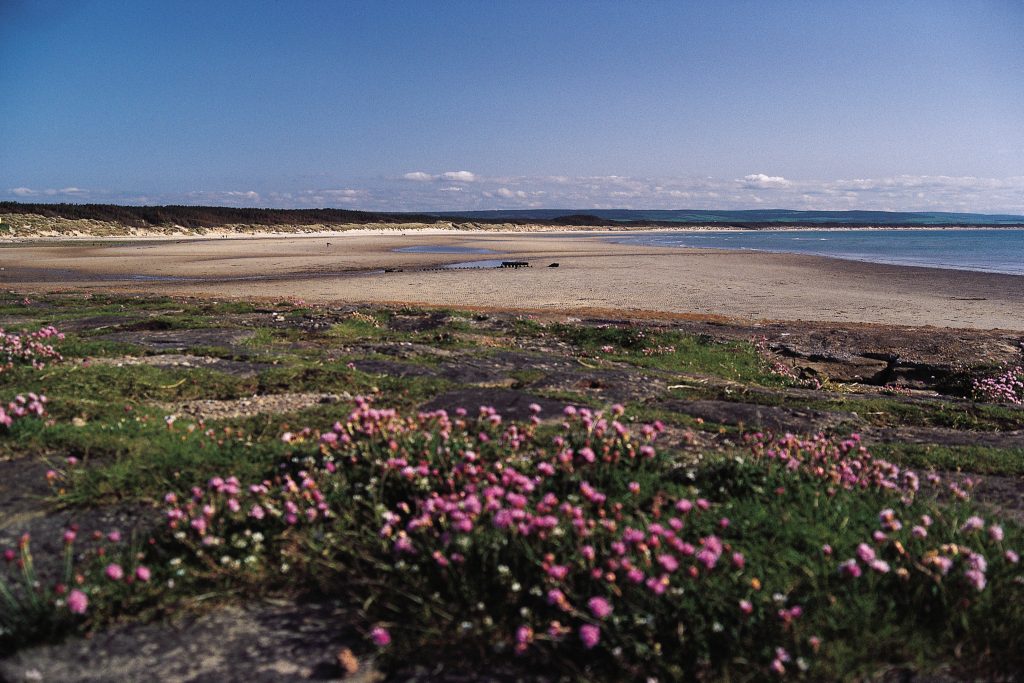
Bannockburn, Eat Your Heart Out
Almost everyone knows the importance of the Battle of Bannockburn in Scotland’s history, when Bruce’s men sent a huge English army home to think again against all odds in 1314. Songs, writings and folk tales by the hundred circulate about the victory.
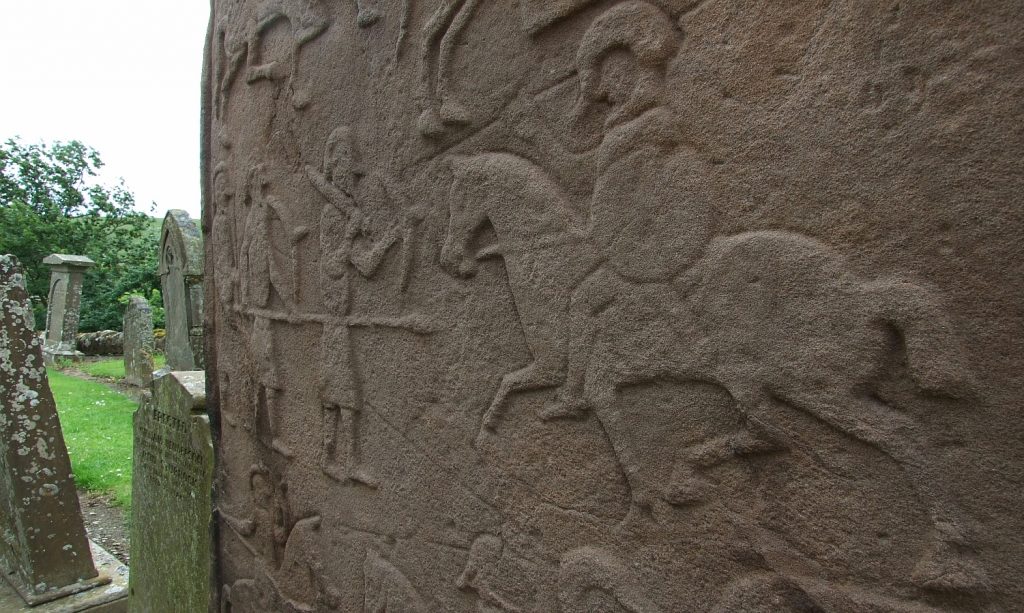
However, most of us haven’t heard of the mighty battle that took place 600 years earlier, when the Picts expelled the invading Northumbrians from the south at the Battle of Nechtanesmere (from Old English) or Dun Nechtain (from Gaelic). Without this Pictish victory in the year 685, it’s no exaggeration that there would have been no Scottish nation to fight for in 1314 – and thus no Scotland to speak of today.
Read in Scots – Burgheid, the Pechts and the Battle o Dun Nechtain
Picts, Calidones and Verturiones
So, who were these Picts? The word ‘Picts’ comes from the Latin Picti and is first attested to around 297 AD. It was a catch-all term used by classical writers to refer to the various groups who lived beyond the Forth-Clyde line across central Scotland, taken as the southern-most boundary of the Pictish realms. Fortunately, from written sources, we even know a few of the names of individual Pictish provinces and peoples, such as the Calidones or the Verturiones – who we’ll now stay with.
Most significant among the Pictish tribes who fought at Dun Nechtain were the Verturiones of the kingdom of Fortriu, concentrated around the modern region of Moray. By the mid-7th century, they had come to dominate the Pictish region, and were big players in the land that would come to be called Scotland. It was a King of Fortriu, King Bridei III, who led the Picts to victory over the Northumbrians in 685 after all. Then there’s the imposing coastal fort at Burghead – which should leave nobody in any doubt as to the power of this once mighty tribe.
Burghead – The Mightiest Fort of Them All
Burghead was home to the mightiest Pictish fort that we know of. It was three times bigger than any comparable site, and more elaborate in layout. To the east, triple outer ramparts divided the fort from the land beyond, and sea and stone protected the other three sides. Inside the walls, the fort was divided into an upper (thought to have been a royal or religious space) and lower (thought to have been the heart of the settlement) enclosure. In addition, the soft yellow sands of the nearby beach are thought to have served as a Pictish naval base.

Burghead Pictish Fort © Historic Environment Scotland
The Burghead (or Broch) Bulls
Nowadays, the Picts are perhaps best known for their magnificent carved symbol stones – and Burghead doesn’t disappoint. The ‘Broch Bulls’ are a set of 25 to 30 symbol stones carved with stylised bulls that were uncovered when the old fort was dug up to construct the harbour structure in the early 1800s. Sadly, most of them are lost, with only six surviving today. However, you can see the remaining examples at the Burghead Visitor Centre or Elgin Museum; there’s also one at the National Museum of Scotland in Edinburgh and one at the British Museum in London.
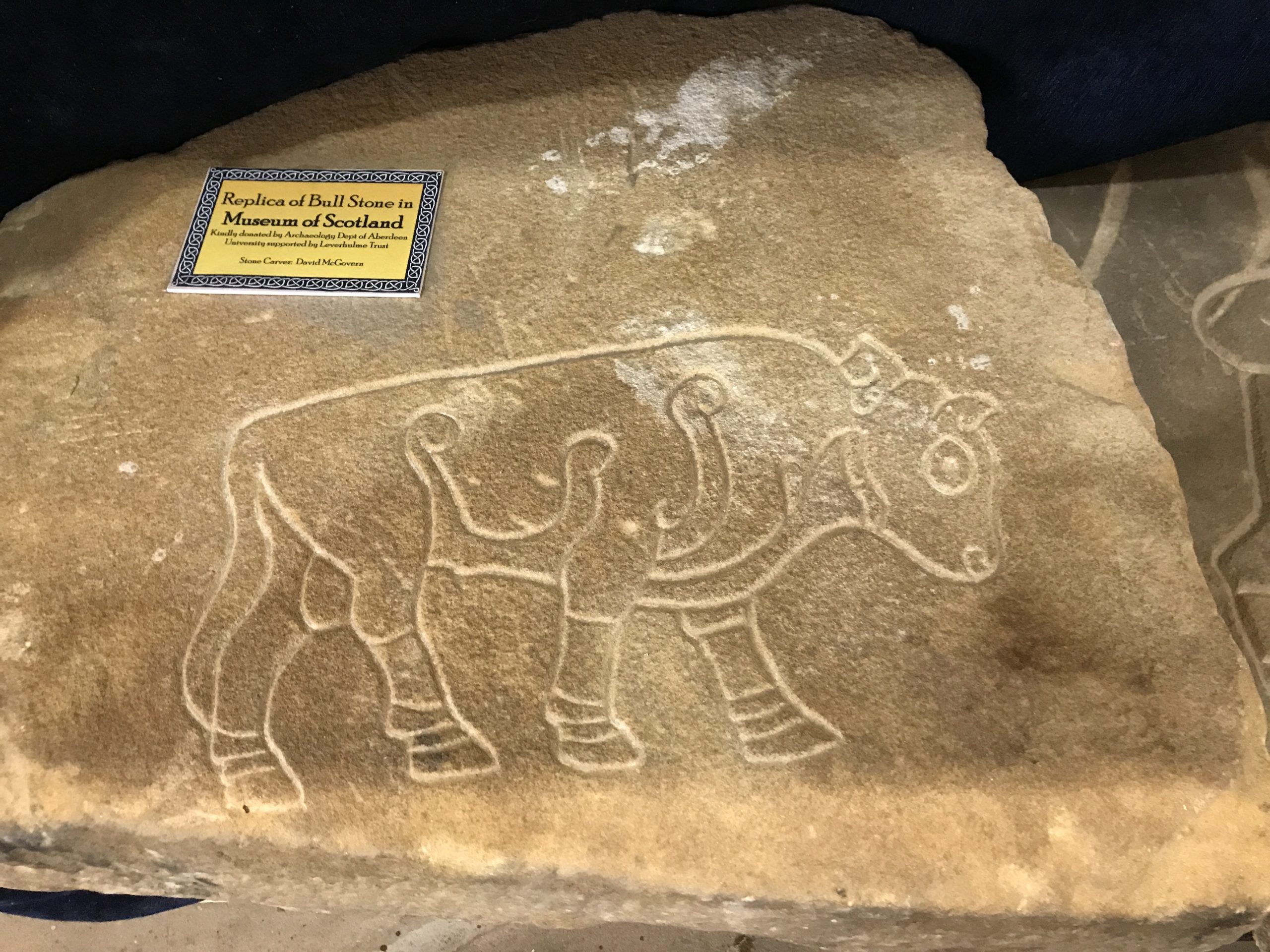
(Image Credit: Ashley Douglas)
Was the bull, whose carved representation has so far been found only at Burghead, a symbol of the Verturiones who lived there, signifying their might and power? Given our lack of meaningful written sources from the Picts themselves, perhaps we’ll never know.
By Ashley Douglas, a parliamentary reporter, translator and writer based in Edinburgh. Follow her on Twitter at @ashdouglasscot
Header Image: © VisitScotland / Paul Tomkins
