Centuries-Old Steading in Dumfries & Galloway Inspires at Scotland’s International Poetry Festival
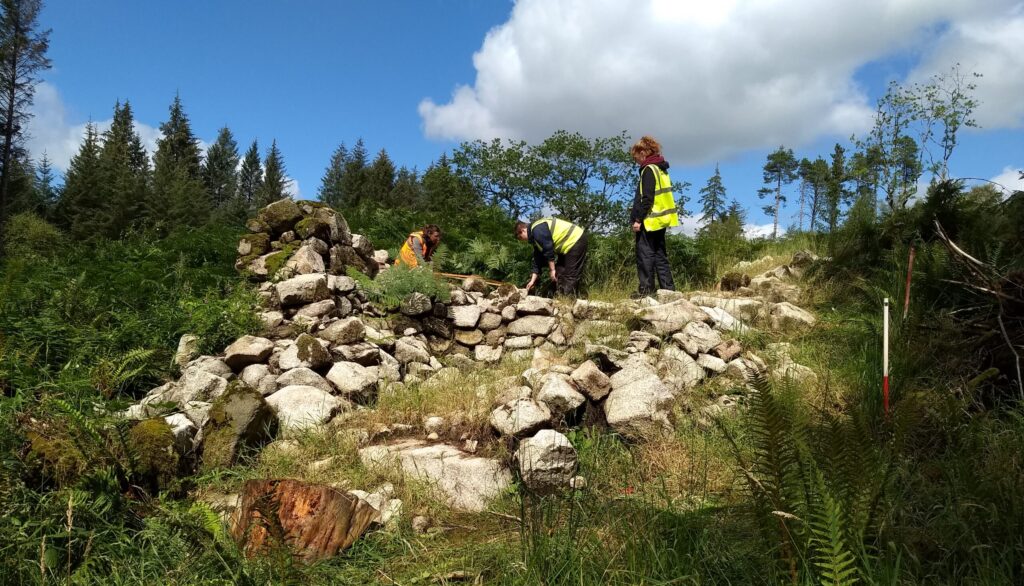
Remains of rural life from a remote ‘Raiders Road’ farmhouse affected by the Lowland Clearances have been brought to life in a new poem for StAnza, Scotland’s Poetry Festival.
In 2019, archaeologists and volunteers from the Can You Dig It (CYDI) community archaeology program investigated a deserted farmstead named Upper Gairloch along the Raider’s Road in Galloway.
Looking to showcase a fresh perspective on Scotland’s past during the pandemic, Dig It! commissioned Mae Diansangu to write a poem inspired by the site.
Diansangu is a spoken word artist and performer based in Aberdeen whose work centres on anti-racism, intersectional feminism, and LGBTQIA+ rights. They worked online with Claire Williamson, an archaeologist from Rathmell Archaeology and Project Manager for CYDI, who provided the details to help bring the poem to life.
An Abandoned Farmstead in Galloway
Mae was inspired by CYDI’s investigation of a deserted farmstead called Upper Gairloch along Raiders Road in Galloway. In use as a steading since the 17th century, the surviving remains consisted of a farmhouse rebuilt in the late-18th or early-19th century and a kiln barn of similar date, common across Scotland in the 1800s.
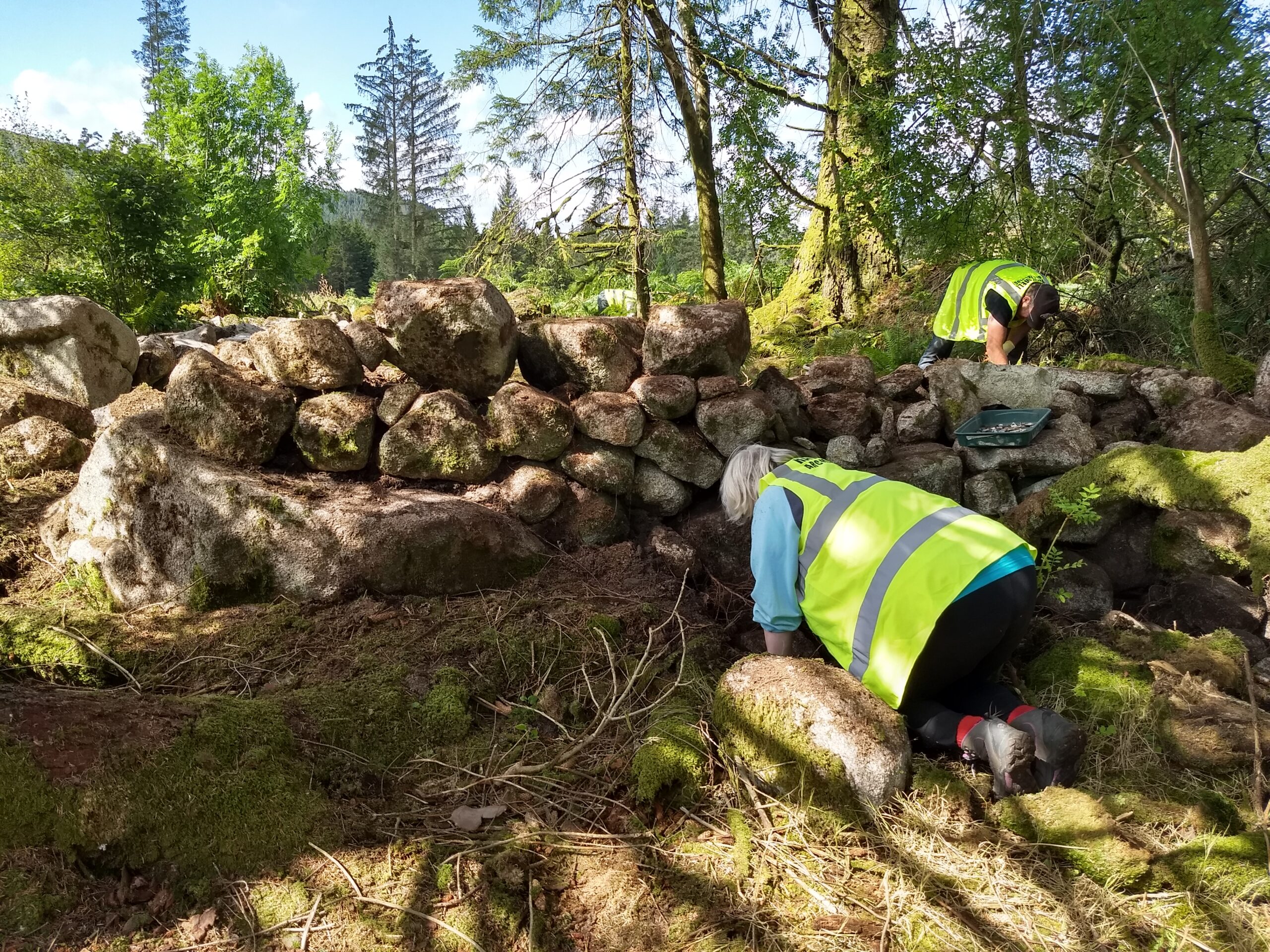
Clearing the farmstead of vegetation (© Galloway Glens)
The steading was abandoned at some point during the mid- to late 19th century during a period known as the Lowland Clearances with many rural settlements being abandoned at this time due to changes in land use. Estate owners incorporated land to make sheep farms which emptied a lot of farmsteads and resulted in a mass movement of people away from rural living.
This particular ruined settlement later became part of a larger sheep farm cared for by a shepherd named William Little, who used farm ruins as sheiling huts. Many such steadings, like the Upper Gairloch farmstead, survive today hidden in dense vegetation waiting to be uncovered.
Finds from the Excavation
The site is particularly special to the team as they were able to marry up the archaeological record with written sources, such as maps and census records, to piece together of the lives of the people who once lived here.
For example, a stylus was found on the site of the farmhouse which may have been used by the children of Elizabeth McQueen recorded in the census record of 1851.
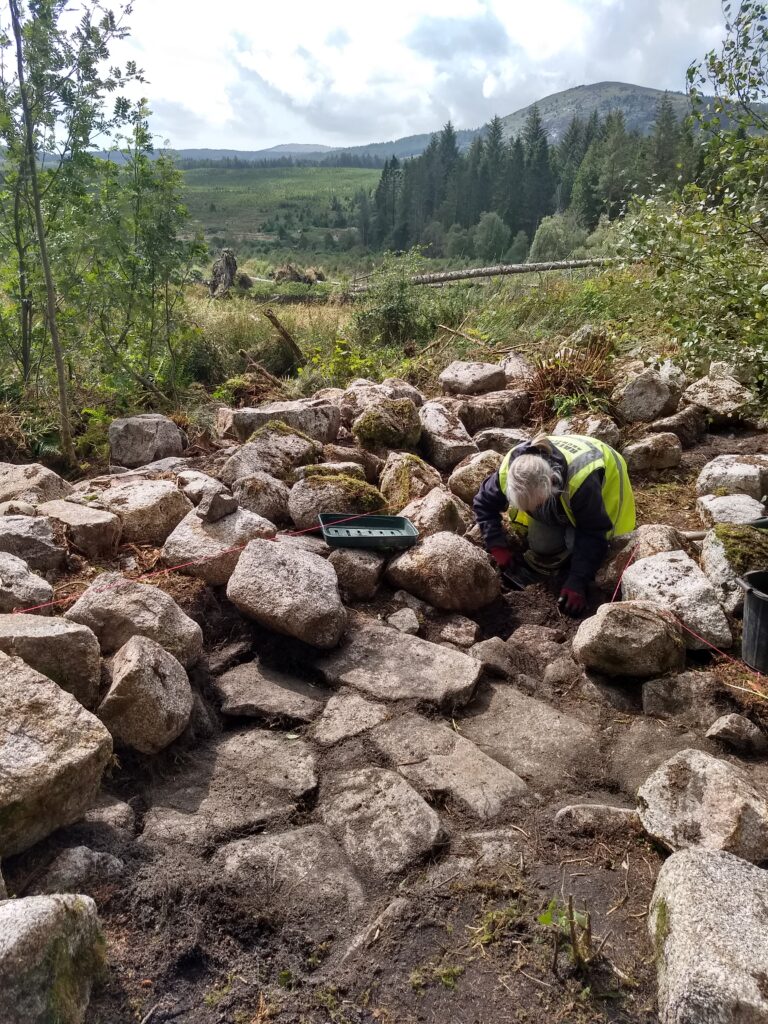
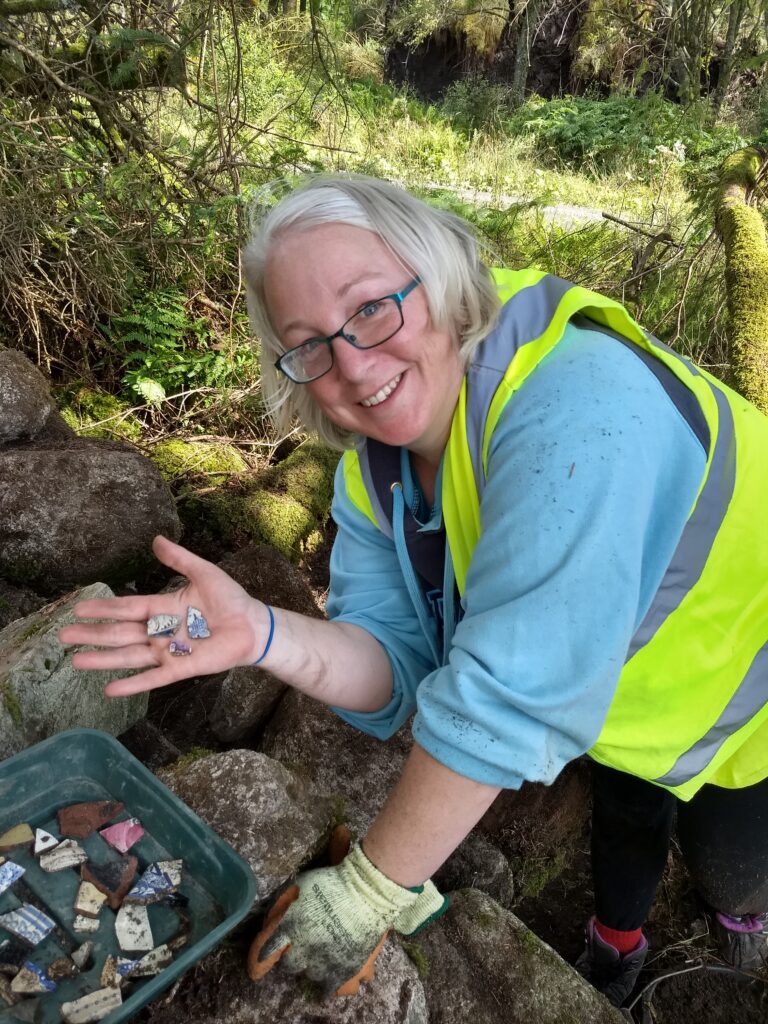
The floor of the remote 200-year-old farmhouse and a volunteer holding up pottery sherds found at the site (© Galloway Glens)
The earliest finds from Upper Gairloch were two sherds of ‘pearlware’ teacup and an ‘onion’ wine bottle, produced around 1800. As the only two items to be recovered from this early a date, it seems likely that they both represent items which had been carefully curated by the residents. Perhaps the teacup was part of a dinner set that had been passed down through the generations and safeguarded (for the most part anyway) before leaving with the family on their departure.
The Poem
In the poem, Diansangu used the site to reflect on the similarities between people today and people in the past who shared some of the same wants, anxieties and experiences across the centuries. Diansangu was inspired by the festival theme of “Make It New” and chose to write it in Doric, the Scots language spoken in the North East of Scotland around Aberdeen city and shire.
Diansangu’s poem, ‘nuhin new unner the sun’ was released in Doric and English to coincide with StAnza, Scotland’s International Poetry Festival (6-14 March 2021), which ran running as a hybrid (mostly online) festival.
Dig It! is coordinated by the Society of Antiquaries of Scotland and primarily funded by Historic Environment Scotland.
Header Image: © Galloway Glens
