Top Archaeological Sites on Barra (English)
Prehistoric cist burials, chambered cairns, standing stones, castles – you want it, Barra’s got it.
Allasdale Burials
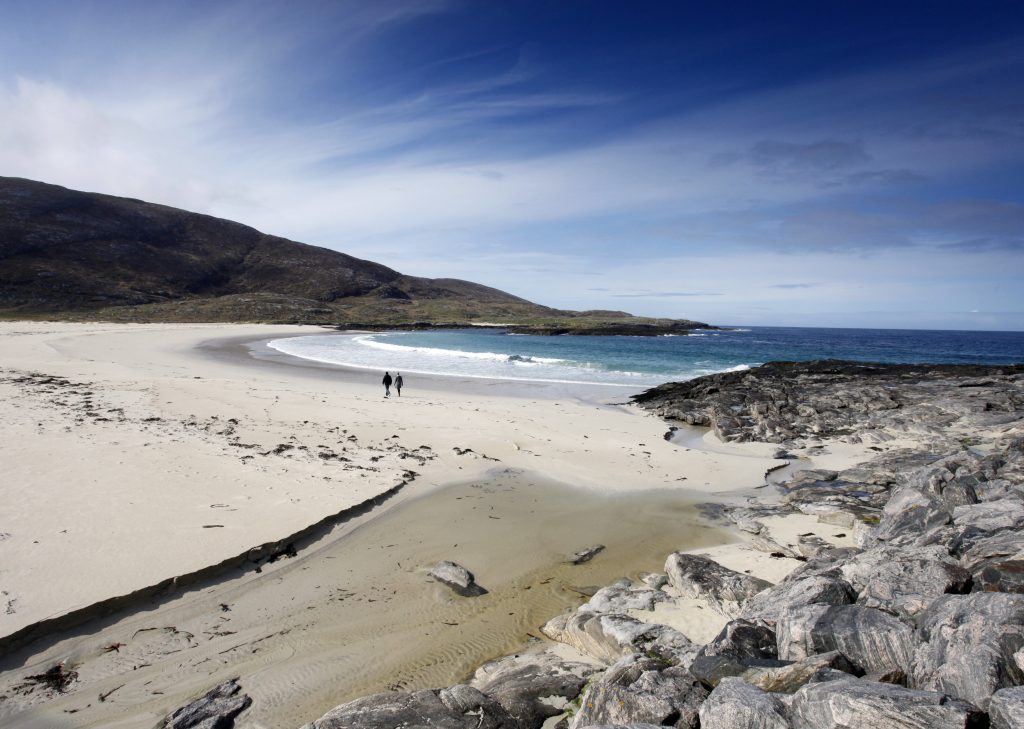
Forget the Caribbean, the “Barra-bean” is famed for its blue skies and white sandy beaches, (at least for part of the year!). However, this idyllic island setting also has a curious preservation paradox – strong winds can do the work of an excavator and uncover hidden artefacts, but they can just as easily blow fragile materials out to sea where they are lost forever.
This was what happened in 2005 in the sand dunes near the hamlet of Allasale, when archaeologists rushed to save four Bronze Age cists (stone-built coffin-like boxes) uncovered by a storm, which were found to contain four bodies buried in a crouching position. The remains of six more Bronze Age burials were excavated during another rescue operation at the site, which was visited by Time Team following storms in 2007.
On the plus side, the soft sand protects human remains perfectly when they’re buried deep enough, as there is much less danger of erosion like there is in the acidic soil found in much of Scotland. And so archaeologists found the perfectly preserved cist burial of a woman, also laid in a crouching position, who’d lived in Barra around 4,000 years ago.
At the same dig, the team also discovered a 2,500-year-old wheelhouse, built in the early Iron Age, with the doorway still intact. The wheelhouse, named after its central living area with rooms radiating off like the spokes of a wheel, was later re-occupied between the 3rd and 4th centuries AD, and again in the 7th and 8th centuries AD. A fragment from a cooking vessel found inside dated the dwelling to around 1,000 years after the cist burials were left in the sand, showing Allasdale to be a multi-period site occupied over thousands of years.
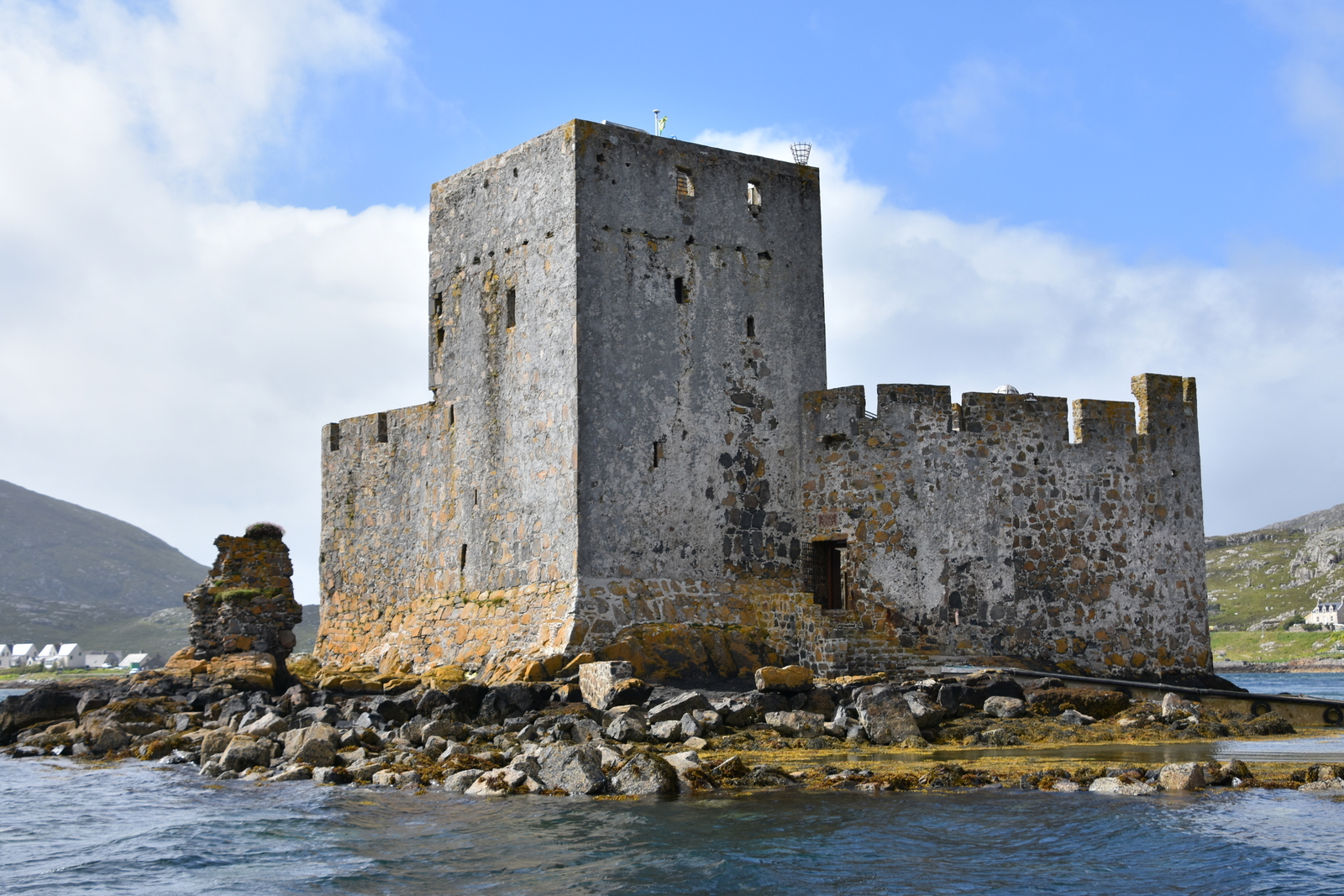
A Golden Find at Kisimul Castle
In 2001, excavation work took place at Kisimul Castle, also known as the ‘Castle in the Sea’, and a decorated gold object was recovered in the basement of the tower. Thought to be a lace tag from the early 12th century, it probably looked something like the one below and may have been used to prevent the ends of laces fraying.

A complete late medieval – early post medieval copper alloy lace tag dating late 15th – 16th century (Museum of London, CC BY-SA 4.0)
The castle you see today is between 500 and 600 years old with some more recent restorations, but archaeologists have also found evidence for prehistoric occupation of the site, including pottery, flint and cereal remains.
Tools and Games at Dun Cuier
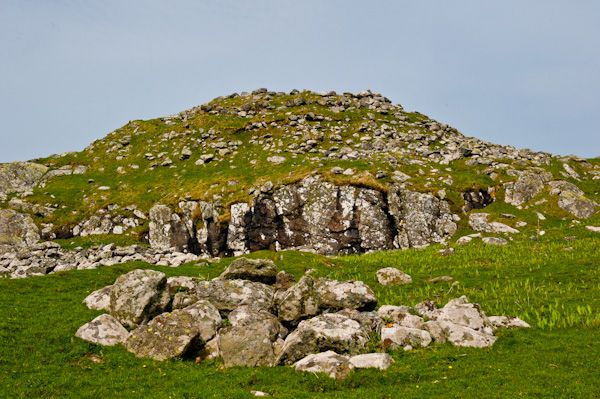
This massive roundhouse, also known as a galleried dun or broch, overlooks the sea on the north-west side of Barra. The main occupation of Dun Cuier occurred around 1,300 years ago, in the late Iron Age.
The finds, dated from around 1,700 to 1,400 years ago, tell us that this site had also been previously occupied by earlier settlement. Archaeologists have discovered pottery sherds, metal objects, bone combs, bone pins, stone tools, querns (a simple hand mill of two circular stones which are rubbed together to grind corn), and even gaming pieces similar to modern-day dice.
Kilbar’s Graveslabs
The site of Clann MacNèil’s 18th-century home and an important religious settlement, Kilbar (or St. Barr’s) was founded around 1,400 years ago. Today, the site is made up of three ruined medieval buildings (probably around 900 years old and later) within a burial ground. The medieval church here, like the island itself, is dedicated to the island’s mysterious patron saint, Saint Finnbarr or Saint Barr.
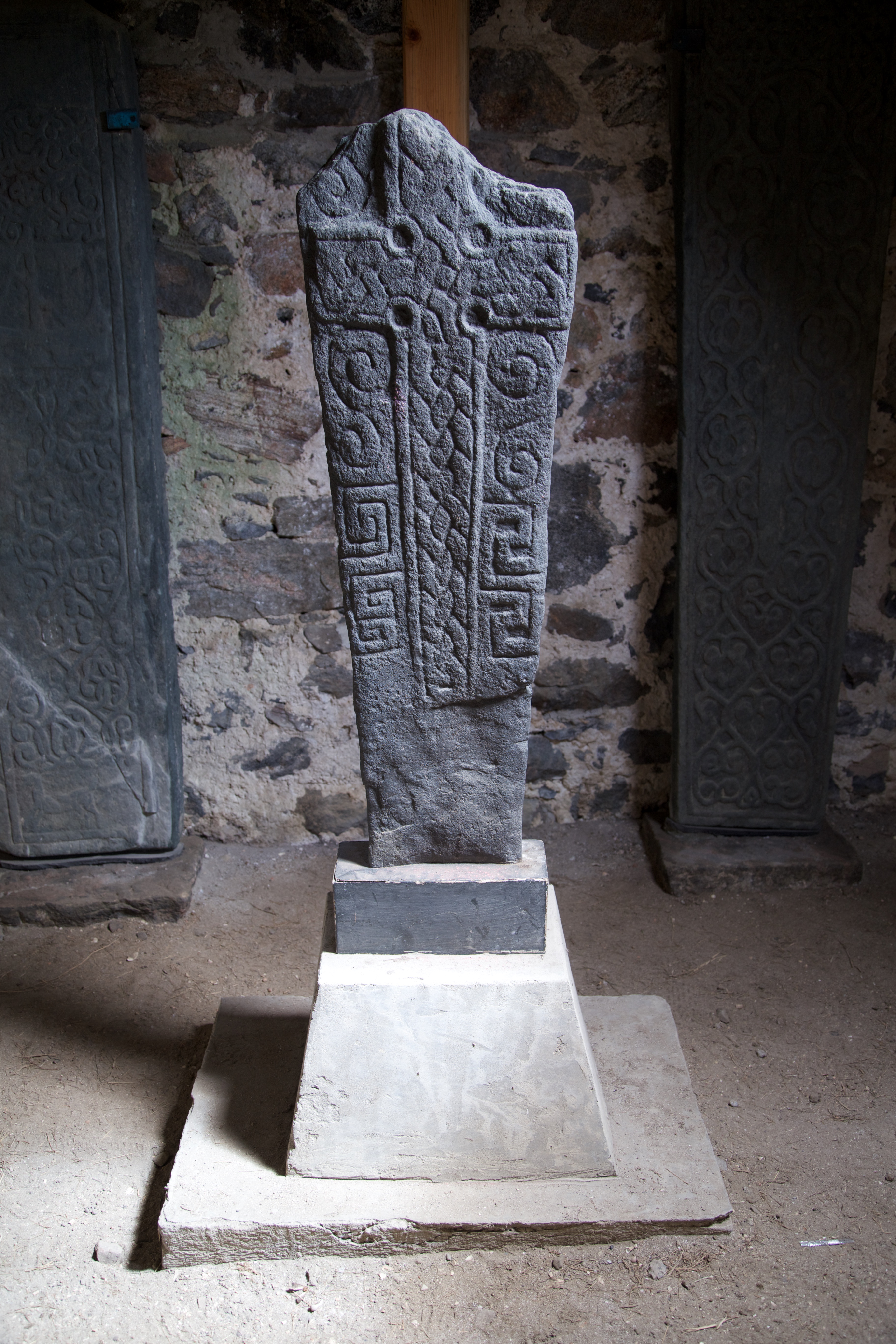
The site also houses four late medieval graveslabs, probably commemorating Clann MacNèil chiefs. The slabs are carved with swords and foliage with one bearing depictions of animals and a galley. It’s also home to a cast of Clach Chille Bharra, a striking 1,000-year-old cross-slab discovered at the site in 1865 (the original is now on display in the National Museum of Scotland).
Featuring a Celtic cross on the front and a runic inscription on the back, the cross-slab reveals the island’s Viking heritage as well as the mingling of Christian belief and Norse culture. According to the ancient Norse Grettis saga, the first Viking to arrive on Barra was named Omund the Wooden-Leg, but this stone is not dedicated to a Norse pirate. Rather, the Viking runes reveal that the stone was carved as a memorial to a woman, Thorgerth, daughter of Steiner, though sadly we know nothing else about her.
If that’s not enough, there’s plenty more incredible archaeology to explore on Barra, including a large chambered cairn to the north of Borve, another Iron Age broch on the island of Vatersay, a vast assortment of standing stones and more.
Ready to explore more Scottish archaeology? Travel back into Scotland’s past with our guides to unmissable archaeological sites by region.
Featured Image: Tangasdale Beach, Isle of Barra, Outer Hebrides. A couple walking on the beach (VisitScotland / Paul Tomkins)
This article was produced in support of Scotland’s Year of Coasts and Waters 2020-21.

