Prehistoric Hares, Eggs and Baskets: Four Scottish Artefacts for Easter
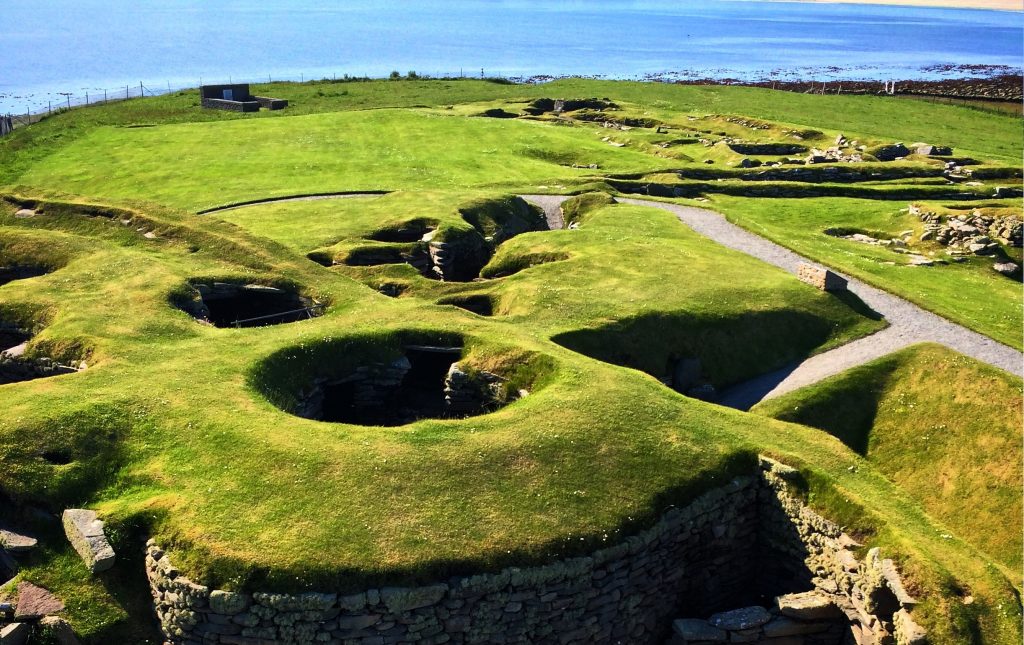
What we lack in chocolate, we make up for in fantastic Scottish finds.
A Pictish Easter Hare
The Drosten Stone at the St Vigeans Sculptured Stones Museum in Angus is one of the mostly richly decorated Pictish symbol stones in Scotland. In addition to a Christian cross and mythical Pictish creatures, a hunting scene can be spotted on the back – and just below the deer? A 1,200-year-old hare (just pretend it’s a rabbit).
There are lots of different animals depicted on the #Pictish Drosten Stone. Which ones can you see?
If you would like a closer look, head to St Vigeans Museum next Saturday (29 September) for the final open day of 2019. https://t.co/GehPuU4yiS pic.twitter.com/FJVrka1R9m
— Historic Scotland (@welovehistory) 22 September 2018
Jarlshof’s Easter Chick[en]
People settled at Jarlshof in Shetland (pictured above) for more than 4,000 years, leaving behind oval-shaped Bronze Age houses, an Iron Age broch and wheelhouses, Norse long houses, a medieval farmstead, a laird’s house – and a chicken. This piece of slate dates to 800-100 AD and it’s possible that a hen has been etched onto the right side of it. Unfortunately it’s unlike to lay any eggs…
Could it be a chicken etched into the right side of this piece of slate from 800 – 1100 AD? http://t.co/kKqSLPWTtk pic.twitter.com/pNiCj8JhCw
— National Museums Scotland (@NtlMuseumsScot) 5 September 2015
Easter Egg Amulet
In 1989, a local man “casually” found a rare stone ‘egg’ amulet at Bu Sands, a beach on one of the Orkney Islands. The amulet is made of serpentine rock with a pattern similar to the skin of a snake and it’s estimated to be at least 1,600 years old. A handful of similar artefacts have been found in Aberdeenshire and East Lothian and some of them resemble eggs of certain seabirds, although nobody knows why – except maybe the Easter Hare.
Sunken Easter Basket
Thanks to the work of archaeologists (including ones from AOC Archaeology and the Western Isles Council such as Deborah Anderson), members of the local community and a tractor, a 3,500-year-old basket was saved from the waves in Na h-Eileanan Siar (the Outer Hebrides) in 2014. The oval-shaped woven basket is believed to be one of best-preserved of its kind found in Scotland. Instead of Easter eggs, it contained prehistoric animal bones covered in a layer of quartz pebbles. Better than creme eggs? Debatable.
Amazing find on North Uist beach by Access Archaeology-a basket encircling quartz and a bone. Could be Bronze Age!! pic.twitter.com/iFeGvP7kAf
— SCHARP (@CoastArch) 9 November 2014
If you’d like to keep exploring Scotland’s past, visit our Events page to read about upcoming events.
