Fact meets Fiction: Shakespeare and Scottish Archaeology

Known as ‘The Scottish Play’, Shakespeare’s tragic tale of the legendary Scots king ‘Macbeth’ has been performed to audiences around the world.
Inspired by the real-life monarch MacBheatha born around 1005, the bard’s Macbeth rises to the throne after murdering King Duncan, but his ruthless success is cut short when a prophecy made by three witches comes true and he’s is defeated in battle by another Scottish magnate, MacDuff.
It’s thought that Shakespeare wrote the play as a tribute to the Scottish roots of the then king of England and Scotland, James I and VI, who also happened to be fascinated by witches. But how much did the bard know about the real locations in the historical kingdom of MacBheatha? Take a tour through the real archaeology from the Scotland of Shakespeare’s anti-hero.
Brodie Castle
Shakespeare’s Story: A Coven of Witches
‘So foul and fair a day I have not seen’ – Macbeth, Act 1, Scene 3
The tower house of Brodie Castle in Moray was built in 1567 and has been added to in the centuries since. It was continuously in the possession of the Brodie family until it was handed over to the National Trust for Scotland in 1980. A small signposted hill near to the castle is said to have been a possible place where Macbeth first met the three witches.
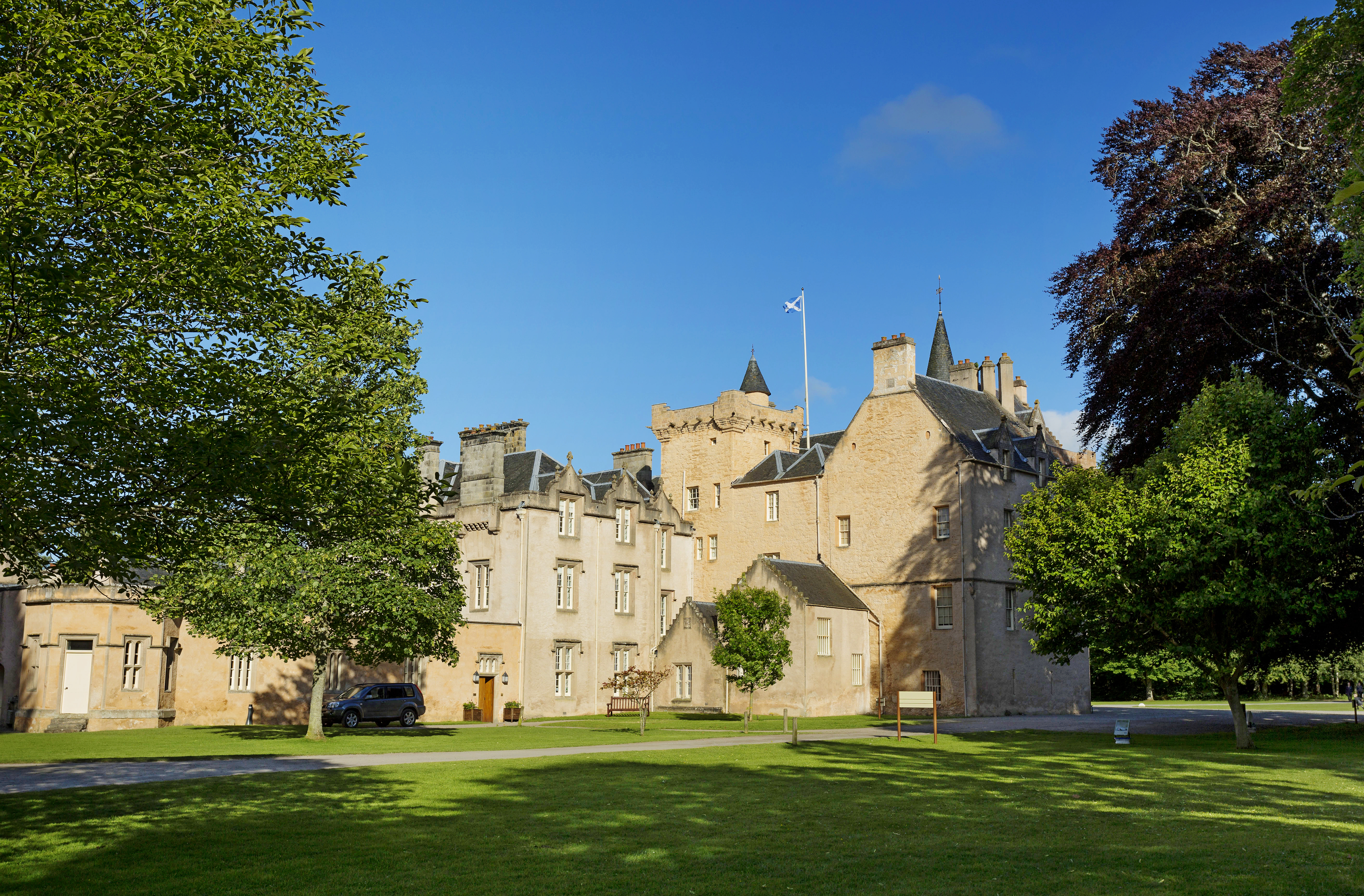
Brodie Castle, near Forres, Moray (Image Credit : Paul Tomkins/ VisitScotland)
Scotland’s Story: Rodney’s Stone
Brodie Castle existed in Shakespeare’s time, but the medieval tower house was certainly not visited by MacBheatha, who was born hundreds of years before the playwright. However, a Pictish symbol stone, known as Rodney’s Stone, hints at much earlier settlement on the site.
It has a cross and two fish monsters on one side, and a Pictish beast and a double disc and Z-rod on the other – all popular symbols found on many other carved Pictish stones across the country, although we don’t know for sure what they represent. It also bears three ogham inscriptions, one of which transliterates EDDARRNON; the name Ethernan is recorded in the Annals of Ulster (a historical record of medieval Ireland) referring to a Pict who died in 669AD.
It is possible that MacBheatha himself, as Mormaer (a type of lord) of Moray, may have observed this stone in his lifetime.

A detail of Pictish carvings on a stone in the grounds of Brodie Castle (Image Credit: Paul Tomkins / VisitScotland)
Glamis
Shakespeare’s Story: Thane of Glamis
‘All hail, Macbeth! hail to thee, thane of Glamis!’ – First Witch, Act 1, Scene 3
Shakespeare’s Macbeth holds the title of ‘Thane of Glamis’ at the beginning of the play, but there is no known connection between the real MacBheatha and Glamis castle in Angus. There was a fortification on this site in 1376, but how old it was at that point is unclear.
The current Glamis Castle is open to the public and full of curious tales and history, including the fact that a monarch was murdered on this site in 1034: Máel Coluim II (Malcolm II), who was King of Scotland before Donnchadh mac Crìonain (the man who inspired the bard’s King Duncan).
Scotland’s Story: Medieval Moray
In 2007, archaeologists found medieval and late medieval pottery, and a bronze cooking pot near the castle, indicating that there was activity in this part of the village of Glamis from as early as the 13th century – could the vessels have been from the castle kitchens?
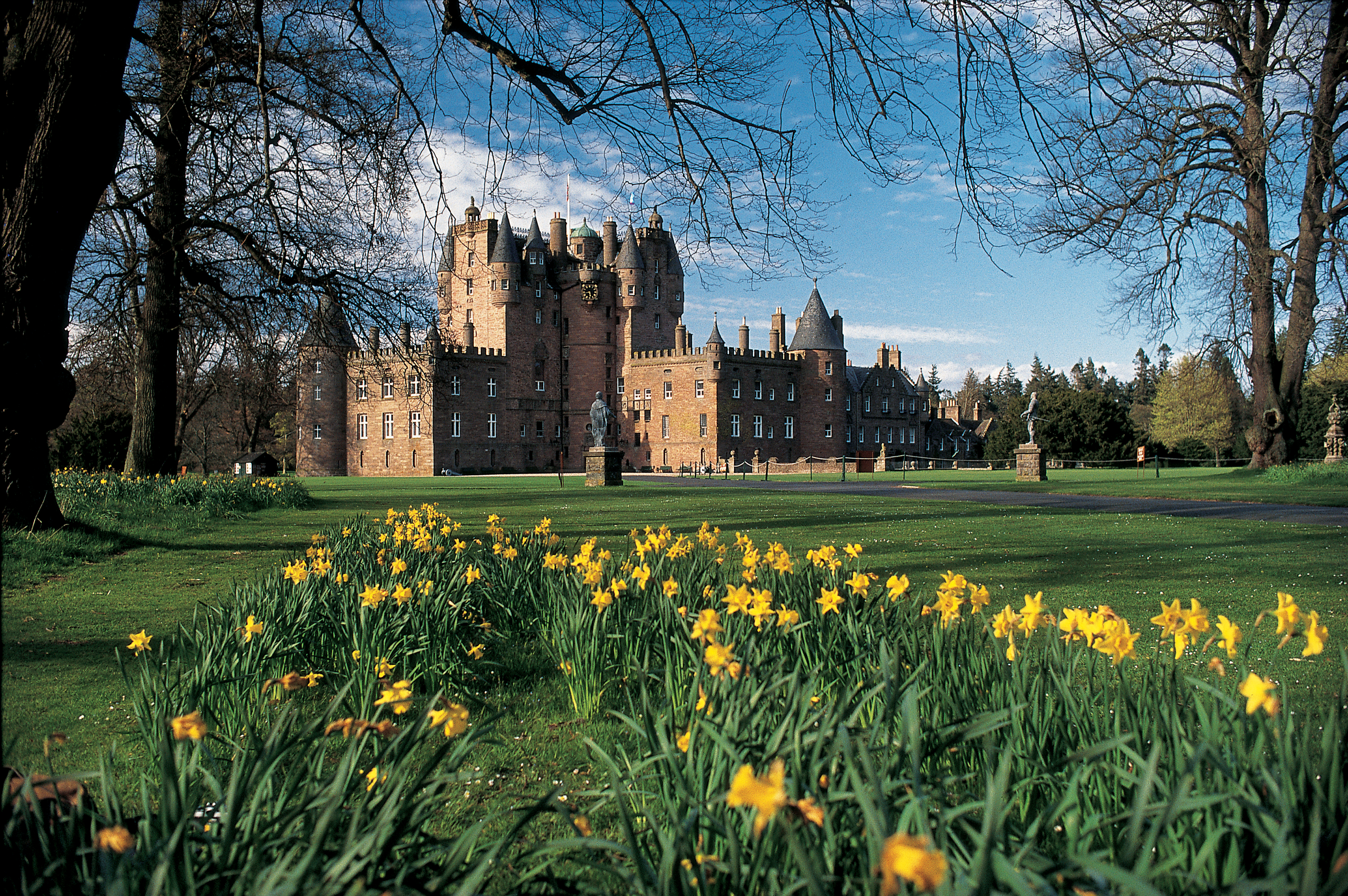
Looking over daffodils in the grounds of Glamis Castle (Image Credit: Paul Tomkins/VisitScotland)
Forres
Shakespeare’s Story: A Castle Fit for a King
‘How far is’t call’d to Forres?’ – Banquo, Act 1, Scene 3
In the play, Duncan’s castle is said to be in Forres on the Moray coast, and we know that a royal castle was present in this area from at least 900 AD. Today, nothing remains of the structure except its foundations; the castle stood on the site of the current Castle Hill Gardens until it fell into disrepair in the 17th century – could this have been the inspiration for Duncan’s castle?
Scotland’s Story: Sueno’s Stone
Something much older than the medieval castle still survives in Forres. Sueno’s Stone, an enormous symbol stone probably carved by Picts to commemorate a battle against Norse invaders, stands to the north-east of the town. Standing 20 feet tall and encased in glass structure to protect it from the elements and graffiti, Sueno’s Stone translates to Sven’s Stone and dates to the later 9th or 10th century.
It is carved from local sandstone and legend says that this massive monument was where Macbeth originally met the three witches at a crossroads.
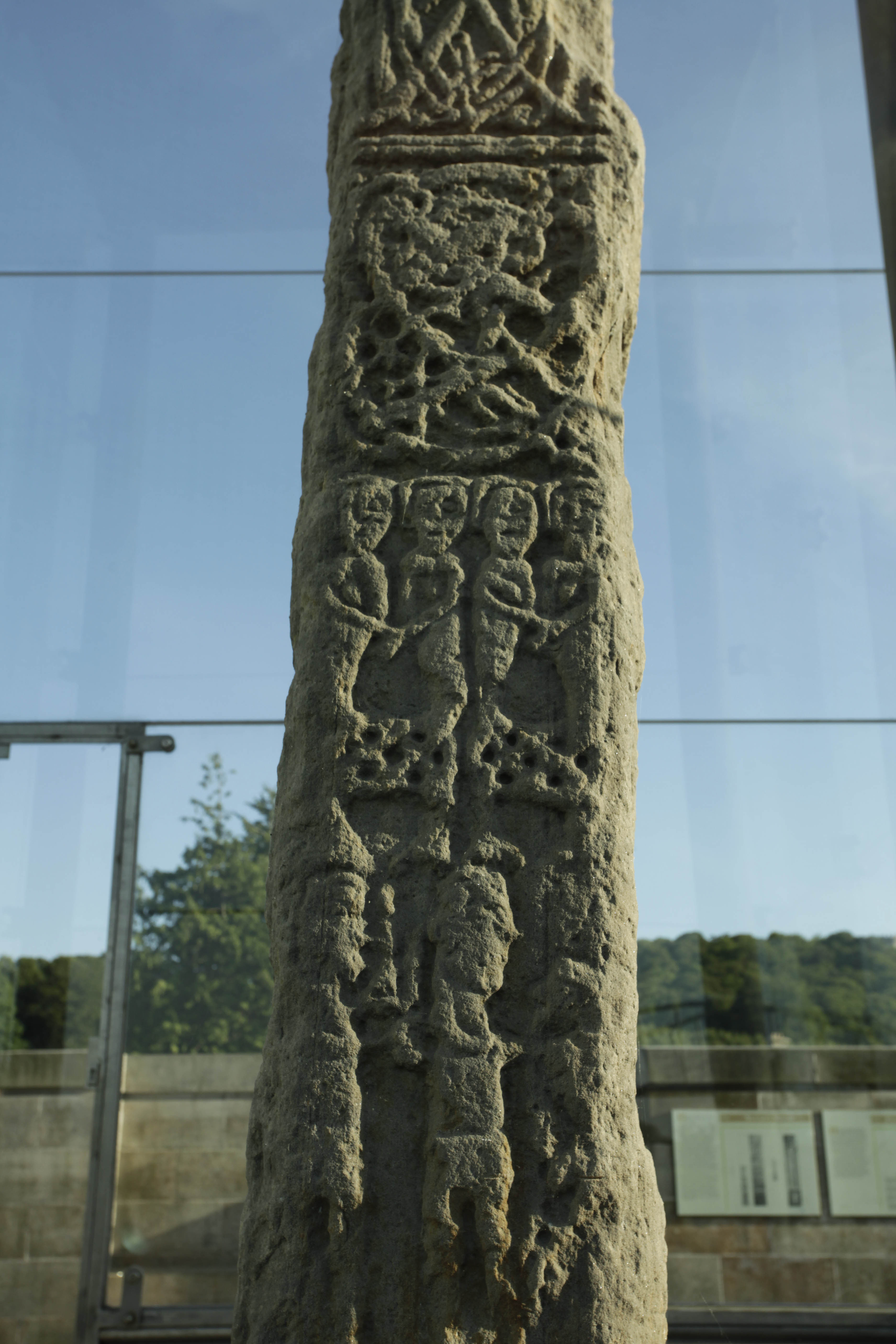
Sueno’s Stone, Forres, Moray (Image Credit: VisitScotland / Paul Tomkins)
Dunsinane
Shakespeare’s Story: The End of Macbeth
‘Great Dunsinane he strongly fortifies: Some say he’s mad; others that lesser hate him do call it valiant fury’ – Caithness, Act V, Scene 2
In the play, Dunsinane Hill in Perthshire is where Macbeth is finally killed by MacDuff. We know that the real MacBheatha did fight a battle here, but this was against Máel Coluim III. MacBheatha lived to rule for another three years after his defeat at the battle of Dunsinane, before being killed by Máel Coluim III.
Scotland’s Story: Fortifications with a View
Archaeological surveys have located the remains of two different fortified buildings at this hill. There is a fort occupying the summit and lower slopes of Dunsinane Hill, as well as two cup-marked boulders visible on the south-western side of the fort. A lot of vitrified material (formed when the stone walls of a fort have turned to glass through exposure to extreme heat) has been found among the stonework of this fort, which archaeologists have suggested is the remnants of an earlier fort which burned down.
In 1857 a small bronze spiral ring of serpent design was found during an excavation near the gateway of the fort but was sadly lost soon afterwards. A Roman coin was also found close to the hillfort’s entrance in 2011. It shows the profile of Carausius, a Roman military commander who declared himself emperor of Britain in 286AD. Other finds include a Roman bowl, three sets of human remains, and a rotary quernstone, suggesting MacBheatha was not the first person to use Dunsinane Hill as a defensive position.
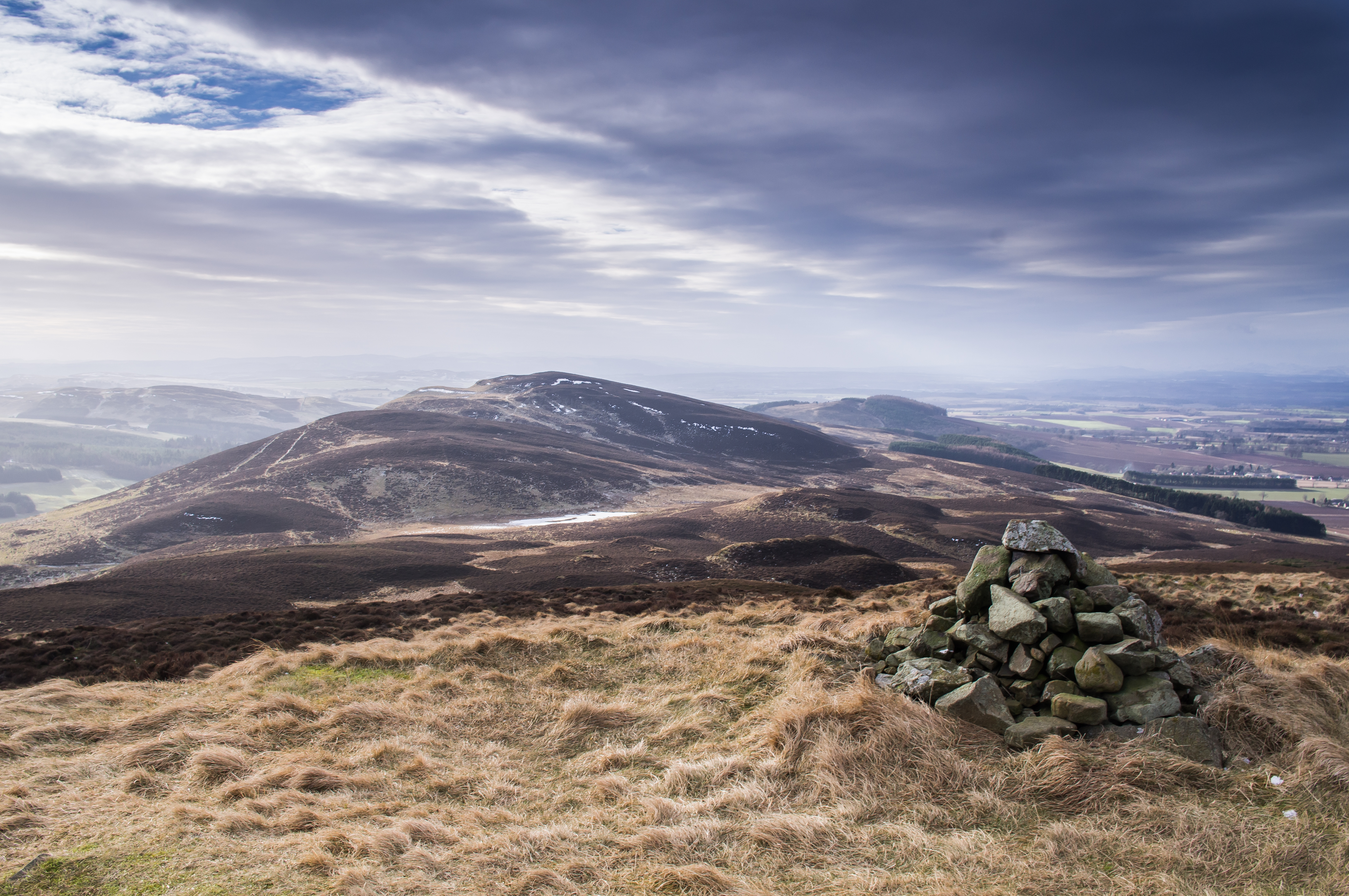
Birnam Wood
Shakespeare’s Story: A Cunning Plan
‘I will not be afraid of death and bane, till Birnam forest come to Dunsinane’ – Macbeth, Act 5, Scene 3
The prophecy of Shakespeare’s three witches in the play did come true, when MacDuff orders his men to cover themselves in branches of trees from great Birnam Wood to camouflage themselves as they advanced on Macbeth.
It is believed that Shakespeare found inspiration for this section of his play during a visit to Perth, Birnam and Aberdeen in 1599 as one of a troupe of comedians. The visit was arranged after King James VI (at the time, just king of Scotland) sent a request for entertainers to Elizabeth I of England.
Scotland’s Story: Ancient Woodlands
The remains of another prehistoric fort are still visible close to Duncan’s hill in Perthshire, not far from Dunsinane. Known locally as ‘Duncan’s camp’, there are traces of artificial defences at the north end of the hill still visible. Why the location was given it’s name is unknown, but it’s possible that King Donnchadh mac Crìonain may have organised his forces here.
Birnam Wood still exists today, but has drastically diminished in size over the centuries. An hollow oak tree, known as the Birnam Oak, attracts visitors to the forest for its legendary connection with the wood in Shakespeare’s play.
It is unlikely to be old enough to have existed when Máel Coluim III approached Dunsinane Hill to battle MacBheatha in 1054, but it is one of only two trees left in the wood which were once part of the great forest that straddled the banks and hillsides of the River Tay. One day, tree-ring analysis (also known as dendrochronology) may be able to tell us exactly how old the Birnam Oak really is.

The Birnam Oak (Image Credit: Kenny Lam/ VisitScotland)
If you, like Shakespeare, have been inspired by these fantastic locations, check out our Events & Digs listing to find out what’s happening near you.
Header Image: Witches in an outdoor performance of Macbeth at Glamis Castle, Angus (Image Credit: Paul Tomkins / VisitScotland)
