GIE IT LALDIE FUR WHISKY! THE ARCHAEOLOGY O SCOTLAND’S ‘WATTER O LIFE’ (SCOTS)

Scotland’s drouth fur a dram gangs aw the wey back tae the Middle Ages and is unjoukably pairt o oor history and politics.
Archaeologists the day are discoverin mair and mair anent oor lang-staunin relationship wi whisky – oor ‘watter o life’.
Whisky Galore! The Archaeology of Scotland’s ‘Water of Life’ (English)
Uisge-Beatha Gu Leòr! Arc-Eòlas Uisge-Beatha Na H-Alba (Ghàidhlig)
The First Stills
The first scrievit record o whisky distillin in Scotland taks the form o a royal request fur eicht bolls o malt, gien tae Friar John Cor in 1494 – which would hae made 1,500 bottles. Fur a lang time, the spirit wis gey popular amang common fowk and kings baith, hooivver, whan it began tae be taxed in 1644, illicit stills like the ane pictured ablow sprang up across the kintra.
Atween the 1760s and the 1830s, the Hielans wis up tae the oxters in the illegal Scottish whisky trade. In 1782, mair nor 1,000 illegal stills were seized fae the area.

The Jacobite Cause
Whisky gangs were ticht-knit groups o fowk, foondit amang communities or on auld and weel-established criminal networks. Durin the late seventeenth and eichteenth centuries, the pauchlin o whisky providit siller tae the Jacobite cause and tae pro-French political ongauns. Clan Gordon and Clan Duncan, baith active in Aiberdeenshire, were muckle smugglin faimlies whae transportit guids fae inland Scotland tae the coast, aften in bricht daylicht and in plain sicht o the authorities.
Hale communities warked thegither tae perform gegs tae swick and begowk the ootnummered authorities, whae had nae chance. Some stories tell o wummin wearin twa-gallon ‘belly canteens’ made o sheet iron tae look like bairn-bumps, ithers o pit-on funeral processions that were really transportin whisky in deid-kists or hearses, and ithers still o bottles bein concealed in deid geese.
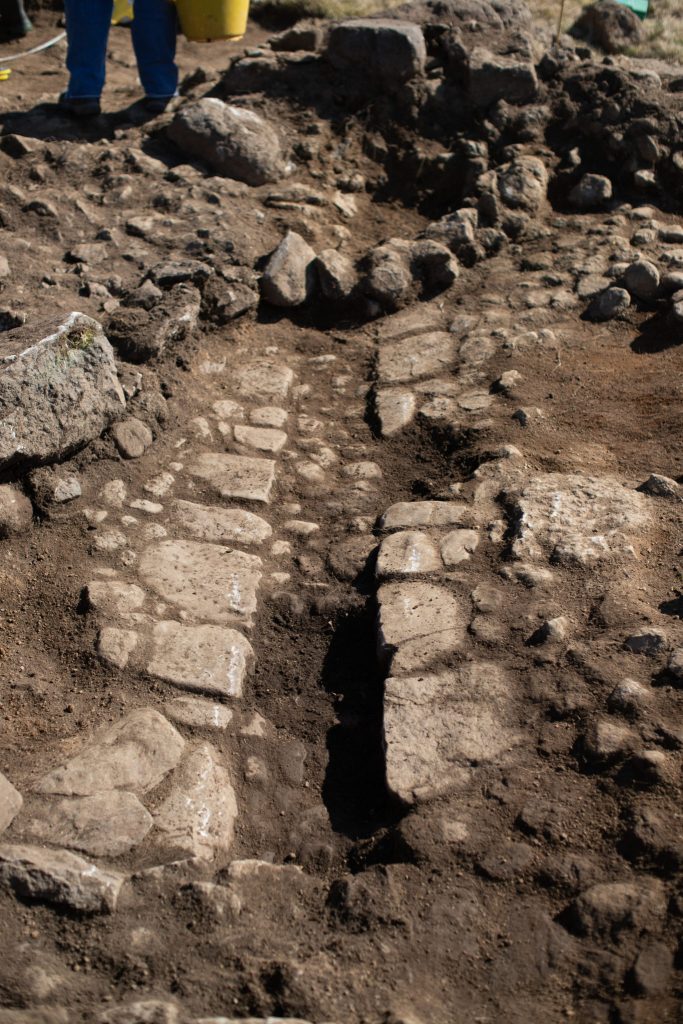
The Blackmiddens site (Image Credit: Reproduced wi permission fae The Cabrach Trust)
“Smugglin’s Hertlaun”
The Cabrach is the remote and aften uplaun area o Aiberdeenshire in the fithills o the Cairngorms. It has been cried ‘Smugglin’s Hertlaun’, reflectin the fack that, fur monie years, the illegal distillation and transportation o whisky wis at the hert o its economic forby social development.
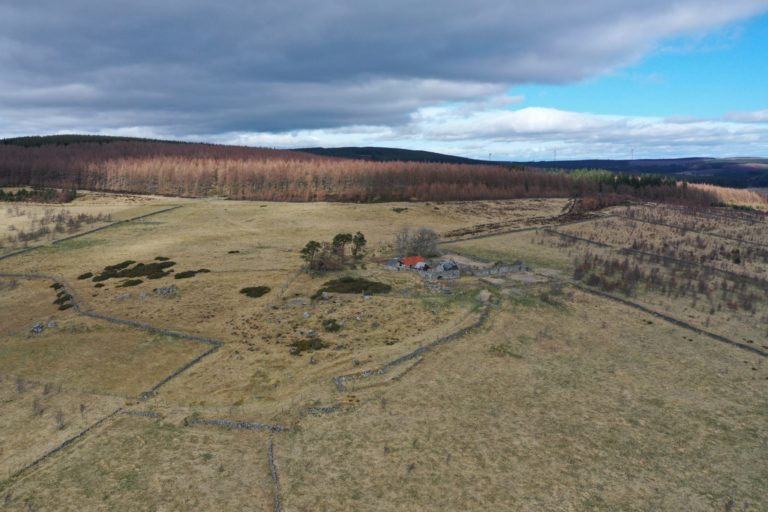
The site o Blackmiddens distillery. (Image Credit: Reproduced wi permission fae The Cabrach Trust)
In 2018, an archaeological dig stertit at Blackmiddens, a run-doon steidin in the Cabrach on the border atween Moray and Aiberdeenshire. This is thocht tae be the first excavation o a traditional wee ferm distillery.
Blackmiddens wis ane o the first ferms tae be grantit a licence fur tae produce whisky follaein the ‘Excise Act’ o 1823, which providit a formal basis fur the distillin o whisky on a wee scale – the first step on the path taewart the muckle global whisky industry that we ken the day. Hooivver, whisky production at Blackmiddens cam tae a halt jist eicht year efter it had begun, and the ferm fell intae ruin.
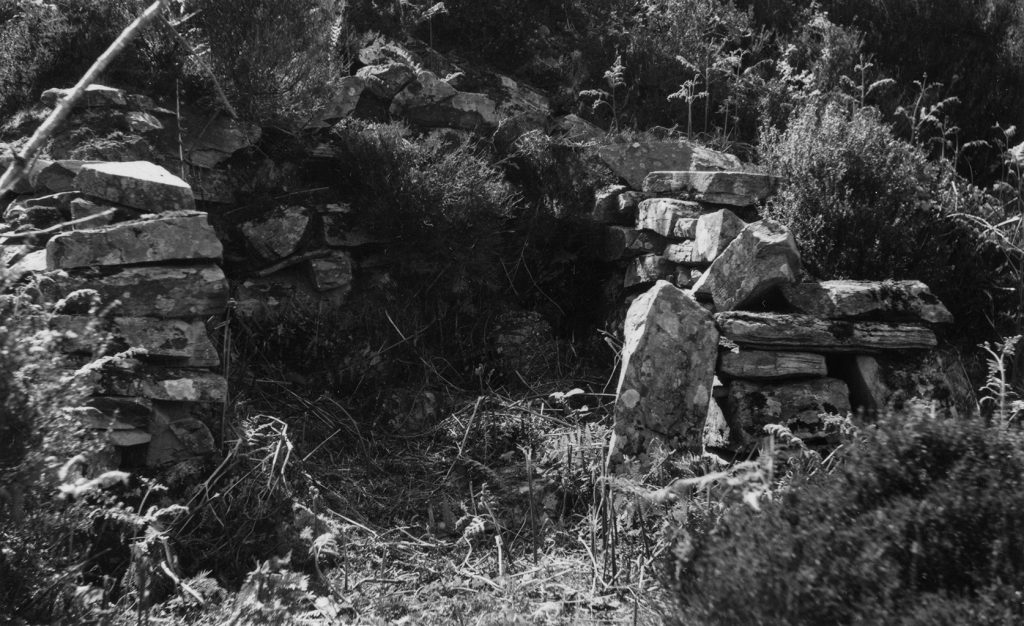
Ootbiggin threapit tae be the site o an auld still, Smearisary, Moidart, Inverness-shire (Image Credit: Ian Whitaker, 1959. Reproduced wi the permission o The School o Scottish Studies, The University o Embra).
It’s mair nor likely that the remains o hunners o illicit stills are aye scaittert across the Hielans, maist o aw in the Cabrach. Due tae baith erosion as a result o the passage o time, forby the fack that were biggit fur tae be haurd tae find, they’re no gey easy tae hunt oot. Hooivver, ye’re maist likely tae find them coorried awa neist tae burns in the braes, wi twa-three wee stane waws biggit up agin a waw o earth.
BY ASHLEY DOUGLAS, A PAIRLAMENTARY REPORTER, OWERSETTER AND SCRIEVER BASED IN EMBRA. FOLLAE HER ON TWITTER AT @ASHDOUGLASSCOT
Header Image: Reproduced with permission from The Cabrach Trust
This article was produced in support of Scotland’s Year of Coasts and Waters 2020-21.

