Hair-raising Archaeology in Scotland

Curling irons and straighteners may be relatively modern inventions, but people have been taming their tresses for thousands of years. Archaeology can tell us more about how they liked to style their hair, while the strands themselves can help unlock their lifestyles.
On trend
The appearance of the Picts has long been debated, with many modern depictions characterising them with wild, untamed hair. But what do we actually know about the grooming preferences of the peoples who lived in northern and eastern Scotland in the Late Iron Age and Early Medieval periods?
Clues can be found in the stone carvings they left behind, such as the Bullion stone from Angus (now in the National Museum of Scotland) which depicts a horseman sporting a striking pointed beard (above).
Roman finds can also provide a glimpse into styling at the turn of the first millennium. The Lewisvale altars from East Lothian, for example, feature personifications of the four seasons with enviable locks, while coins depict the haircuts of emperors and military leaders.
The medieval Lewis chess pieces, which were discovered in Na h-Eileanan Siar (the Outer Hebrides) in 1831, also sport a variety of hairstyles. The hoard contained 93 gaming pieces in total, including bishops which appear to have religious tonsures (the top of the head shaved with a ring of hair round the edge) and kings and queens with long styles – a mark of royalty in Western Europe.
All about the accessories
Throughout history, people probably tied their hair up with materials such as fabric or leather which no longer survive, but some of the more robust accessories have stood the test of time.
4,000-year-old sheet bronze ornaments were found at Migean (Migdale) in Sutherland in the late-19th century, which may have formed part of a headdress complimented by a basket-shaped hair ornament (like the one found in an Early Bronze Age grave at Orbliston in Moray) in a style worn by Bronze Age peoples across central-north Europe.
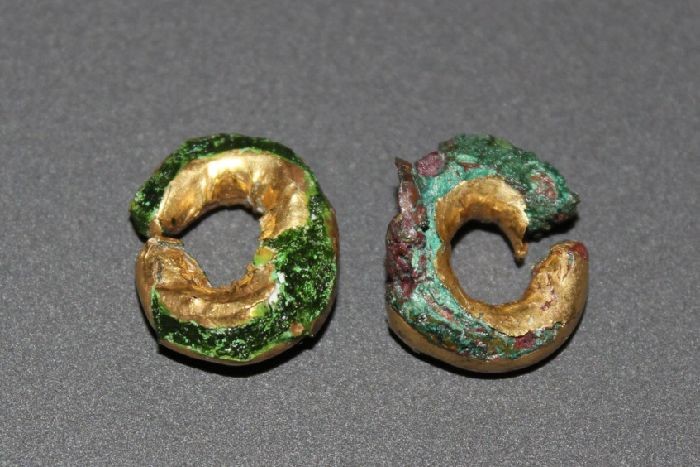
Gold-covered hair ornaments of a similar date have also been found, such as these rings from Sculptor’s Cave on the shore of the Moray Firth, which now reside in Elgin Museum. Although these ones seem to be related to some of the human remains found at the site, that’s not the case for all 26 hair rings which have been found in Scotland. It’s been argued that people wore them during their lifetime “as a way of showing off the wealth and status of their high-ranking owner. The wear seen on the inside of the hoop is consistent with this.”
Tools of the trade
Like the gold ‘hair rings’, razors used to trim and shave facial hair are thought to have been prestigious items. They were so highly prized that some Bronze Age razors, including those found as part of a hoard from Adabrock in Leòdhas (Lewis), may have been donated as gifts to the gods along with other precious items.
Fast forward a couple of thousand years to beautiful Pictish types of combs (some dating from the times of the earliest Viking settlers), which would have been particularly useful in ridding oneself of pesky bugs, with smaller combs possibly being used for beard maintenance.
Bone comb found at the Brough of Birsay #Orkney @orkneycom and carved with a birds head now in the NMS https://t.co/ka5EKwNAKq pic.twitter.com/45b2VaAKFd
— Swandro Orkney (@SwandroOrkney) December 20, 2018
Well-kept locks
In 2018, archaeologists working at the Cairns dig in Orkney made an incredible discovery: 2,000-year-old hair. The 20 or so strands of human hair had been cut from two individuals and were found in a well at the site, likely preserved due to the lack of oxygen which meant that “micro-bacterias had not had an opportunity to eat away at them”.
The shiny, dark locks measured around eight to 10 centimetres long and could potentially record 8 to 10 months of information about diet and living conditions which could be revealed through isotope analysis (based on the principle that human and animal body tissues will reflect the isotopic composition of food and water ingested during their lifetimes). It’s hoped that future research will tell us more about the lifestyles of Orkney’s Iron Age residents.
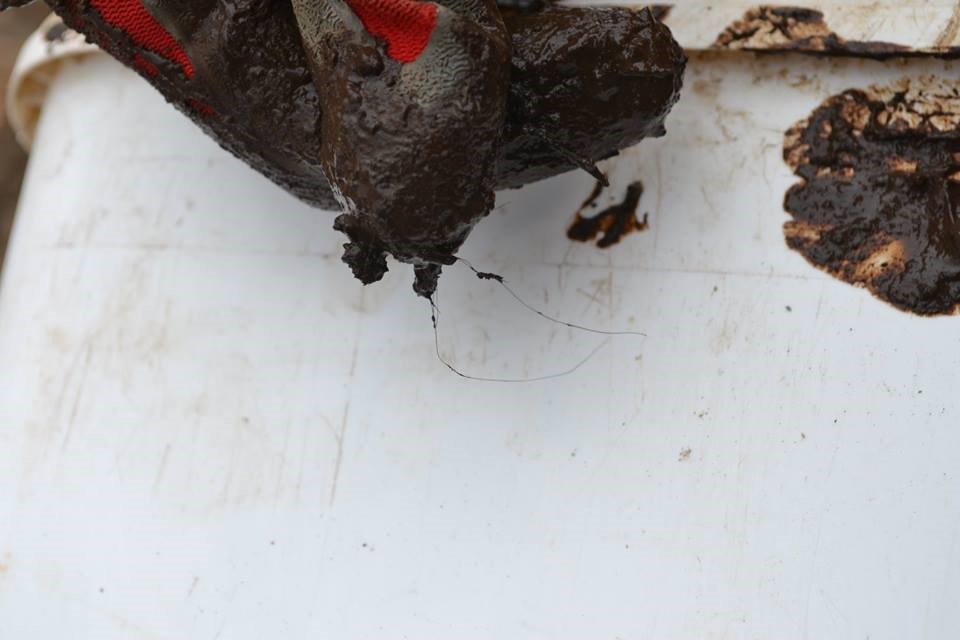
Some of the strands of Iron Age hair found at the Cairns dig in Orkney © AOC Archaeology
Want to keep digging into the past? Discover upcoming Scottish archaeology events.
Featured Image: Detail of the Bullion stone in the National Museum of Scotland
