Outlander Odyssey in Culross | Guest Post

Outlander and Scottish archaeology go hand in hand, so when Dig It! 2017 was invited to the Culross Lates, we couldn’t resist! We reached out to Stephenie McGucken (a fantastic Dig It! 2017 volunteer who also happens to be an Outlander expert) and she kindly agreed to go along and tell us about her experience:
“Culross Lates was a small, intimate event designed to give an impression of the village and its historical character. Organised by Outlander Filming Fife and Emma Chalmers of Mary’s Meanders in conjunction with the National Trust for Scotland, the event featured tours of the Palace, Village Hall, and Mercat Square before a small dinner and ceilidh with the band Boorach.
The event was targeted to fans of the TV series Outlander, a time-travel historical fantasy, but would appeal to those unfamiliar with the show who are interested in Early Modern history. The evening started in Culross Palace with a whisky-tasting (Irn Bru for those driving or who did not want to drink.) After a quick introduction to the evening, the tour began in the High Hall of the palace. The house was built by George Bruce, a local merchant, around 1600. The tour itself was mostly focused on the general history of the house and Culross with a slant towards how it was used in the show. In the case of the High Hall, it was recognisable to fans as where Prince Charlie held the infamous meeting in Derby. Our guide explained how production both brought in props and used some of the furniture in the room, such as the chairs near the fireplace.
The High Hall was originally one long room, but has now been subdivided into two separate spaces. The second space now forms the Drawing Room, which was also used in the show’s first season as a drawing room for Geilis, a friend of Claire (the main character). Many of those in attendance were enjoying their first visit to Culross, with the tour guide playing on their enthusiasm for the show and its related history by having them guess which scene was filmed in the room. From here, the group was ushered into the adjoining bedroom, which features a bed on loan from the National Museum of Scotland. While not featured in the show, the group clearly enjoyed seeing the room with its extant seventeenth-century wall painting, one of several examples in the village. The final stop in the Palace before braving the rain in the herb garden, was the King’s Room, which featured in the second season.
Luckily, the rain stopped on the brief walk to the Mercat Square, which featured as the fictional village Crainesmuir’s village square in the show’s first season. Having been allowed to walk through the set on a visit to Culross while production was prepping for filming, I always find it interesting to see the square undressed. The charm captured in the show is evident, even without the set dressing. Everyone snapped pictures of the iconic Mercat Cross, while the guide explained how the square was a gathering place, and used for punishments, ideas seen in the show. From there, it was on to the Village Hall to see another seventeenth-century painted ceiling; this one has not been restored yet so it gave a slightly different impression than the painted ceilings and walls that had been restored in the Palace.
It was then back to the palace for stovies and a little dancing. Boorach performed songs such as ‘Ye Jacobites’ and ‘Loch Lomond’ between ceilidh dances. While the room was small, it made for an intimate atmosphere in which those not dancing could watch their friends and chat. The evening was enjoyable and allowed fans of the show to experience one of its most recognisable locations. Attendees were treated to the history of Culross while also experiencing the ficitonalised Crainesmuir; familiarity with the show, a kind of fictionalised re-enactment of eighteenth-century life, inspired interest into the actual history of the location. History met fantasy in a way that demonstrated the potential for the meeting of heritage and film tourism, an idea begging to be explored.”
– Stephenie McGucken
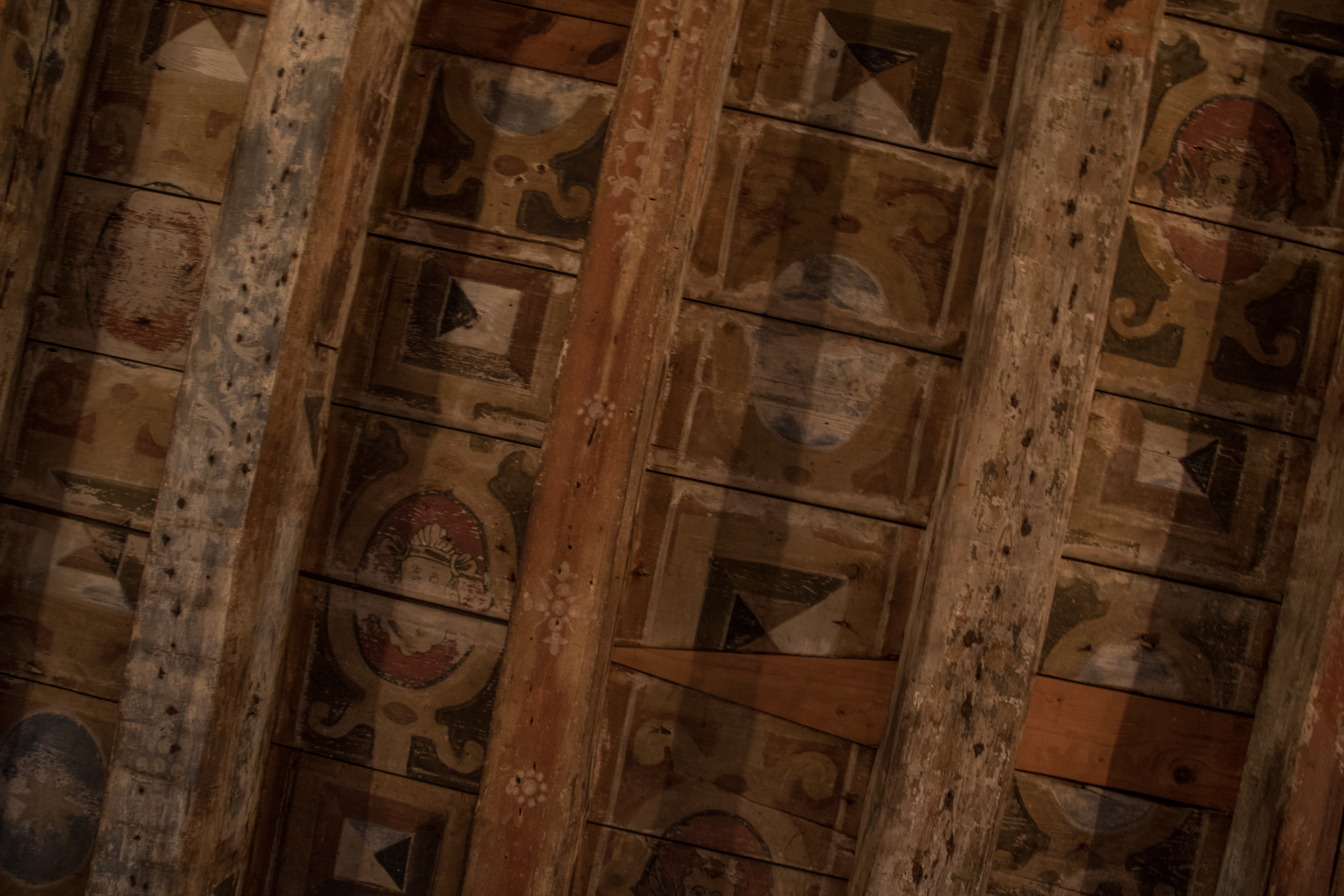
Image credits: Stephenie McGucken
