Revealing a ‘Secret’: Paisley Museum’s Archaeological Collection

Nestled in the heart of Paisley is one of Scotland’s best-kept archaeological secrets. ‘The Secret Collection’ opened in 2017 and is the UK’s first publicly-accessible museum store located in a town centre. All of our collections are stored here, with only those scheduled to be displayed in the newly renovated Paisley Museum returning to their previous home. The store houses over 350,000 items, including several hundred fascinating archaeological objects.
The archaeological collection at Paisley Museum consists of both stray finds and material recovered from archaeological excavations. Many of the stray finds arrived during the formative years of the museum and have very little information about where they were found or the circumstances of their discovery. As a result we have to be wary of some of the claims made for these objects. This does however provide us with many research opportunities for the future as we strive to uncover more about our fascinating collections.
Houston South Mound
In 1975, excavation work was carried out on a small hillock on the outskirts of the village of Houston. This hillock, known as Houston South Mound, turned out to be a Bronze Age burial cairn, complete with a skeleton.
Accompanying the grave’s inhabitant were high-value items including a decorative food vessel and the remains of a jet necklace, suggesting that this person was an important individual.

Food Vessel from Houston South Mound excavation (Image Credit: John Pressly)
Whitemoss Roman Fort
Our Roman archaeology comes mostly from Whitemoss Fort, again near Bishopton, which has seen periodic excavation work carried out from the 1950s through to the latest phase in 2012. The fort dates from the Antonine Period (roughly 140AD to 220AD) and was likely built to protect the flank of the Antonine Wall, the western end of which lies at Bowling on the River Clyde, just a few miles north of Whitemoss as the crow flies – or as the Centurion marches, as the river would have been shallow and fordable when the Romans were here!
Paisley Museum holds coins and pottery recovered during the excavations at the fort and our most recent addition to the Whitemoss story is the Pegasus Brooch, a small bronze object in the shape of the mythical flying horse, a stray find discovered in 2013.
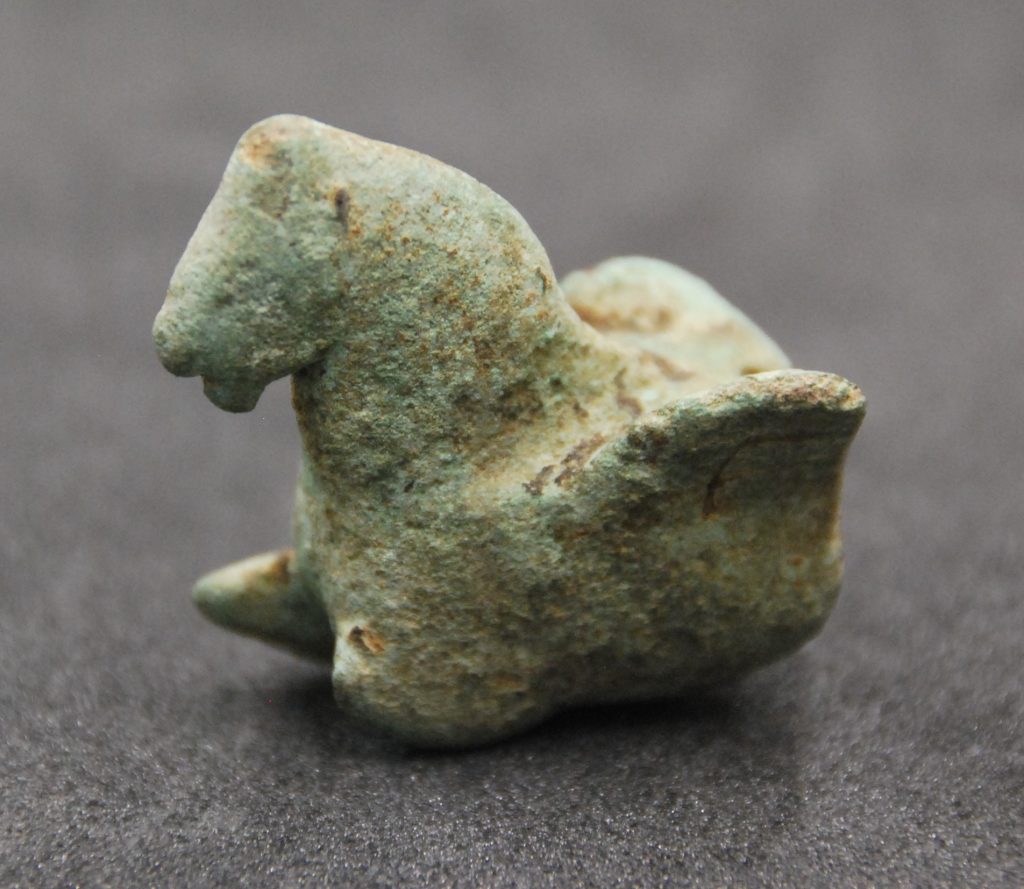
The ‘Pegasus Brooch’ from Whitemoss Roman Fort (Image Credit: John Pressly)
Paisley Abbey Drain
By far the most impressive assemblage in our collection has come from the series of archaeological investigations surrounding Paisley Abbey’s Great Drain.
Rediscovered in 1990, the Great Drain, which dates from the early 14th century, is a vaulted tunnel almost two metres tall and running for 100 metres just outside the perimeter of the Abbey complex. Archaeologists found the bottom of the drain covered in a thick layer of silt which revealed a remarkable array of artefacts.
This included amazingly preserved organic material such as worked leather, wood and plant seeds, over 14,000 sherds of pottery (the largest assemblage of medieval pottery found in the country to date) and some unique carved slates, among which is the earliest piece of written music yet discovered in Scotland. In short, the drain unveiled a fascinating insight into life behind the cloister walls.
Regular excavation work has been carried out on the site over the years and the majority of the finds are kept at the ‘Secret Collection’. The carved slate with the musical annotation is currently on display in Paisley Abbey alongside a small selection of other finds from the drain.
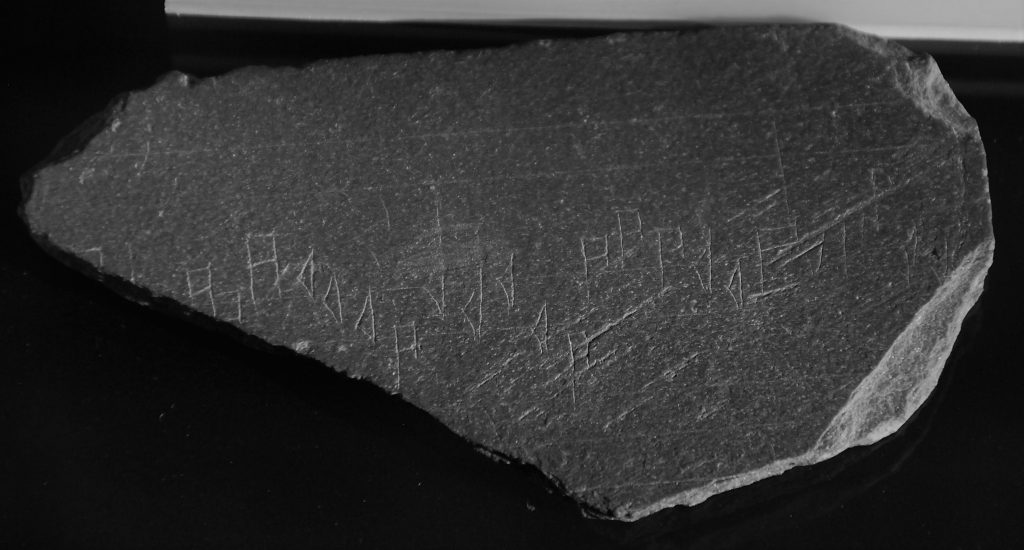
Musical notation carved onto a piece of slate. Found during the excavation of the Great Drain in 1991 (Image Credit: John Pressly)
Paisley Museum Re-Imagined
Paisley Museum is one of Scotland’s oldest public museums. Founded by the local Philosophical Institution and opened in 1871, the museum houses a large and varied collection reflecting local, national and international history, art and culture. Our archaeological collections are no exception to this, consisting of excavated material, stray finds and various Egyptology and Classical pieces gifted by the museum’s benefactors during its formative years.
Paisley Museum is currently closed until 2025. Prior to closure all of the collections were decanted and re-housed in our new purpose-built store, ‘The Secret Collection’.
Paisley Museum is due to reopen in 2025, once the redevelopment of the museum complex is complete. But if you can’t wait that long to view our collections then a tour of ‘The Secret Collection’ would be the ideal way to get up close and personal with our amazing artefacts.
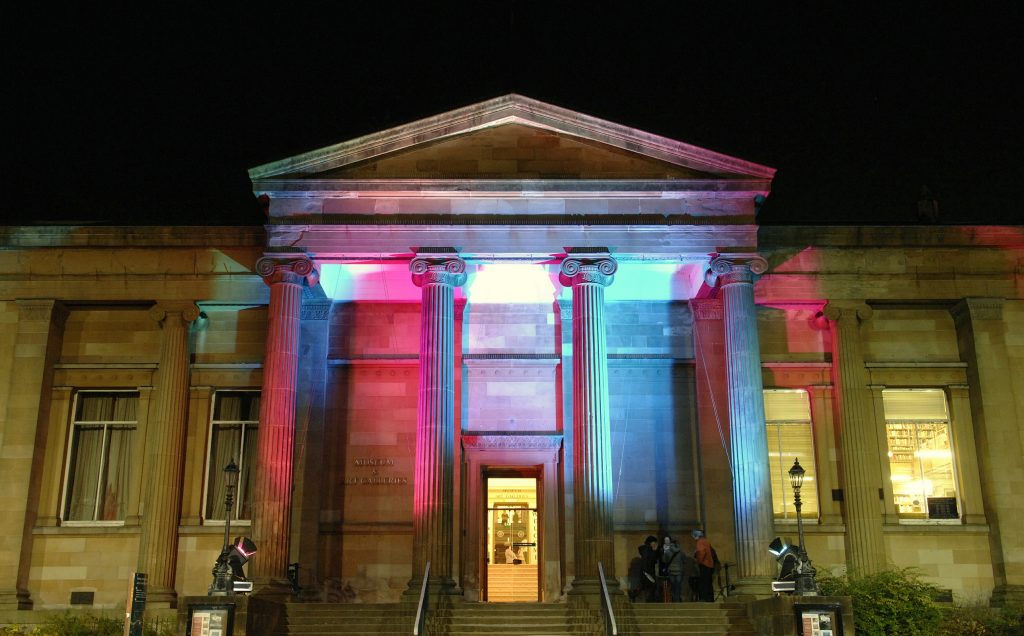
Paisley Museum (Image Credit: Renfrewshire Arts and Events)
By John Pressly, the Science Curator at Paisley Museum. Graduating from Glasgow University in 1993 with an honours degree in Archaeology, John has worked in field archaeology and in several museums throughout the country. He has been at Paisley Museum since 2005 and is based at Coats Observatory, where he officially gets paid to stare into space…
Featured Image: Paisley Abbey (Image Credit: Mark Harkin via Flickr at http://bit.ly/35yfMI8, CC BY 2.0)
