Scotland’s biggest prehistoric fires: the senses and the soul
Some of Scotland’s biggest festivals are all about the fire. Why?
For me, there is something deeply emotive and invigorating about witnessing fires – big fires – that goes beyond the basic human needs provided by the flames. Fire cooks, heats, creates and destroys according to what we need it to do, and occasionally we lose control of it with devastating consequences.
But the archaeological record in Scotland suggests that fire has also been used for all sorts of political and social purposes for thousands of years. And we are not talking about little campfires here!
Community
Fire was used commonly in the early Neolithic period (4000-3000BC) to destroy big timber buildings and ceremonial structures such as cursus monuments (earthwork enclosures). Large barn-like halls such as Doon Hill in East Lothian were burned down to their foundations in massive blazes that went beyond mere accident.
Such big fires would have required huge amounts of fuel and days of hard work, curating a big fire for political effect. Such ‘flashbulb memories’ would live on in the social consciousness for many generations at a time when such gestures were needed in the absence of the written word. These emotional shared experiences were what held society together.
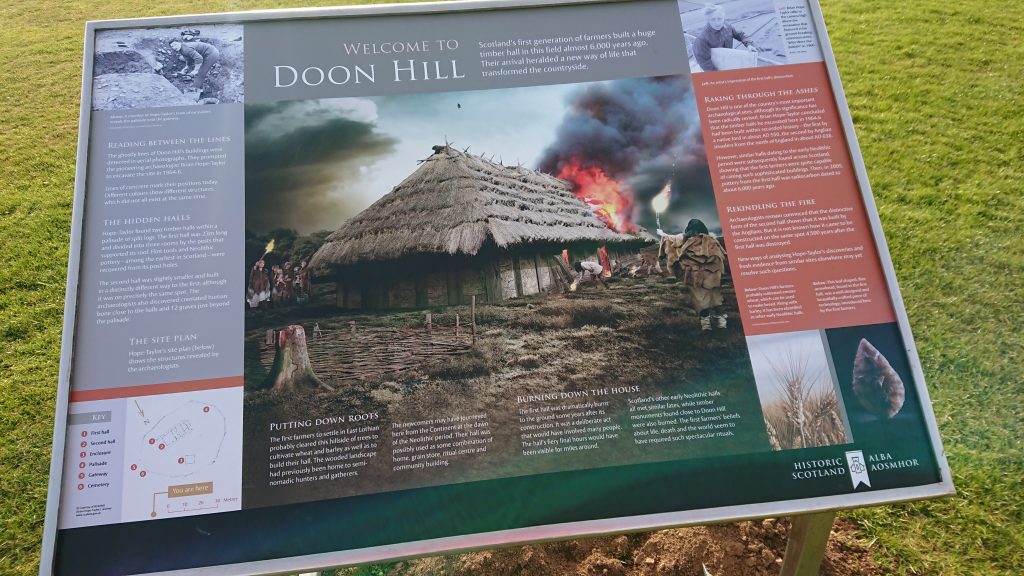
Historic Environment Scotland’s Doon Hill noticeboard showing the timber hall on fire
Cremation
Fire was also used for the cremation of the dead in the Neolithic and Bronze Age. Bodies would have been burned on pyres in front of friends and family, visceral reminders of mortality, played out across six to ten hours.
The careful collection of chunks of burned bones and possessions after the fire suggest a level of intimacy and care that contrasts with brutal burning of flesh and bones that went before. Big fires were being used here to not only destroy, but also preserve forever the memory of, the deceased.
Strategy
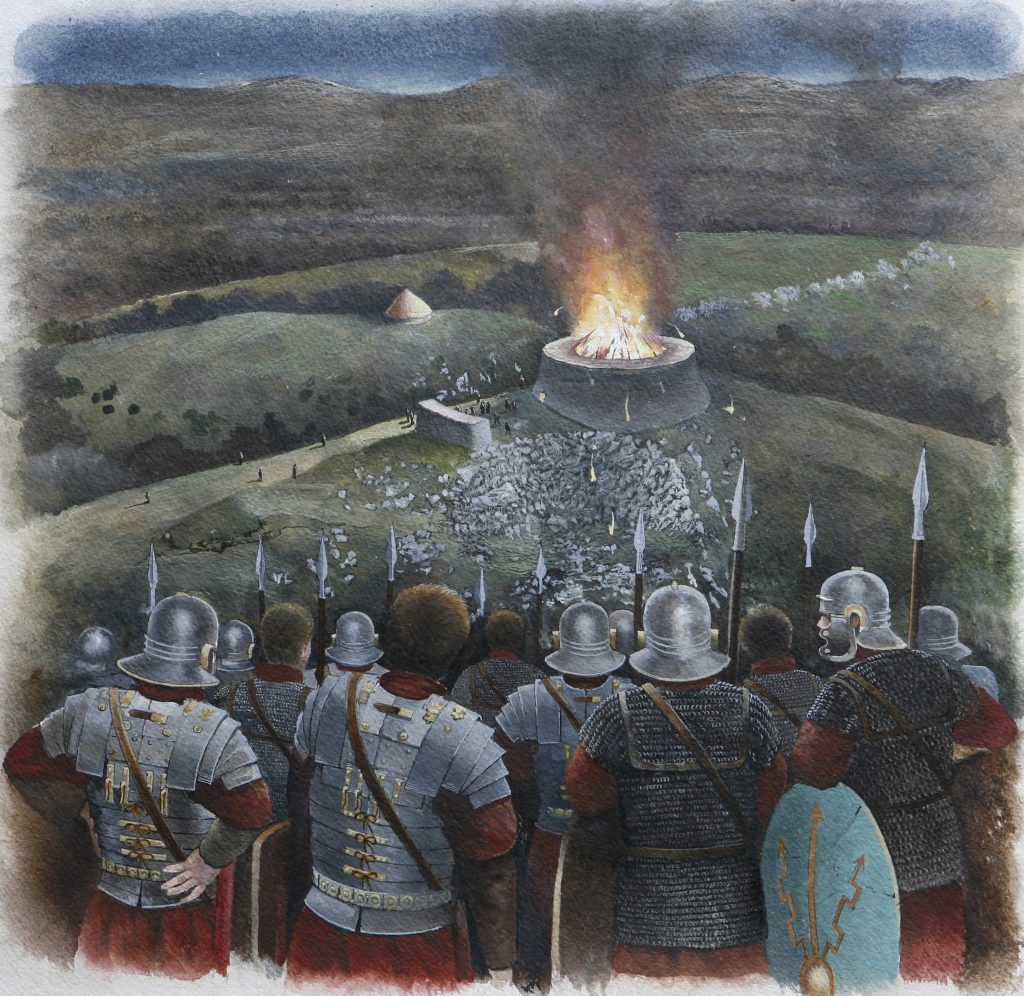
Later still in the Iron Age, fire was used strategically in other ways. A rare ‘lowland broch’ at Castle Craig near Perth (top image) appears to have been destroyed by fire in the second century AD, and an obvious culprit here would be the Romans, this being near the location of several camps and a series of fortifications known as Gask Ridge. Or was this a local feud that got too hot to handle? Regardless of who done it, this huge fire would have been visible across much of east central Scotland and ‘gone viral’ 1800 years before social media.
The burning of hillfort boundaries, turning stone and timber ramparts into glassy stone (what we call vitrified forts) had less obvious tactical and political motivations. A fort at Dun Deardail in Glen Nevis suffered such a fate, with fires of over 1000 degree centigrade literally cooking the fort’s walls. Such events would have been terrifying and powerful, the stuff of myths.
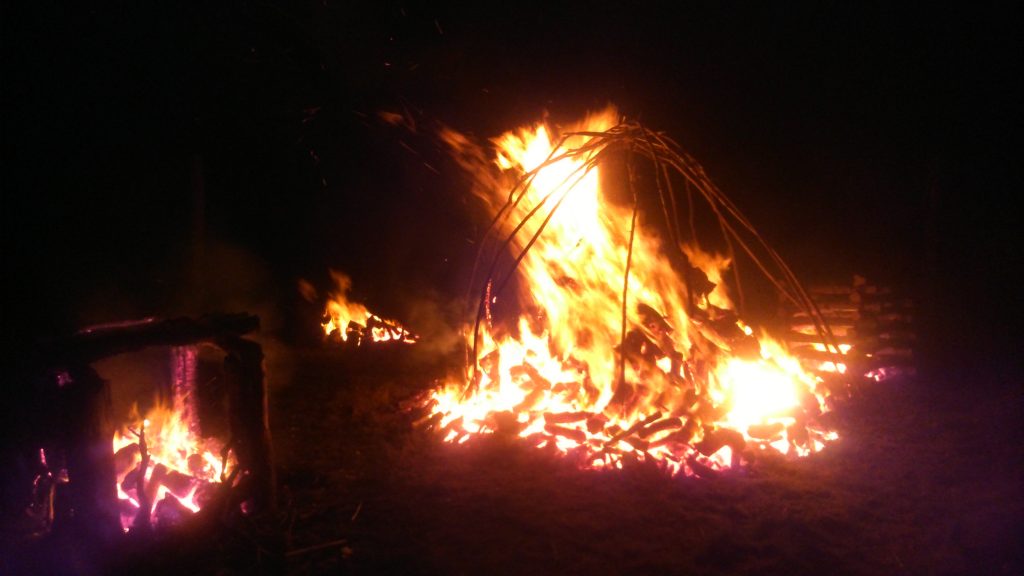
“Experimental cremation pyres, Burning the Circle 2, on Arran 2014” © Kenny Brophy and Gavin MacGregor
We can still experience prehistoric-style big fires today. Experimental archaeology can shed light on processes as diverse as cremation and vitrification, with the effects of big fires on materials subject to scientific recording. A project I have been involved in since 2013, Build ‘N’ Burn, goes one step further, creating big fires by burning replica Neolithic and Bronze Age structures, and documenting the effect this has on the audience.
Observations to date suggest big fires impact on the senses and the soul of those who experience them, and this is something that people have been exploiting – and enjoying – for millennia.
By Kenny Brophy, Senior Lecturer (Archaeology) at the University of Glasgow and founder of The Urban Prehistorian, a blog dedicated to recording prehistoric sites and monuments found today within urban contexts
If you’d like to keep exploring Scotland’s past, visit our Events & Digs page to find an activity near you.
Header image: Dunning broch on fire © SERF Project and David Simon
