Scotland’s International Connections Unearthed this Summer
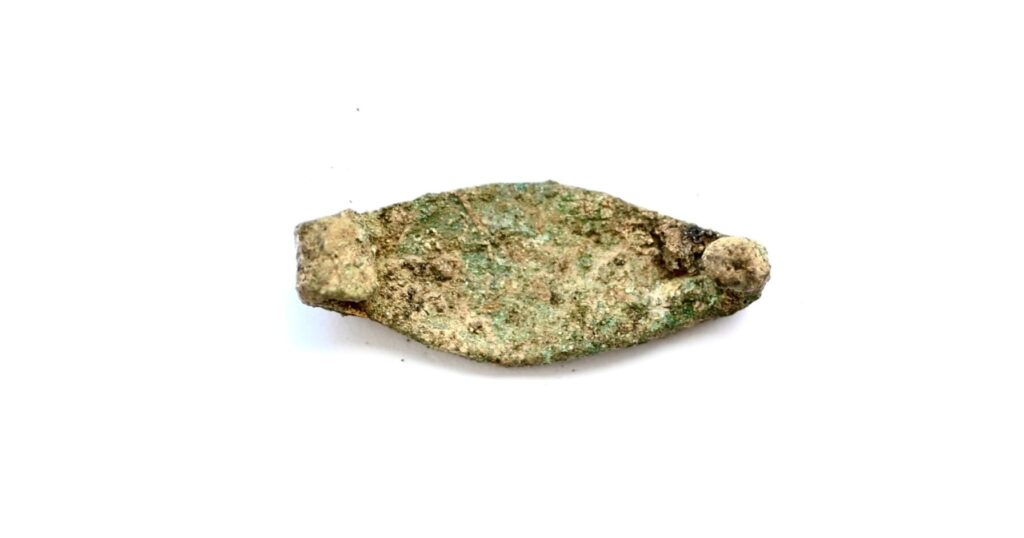
The Scotland Digs 2024: International Connections campaign showcased the country’s world-leading archaeology and raised awareness of our links with other parts of the globe by spotlighting finds such as a possible Roman belt hook and French pottery.
Now in its sixth iteration, our national campaign assembled hundreds of fieldwork updates and 22 events for the public through social media and an online hub from 20 June to 23 September.
Survey, recording, excavation and more took place in urban and rural areas across the country, with a range of different sites welcoming the public with tours, open days and volunteering opportunities – no experience required.
In addition, this year’s campaign raised awareness of the historic links between Scotland and the wider world by highlighting projects and discoveries with international connections, as well as how archaeology can be used to combat harmful narratives.
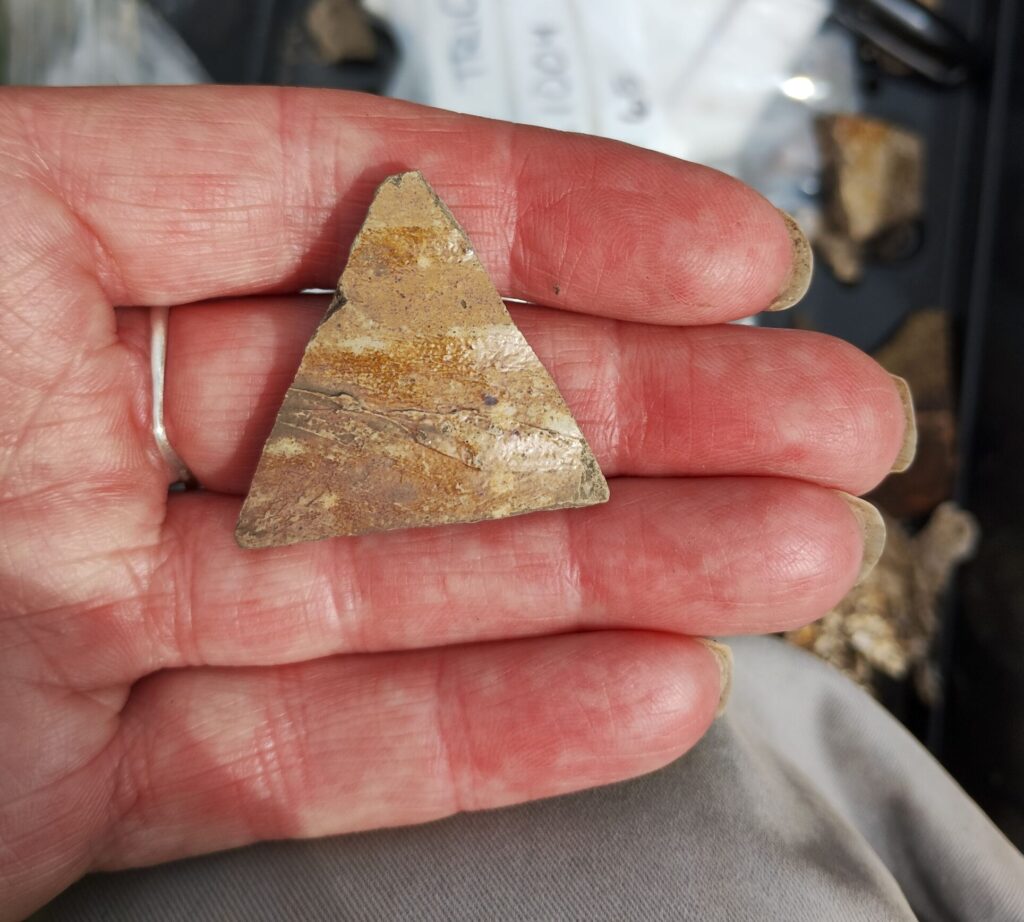
Rhenish Stoneware bodysherd discovered at Lindores Abbey (Image Credit: MAFS)
Possible Roman Belt Hook in Orkney
In Orkney, an Iron Age belt hook (pictured above) was uncovered at the Knowe of Swandro in Rousay. Thought to have been made around 2,000 years ago, one end of the copper alloy object would link to a strap and the other would’ve slotted into a hole in the belt. Analysis of the metal suggests it was made from recycled Roman brass.
Swandro is home to a large settlement occupied from around 1,000 BC to AD 1,200, which is being destroyed by coastal erosion exacerbated by climate change. It consists of Iron Age roundhouses and Pictish buildings, as well as a Viking settlement and a Norse Long Hall which were built by people predominantly from Scandinavia. Evidence of contact with the Roman Empire has previously been found at the site, in the form of ancient glass fragments and coins.
According to Dr Julie Bond FSAScot, Associate Professor in Archaeology at the University of Bradford, “objects such as the belt hook, fragments of Roman glass bottles and coins found in the Iron Age settlement at Swandro are a vivid demonstration of how places we now think of as remote were once embedded in trade routes stretching around the British Isles and through Europe.”
The excavation was coordinated by the University of Bradford and Swandro-Orkney Coastal Archaeology Trust, who rely heavily on public donations to fund their work. They welcomed visitors throughout the excavation and held a free Open Day with Viking and Iron Age costumes and 3D printed models from photogrammetry images of the site.
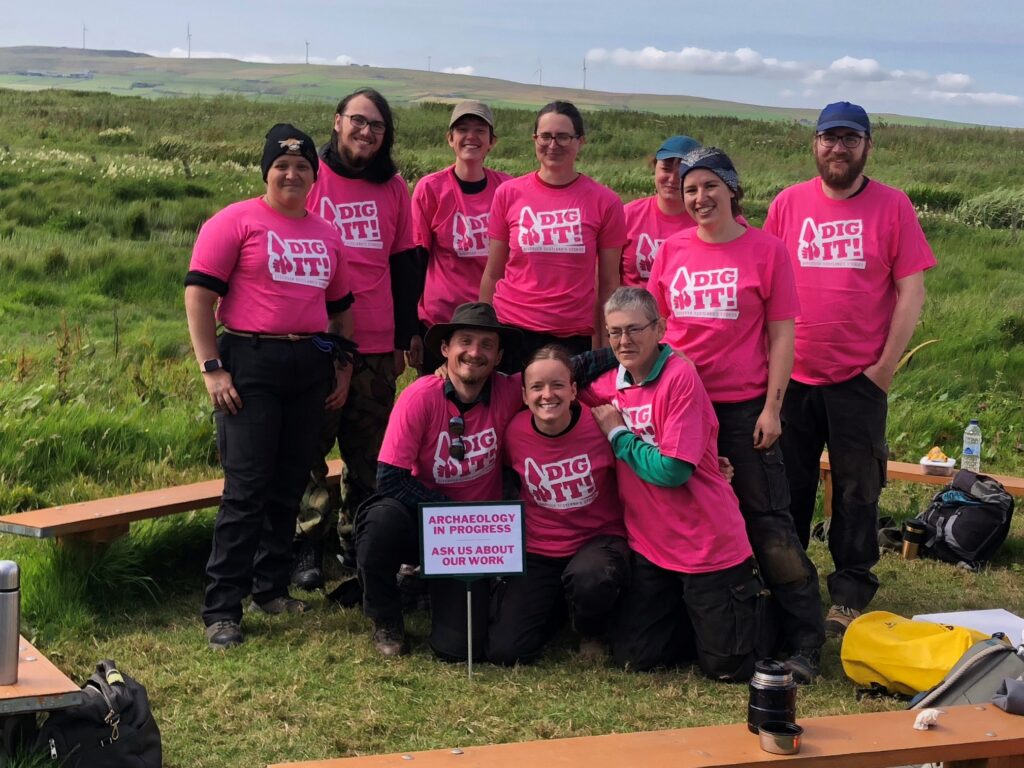
The Knowe of Swandro team celebrating the campaign (Image Credit: S. J. Dockrill)
Medieval French Pottery in Fife
In Fife, imported medieval pottery was found at Lindores Abbey, a 12th-century monastery with a tradition of distilling dating back to the 15th century. The piece of French pottery is currently believed to have been made in either Rouen or Reims around 600 years ago and was unearthed by the Monastic Archaeology Field School (MAFS) in June.
According to Dr Kimm Curran, Honorary Research Fellow at the University of St Andrews and Heritage Lead (MAFS), “the important connection between Scotland’s medieval monasteries – and the wider world – places them within the large network of economic centres of trade and industry. Lindores Abbey and its location on the Tay River, as well as its connections to the medieval trade centre of Perth, makes this particular abbey important in our understanding of Scotland’s monastic place in medieval Europe, including the exchange of goods and services.”
The public was invited to tour the site and attend a free Open Day coordinated by the summer field school students from Global St Andrews. The team hope to return in June 2025 to uncover more and welcome members of the public to the site once again.
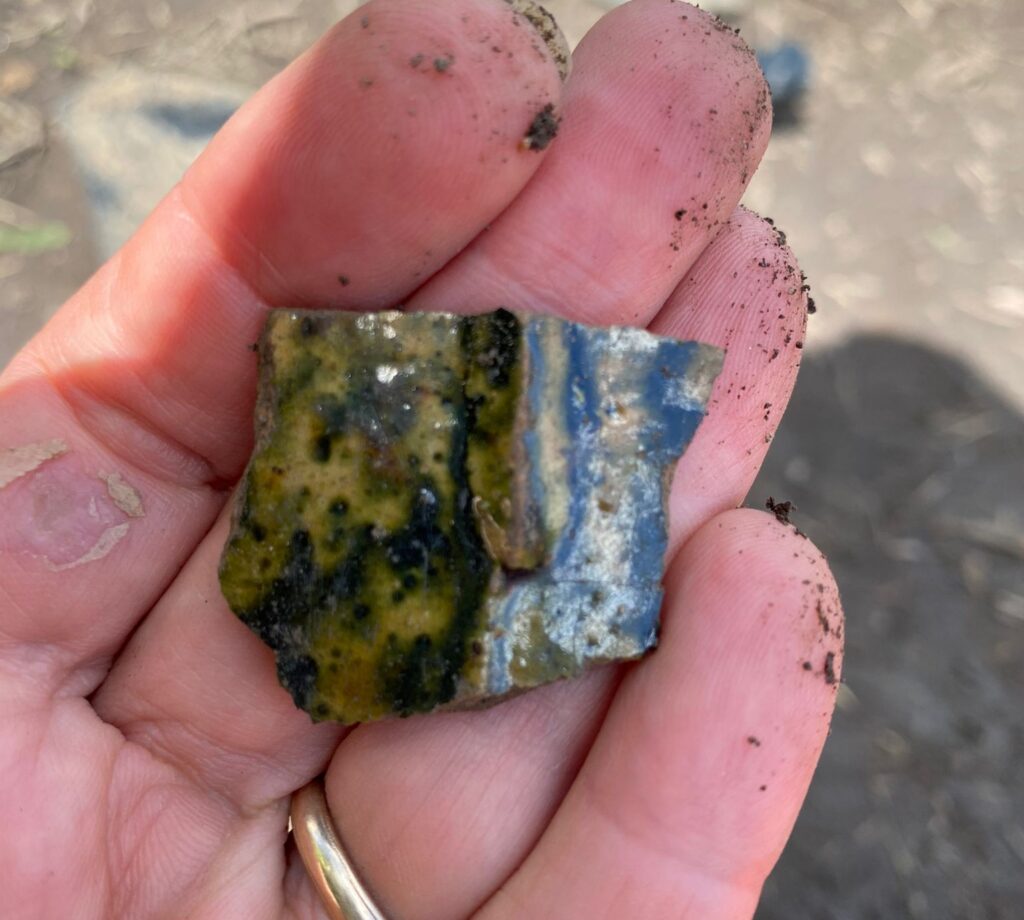
French pottery discovered at Lindores Abbey (Image Credit: MAFS)
Archaeological fieldwork which welcomed visitors or volunteers was also coordinated by AOC Archaeology, Archaeology Scotland, the Bannockburn House Trust, Ben Bright FSAScot, Clyde Archaeology, Dr Murray Cook FSAScot, the Edinburgh Archaeological Field Society, the Friends of Dundonald Castle, the Friends of the Ness of Brodgar, Govan Heritage Trust, Historic Environment Scotland, Rampart Scotland, the Tarradale Through Time project, and several universities, including the Universities of Aberdeen, Edinburgh, Glasgow, and the Highlands and Islands.
In addition, the public were able to follow along online with posts on the Dig It! website and social media under the dedicated hashtag: #ScotlandDigs2024. This included updates from developer-led archaeology, which is undertaken as part of the planning process, for example, in advance of the building of new houses, schools or roads.
This year’s campaign may have come to an end, but you can still explore events, dig into over 100 archaeology stories or sign up to the monthly Dig It! Digest to have updates delivered straight to your inbox.
Tweet
Dig It! is coordinated by the Society of Antiquaries of Scotland and primarily funded by Historic Environment Scotland
Header Image: Iron Age belt hook (Image Credit: S. J. Dockrill)
