Six Scottish Artefacts and Archaeological Sites as Emojis
Starting with everyone’s favourite…
💩 – Fossilised Dung from an Iron Age Broch
While digging at an Iron Age broch in South Ronaldsay in 2016, archaeologists from the University of the Highlands and Islands and others (including the organisation Orkneyjar) uncovered fossilised dung that may have been left by dogs or cats. According to the site director, Martin Carruthers, the animals might have been helping to control the vermin and were “probably feeding off the waste products of human food.”
The find could also reveal what kinds of scraps the broch’s residents were throwing to the animals.
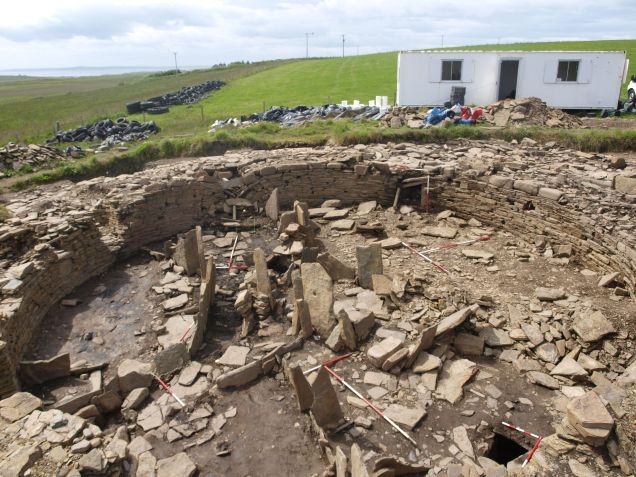
Looking across The Cairns Broch (UHI Archaeology Institute)
🔥 – Dun Deardail Vitrified Hillfort
The vitrified hillfort of Dun Deardail in Gleann Nibheis (Glen Nevis) was built around 2,500 years ago and eventually destroyed in a catastrophic blaze. Like many other ‘vitrified’ sites in Scotland, an accidental or deliberate fire of over 1000° C literally cooked the fort’s walls with the rock melting and eventually fusing.
As a result of the first ever excavation at the site, archaeologists were able to draw conclusions about the date of construction and size of the rampart walls, although the cause of these fires remains a mystery. The Dun Deardail project was part of the Nevis Landscape Partnership and was funded by Forestry and Land Scotland and the National Lottery Heritage Fund, in partnership with AOC Archaeology and the University of Stirling.
A few pics from the ongoing Dun Deardail vitrified hill fort excavation in Glen Nevis. Amazing location! pic.twitter.com/nXZDbdJj23
— NOSASArchaeologyBlog (@NosasBlog) 25 August 2015
🐶 – Cuween Hill Neolithic Dog
Is this the world’s first canine forensic reconstruction? In 2019, the head of a dog that lived in Orkney 4,500 years ago was recreated by a forensic artist Amy Thornton images produced by Historic Environment Scotland and Edinburgh University’s Royal (Dick) School of Veterinary Studies from one of 24 dog skulls that were excavated by archaeologists in Cuween Hill Chambered Cairn, a Neolithic tomb in Orkney. The reconstruction was then put on display in the Maeshowe Visitor Centre.
The domesticated dog with wolf-like characteristics was reconstructed “as part of an attempt to bring alive the stories behind Orkney’s large number of Neolithic monuments and those who built them”.
Dogs have been known as ‘man’s best friend’ for a very long time. But what did dogs look like 4,500 years ago? Thanks to a new facial reconstruction of a skull in our collection, commissioned by @HistEnvScot, we now know… 🐺https://t.co/Voh1tN5eFR pic.twitter.com/a2UkDnKBgK
— National Museums Scotland (@NtlMuseumsScot) 15 April 2019
👣 – Dunadd Footprint
Sitting on top of an isolated hill, Dunadd Fort in Kilmartin Glen was a royal power centre of Gaelic kings over 1,200 years ago. Excavations in the 1980s by Alan Lane of Cardiff University also found that the mound was used as a fort more than 2,000 years ago, with archaeologists unearthing a large range of pottery and high-status weapons and metalwork.
The site also features several rock carvings, including two human footprints, which may have been used during inauguration ceremonies for new kings.
🎵 – Paisley Abbey Drain Musical Notation
After it was unearthed in the 19th century and rediscovered in the 1990s, archaeologists once again set their sights on Paisley’s Abbey Drain in 2017. This 100m long underground passageway links the medieval abbey to the river and is thought to be more than 700 years old.
In addition to the largest collection of medieval pottery ever found in western Scotland, GUARD Archaeology Ltd also unearthed a fragment of slate with musical notation.
Archaeologists go underground to unearth secrets of 700 year old Paisley Abbey Drain https://t.co/hqRpVqhsj3 pic.twitter.com/2b9OgEGXmt
— Renfrewshire News (@johnstonenews) 10 June 2019
❤️ – Robert the Bruce’s Heart
Following his death in 1329, King Robert I of Scotland’s body was buried at Dunfermline but his heart was removed and eventually buried at Melrose Abbey in the Scottish Borders.
In 1921, the Office of Works discovered a conical casket, roughly ten inches long, beneath the Chapter House floor at Melrose. They quietly reburied it but in 1996 an archaeological team working for Historic Scotland (now Historic Environment Scotland) rediscovered the casket and in 1998 it was reburied again beneath a memorial stone dedicated to the king.
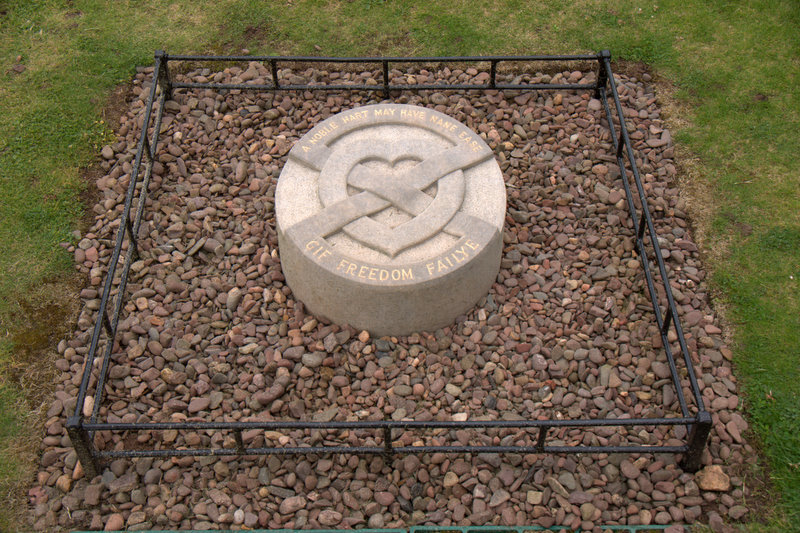
Bruce’s heart memorial, Melrose Abbey cc-by-sa/2.0 © Mike Pennington – geograph.org.uk/p/2547822
If you’d like to keep exploring Scotland’s past, visit our Events & Digs page to find an activity near you.
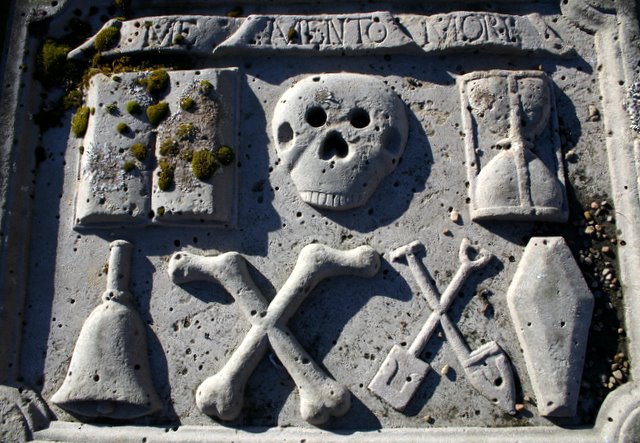
Header Image: 18th century grave slab, Logie Buchan kirkyard cc-by-sa/2.0 – © Martyn Gorman – geograph.org.uk/p/236548
