‘Tales of great war and strong hearts wrung’: Your Guide to World War Archaeology on Scottish soil
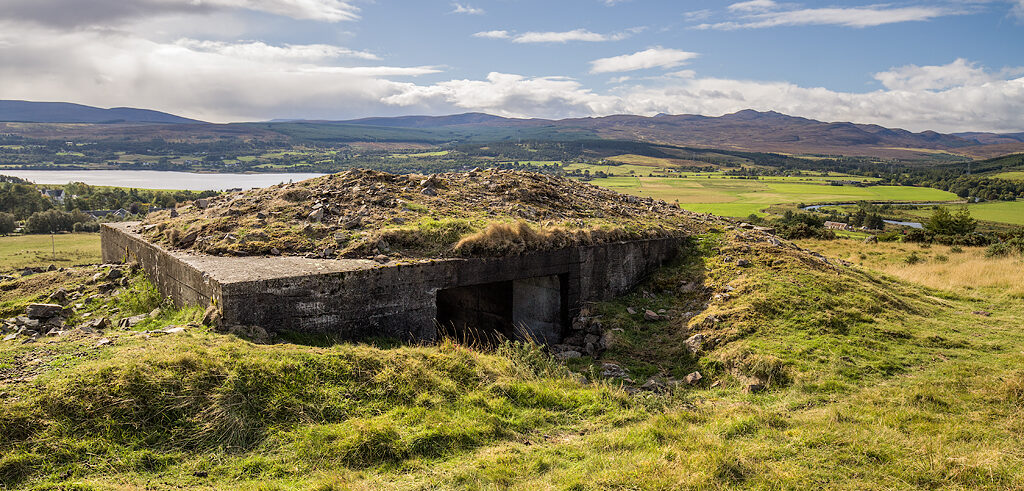
Scotland probably isn’t at the top of the list when it comes to thinking about countries related to either world war of the 20th century. One could be forgiven this as the sites of notoriety, such as Flanders, Stalingrad, and Auschwitz are quite removed from the shores of Scotland. However, it played an integral part and is full of world war archaeological remains.
What Type of World War Remains Can be Found in Scotland?
The most obvious remains are the prisoner of war (POW) and training camps. Conveniently, both state their purpose in their names: training camps trained soldiers and POW camps held enemy combatants. Scotland was home to many such camps, though most have since been completely or partially destroyed.
Stobs Training and POW Camp
Some camps, like Stobs in Hawick on the Scottish border, served dual purposes as both a training and POW camp. Initially, Stobs was built as an army training facility, but the outbreak of WWI in 1914 saw the camp’s purpose gradually shift from training troops to housing POWs; indeed, Stobs would become the headquarters camp for all POW camps within Scotland by the end of the First World War.
Though Stobs was used again by the military in WWII, it was eventually closed and dismantled. Very little remains of the camp today: wall remnants, concrete foundations, and a few buildings. Some archaeological work has been carried out at Stobs in recent years such as geophysical surveys (the systematic collection of physical features to form a data set) and archaeologists excavated the location of a former POW cemetery.
A memorial had been built by the POWs during WWI on the site, but by the middle of the 20th century, all bodies had been moved and the memorial dismantled. The excavation, undertaken by Archaeology Scotland, was able to locate grave settings, headstone bases, and elements of the damaged memorial.
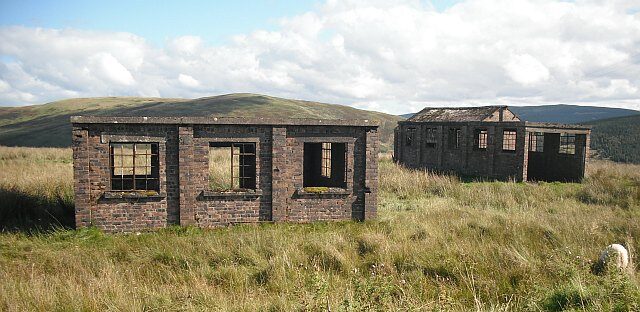
Military buildings, Penchrise cc-by-sa/2.0 – © Richard Webb – geograph.org.uk/p/1498911
Cultybraggan Camp’s Rumoured Nazi Escape Tunnel
Not all of the POW camps in Scotland sit in ruins. Perthshire’s Cultybraggan in Comrie is almost completely intact. Built in 1941, Cultybraggan held a variety of POWs, but would become infamous for housing those soldiers that were the most devoted of Nazis. Following the end of WWII, the camp transitioned into an army training facility, and was sold in the early 2000s to the Comrie Development Trust.
It now houses businesses and allotments in addition to being an active heritage site. Its constant use since the end of WWII is likely why today it remains so intact, albeit not unchanged, with many original Nissen huts (a prefabricated, half-cylindrical steel building). Rumours of a Nazi escape tunnel helped prompt an excavation (of which this author was a part) in 2017. Sadly, no evidence of such a tunnel was discovered, but there were plenty of coins, bullet casings, and building materials.
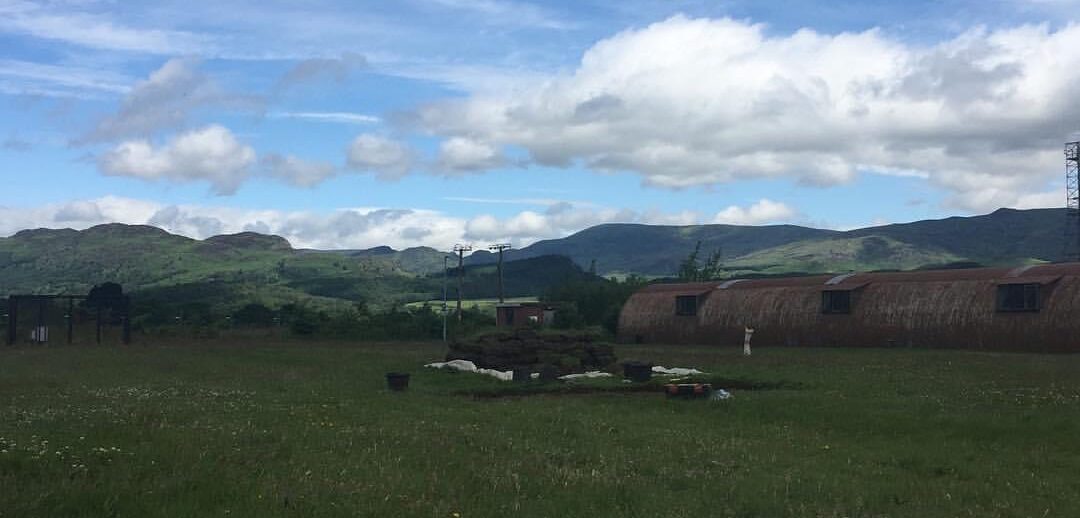
Image Credit: Sophie M. McMillan
Achnacarry Castle Training Camp for Elite Commandos
Another site, Achnacarry Castle near Fort William in the Highlands, was the location of a training camp for elite commandos of WWII. There is little by way of physical remains of the training camp today, but an archaeological dig in 2014 uncovered bullet rounds and casings as well as Hessian fragments (i.e. casing for sandbags, likely used for target practice).
Sheriffmuir’s Mock Atlantic Wall
Scotland even has its own mock Atlantic Wall (coastal defences constructed by Nazi Germany), built to practice the D-Day landings near Stirling.

Image Credit: Sophie M. McMillan
Pillboxes
Also scattered around the Scottish landscape are concrete structures known as pillboxes, so named due to their resemblance to little boxes that held medical pills. They were generally part of other existing lines of defense (e.g. trench systems, coastal areas, rail lines, etc.) and often camouflaged within their surrounding environment.
The solid construction of these pillboxes makes them difficult to destroy, which is why many survive today. Along the shores in Fraserburgh in Aberdeenshire on the Waters of Philorth beach is an excellent example of a coastal pillbox.
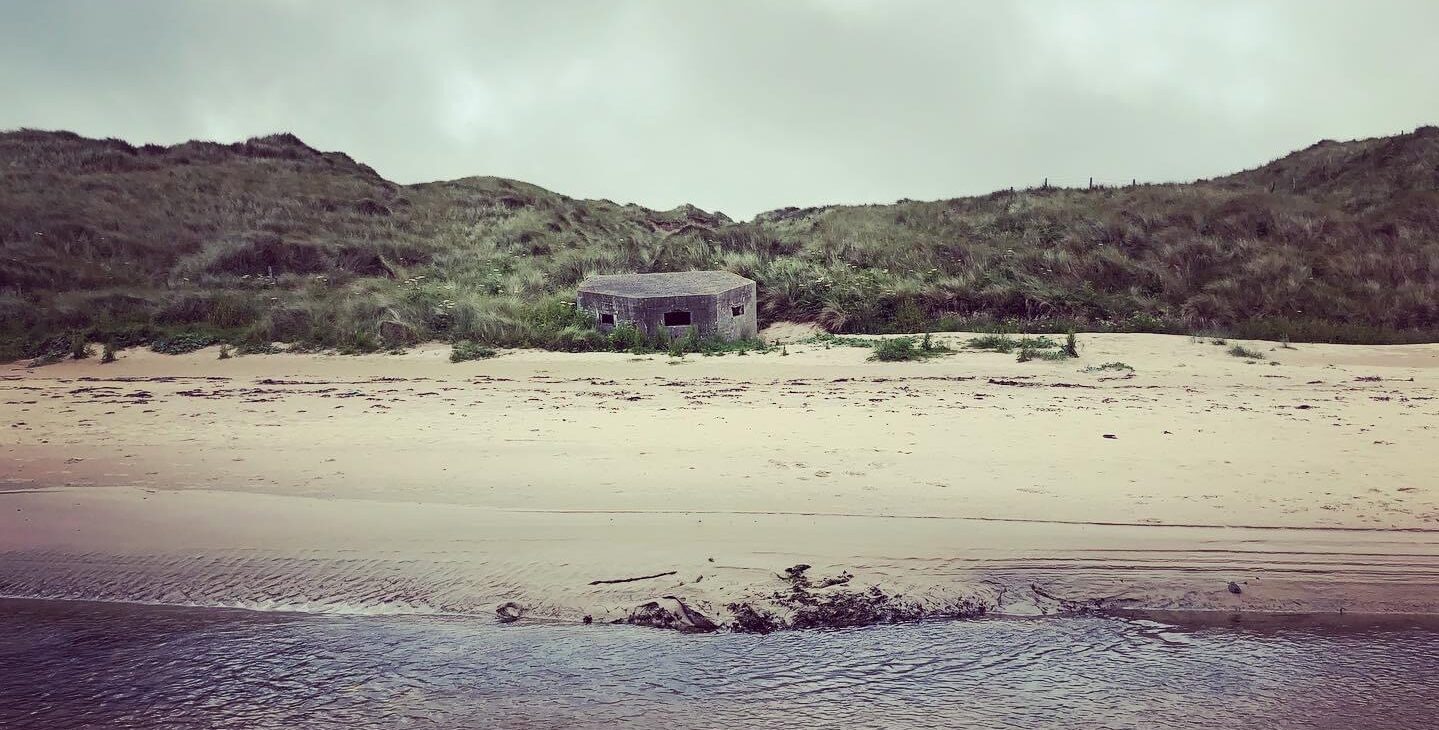
Image Credit: Sophie M. McMillan
There are also other, more personal reminders of Scotland’s world war past. The area around Stirling Castle, better known for its pre-20th century conflicts, was also used by the military during the First World War. Excavations undertaken by GUARD Archaeology came across a WWI belt buckle with a double-headed eagle and the Austrian coat of arms. Whether a war souvenir or lost by a POW far from home, the buckle is a reminder of the very human element of war.
Why Does It Matter?
The above-mentioned sites are important to archaeologists, but these remains should matter to every person in Scotland. These camps, training grounds, and pillboxes are tangible reminders of some of the most turbulent times in Scottish history, a history that belongs to all Scots.
It might seem counterintuitive to the field of archaeology, but the physical excavation of archaeological remains is actually one of the last things we want to do. Because once you start that process, there’s no going back and the physical nature of those remains is forever altered.
Unfortunately, many of these sites, especially pillboxes, come across as abandoned and unimportant, making them tempting targets for vandalism. It is extremely important to know that when you vandalise a piece of heritage, you’re irrevocably changing and destroying it for future generations.
So What Can You Do?
Although it is important to check who owns the land and gain appropriate permission, many of the world war sites in Scotland make for excellent outdoor excursions for the whole family. For those interested in a more hands on experience, check to see if any of the sites have active archaeological digs scheduled as volunteers are often encouraged to partake.
If the weather is too dreich for outside trips, as happens frequently in Scotland, there are dozens of websites, hosted by archaeological groups and local history organizations with tons of information, digital tours, and opportunities to interact.
From the scuttled Germany navy of WWI at Scapa Flow in Orkney to the coastal defenses on the Clyde, Scottish history is waiting there for you to explore.
By Sophie M. McMillan. An American expat living in Scotland, Sophie is a conflict historian and archaeologist.
Header Image: WWII defences of Bonar Bridge (17) © Copyright Mike Searle and licensed for reuse under this Creative Commons Licence
