Uncovering Black History Through Scottish Archaeology
Black people have lived in Scotland for thousands of years and recent archaeological work is helping to unearth and explore some of their stories.
Dining with North African soldiers on the Antonine Wall
Built by the Romans around 1,900 years ago, the Antonine Wall was a 37-mile-long turf fortification across what is now the Central Belt of Scotland.
The wall was peppered with forts and fortlets and marked the northernmost boundary of the ancient Roman Empire. Much of the turf remains of the wall and the foundations of these garrisons can still be seen today. Around 7,000 soldiers were stationed on the Antonine Wall from countries such as modern-day Syria, Spain and Algeria.
Dr Rebecca Jones FSAScot, former Head of Archaeology and World Heritage at Historic Environment Scotland, has noted that an archaeologist named Dr Vivien Swan identified pottery from various sites on the Antonine Wall in the 1990s which were made in a north African style. One was a type of casserole dish which may have been an ancestor of the modern tagine, while other dishes were of a brazier style, a type of cooking more popular in north-west Africa than northern Europe.

Ramparts of the roman fort, part of the The Antonine Wall built in AD 140. A mile walk from the Falkirk Wheel at Rough Castle, Bonnybridge in Falkirk (© VisitScotland / Kenny Lam)
It’s possible that these items were inspired by the original African designs and were made and used in Britain by white artisans and soldiers. More likely, it could be that Black soldiers from modern-day North Africa – or their servants and others who moved around with the Roman army – brought these items with them when traveling to what is now Scotland almost 2,000 years ago.
This interpretation supports the narrative of Black soldiers and their attendants living in Scotland, at the very edge of the Roman Empire.
Walking in the Footsteps of the ’Moorish Lassies‘ in Linlithgow
In 1504, two young Black girls, recorded as ‘Elen’ and ‘Margaret’ or the ‘Moorish Lassies’, arrived together in Edinburgh from North Africa and were baptised. Their birth names were never recorded, and it’s thought that they were likely found aboard a foreign ship around age 10.
While Scotland had not yet begun participating in transatlantic slavery, other kingdoms such as Spain had, and it has been suggested that the girls may have been taken from a European ship carrying enslaved peoples and brought back to Scotland.
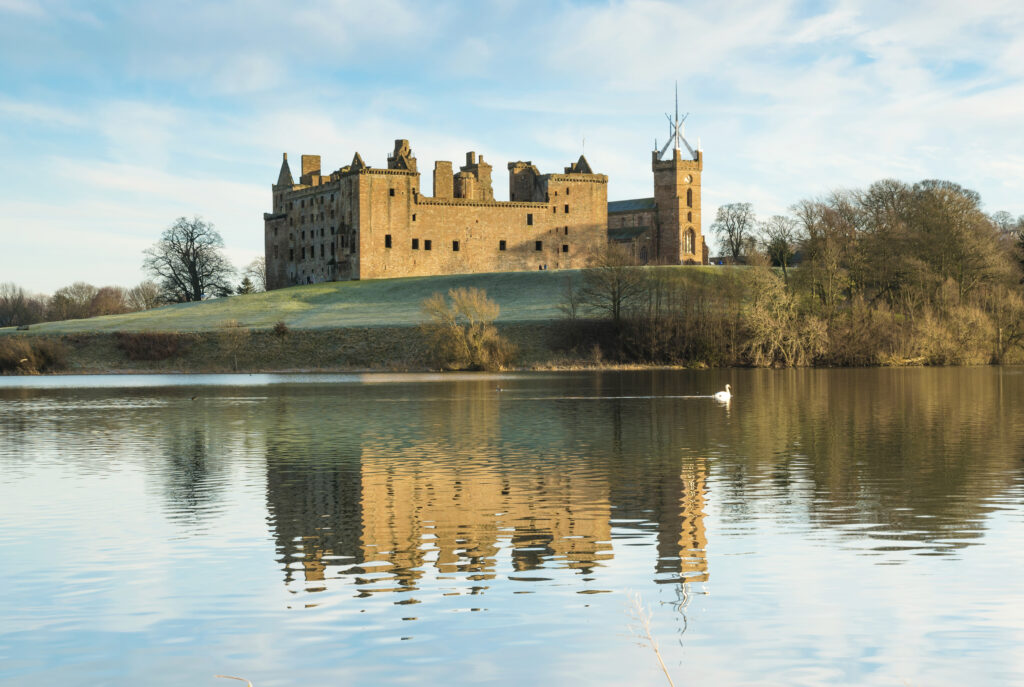
Linlithgow Palace (© VisitScotland / Kenny Lam)
In 16th-century European society, it was considered fashionable to have African girls as attendants in wealthy homes and so the ‘Lassies’ were incorporated into the household of the Lady Margaret, King James IV’s illegitimate daughter.
The girls received wages and records indicate that they lived as free people, so it’s possible that they were freed from slavery before arriving in Scotland. However, it’s worth keeping in mind that they had also been taken thousands of miles away from their families against their will and forced to live with and work for strangers.

An artist’s impression of the 1512 Easter celebrations at Linlithgow Palace, with ‘Elen’ depicted on the right (© Historic Environment Scotland)
The trio of the Lady Margaret, ‘Elen’ and ‘Margaret’ appeared at courtly events, including a royal tour of the Scottish Borders in December 1504. They would also have met the king at celebrations, such as at Christmas or annual chapel services.
In 1512, an Easter concert was held for James IV in Linlithgow Palace chapel – we know that ‘Elen’ and ‘Margaret’ were present at the palace on this occasion, so it’s possible that they also attended the same service in the chapel.
-
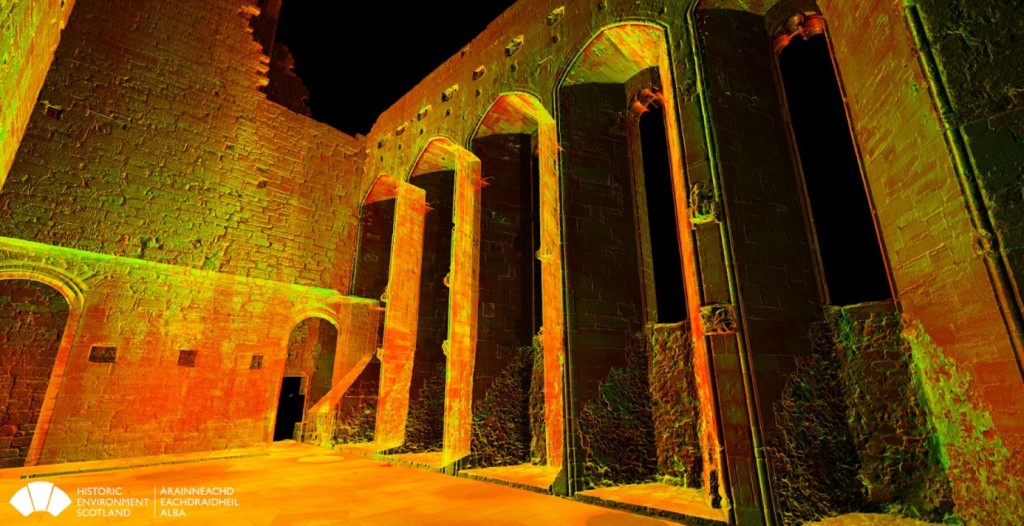
- A LiDAR scan of the now-ruined Linlithgow Palace Chapel (© Historic Environment Scotland)
-

- The same image with contemporary features added (© Historic Environment Scotland)
More than 500 years later, researchers captured how they believe the choral music sung at the service would have sounded when performed in the chapel. Using a type of archaeological recording called LiDAR scanning, Historic Environment Scotland teamed up with the University of Edinburgh to make a digital model of the chapel as it stands today.
With the help of historical and architectural records, the model was completed with a roof, windows, a tiled floor and filled with interior details including an altar, throne and drapes – features which determined how sound would have travelled in the space.
-
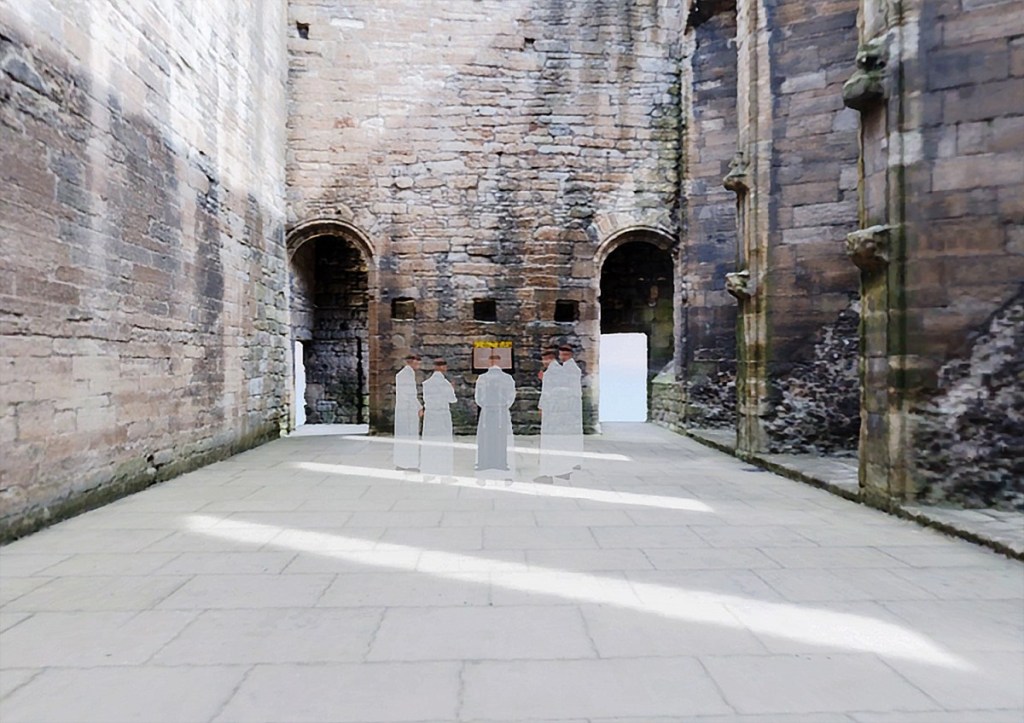
- The chapel as it stands today with religious figures positioned within (© University of Edinburgh)
-
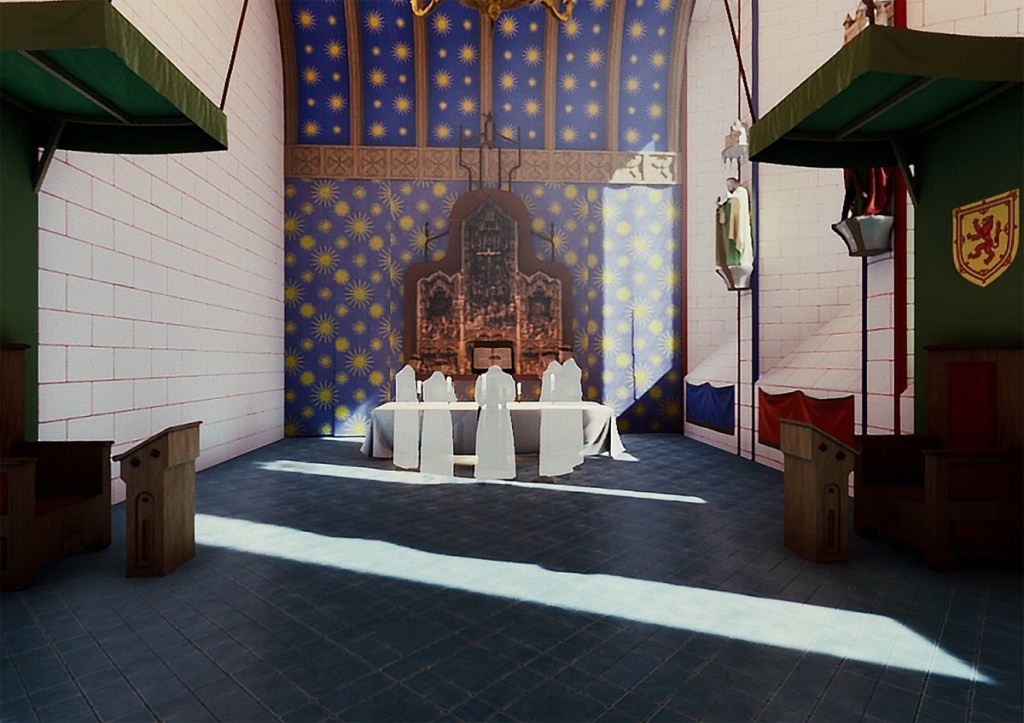
- The chapel as it may have looked c.1512 (© University of Edinburgh)
The virtual reconstruction revealed what the chapel might have looked in its heyday and informed how the acoustics would have affected the choral music performed inside during the 1512 Easter service. This allowed the team at the University of Edinburgh and Soluis Group Heritage (a company specialising in digital interpretation of historic spaces) to recreate some of the music, which you can listen to.
The project also gives us an insight into what ‘Elen’ and ‘Margaret’ may have seen and heard when they stayed at Linlithgow Palace over half a millennium ago.
Uncovering the Site of Andrew Watson’s Historic Victory in Glasgow
Andrew Watson was one of the best known and most influential footballers of his day, captaining Scotland and leading his team to significant victories over England and Wales over 140 years ago. Watson was the first Black captain of an international team, the first player of colour to win a major footballing competition and the first Black player to appear in the English FA Cup. He was also inducted into the Scottish Football Hall of Fame in 2012.

Andrew Watson, back row, third from right with the Glasgow Select Team in 1880 (Image: Scottish Football Museum collection)
Born in Georgetown, Demerara (the capital of British Guyana), Andrew’s father was a wealthy Scottish sugar plantation owner named Peter Miller Watson, and his mother was a local Black Guyanese woman named Hannah Rose. At age five or six, Andrew and his older sister Annetta travelled with their father across the Atlantic Ocean to a new life in Britain, leaving their mother behind in Guyana.
At the age of 19, Watson enrolled at the University of Glasgow though he did not complete his studies, choosing instead to pursue a career in football and to use his independent means to set up a wholesale warehouse business in Glasgow in 1877 called Watson, Miller & Baird.
In 1882, Watson captained the Scottish team to an astonishing 5-1 victory over England at the first Hampden stadium, which Paul Murtagh, a senior project officer with Archaeology Scotland, has called “the most significant footballing site in the world” because “every stadium after the first Hampden basically copied it”. Features which we recognise as part of football stadiums today, such as turnstiles, embankment standing and season tickets, all originated here. Two years later, the first Hampden Park was closed due to the building of a railway line and eventually became “lost”.
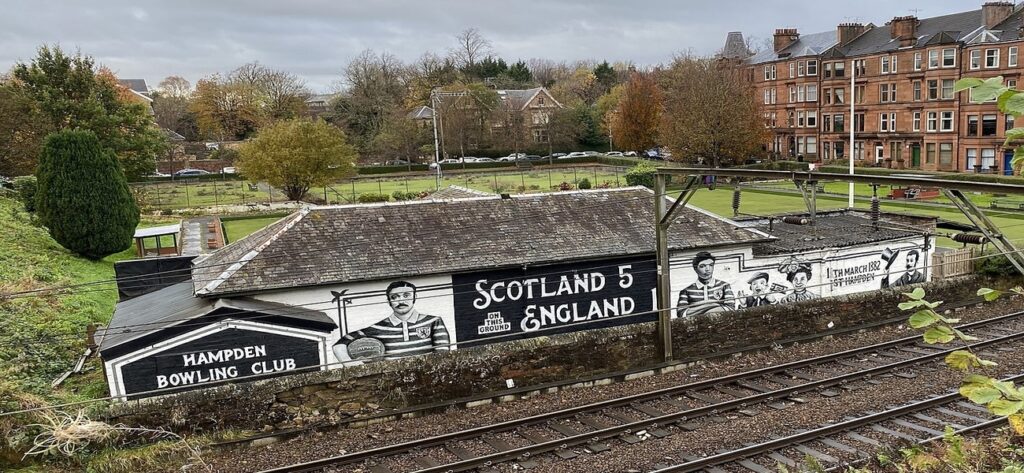
A mural on the current Hampden Bowling Club commemorates Scotland’s historic victory over England, with Watson depicted on the right (Image: By Footballfactsandimages – Own work, CC BY-SA 4.0, https://commons.wikimedia.org/w/index.php?curid=83700715)
In 2021, Archaeology Scotland partnered with The Hampden Collection to excavate parts of the Glasgow site where it is believed the stadium once stood.
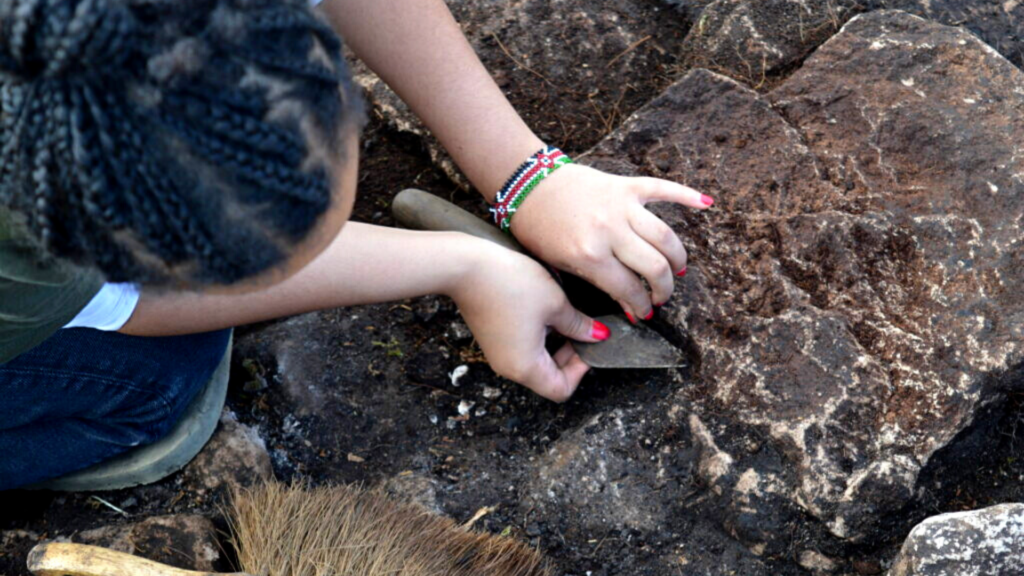
Archaeologists and volunteers (including presenters from Jambo! Radio, the only radio station for the people of African and Caribbean heritage in Scotland) carried out geophysical survey and excavated six trenches. They revealed evidence of the foundations of the first Hampden Park pavilion where the first players to play for Queens Park and the Scottish national team would have changed before matches and the team officials would have sat.
They also found tantalising evidence of the original playing surface which had been sealed beneath a century of earth and dirt, as well as numerous artefacts dropped by the early supporters including beer bottles, juice bottles and clay pipes.
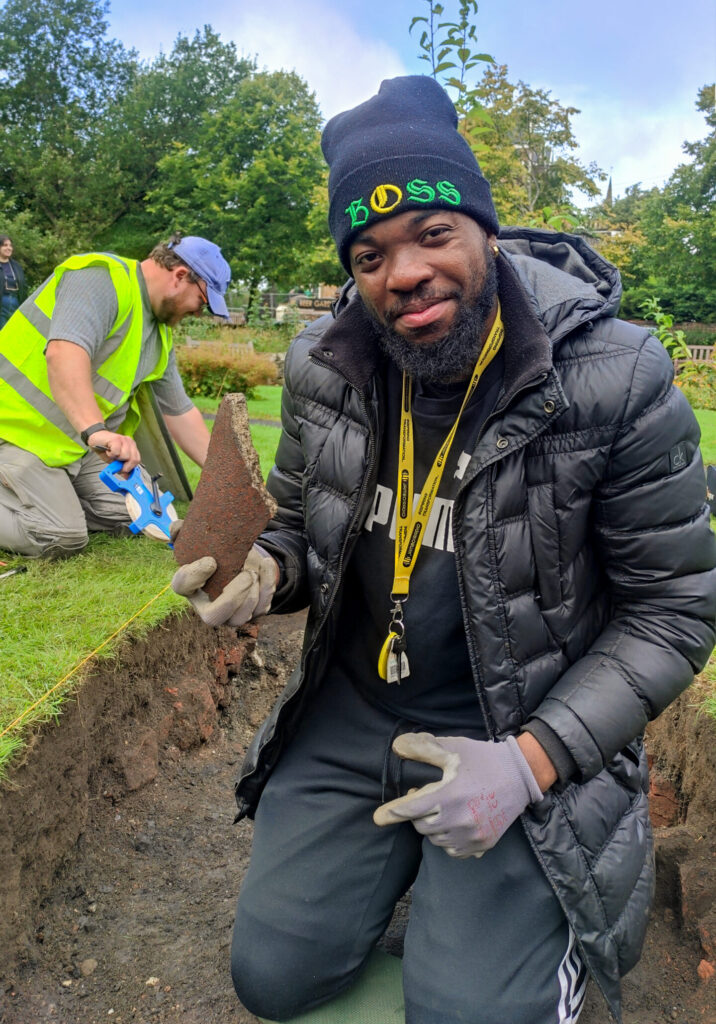
Berthold Nguetsa, a multilingual DJ and presenter at Jambo! Radio and based in Glasgow, taking part in excavations at the first Hampden site (© Jambo! Radio)
Forming part of Archaeology Scotland’s New Audience Project, funded by Historic Environment Scotland, the project was designed to engage audiences that would not normally have access to heritage or archaeology. In this instance, the team were able to work in Glasgow’s southside with people from lots of different backgrounds, whether they had been born and brought up in the area or had just arrived. Over the course of the project, volunteers from 11 different countries learned more about their new city and archaeology while practicing their English and making new friends on site.
It’s believed that this location is key to the history of football and further excavations are set to reveal much more about the ground where Andrew Watson earned his stripes.
Header Image: © Jambo! Radio
Visit the Dig It! Instagram account to see recreations of a Roman soldier, ‘Elen’ and ‘Margaret’ and Andrew Watson produced by artist Abz Mills in celebration of Black History Month Scotland 2021.