“What if I find an artefact?”: A Beginner’s Guide to Treasure Trove

What is Treasure Trove?
Treasure Trove is a system for ensuring that artefacts of archaeological and historical significance are preserved in public collections for the nation to learn from and enjoy.
It is particular to Scotland and draws upon the Scots common law principle of bona vacantia (ownerless goods). This means that portable antiquities found in Scotland which are not owned are liable to be claimed as Crown property.
The Treasure Trove Unit is co-ordinated by a small team who deal with around 2,500 finds every year. Claimed items are offered to accredited museums in Scotland to be safeguarded for future generations.
What qualifies as ‘treasure’?
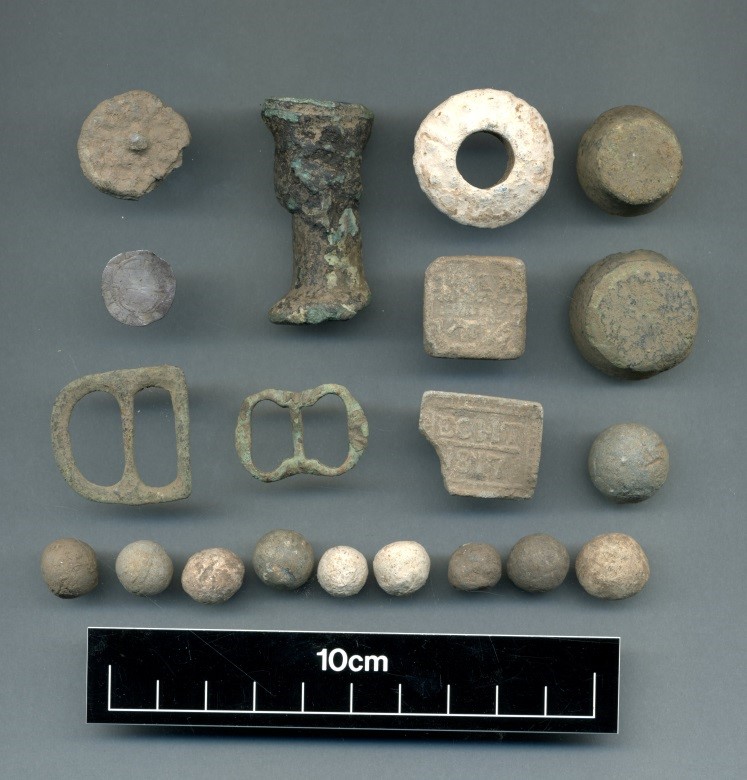
Artefactual material (i.e. manufactured or modified by humans) that has been found in Scotland or any object which has once been owned but with no traceable owner.
There is no restriction on age or material type, although the team does not deal with geological material, animal remains or wreck salvage.
© Crown copyright, reproduced with permission from Treasure Trove
What should I do if I find something?
If you think you have found something of archaeological significance in Scotland, you are obliged by law to report it to Treasure Trove.
Start by trying to record as accurately as possible where the object(s) was found, using either a hand-held GPS or by plotting the position on an OS map. Make sure you reduce as much as possible any potential damage to the object.
Although it might be tempting, do not clean it or attempt to apply any substances to it (but if an object is wet and made of wood or textile it is a good idea to keep it damp by keeping it with some of the soil in which it was found and keeping it in a plastic bag).
Then report the find to Treasure Trove as quickly as possible using the online form.
What kinds of objects have been claimed?
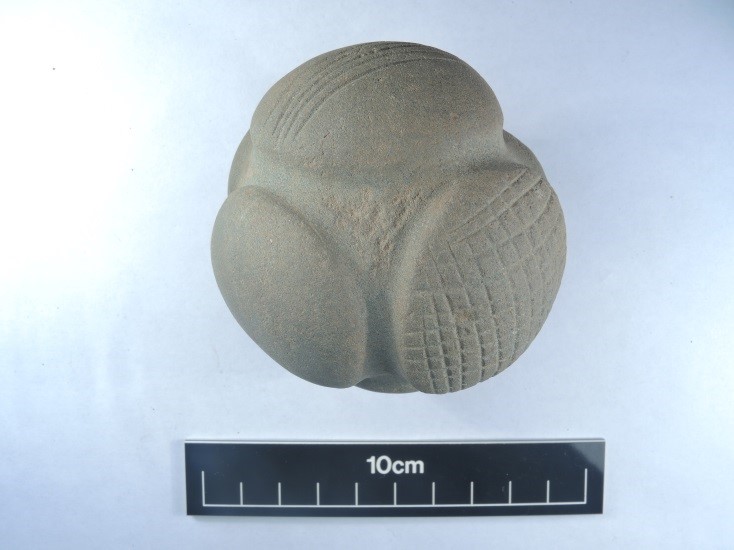
Carved Stone Ball
This curious piece of carved igneous rock (formed through the cooling and solidification of magma or lava) dates to around c.3200-2500 BC. Carved stone balls are almost exclusively found in Scotland.
This example bears six symmetrically arranged knobs with incised decoration and was found in Perth and Kinross before being allocated to Perth Museum and Art Gallery in December 2018.
© Crown copyright, reproduced with permission from Treasure Trove
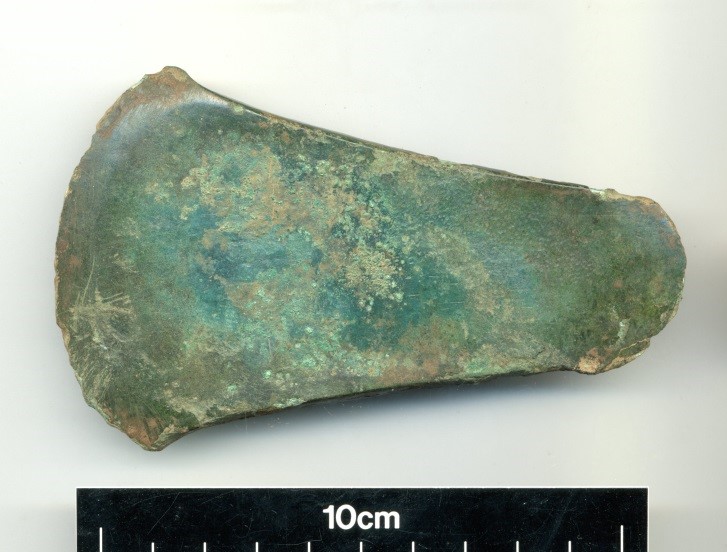
Axehead
This is an early type of axehead, known as a flat axe, which was made from copper or copper alloy over 4,000 years ago. There are traces of decoration towards the handle end, similar to ‘raindrop’ type decoration found on other examples. It was found in Dumfries and Galloway and matches a type of flat axe not previously seen in the region.
It was allocated to Dumfries Museum and Camera Obscura in June 2019.
© Crown copyright, reproduced with permission from Treasure Trove
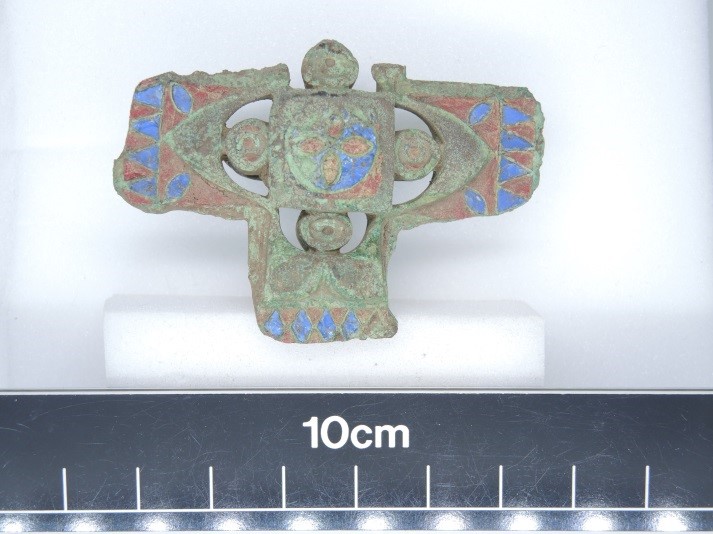
Strap Mount
Cruciform (in the shape of a cross) strap mounts and strap junctions were a standard part of an Iron Age horse and chariot harness some 2,000 years ago, as were decoration techniques such as small cell enamelling. The loss of an arm suggests that this item was discarded or accidentally lost.
This mount was found in the Scottish Borders and is now in National Museum Scotland‘s collections (March 2019).
© Crown copyright, reproduced with permission from Treasure Trove
Medieval Annular Brooch
This small, silver annular (ring-shaped) brooch complete with pin was found in South Lanarkshire and dates to the high medieval period (around 1250 AD). The terminals are crafted to resemble the heads of dogs, probably hunting dogs, and appear to be keeping the pin in place.
It was allocated to the Biggar Museum Trust in March 2014.
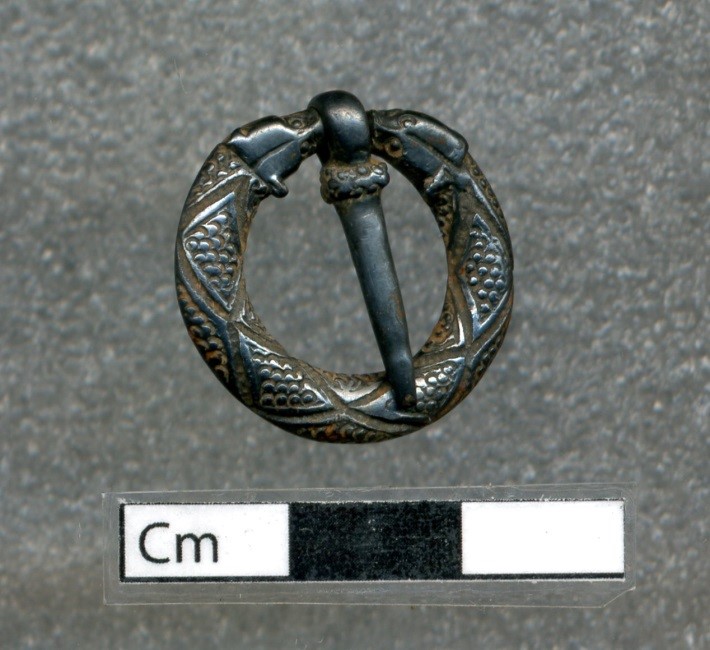
© Crown copyright, reproduced with permission from Treasure Trove
Beggar’s Token
This object is a beggar’s badge made of lead, issued to an individual as a formal means of permission to beg in the parish. The date of 1699 is an early one with the majority of recorded examples dating to the mid-18th century.
It was found in Fife and allocated to Fife Cultural Trust and St Andrews Museum in March 2016.
-

- © Crown copyright, reproduced with permission from Treasure Trove
-
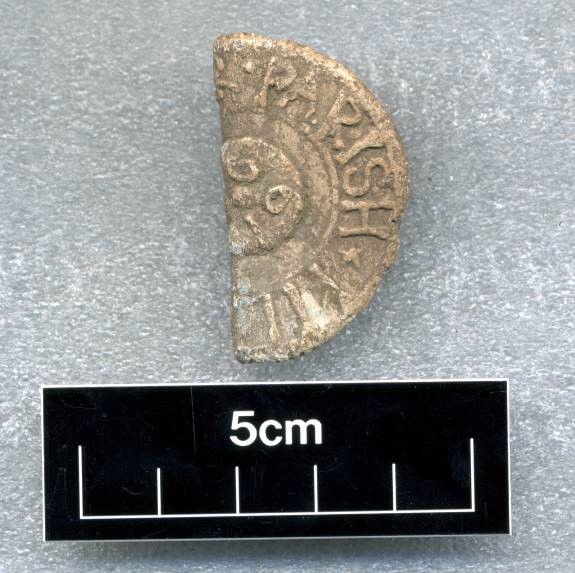
- © Crown copyright, reproduced with permission from Treasure Trove
These five finds were claimed by the Crown, however the majority of objects that are recorded do not get claimed and are instead returned to the finder.
Think you’ve found something or want to know more about the process? Visit the website to learn more or get in touch through Facebook, X (Twitter) or email.
By Ella Paul, Treasure Trove Officer
