Five of Scotland’s Most Amazing Archaeological Finds from 2019
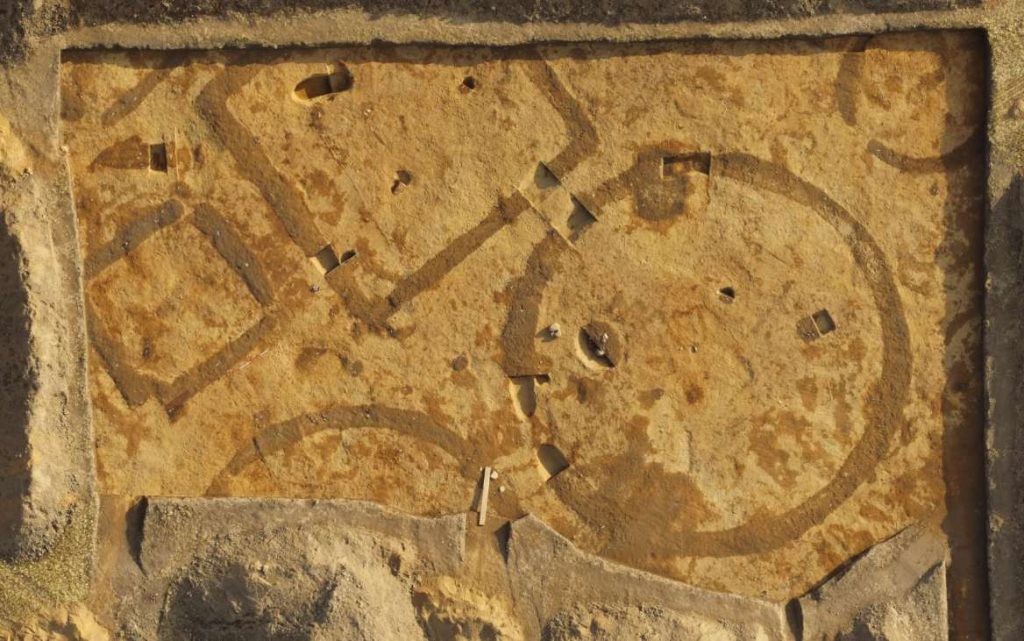
Archaeologists and volunteers unearth astonishing finds across the country each year and 2019 was no exception.
Dig It! has compiled a list of the most ground-breaking stories, including a newly-discovered Pictish stone, ‘Viking drinking hall’ and 1,400-year-old skeleton.
1. The Lost Govan Stones
In March, a 14-year-old schoolboy on his first dig uncovered one of Govan’s long-lost medieval gravestones.
In the 19th century, 46 of these carved stones were found in the Govan Old Parish Church graveyard west of Glasgow city centre. Even then, they were recognised as being hugely significant, a unique legacy of an ancient kingdom which had its powerbase centred on Govan. 31 of stones were taken into the church for safe keeping; a collection which is now referred to as the ‘Govan Stones’. Until this year, it was believed that many of the remaining stones had been lost or destroyed when a nearby building was accidentally demolished.
Following the young boy’s discovery, three more stones were quickly revealed. Further excavations are in the planning stages to recover any additional medieval gravestones which may have survived.
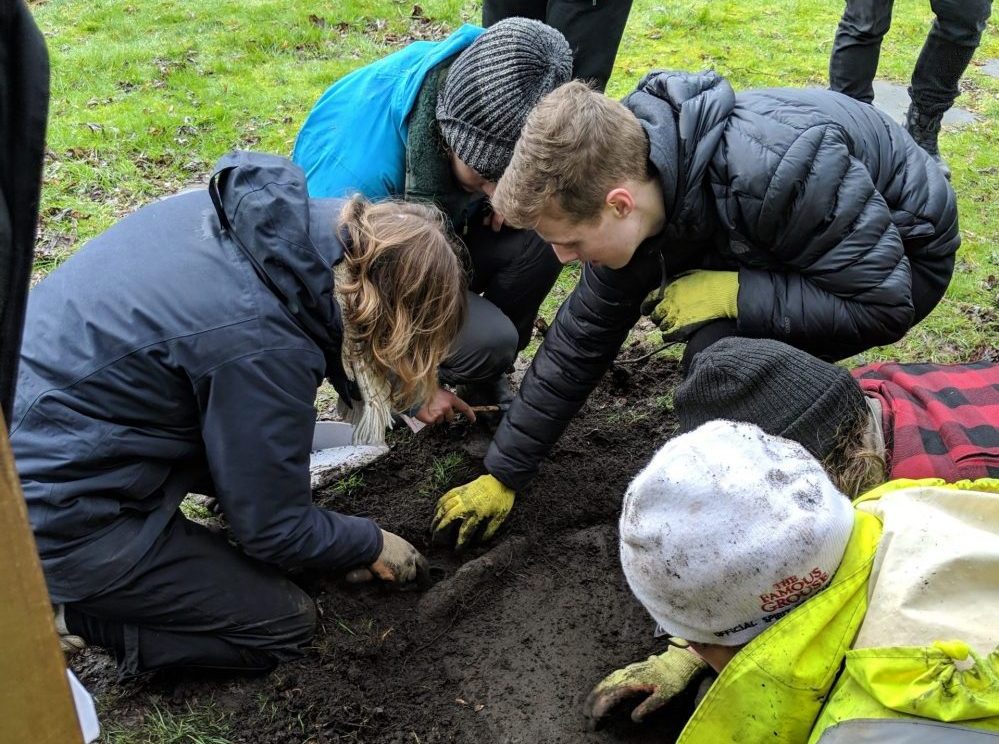
Image Credit: Govan Heritage Trust
2. Scotland’s First Railway Track
In June, the 1722 Waggonway Heritage Group unearthed the remnants of Scotland’s first railway track.
The wooden rails from the original Tranent Cockenzie Waggonway – which predates traditional steam railways and has ties to the Jacobite Rebellion of 1715 – were found one metre below the surface of a modern-day footpath in East Lothian. They were badly decayed but left imprints and cavities in the ground either side of an unexpected find – a cobbled horse track for the ponies which pulled the empty waggons up to the coal pits at Tranent.
The group will be conducting more extensive excavations in 2020 with events and viewings for members of the public.
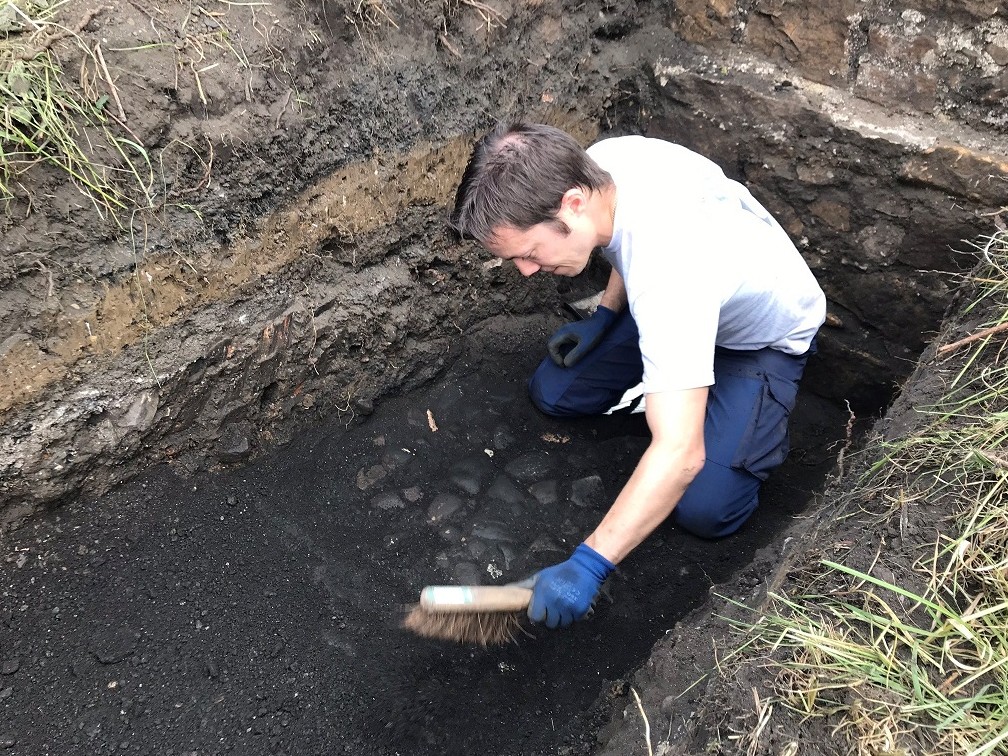
Image Credit: Ed Bethune
3. ‘Viking Drinking Hall’
During the summer, a large Norse hall was discovered at Skaill Farmstead on the island of Rousay in Orkney.
A team of archaeologists from the University of the Highlands and Islands Archaeology Institute, residents and students had been digging at the site for several years before uncovering the hall which probably dates from the 10th to 12th centuries AD. The 13m-long building features wide stone walls and stone benches along either side and has parallels with other Norse halls excavated in Scotland. The name Skaill, which is a Norse word for “hall”, also suggests that the site was high-status and as the area is mentioned in Orkneyinga saga – a historical narrative – as the home of a powerful chieftain, it’s long been believed that a Norse settlement was located somewhere at Skaill.
This discovery provided another piece to the 5,000-year jigsaw puzzle along this archaeology-rich stretch of coast.

Image Credit: Bobby Friel (@Takethehighview)
4. Newly-discovered Pictish Stone
In August, a previously unknown carved Pictish stone was found at an early Christian church site in the Dingwall area of the Scottish Highlands.
The rare find, described by experts as being of “national importance”, was thought to have to been carved around 1,200 years ago, although it had lain on the ground since at least the 1700s when it was reused as a grave marker. It is likely to have originally stood over 2 metres high and is decorated with several mythical creatures, including two massive beasts, which experts described as being “unlike anything unlike anything found on any other Pictish stone.” It is one of only about 50 complete or near complete Pictish cross-slabs known in the world, and the first to be discovered on the Scottish mainland for many years.
The stone was found by a member of the North of Scotland Archaeological Society, who are now working with the Pictish Arts Society to raise money to clean, conserve and then display the stone in Dingwall Museum.

Image Copyright: NOSAS
5. 1,400-Year-Old Pictish Skeleton
In September, archaeologists uncovered the partly preserved remains of a skeleton thought to be about 1,400 years old. The discovery was made on the Black Isle in the Scottish Highlands as part of the Tarradale Through Time project on the last day of the excavation of a large Pictish cemetery.
Although a number Pictish cemeteries have been discovered in northern Scotland over the last 30 or 40 years, only a handful have been excavated and bodies very rarely survive due to the acidity of the soil.
If the teeth have survived, analysis of the enamel could say a lot about where the person grew up and what kind of diet they enjoyed.
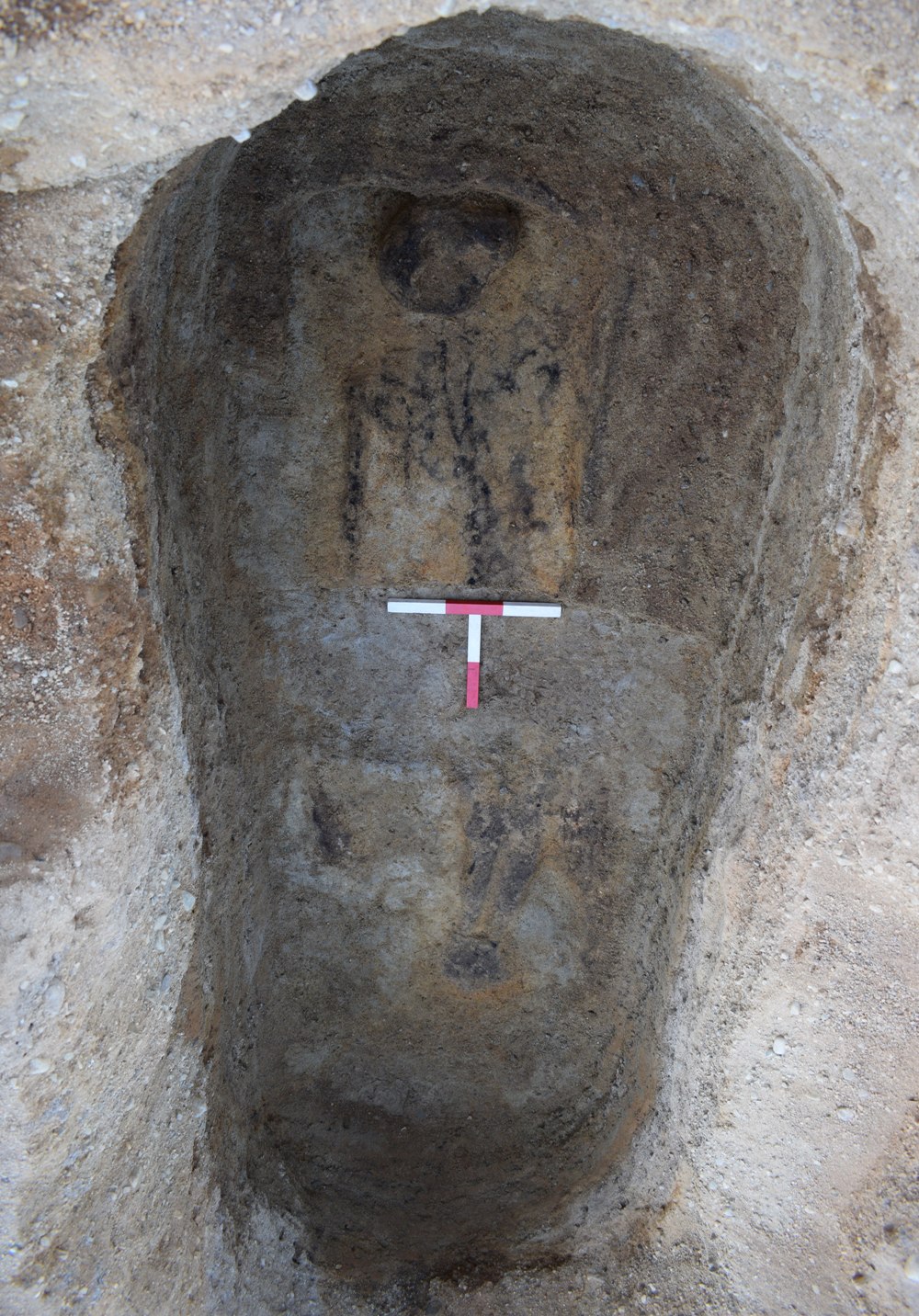
Image Copyright: James McComas / Tarradale Through Time
Dr Jeff Sanders, Project Manager at Dig It!, said:
“Archaeology is all about discovering stories – and new chapters are added to Scotland’s story every year. These are just some of the amazing finds that have been unearthed in 2019, with other exciting discoveries ranging from a 2,500-year-old seal tooth pendant in Orkney to Pictish hillforts in Aberdeenshire. We’re already looking forward to adding more pages in 2020.”
Amy Eastwood, Head of Grants at Historic Environment Scotland, said:
“The fantastic archaeological discoveries made this year are key examples of how the historic environment helps our understanding of our past, and we’re pleased to support and promote the invaluable work being carried out across Scotland.”
Don’t forget that Dig It! advertises events through the year, including dozens of excavations which are open to members of the public thanks to free tours, open days and training opportunities. The project is coordinated by the Society of Antiquaries of Scotland and primarily funded by Historic Environment Scotland.
Header Image: A 1,400-year-old skeleton was uncovered at a large Pictish cemetery near Muir of Ord on the Black Isle which had been identified from aerial photographs (Copyright: Andy Hickie)
