Of Grave Concern: The Archaeology of Burials on Scotland’s Battlefields (English)
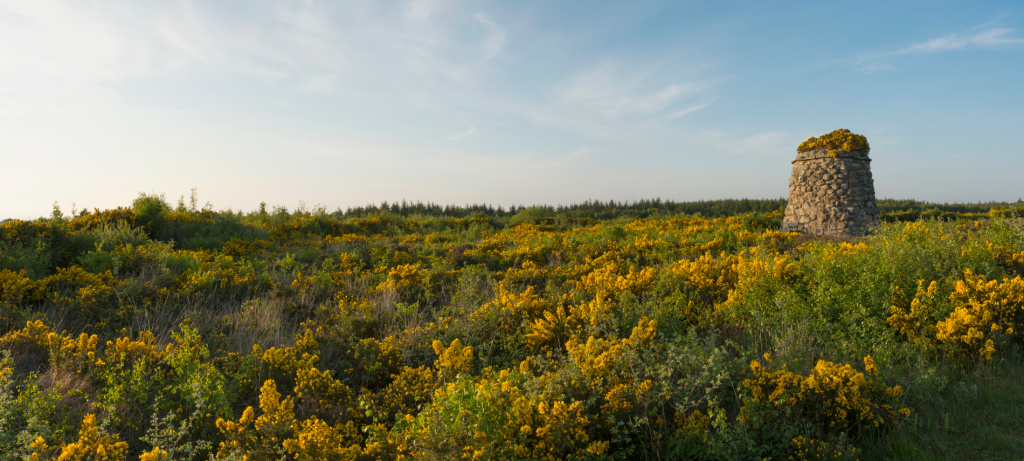
A question I am often asked as a battlefield archaeologist is, why do we not find more burials on battlefields? We read about hundreds, if not thousands, of people being killed on the battlefield and yet in Scotland we don’t seem to have much in the way of archaeological evidence.
Is this accurate? If not, what evidence do we have of battlefield burials and how can we understand them better?
A Note on local tradition and folklore
Local tradition and folklore have an important role to play as part of the colourful cultural tapestry of the battlefield, but in terms of locating burials they should always be taken with a pinch of salt. For the Battle of Killiecrankie in 1689, local tradition talks of the bodies of the dead soldiers being thrown into Perthshire’s River Garry and floated out to sea.
On the battlefield of Langside in 1565, local legend has the mass graves of the battle-dead buried under the boating pond of Glasgow’s Queen’s Park. Ghostly apparitions of soldiers rising from the shallows have been reported over the years by park rangers and passers-by! The jury’s still out on both of these stories.

Queen’s Park Boating Pond © Copyright Richard Sutcliffe (CC BY-SA 2.0)
Documentary sources
Ghosts knee-deep in pond water are all very well, but primary sources giving eyewitness accounts in letters and diaries are a much more valuable resource for the battlefield archaeologist. They can give important descriptions of where and how the dead were laid to rest, especially if they were carried away and buried elsewhere. For earlier medieval battles these sources can be less reliable for accurate detail, but no less useful for understanding post-battle burial practices.
For example, the Annales of Trokelowe (written by John of Trokelowe, an English Benedictine monk and chronicler of the fourteenth century) records that ‘gret Lordis’ [great Lords] of a higher social status were buried in ‘haly place honrabilly’ [a holy place with honourability], presumably taken away from the battlefield to the consecrated ground of a churchyard. Whereas the rest of the soldiers remained on the battlefield buried together in ‘gret pyttis’ [great pits][1].
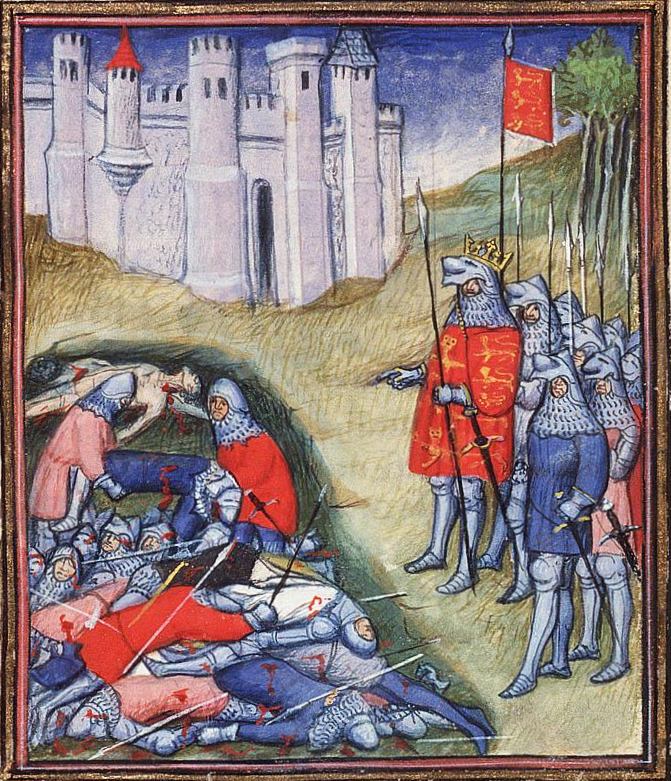
King Edward III counting the dead at the Battle of Crecy in France [2]
X marks the spot: Early discoveries of battlefield burials
As industry developed in Scotland during late-18th and 19th centuries, the digging of canals, drainage ditches, and railway tracks led to buried archaeology being discovered at an unprecedented rate. The discovery of several bodies from the 1645 Battle of Kilsyth in North Lanarkshire were reported during the construction of the Forth and Clyde canal in the 1770. And in the building of Falkirk High railway station, a mass grave locally referred to as the ‘English graves’ were found in relation to the 1746 Jacobite Battle of Falkirk.
Much of the evidence of these findings comes from annotations in the Ordnance Survey maps and accompanying name books. For example, evidence pointing towards burials on the 1547 Battle of Pinkie can be located next to the placename Pinkie Brae in East Lothian. Here the descriptive remark reads, ‘it is supposed that the killed at the battle of Pinkie in 1547 were buried here as quantities of human bones have from time to time been dug up, some enclosed in coffins’.
At the site of the 1645 Battle of Philiphaugh in the Scottish Borders, a field is tantalisingly named ‘Slain Men’s Lea’ where it is reported that a ‘considerable quantity of human remains were discovered some years ago and said to be the remains of some of Montrose’s Army who fought on Philiphaugh battlefield’. This may relate to the massacre of Irish soldiers captured after the Marquis of Montrose’s Royalist army was defeated in battle here by Government troops and who would not have been afforded individual graves.
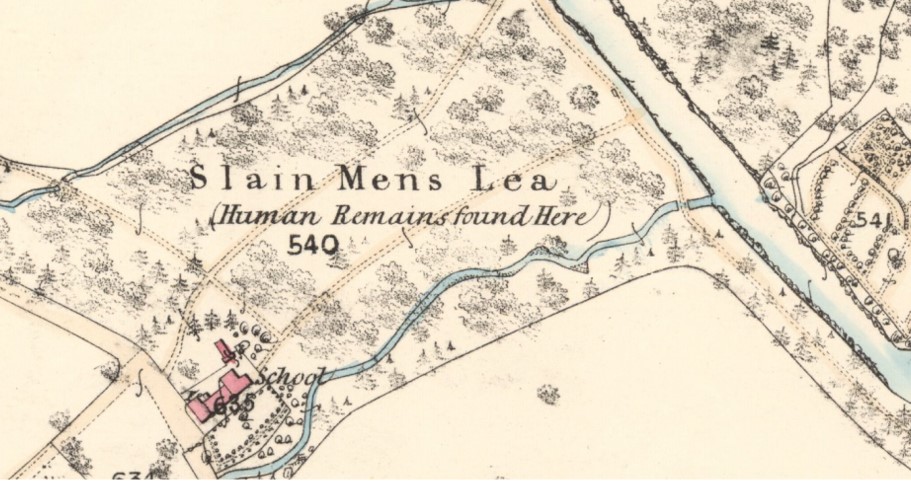

Ordnance Survey Map Selkirkshire XI.7 (Selkirk) Survey date: 1858 and relating OS Name Book original transcription with description of the placename ‘Slain Men’s Lea ’
Bring up the bodies
“The opening of that burial heap blazes strangely in my thoughts; these are the very jawbones that were clenched together in deadly rage, on this very ground 197 years ago”. – Letters from Thomas Carlyle to his friend Edward Fitzgerald in 1842[3]
Thomas Carlyle’s aptly grim description of the scene when a mass grave of soldiers killed at the 1645 Battle of Naseby in England was disturbed by farmworkers. Carlyle, a prominent historian born in Ecclefechan in Dumfries & Galloway was ahead of his time in his desire to seek out and observe the physical remains of battle, placing himself in the shoes of the soldiers who fought and died there.
Today there are many techniques at the disposal of the archaeologist to trace the presence of potential graves and mass burials on battlefields without waiting for them to be disturbed by farming or development. For example, geophysical survey conducted by GUARD Archaeology at Cùil Lodair (Culloden) (the battlefield where the 1745 Jacobite Rising came to an end) found evidence of larger pits under the mounds of the ‘Clan Graves’ and in an area known as the ‘Field of the English’[4].
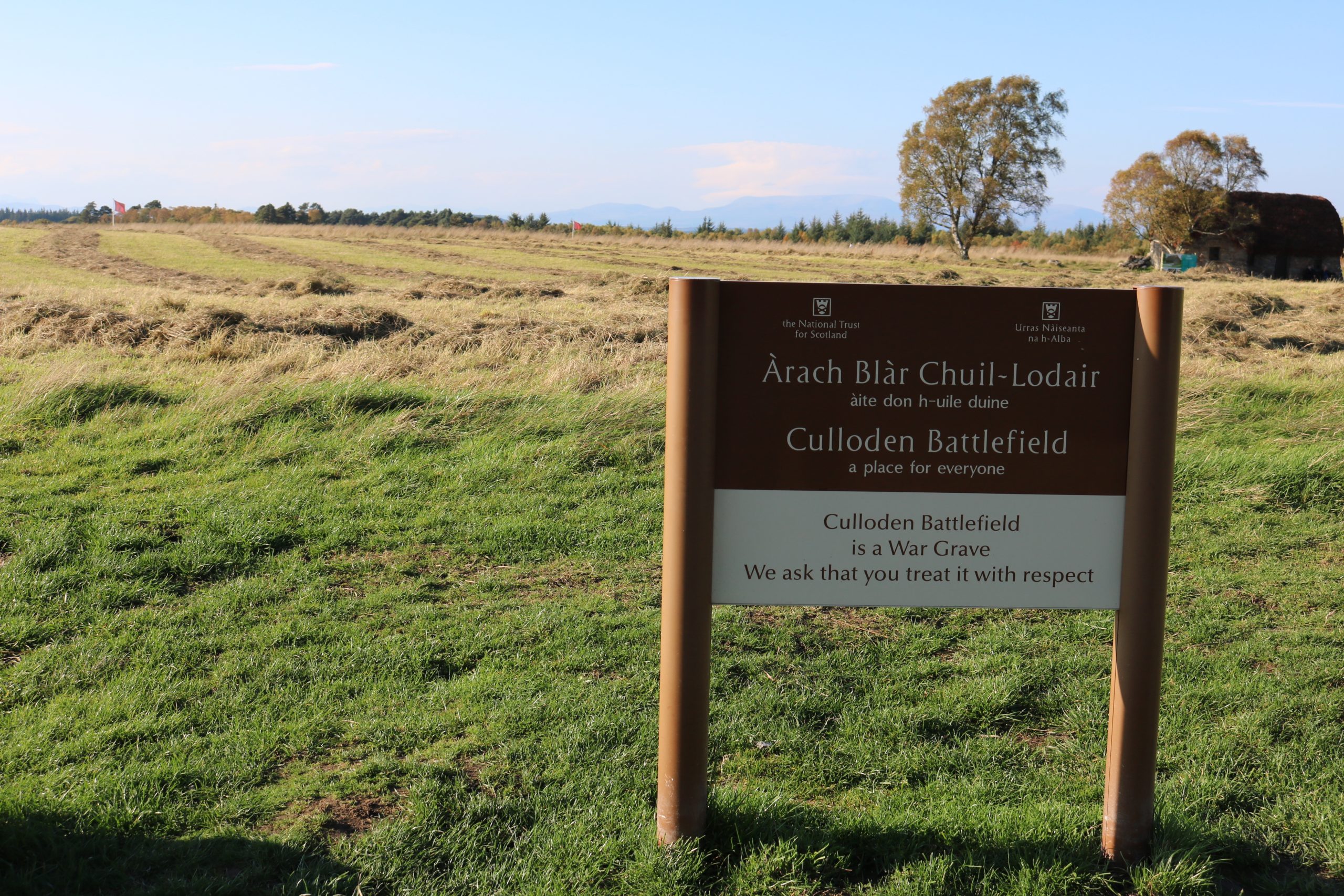
But, if we know where they are, why don’t the archaeologists just get on and dig them? A National Trust for Scotland sign on the battlefield near Inbhir Nis (Inverness) answers this question succinctly; ‘Culloden Battlefield is a War Grave. We ask that you treat it with respect’.
In his letter, Carlyle is clearly disturbed by what he saw and it is an important reminder that the excavation of human remains, especially within mass graves, are the result of traumatic events and must be attributed with the upmost care and dignity. To justify excavating we must be armed with a clear purpose and solid research questions, otherwise we are simply disturbing those who have been laid to rest in peace.
Battlefields are not only war graves, but an important part of our national heritage and we need to treat them accordingly. Ensuring their future protection is an important step in that process. Why not find out more about a battlefield near you by visiting the Historic Environment Scotland Inventory of Historic Battlefields?
By Dr Natasha Ferguson, Former Post-Excavation Manager at GUARD Archaeology Ltd. She is a specialist in medieval to early modern artefacts and conflict archaeology.
Header Image © VisitScotland / Kenny Lam
[1] Brown, M., 2008. Bannockburn: The Scottish War and the British Isles 1307-1323: The Scottish War and the British Isles 1307-1323. Edinburgh University Press.
[2] Jean Froissart, Chroniques (Vol. I): Edward III counting the dead on the battlefield of Crécy, c.1410
[3] FitzGerald, E., 2017. The Letters of Edward Fitzgerald, Volume 1: 1830-1850 (Vol. 4853). Princeton University Press pp. 125-138
[4] Pollard, T. ed., 2009. Culloden: the history and archaeology of the last clan battle. Pen and Sword.
