Textiles and timbers: the archaeology of recycling in Scotland
Now more than ever, we are constantly being reminded of the importance of reusing products where we can and recycling as much as possible – but this isn’t a new concept. People in Scotland have been practising recycling for centuries.
Pictish Art in Unusual Places
Next time you go walking, keep an eye out for stones with unusual markings built into farm buildings and outhouses. Several ‘new’ Pictish stones have been found in recent years which were previously hidden from view inside later structures, like the Pictish stone which was discovered in the wall of a farmhouse in 2011.
The Pictish kingdom, made up of different tribes across much of modern northern and eastern Scotland seems to have dissolved around 1,200 years ago, leaving their art and the remains of their fortresses behind. It’s generally unclear whether the people who reused their stones in later medieval buildings recognised their significance, or simply wanted to reuse them as decoration, but there are some exceptions.
“Two massive beasts” have been uncovered on a 1,200-year-old Pictish standing stone in the #Highlands 🐲
The slab was discovered in August at an early Christian site near Dingwall ⚒️
The mysterious carvings are unlike anything seen before in Pictish art: https://t.co/pXuwl3KWo2 pic.twitter.com/GECxQwqZc0
— Dig It! (@DigItScotland) October 14, 2019
In 2019, a 1,200-year-old standing stone was found lying in the ground and covered by vegetation at an early Christian church site near Dingwall in the Highlands. The slab, which is decorated with carved beasts ‘unlike anything found before’ in Pictish art, had been used a grave marker in the 1790s. The stone is now on display at Dingwall Museum.
Recycling Roman Silver on Traprain Law
In 1919, a huge hoard of Roman silver was unearthed at Traprain Law in East Lothian. It is the largest known hoard of its kind from outside the Roman Empire and was buried around 1,600 years ago, probably to avoid being stolen by an enemy, with the owner intending to return and collect it at a later date.
It contains over 250 pieces of silver which have been cut up either for exchange as a kind of currency or for melting down and recycling into new objects of Iron Age design, such as the heavy silver chain weighing around 3kg.
Once serving as exquisite dining plates and crockery, it is likely that the hoard have been given by the Roman army to the Iron Age community controlling Traprain Law as a diplomatic gift or in payment for mercenary activity. After abandoning Scotland in the 160s, the Romans used bribery to keep the frontier secure.
Through the Looking Glass
Silver was not the only valuable material which found its way to Scotland via the Roman Empire; glass was a prized commodity in the Scottish Iron Age. In 1985, a beautiful blue glass bead was found in a ploughed field in Culduthel, near Inverness. While the bead was made in Scotland more than 1,500 years ago and unique in style, the glass itself was originally Roman and most likely made in the Mediterranean or Levant region using an organic salt substance – natron – that came from Egypt.
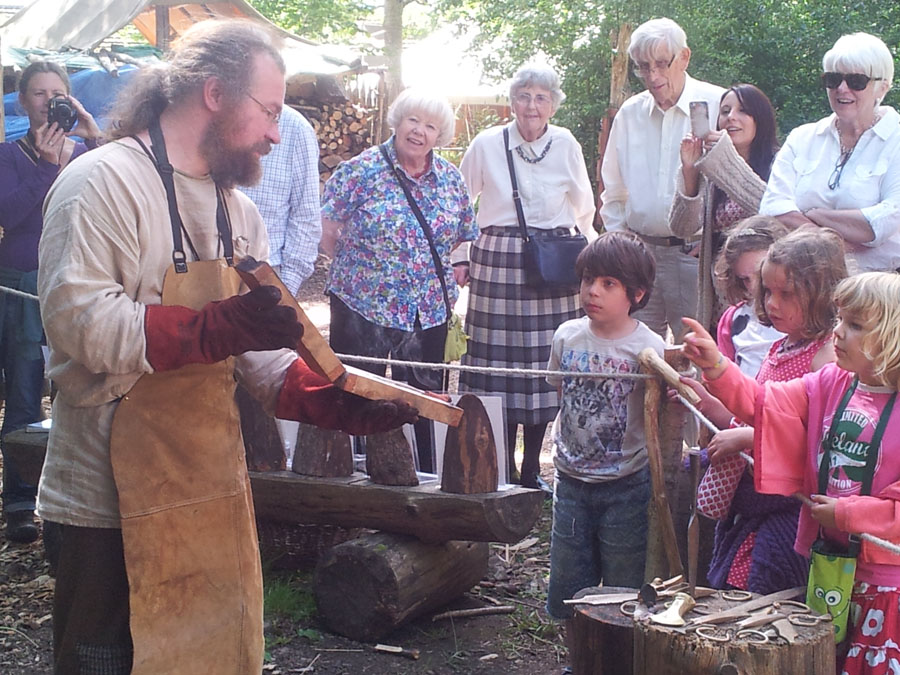
A demonstration of Iron Age crafting (Image Credit: Scottish Crannog Centre)
Like today, the glass was probably recycled quite a few times and used to make different things like vessels, bangles or windows, before it was made finally into beads and enamels by a glass worker from Scotland.
Terrific Textiles
In 1867, a remarkably well-preserved woollen hood was discovered in a peat bog in Tankerness in Orkney. The garment was lost, or deliberately deposited, in the bog around 1,700 years ago and the lack of oxygen in the peaty conditions slowed the decay for hundreds of years.
Radiocarbon-dating established that the Orkney Hood was woven sometime between 1,385 and 1,750 years ago, making it contemporary with the Iron Age site of Minehowe and probably the oldest, best-preserved sample of textiles in Britain.
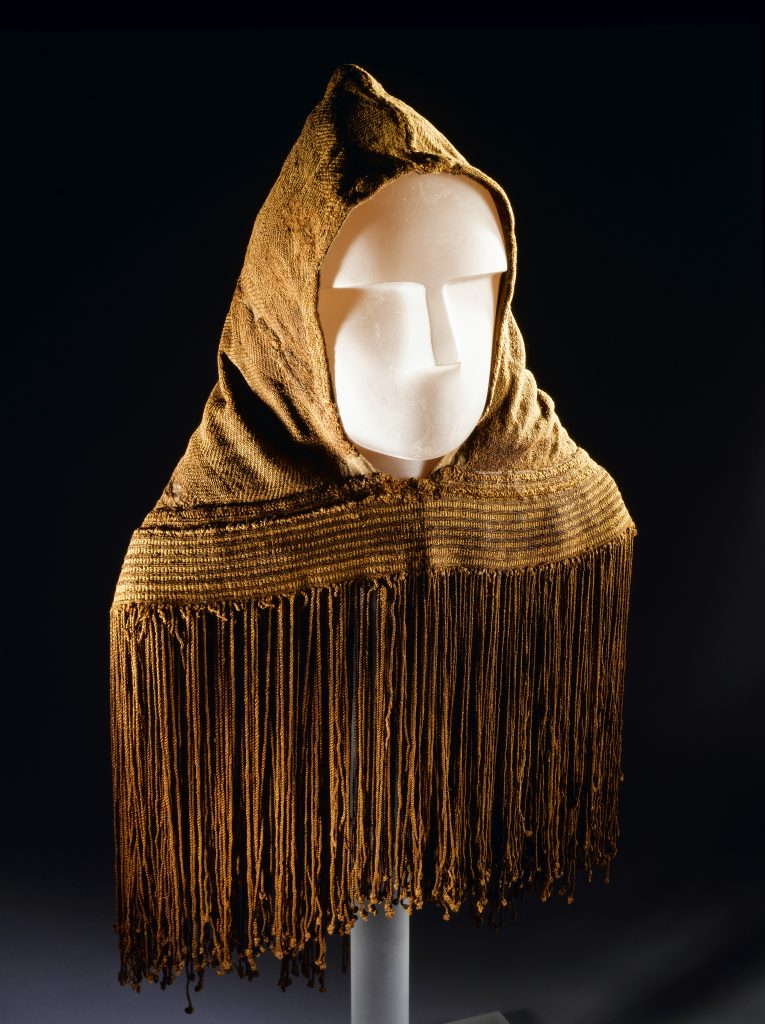
© National Museums Scotland
It’s thought that the hood was made for a child using recycled pieces from an adult’s garment. A textile expert commissioned to create a copy of the original hood noted that one of these original pieces “was undoubtedly from a very high status garment” and that “the care taken by the hood maker to utilize these old garments to make a new article of clothing…is endearing.” Could the Orkney hood have been a gift from the weaver to a young family member?
See the original on display in the National Museum of Scotland, or visit the replica at The Orkney Museum.
Shiver Me Timbers
When they’re not lying on the sea bed, the remains of Scotland’s sailing ships can sometimes be found re-purposed in later buildings as structural timbers. MacArthur’s Store in Dunbar, is a rare example of this. Around 1800, the East Lothian building was strengthened with ships’ timbers which remain visible to this day. Thanks to a dating process called dendrochronology, it’s now thought that they were originally part of an 18th-century Scots merchant vessel.
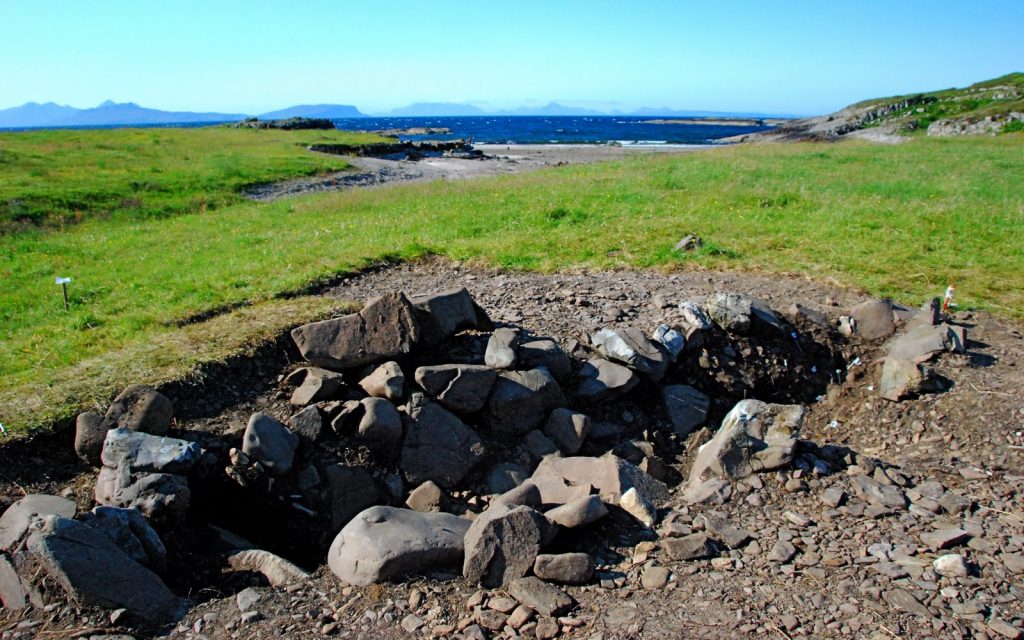
Viking ships can also be found reused underground in graves. In 2011, the first undisturbed Viking ship burial to be found on the British mainland, was uncovered on the Ardnamurchan peninsula in the West Highlands. A Viking chieftain had been buried along with his shield, sword and spear, with the 10th-century vessel being re-purposed as his coffin. The boat’s timbers had rotted into the soil centuries ago, however its outline remained, traced by hundreds of rivets, some still attached to scraps of wood.
Intrigued by these tales? Unearth more of Scotland’s stories in our Discover section.
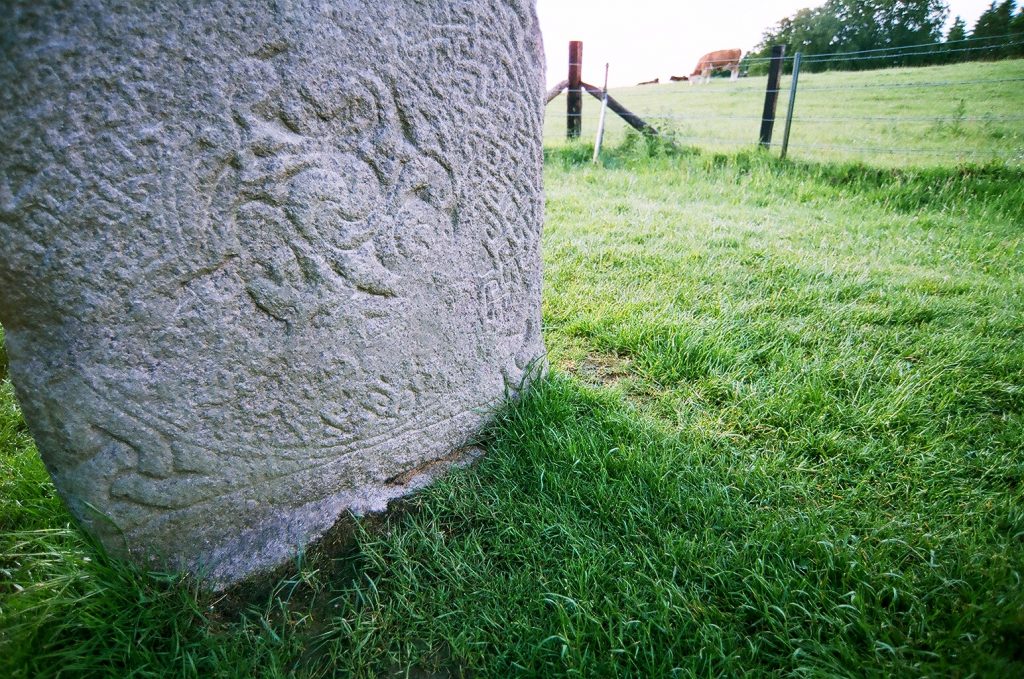
Header Image: Maiden Stone (Image Credit: Sean Knoflick via Flickr at http://bit.ly/3a141x1, CC BY-NC 2.0)
