Eight of the Best Museums in Scotland for Discovering Archaeological Gems
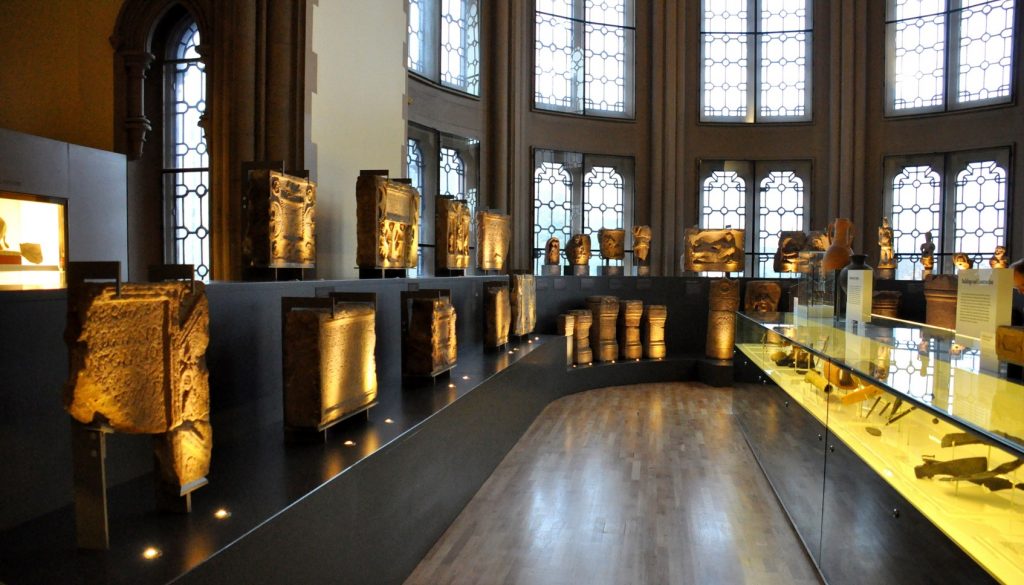
Archaeological remains offer an insight into what life was like for people living in Scotland over thousands of years, and the country’s museums collect and display these objects to help tell this story. The Galloway Hoard, Lewis Chess Pieces, and Meigle Pictish Stones are a few of the most treasured finds held in some of the country’s 257 accredited museums, which are responsible for collections Recognised as Nationally Significant to Scotland by Museums Galleries Scotland, on behalf of the Scottish Government.
Which ones should be at the top of your list?
1. The Scottish Crannog Centre
Despite the June 2021 fire that destroyed their iconic reconstruction of an Iron Age crannog (loch dwelling), a trip to this Perthshire museum is still a fascinating journey into Scotland’s prehistory. The Crannog Centre holds a collection of original artefacts, and offers demonstrations of textiles, cooking, ancient crafts and technologies all of which will give you an insight into the lives of the villagers who lived by the loch 2,500 years ago.
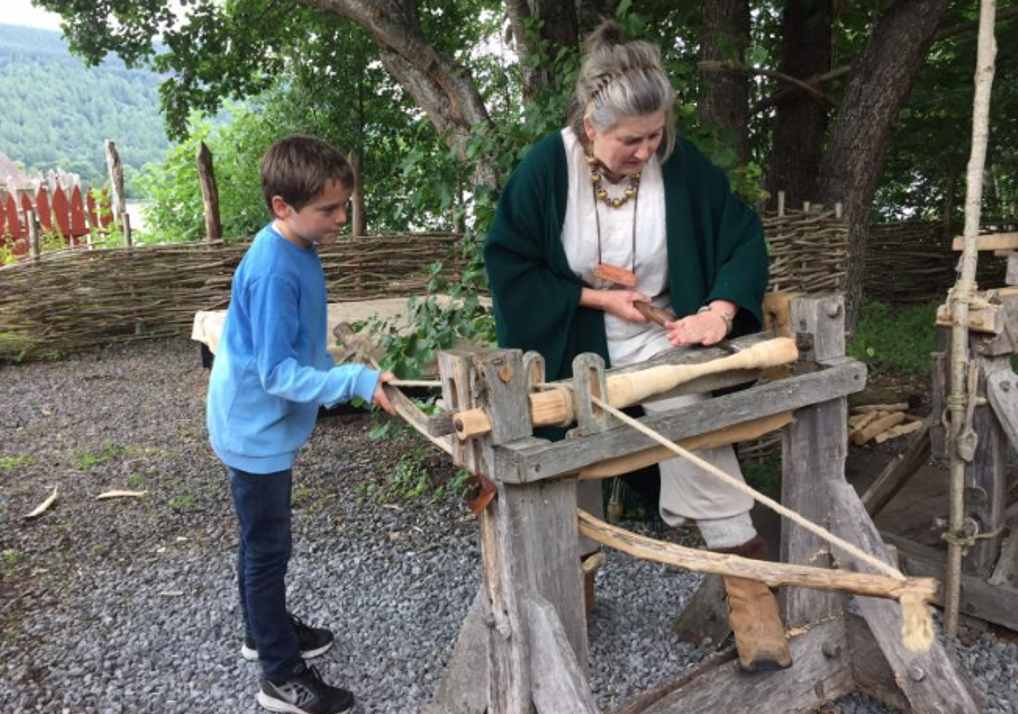
Iron Age interpreter Frances teaches traditional woodworking skills to visitors.
2. Shetland Museum
The archaeology collection at Shetland Museum holds between 300,000 to 400,000 items and is a valuable part of the archaeology record of Scotland, the UK and Europe. The Collection represents all aspects of life in Shetland from 4,000 BC to the 17th century, when Shetland was at the heart of European trade routes. The collection consists of site excavations and stray finds from a variety of elements including domestic, farming, fishing and religion.
3. National Museum of Scotland
The National Museum of Scotland in Edinburgh has a wide selection of objects for anyone with a keen interest in Scottish archaeology. The Scottish history and archaeology department holds a large collection of objects including stone, pottery, bone, antler and wood.
The collection intends to be a broad record of the life, times and achievements of the people of Scotland at home and abroad. A museum highlight is the Lewis Chess Pieces, a collection of medieval chess pieces carved from sperm whale tooth and walrus ivory which were found on a beach on Leòdhas (the Isle of Lewis) in 1831. The pieces are thought to have been made in Norway in the late 12th to early 13th century and are available to view in 3D via Sketchfab.
4. Dumfries Museum
The archaeological collection of Dumfries and Galloway is mainly held in Dumfries Museum and was Recognised as Nationally Significant in June 2007. Dumfries Museum holds a unique collection of objects including the skull of Robert the Bruce, a large collection of Roman and Celtic stone crosses and funerary monuments (structures that commemorate a deceased person) and a variety of tools and weapons used by some of the region’s earliest inhabitants.
5. Kilmartin Museum
In 2019, Kilmartin’s Prehistoric Collection was announced as the 50th Recognised Collection in Scotland. The Collection is made up of many unique artefacts including flint and other stone tools, bronze weapons, and prehistoric pottery, most of which were discovered or excavated at the Neolithic (10,000 – 4,500 BC) and Bronze Age (3,000 – 1,200 BC) sites and monuments in Argyll’s Kilmartin Glen.
Kilmartin’s pottery collection includes the three earliest ‘Beaker’ pots (a small ceramic or metal drinking cup, shaped to be held in hands) found in Britain. The museum’s setting in this landscape is important to the display of their collection, as it overlooks an impressive cemetery of burial cairns (piles of stones used as boundary markers, memorials, or burial sites).
6. Stromness Museum
A visit to the Stromess Museum in Orkney is an opportunity to explore the fascinating collections from maritime and natural history, including First World War artefacts from the scuttled German High Seas Fleet, items from Orkney’s involvement in the Hudson’s Bay Company, and collections brought home from Orcadians travelling abroad. Stromness Museum holds a large number of internationally significant archaeological objects, including important Neolithic and Bronze Age items, from sites across the archipelago.
7. Orkney Museum
The Orkney Museum’s collection of archaeology tells the story of this archipelago, covering over 2.5 million years from the Stone Age, to the Picts and Vikings, right through to the present day. The archaeology collection covers all human activity up until around 1,400 BC.
Containing over 100,000 items from over 50 modern excavations, this collection is internationally recognised for its range and quality. The archaeology collection is made up of bone (including human bone and animal bone objects such as combs), Neolithic pottery, Neolithic rock art (such as the Westray Stone) and the 1,100-year-old Scar Viking boat burial.
The wonderful Scar Viking boat burial. Dated between 875 and 950 AD On display @OrkneyMuseums , Found on Sanday, Orkney. pic.twitter.com/kQlvzlJGy4
— Pieta Greaves (@PietaGreaves) July 24, 2017
8. Hunterian Museum
Glasgow’s Hunterian Museum holds a large prehistoric archaeological collection, mainly donated by Andrew Henderson Bishop, a member of a well-known Glasgow family. Bishop had a keen interest archaeology and collecting and was elected a Fellow of the Society of Antiquaries of Scotland in 1909. The Bishop collection holds over 22,000 objects (approximately 65% of these are from Scotland), including a rare intact metal vessel of the Late Bronze Age (1,650 – 1,050 BC), carved stone balls and prehistoric gold.
The Hunterian also holds a number of additional archaeological subcollections, many of which have been donated to the museum over the years.
Waiting for your favourite museum to reopen? You can check out these great resources and activities in the meantime.
By Robyn Evans, Digital Marketing Apprentice at Museums Galleries Scotland
Featured Image: The Antonine Wall, Rome’s final frontier, the Hunterian Museum (Image Credit: Osama Shukir Muhammed Amin FRCP(Glasg) via Wikimedia Commons at https://bit.ly/3bIVvmq, CC BY-SA 4.0)
