Princes and Prehistory on Eilean Bhòid (Bute)
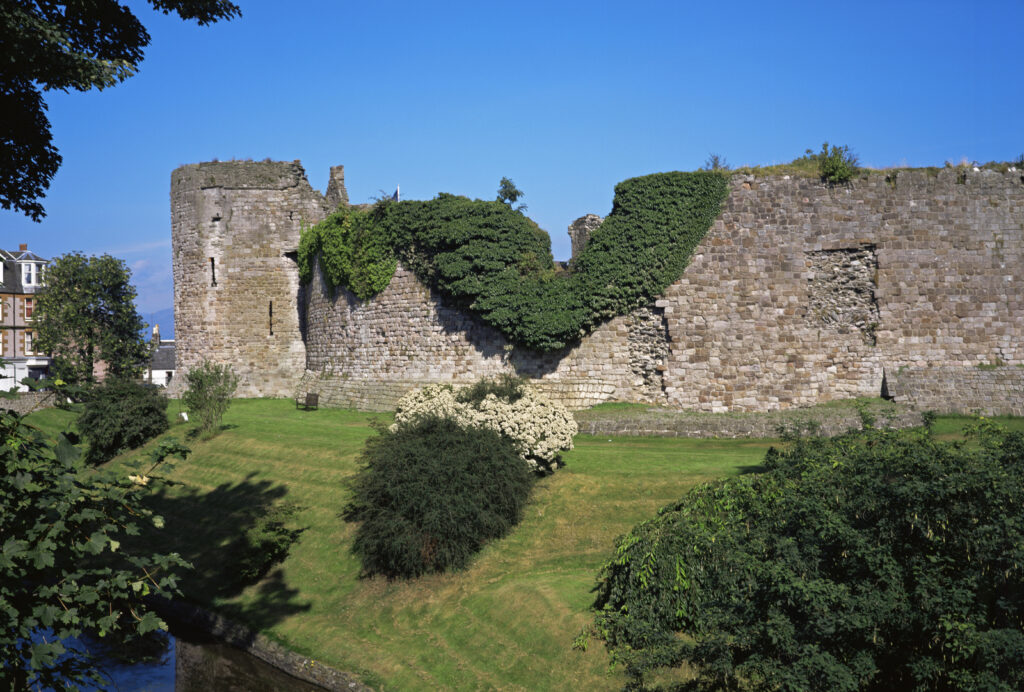
Anyone arriving at the main ferry terminal in Baile Bhòid (Rothesay) can’t help but notice the seaside-retro grandness of this small island town. 150 years ago water was the motorway, and the unique streetscape reflects the island response to the vast numbers of tourists who crammed onto paddle steamers to come ‘doon the watter’ to Eilean Bhòid (the Isle of Bute) during a century long age of tourism.
The unique position of Eilean Bhòid in the Firth of Clyde has, however, made it a central place for thousands of years. Strip away the thick coat of Victorian holiday heritage gloss and underneath lies a multitude of archaeological sites, monuments and landscapes which offer different perspectives about this small Clyde island through time.
Prehistoric Prestige
The remains of prehistoric tombs and structures are scattered across the island, but it’s the multi-phase fort complex of Dunagoil and its smaller neighbour Little Dunagoil which dominate the seas west of Eilean Bhòid, and which were the island focus from about 3,000 years ago up to at least the 12th century AD.
Early 20th-century excavations at Dunagoil produced what has been described as the richest assemblage of artefacts from any fort in western Scotland, most of which (including a beautifully carved bone whistle) can be seen at the Bute Museum.
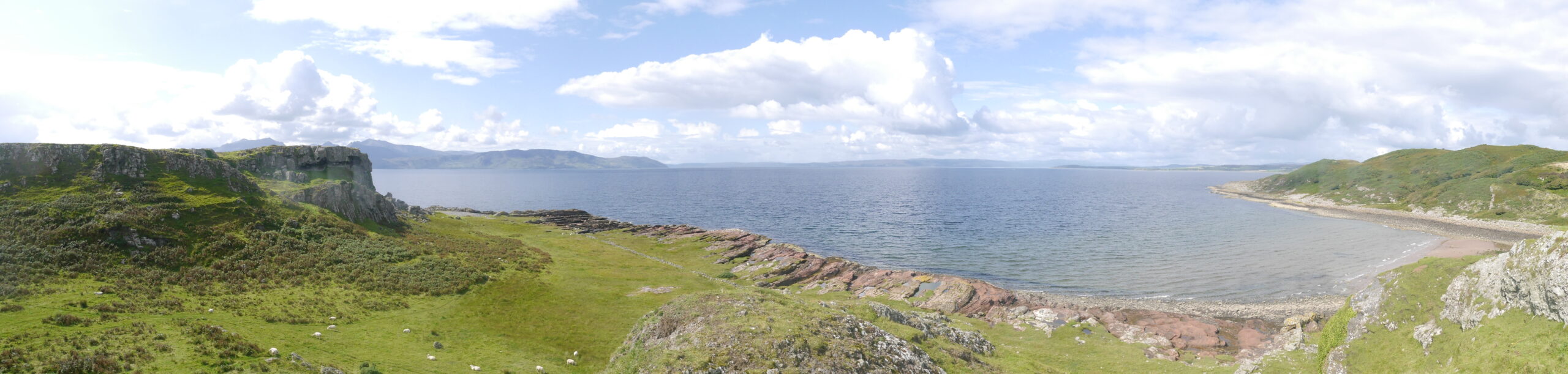
Dunagoil (© Brandanii Archaeology)
Other prehistoric gems have been found elsewhere on the island. In 1960 a prestigious jet necklace was uncovered at Inchmarnock, with a similar example found in 1886 at Mount Stuart. The jet originates from Whitby in north-east England and the necklaces were likely used around 4,000 years ago.
What’s more, a hoard of bronze Halberds (dagger-like objects) found close to the stone settings at Black Park and Largizean, date from roughly the same time and also give an indication of the high status bling that the inhabitants of Eilean Bhòid could access at this time.
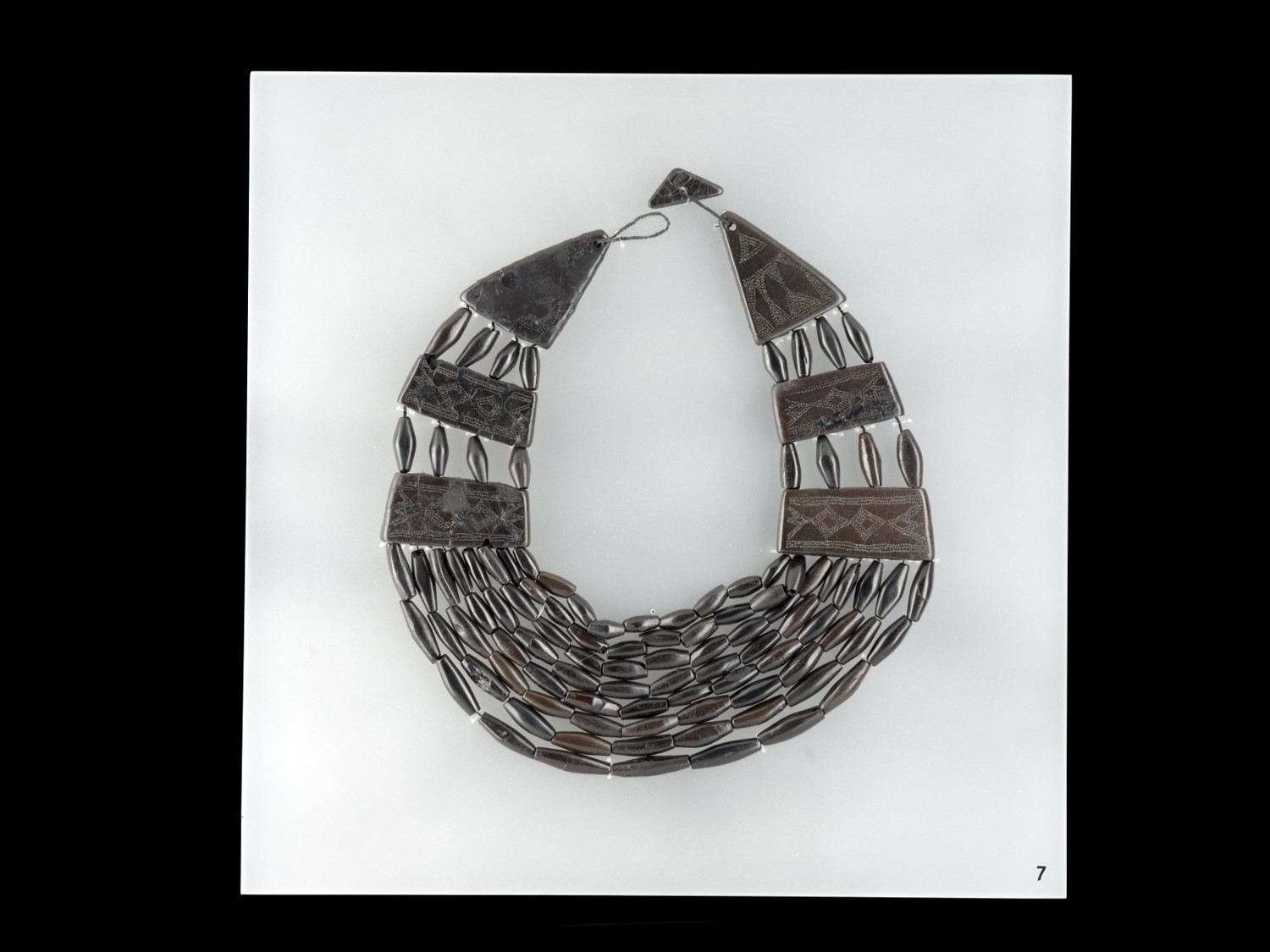
Necklace of jet, with ninety-nine fusiform beads, four spacer plates, two end plates and a toggle, from a Bronze Age burial at Mount Stuart, Bute, 2050 – 1700 BC © National Museums Scotland
Religious and Learning Centre
Less than 1km east of Dunagoil Fort lies the site of Kingarth Monastery and St Blane’s Chapel, which historical sources suggest was founded around 1,500 years ago.
Many of the early medieval artefacts found here during excavations in the 1900’s and 1980’s are now preserved in the National Museum of Scotland, including pottery, an ingot-mould and a series of medieval sketchings. Carved by the monks of Kingarth over 1,000 years ago on broken roofing-slates, these slates feature groups of letters, interlaced and spiral ornaments, and animals.
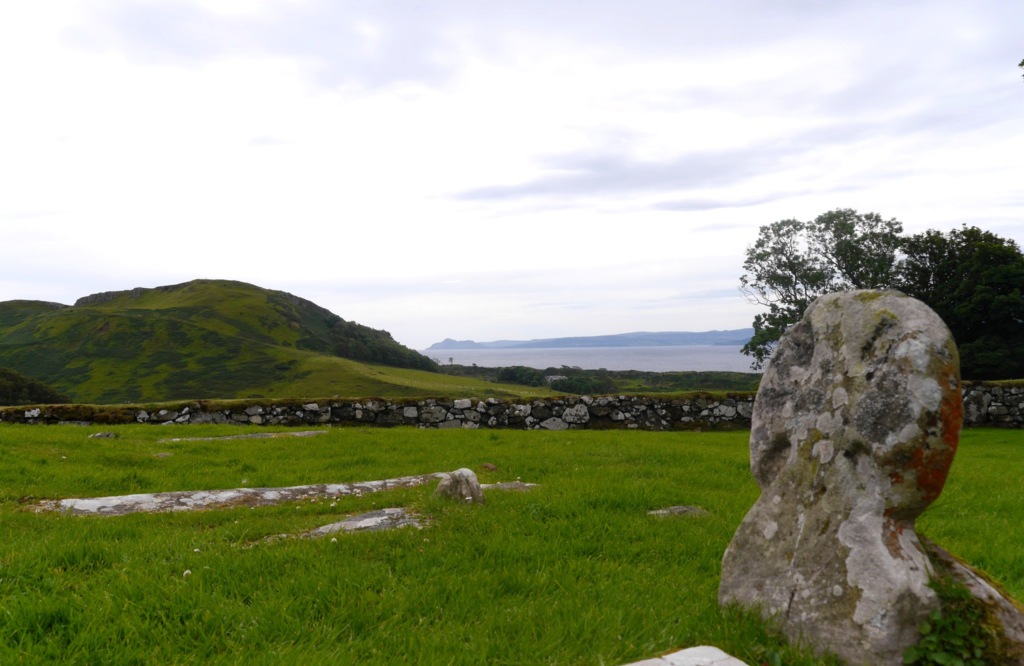
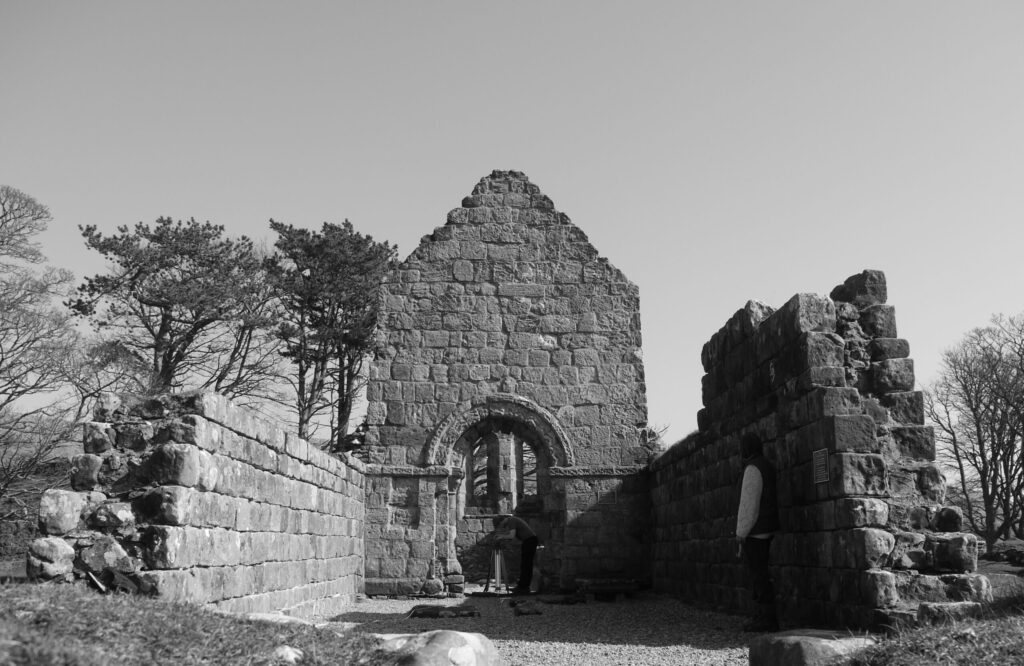
The site of the original 6th-century monastery and the later 12th-century remains of St Blane’s Chapel today (© Brandanii Archaeology)
A short boat ride away, the recently excavated monastery on the isle of Inchmarnock has also produced a rich collection of slate drawings, many of which can be seen at the Bute Museum. Inchmarnock was built around the same time as Kingarth and together these sites suggest that Eilean Bhòid was an important secular, religious and learning centre in the Gaelic kingdom of Dál Riata which flourished between the 5th and 8th centuries AD.
The original patrons of the monasteries were perhaps the Clan (or Cenél) Comgaill, who dominated the area around Eilean Bhòid and Comhghall (Cowal) until about 650 AD. Some of the earliest bishops in Earra-Ghàidheal (Argyll) are recorded as living at Kingarth in the 7th century AD and it may also have been the centre for the early Christian Church in the region at this time.
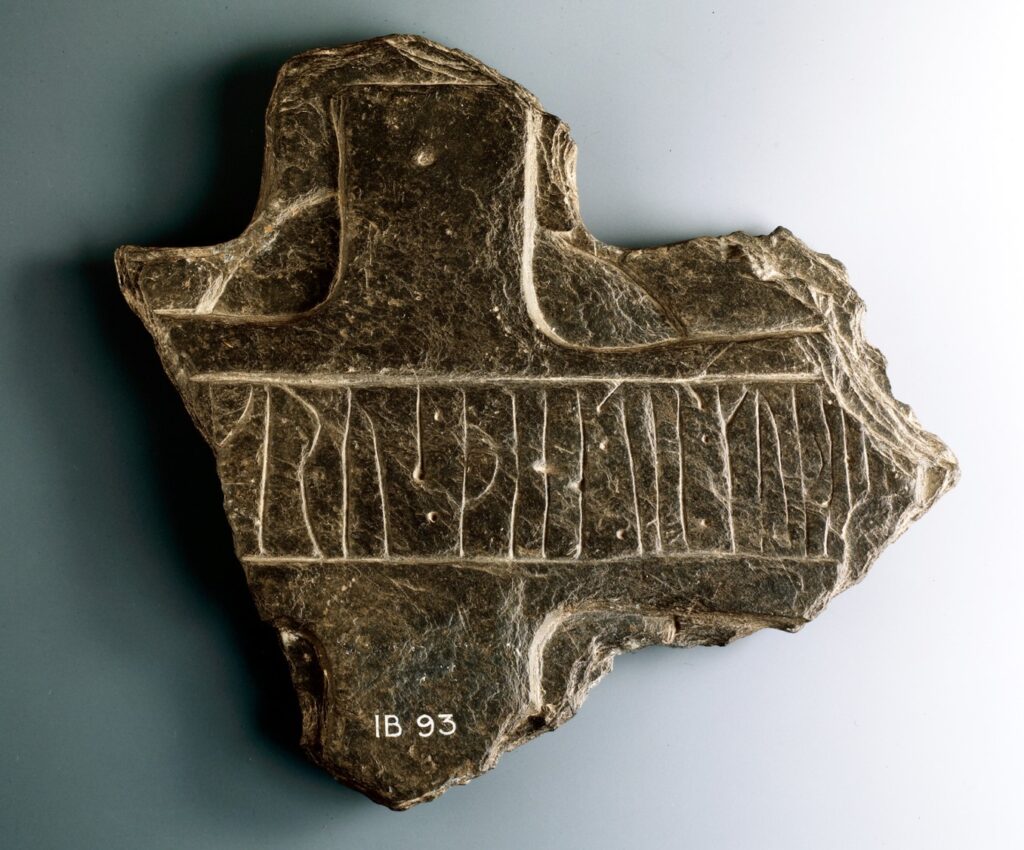

A portion of a cross head of schistose slate inscribed with runes, from Inchmarnock, Bute, 1000 – 1200 AD © National Museums Scotland and an incised slate with graffiti showing collared dogs chasing deer, from St Blane’s, Bute, 600 – 1000 AD © National Museums Scotland
Norse Stronghold
Around 1,000 AD, Eilean Bhòid retained an important place in the Viking world of the west coast of Scotland, though as this interpretation of the famous Inchmarnock ‘hostage stone’ suggests, the Viking raids were perhaps less fun for the monks.
Eilean Bhòid was an important medieval Viking location; the island is mentioned several times in medieval Icelandic Sagas and recent research and excavation has also identified a possible Viking ting (or parliament) site at Cnoc an Rath.
The influence of these Viking settlers locally can be traced through many of the Eilean Bhòid placenames such as Ascog, Birgadale, and even Rothesay itself. The Vikings may have even built an early timber and earth version of Rothesay Castle at this time. Possible Viking houses were also excavated at Little Dunagoil in the late 1950s by legendary local archaeologist Dorothy Marshall.
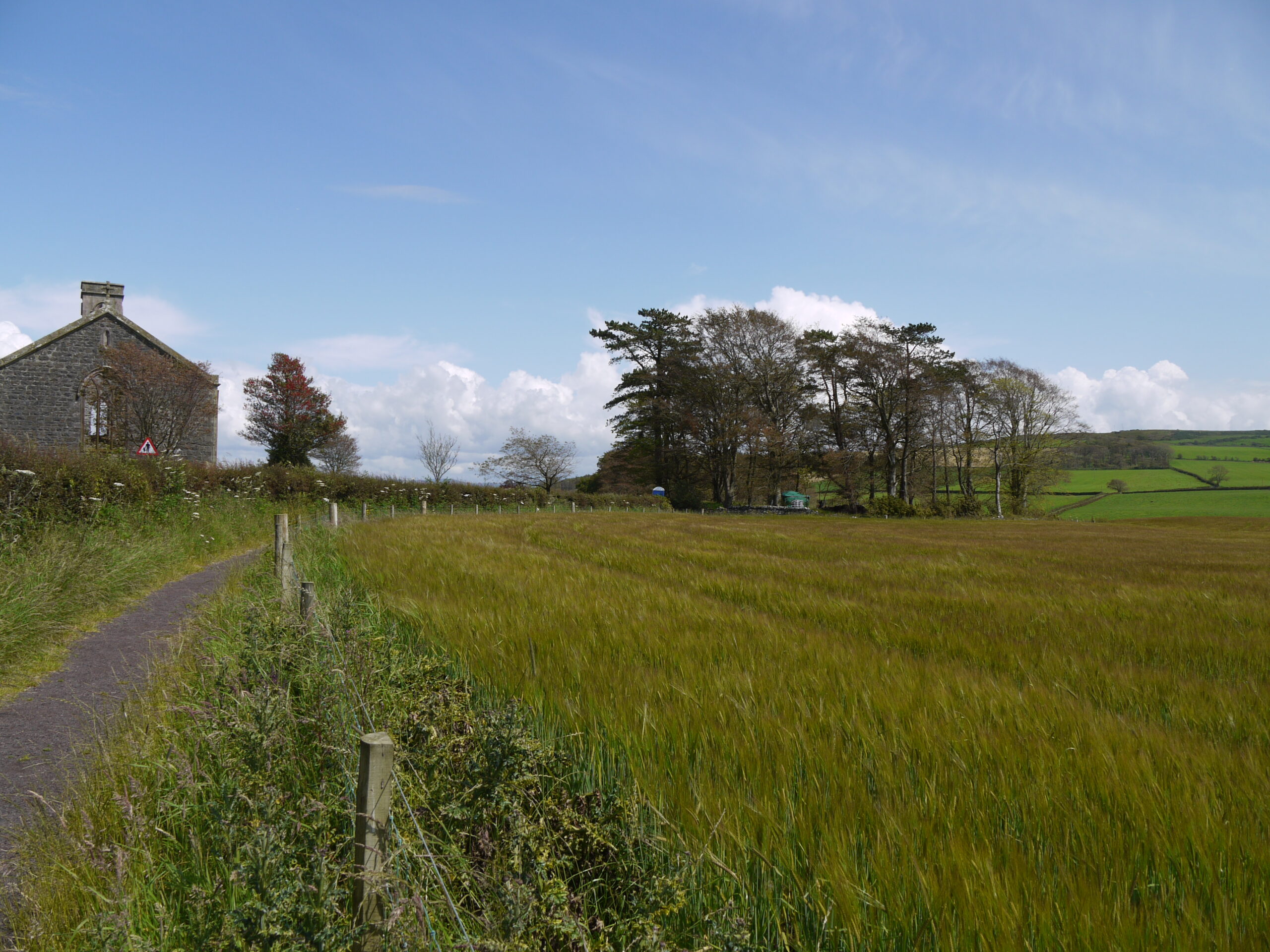
The site of the Viking parliament at Cnoc an Rath (© Brandanii Archaeology)
Royal Rothesay
Around 850 years ago, Eilean Bhòid became a hotly contested frontier base and changed hands between the Vikings and Scots several times. Eventually the island was wrestled from the western sea kings and was granted to Allan FitzWalter, 2nd High Steward of Scotland, who built the chapel that can be seen today at St Blane’s (see above).
His descendants, however, preferred to keep closer links with the mainland, and so within 150 years, it was Rothesay Castle and St Mary Chapel which became the administrative and religious centres of the island, and a favourite destination for successive Scottish kings.
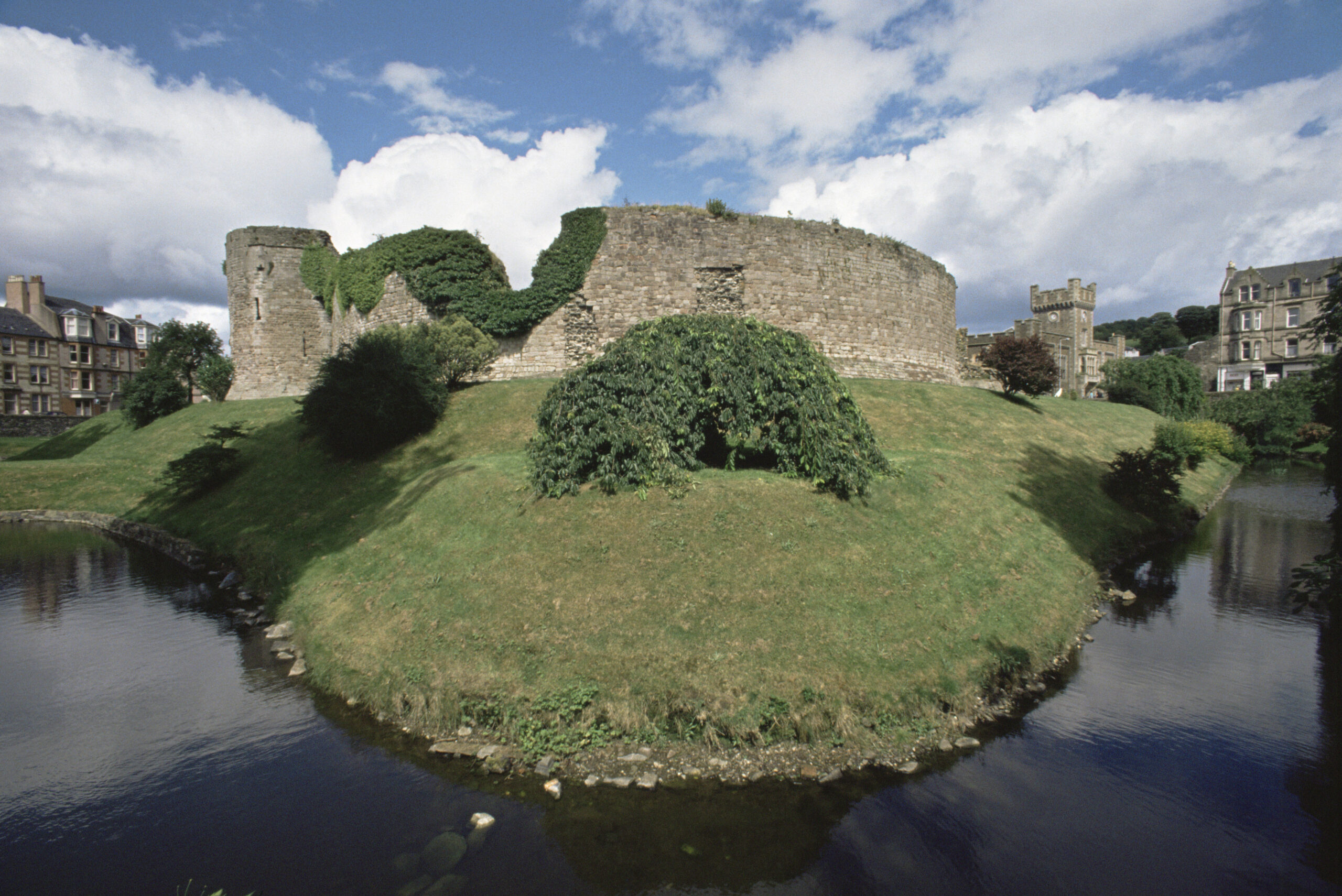
Rothesay Castle (© VisitScotland / Paul Tomkins)
The Stewarts, as the ruling family became, were Bruce supporters during the Scottish Wars of Independence. The unique Bute Mazer, a ceremonial drinking vessel probably made to be used at Rothesay Castle, demonstrates how closely these two noble families were. Walter Stewart married Bruce’s daughter Marjorie in 1315, and in 1371 their son became Robert II of Scotland, first king of the House of Stuart – a dynasty which lasted over 400 years.
Some of Robert’s descendants are still the major landowners on the island to this day.
Further Info
Lots of information is contained in the links on both the Brandanii website and Bute Museum website to help you explore the island virtually. If you prefer your information in more traditional formats, One Island Many Voices remains the most comprehensive and up-to-date book about the island archaeology and is available from the Brandanii website.
Ready to dig into more archaeological gems from Eilean Bhòid? Discover more with The Castle Hunter and Dig It! TV.
By Paul RJ Duffy, a professional archaeologist for over 25 years who has has lived and worked on Eilean Bhòid since 2009. Paul runs Brandanii Archaeology and Heritage, a freelance consultancy dedicated to commercial, research and education projects for communities and individuals across Eilean Bhòid and Earra-Ghàidheal.
Tweet

