Why should I volunteer at an archaeological dig in Scotland?
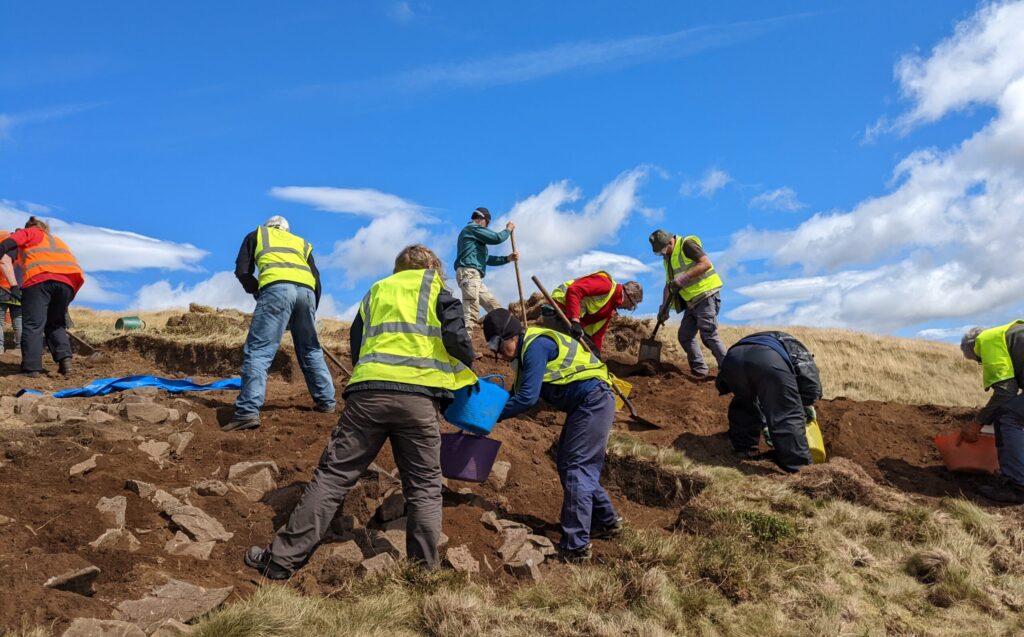
“There’s nothing quite like unearthing something that you know hasn’t been seen in 1,500 years”
– Anne Campbell, Falkland Stewardship Trust Archaeology Ambassador
In August 2022, the Falkland Stewardship Trust teamed up in partnership with the University of Aberdeen to start a new chapter of discovery at East Lomond hill in Fife by launching a community archaeology project.
Following a call for volunteers, 28 members of the public signed up to participate in these excavations led jointly by Falkland Stewardship Trust Chairman, Joe Fitzpatrick FSAScot, and Dr James O’Driscoll from the University of Aberdeen.
It’s not uncommon for these types of opportunities to be open to the public in Scotland – no experience required! If you’re wondering what it would be like to volunteer, take a peek behind the scenes of this excavation.
What kind of archaeological site can I volunteer at?
From prehistoric monuments to 20th-century festival sites, volunteers are invited to help investigate all kinds of historic sites every year in Scotland.
Over 1,600 years ago, East Lomond hill was probably the power centre of an Iron Age people, possibly those identified by ancient Roman writer Ptolemy around AD 150 as Venicones (a name meaning ‘hunting hounds’) and also likely functioned as a centre for trade and craftsmanship, as well as a refuge in times of war. Evidence also suggests it was inhabited by Pictish royalty in the post Roman and Early Medieval period.
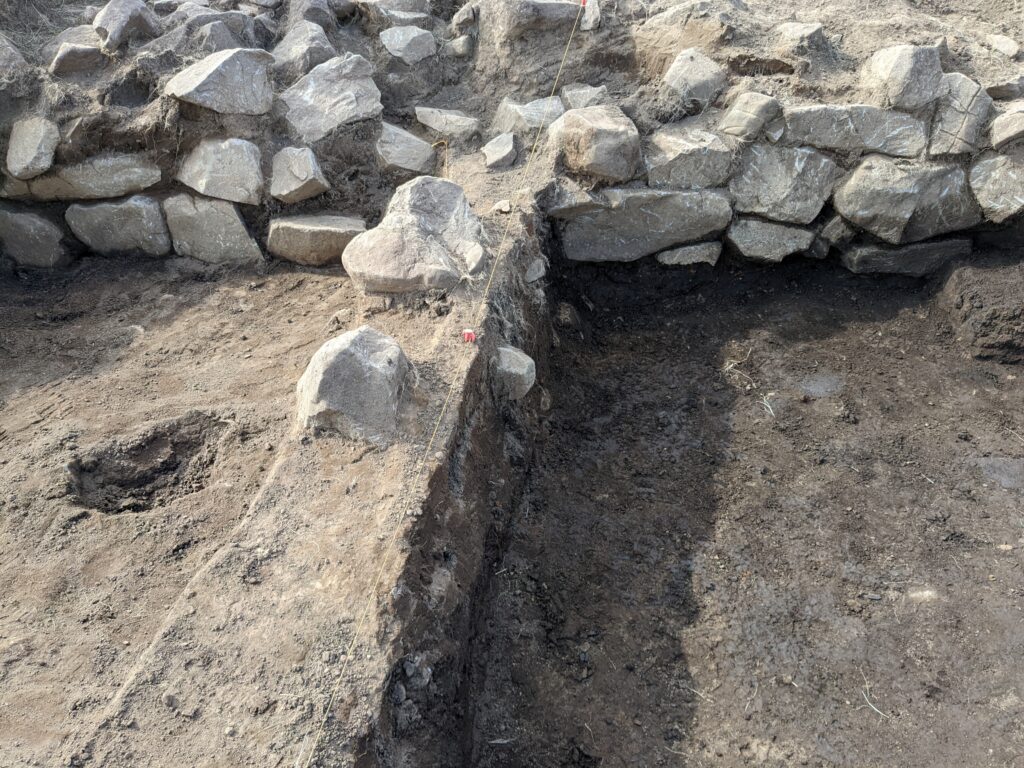
According to O’Driscoll, the hillfort dates from the early centuries of the first millennia – a time period in archaeology where we have very little information about how people lived in Scotland, so excavations like this are important for adding pieces to the puzzle.
The area where the team were digging was a previously unknown site outwith the scheduled monument area of the hillfort. But the discovery of Roman glass and pottery, together with evidence of horsemanship and extensive industrial activity found on previous digs, suggests that this was an elite settlement overlooking the Forth which was well connected to the outside world in the Roman Iron Age and Early Medieval periods, from the 1st to 7th centuries AD.
What kind of discoveries could I make at an excavation?
It depends on the excavation. The primary focus of the East Lomond hillfort dig in 2022 was to obtain secure soil samples from underneath the outer annexe wall of the hillfort which could be successfully dated in the laboratory.
It took a few patient days of digging in very windy conditions to reach the underground wall, clear away debris, and identify the inner and outer faces of the wall, but the team were successful. They opened two trenches on different parts of the hillside, in which they also made some unexpected discoveries.

Five hearths were unearthed within the wall which would have been used for cooking and warmth. According to Dr Edouard Masson-Maclean from the University of Aberdeen, the thin layer of charcoal found inside the circular hearth seen in the picture above suggests that it was only used for a short period of time. The team collected samples of this charcoal, and radiocarbon dating in the lab will give a date for when this and other hearths were used.
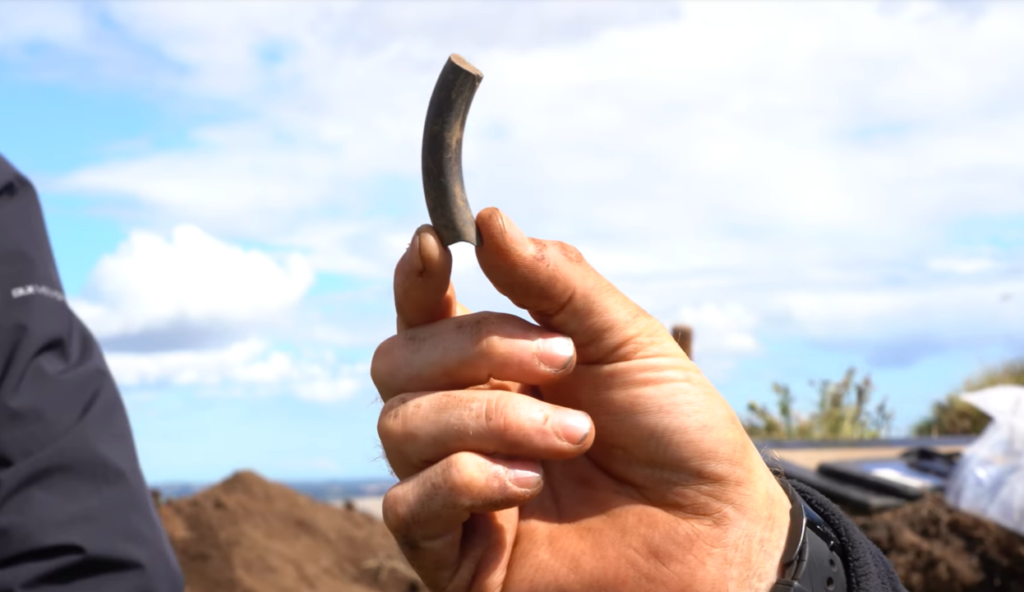
Eagle-eyed volunteers also uncovered various small finds, including a piece of shale bracelet (probably made for a child), a gaming piece and a fragment of crucible (a container in which metals or other substances can be melted) with a blob of metal in it.

Wondering if you’ll find anything? Well, it’s a common saying heard on excavations that it’s the new person who always uncovers the best find of the day! And that was true for Rachel Alexander, the volunteer excavator who found the crucible fragment on her first ever dig (above).
Who volunteers at excavations?
If you’ve never been on an archaeological dig before, you probably won’t be alone. Indeed, not having previous experience doesn’t stop you from being able to fully take part. There are often a number of tasks on offer on community digs which are suitable for complete beginners, from digging in the trenches to cleaning, photographing and drawing artefacts – and support from more experienced participants is always available.
Masson-Maclean explained that the experts’ job is to oversee the excavation and ensure it’s completed to a high standard, but that volunteers get the hang of things really quickly.
Why volunteer at an excavation?
For volunteer Abbie Buckley, it’s a chance to get outdoors and learn more about where you live: “I think it’s very important to be connected to your land and your heritage, especially the things that are around you.”
But according to Mike Arrowsmith, another volunteer excavator who’s being working on the site since the first excavation eight years ago, everyone’s effort is valuable (whether or not you find an artefact) because we’re all working together to uncover the past: “We’re not about looking for treasure, we’re about understanding history… what you understand from doing archaeology is that the people who once lived here are no different to us… they had the same hopes and ideas and they made their lives up here.”
Fitzpatrick is particularly interested in what lessons we can learn from past societies about sustainable living: “We can look at how these people stewarded the land. That they were productive, and they thrived, but they had such a low impact. Now as we look to climate change and how we are affecting our environment, we can learn lots from the past.”
The University of Aberdeen is now actively processing the samples and working on an Excavation Report for the Falkland Stewardship Trust.
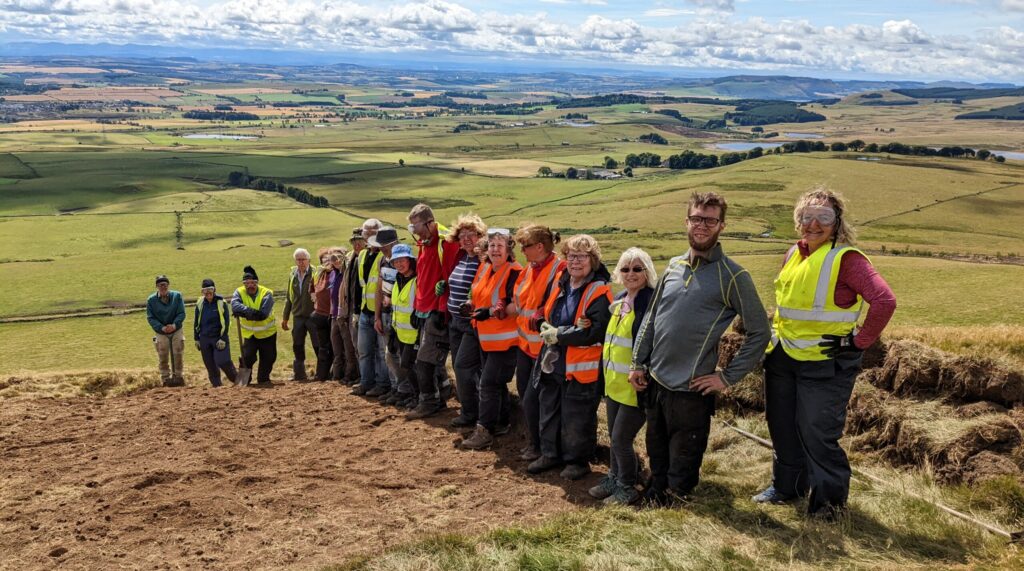
The Falkland Stewardship Trust and the University of Aberdeen are making plans to return to the site in 2023. In the meantime, you can watch their 2022 round-up on their YouTube channel or search “Falkland Hill Dig 2022” on YouTube.
If you’re inspired to attend a dig, check out the Archaeological Digs in Scotland | 2023 Edition page to browse free or low-cost opportunities across the country.
Images © Falkland Stewardship Trust
