It’s a bloody shame! Archaeological evidence of menstruation in the past
While menstruation is part of life for approximately 26% of the world’s adult population, with roughly 800 million people menstruating every day, it’s rarely considered within archaeological studies.
We know that individuals menstruated in the past, so why do we never seem to find evidence of it through archaeology in Scotland?
WHAT IS MENSTRUATION?
Menstruation (or a period) is the discharging of blood and the lining of the uterus approximately once a month from puberty to menopause, except during pregnancy. Alongside the bleeding, periods come with many other symptoms such as tender breasts, cramps, fatigue, nausea, and physical and/or emotional irritability.
Periods are variable and are a biological process that is unrelated to gender. Not all women menstruate and not only women menstruate.
WHY SHOULD WE STUDY MENSTRUATION IN THE PAST?
Examining menstruation can provide glimpses into gender relations and roles that may result in a better understanding of social structures, while also providing a deeper understanding of lifestyles and experiences.
While studies have considered evidence in places such as North America, including key works by Patricia Galloway (1997) titled Where have all the menstrual huts gone? which points out the lack of visibility in the archaeological record and the study of a rock shelter in America by Cheryl Claassen (2017) which attempts to identify evidence.
However, this author isn’t aware of any that focus on Scotland.
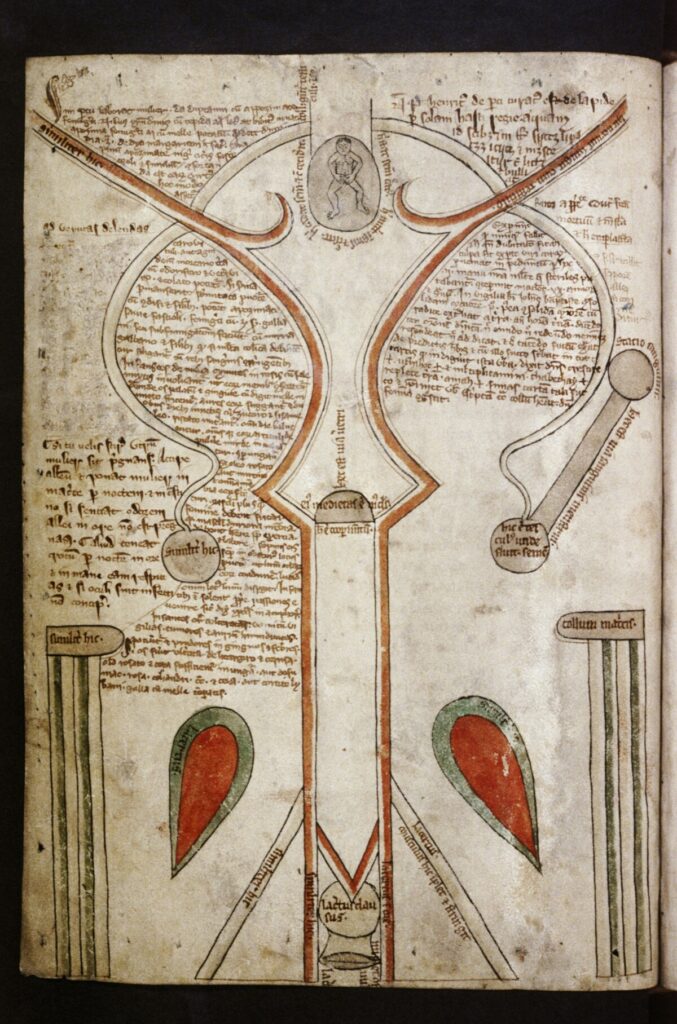
Diagram of a Uterus, about 1292, English. Bodleian Library MS. Ashmole 399. Photo: © Bodleian Libraries, University of Oxford. Image licensed under a Creative Commons Attribution-NonCommercial-ShareAlike 4.0 International license (CC-BY-NC 4.0)
MENSTRUAL HUTS AS EVIDENCE
People around the world have been using huts during their periods for hundreds of years (or more).
As the name suggests, they’re often mud hut or shed-like structure which are used as a place for seclusion or isolation during menstruation and sometimes during childbirth.
While these huts have often been thought to be flimsy structures, it’s more probable that they were built well as they may have been used by many members of society across extended periods of time. They’re also likely to be close to water for hygiene purposes, but downstream from the community settlement to avoid contamination of their water source.
Archaeologist Patricia Galloway has suggested that the identification of their remains could be used to explore menstruation in the past.
Evidence has already been found for these use of these structures in the past in countries such as the United States of America and Israel – and they’re still in use in places like Nepal and Ethiopia. It’s therefore reasonable to think that these huts or seclusion may have once been part of life in Scotland too.
But if they were, why haven’t they been recognised in the archaeological record? Is it possible that they have been unearthed but not identified as menstrual huts? Or is it because archaeologists are not looking for them, especially as they may be located away from a settlement?
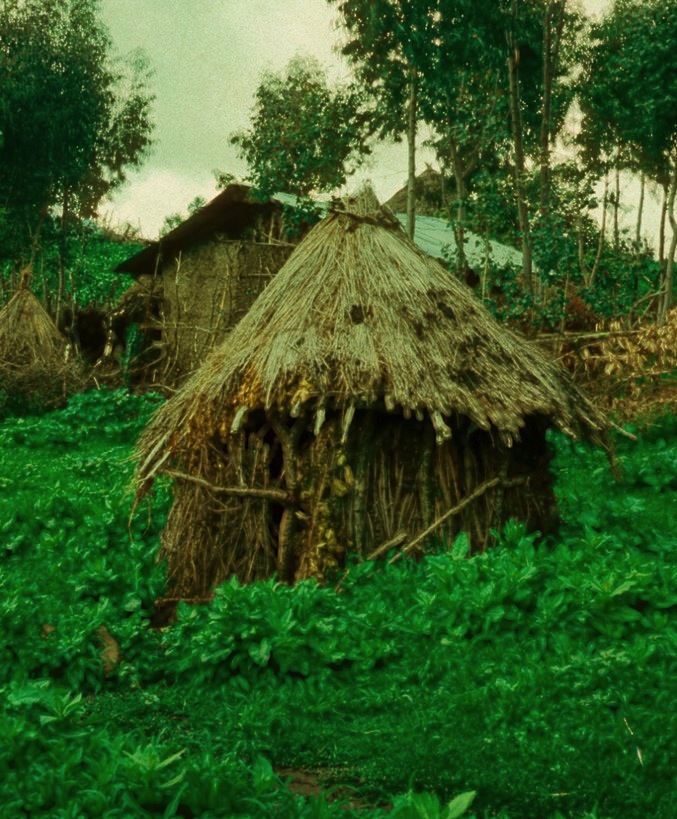
A niddah hut (Mergem Gogo) at the Jewish village of Ambober in Ethiopia, 1976 (© Dov Goldflam via WikiCommons, CC BY-SA 3.0)
PLANTS AS EVIDENCE
As well as evidence of menstrual huts, we can find traces of plants from hundreds or even thousands of years ago which could have been used to treat symptoms and bleeding.
Bog myrtle (myrica gale), for example, grows throughout much of Scotland and is most abundant in the Highlands. Today, it’s used medicinally as an anti-inflammatory and for pain relief, so it’s possible that it was used by past peoples to treat side effects such as headaches, cramps, tender breasts, and bloating.
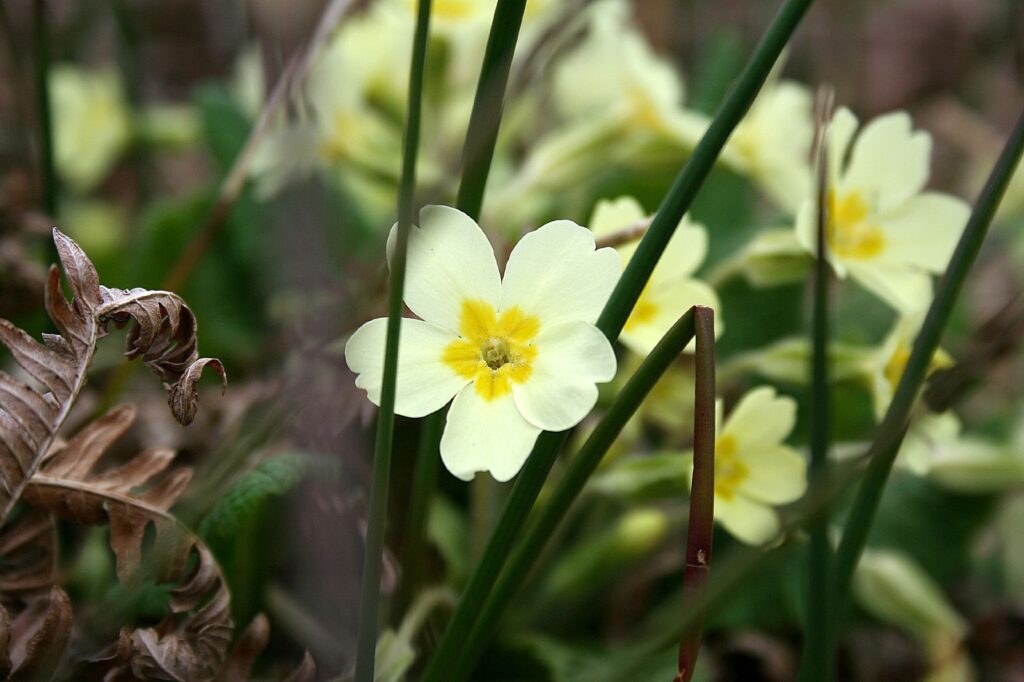
Primrose in Ross Priory woods in West Dunbartonshire (© Bob Shand via Flickr, CC BY-NC 2.0)
Similarly, Scottish primrose (primula scotica) and cowslip (primula veris) — which is often found near the coast, particularly in Orkney — may have also been used for their pain-relieving properties to treat cramps and other symptoms. Additionally, cowslip is known to be good for the skin and may have been used to treat skin problems throughout the menstrual cycle.
In addition, a common type of bog moss (sphagnum cymbifolium) found throughout medieval Scotland (AD 400 to 1500) was used to treat battlefield wounds, but also to soak up menstrual blood like a sanitary towel – according to Drobnik and Stebel (2017) – before the use of cotton or cloth rags which began in the 15th century AD.
This organic material rarely survives in the archaeological record as it can easily decay depending on the environment. Equally, these materials are often not placed in burials or in sacred places, where they’re more likely to survive and be found by archaeologists. Unfortunately, this adds to the lack of evidence of menstruation in the past.
MODERN PERIOD PRODUCTS AS EVIDENCE
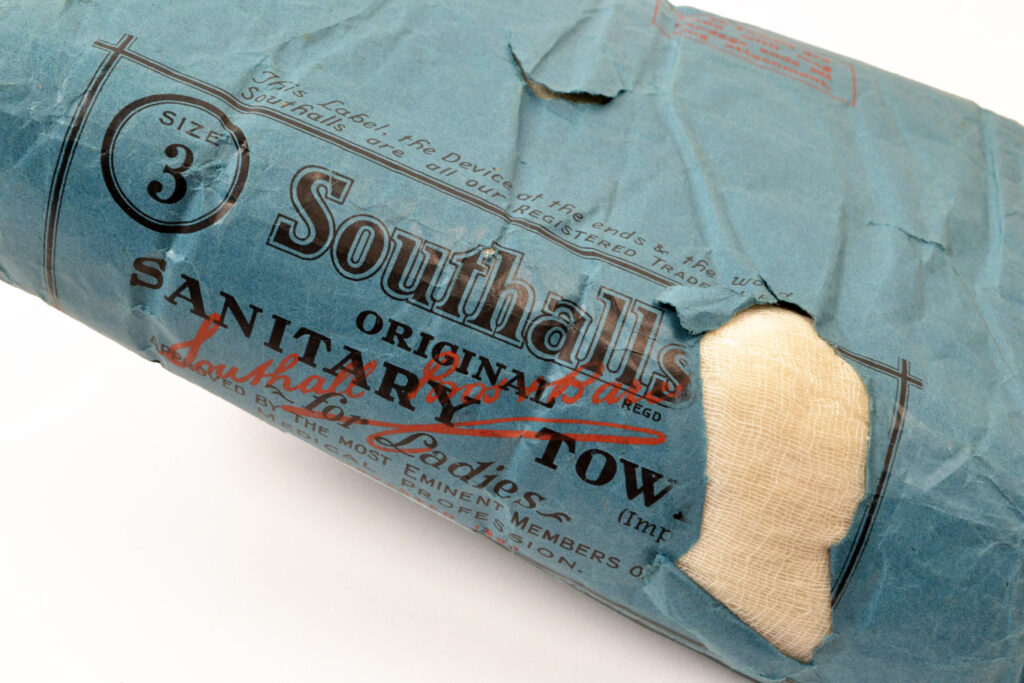
While there’s every possibility that future fieldworkers might find a 1920s sanitary towel in a midden (rubbish heap), or a wartime advertisement in an abandoned toilet block, this author couldn’t find any examples of modern period products (dating from 1890s until now) discovered during Scottish fieldwork in the archaeological record.
If archaeologists today were to come across finds like these in situ (in their original location), they would be recorded – rubbish from the past is useful for researchers!
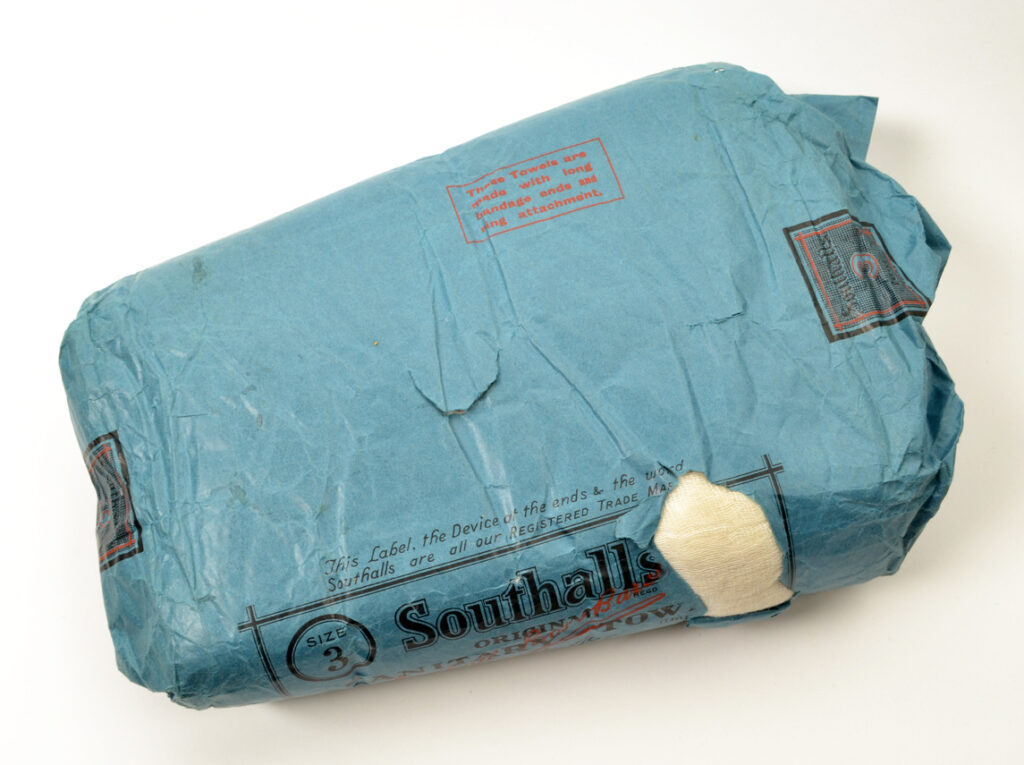
Southalls Sanitary Towels, 1900-1930s (North Lanarkshire Council)
DO MODERN ATTITUDES INFLUENCE THE STUDIES OF MENSTRUATION IN THE PAST?
Modern society appears to avoid conversations around periods, fuelled by the media that perpetuates negative attitudes and beliefs by promoting ideas of shame, secrecy, and uncleanliness. If society is reluctant to discuss menstruation, how can we expect it to be studied archaeologically?
By tackling the issues around the topic of menstruation today, this author believes we can strengthen the study within archaeology by increasing the understanding of what to look for. We can then educate people on – and raise awareness for – menstrual health and hygiene today.
MENSTRUATION ON ARCHAEOLOGICAL SITES
Negative portrayals of menstruation can lead to the lack of consideration in archaeological studies, but it can also contribute to issues regarding resources today, such as products and facilities for archaeologists in the field or the public visiting sites.
According to the Seeing Red initiative, it can be common for these sites to lack suitable bathroom facilities, resulting in people having to change and dispose of sanitary products in fields, behind bushes, or in unclean portaloos (and as a result, they developed a free downloadable menstrual health and hygiene guide).
In addition, Seeing Red reported that fieldwork organisers often don’t provide menstrual products to employees which is an accessibility issue, particularly with regards to period poverty. If accommodations aren’t made for those who menstruate to carry out fieldwork, it stands to reason that they’re less likely to apply for archaeology jobs in the field, which then limits the diversity of archaeologists in the field.
If you’re thinking about visiting an archaeological fieldwork site and are concerned about the facilities, it’s always worth contacting the event organiser beforehand to ask for more information.
WHAT NEXT?
It’s possible to find evidence of menstruation from the past, however, we have to be willing to reconsider traditional interpretations of archaeological materials and practices. Was a small hut set away from a settlement used for storage, or could it actually have been a menstruation hut? Could medicinal plants have been used to treat period cramps as well as a sore head? If a 1970s sanitary garment was found during excavation at the site of a 20th-century tenement building, is it just rubbish? Or does it, like other items thrown away in the past, actually tell us about the people who lived there?
It’s important that archaeologists and the public talk more openly about periods and raise awareness of the issues. Whether it’s the lack of consideration of menstruation within archaeological studies or the lack of facilities and products for those in the field, this awareness can reduce the shame and secrecy while enhancing the study of the past.
If you’d like to keep reading about this topic, dig into Period Poverty UK or the resources from Seeing Red.
BY DULCIE NEWBURY, WHO IS STUDYING FOR THEIR PHD IN ARCHAEOLOGY AT THE UNIVERSITY OF BRADFORD. THEIR WORK IS FOCUSED ON FUNERARY ARCHAEOLOGY, GENDERED IDENTITY, AND ITS IMPACT ON CONTEMPORARY SOCIETY AND MENTAL HEALTH AND WELLBEING.
Image Credit: North Lanarkshire Council
