Archaeologists Set Their Sights on a 300-year-old Highland Township, a Complex Coastal Settlement, and a Royal Castle
The Scotland Digs 2024 campaign is celebrating the country’s world-leading archaeology and raising awareness of our links with other parts of the globe with this year’s “International Connections” theme.
Now in its sixth iteration, our national campaign will assemble fieldwork updates and events for the public through social media and an online hub from 20 June to 23 September.
Survey, recording, excavation and more will take place in urban and rural areas across the country, with many organisations welcoming the public with tours, open days and volunteering opportunities – no experience required.
In addition, this year’s campaign will raise awareness of the historic links between Scotland and the wider world, as well as how archaeology can be used to combat harmful narratives, by highlighting projects and discoveries with international connections. This includes artefacts that were imported to Scotland, sites where the residents or builders (or their ancestors) have come from another part of the world, and finds which demonstrate the historic exchange of ideas or technology.
In the Highlands, a team from the University of Glasgow and the National Trust for Scotland are excavating features in the township of Achnacon with the hope of better understanding the lives of those who lived in Glencoe in the 17th and 18th centuries.
Last summer, students uncovered pottery imported from the Netherlands and Germany in the summerhouse of the MacDonald chiefs, in addition to a hoard of coins from at least four different countries which may have been hidden just before or during the 1692 Glencoe Massacre.
Volunteers with no prior experience are invited to help with the survey and excavation. Alternatively, visitors are encouraged to watch the archaeology in action from 13 to 23 June (10am to 4pm daily) and come along to a free Open Day on 22 June (10am to 4pm) to enjoy archaeology, traditional craft activities and more at the National Trust for Scotland’s turf and creel house.
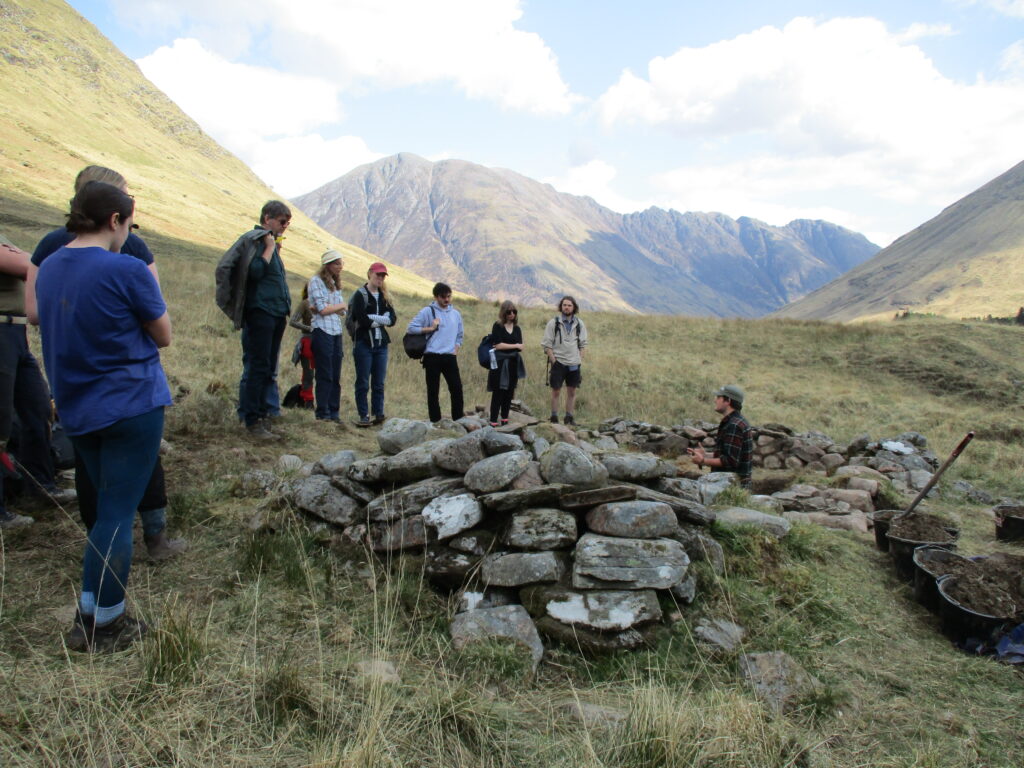
Gleann Leac-na–Muidhe, Glencoe excavation (© Gemma Smith)
The public are also invited to observe the Knowe of Swandro excavation in Orkney when the Swandro-Orkney Coastal Archaeology Trust return to Rousay with the University of Bradford.
The coastal site is home to a large settlement occupied from around 1,000 BC to AD 1,200. It consists of Iron Age roundhouses and Pictish buildings, as well as a Viking settlement and a Norse Long Hall which were built by people who were predominantly from Scandinavia. Evidence of contact with the Roman Empire has also been found at the site, in the form of ancient glass fragments and coins.
The Knowe of Swandro is free to visit between 23 June and 4 August. The team usually have Fridays and Saturdays off, with unexpected closures/openings posted on their Facebook page.
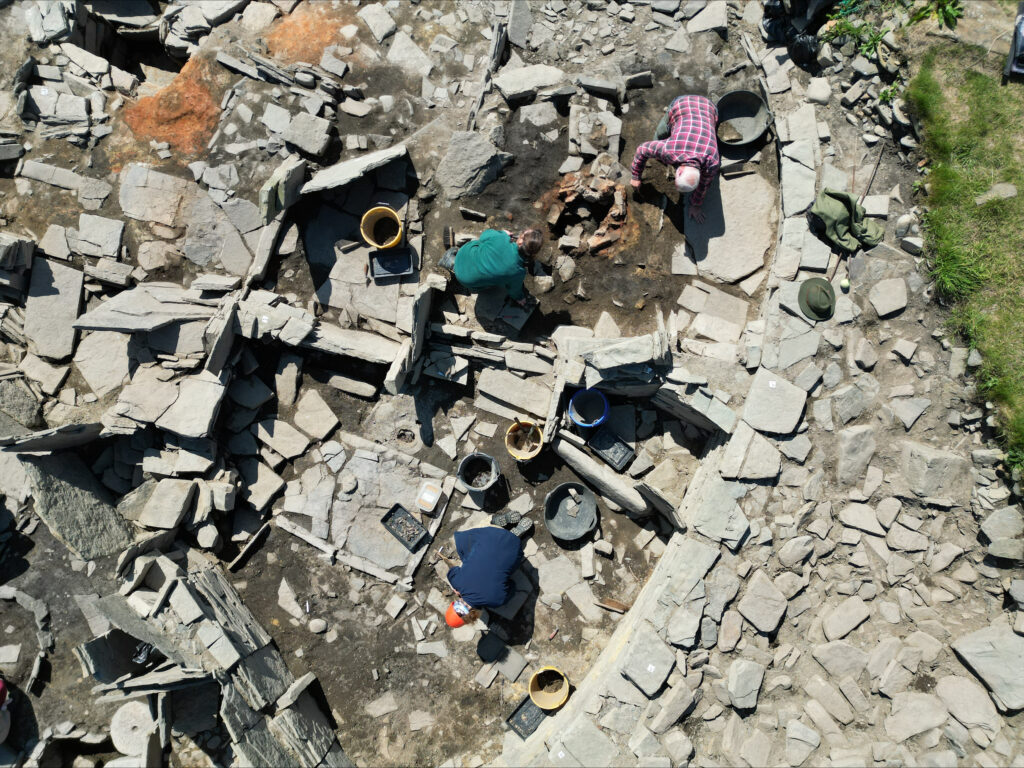
Knowe of Swandro excavation (© S. J. Dockrill)
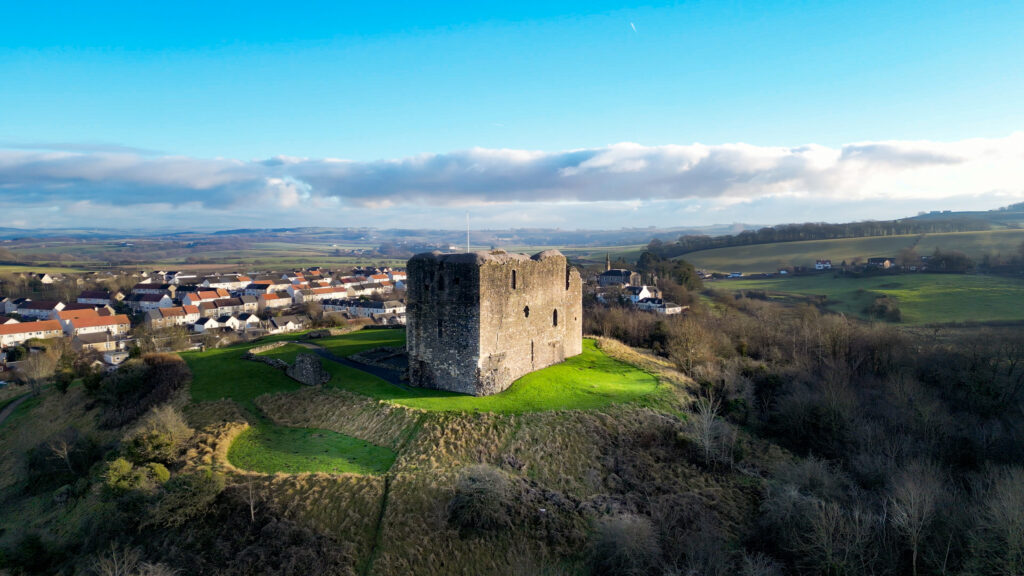
Towards the end of the campaign, community excavations will take place at Dundonald Castle in South Ayrshire starting on 21 September. The team are looking for volunteers to help them uncover 3,500 years of history.
The stone castle we see today was built around 1371 but sits on the site of two probable earlier castles, as well as an earlier hillfort and roundhouses. The presence of imported pottery indicates that the occupants of the hillfort (c AD 500 to AD 1,000) formed part of the trade network that extended from Europe to Scotland.
The public are invited to get hands-on experience in the trenches looking for evidence of previous structures, as well as finds such as pottery, metalwork, animal remains and other artefacts that might provide additional information about how the hillside has been used in centuries past.

Dundonald Castle excavation (© Friends of Dundonald Castle)
Archaeological fieldwork which welcomes visitors or volunteers is also taking place at an Iron Age fort in Edinburgh with the University of Edinburgh’s Holyrood Archaeology Project in partnership with Historic Environment Scotland and AOC Archaeology, Bedrule Castle in the Scottish Borders with Archaeology Scotland, the Neolithic complex at the Ness of Brodgar in Orkney with Friends of the Ness of Brodgar and UHI Archaeology, and a Bronze Age cemetery and Iron Age fort in Stirling with Rampart Scotland. More fieldwork will be announced throughout the campaign.
Developer-led archaeology undertaken as part of the planning process (such as the building of new houses, schools or roads) will also take place over the summer.
For anyone who wants to follow along online, fieldwork organisers will be posting updates on social media using #ScotlandDigs2024.
Dr Jeff Sanders FSAScot, Dig It! Project Manager at the Society of Antiquaries of Scotland, said:
“Archaeology is all about piecing together stories from the past and Scotland Digs 2024: International Connections will highlight that Scotland’s story has always been intertwined with the wider world. In addition to coordinating events, organisations across the country will be sharing information about their projects and discoveries which tell of the far-reaching trade networks, cultural exchanges, and human migrations that shaped what is now Scotland.
From the Palaeolithic period when the first groups of hunter-gatherers walked here from what is now mainland Europe over 12,800 years ago to the immigrants who enrich the archaeology sector today, the campaign will emphasise that Scotland’s stories belong to everyone, regardless of where you were born or how you arrived here.”
Susan O’Connor, Head of Grants at Historic Environment Scotland (HES), said:
“With such a wide range of events on offer and the chance for people at any level to get involved with and learn more about archaeology in Scotland, we’re thrilled to continue to support the vital work of Dig It!. The programme on offer will encourage people to engage with over 5,000 years of history, and this year’s aim of highlighting archaeological links not just across the nation, but across the world, will showcase the continued importance of built heritage on an international scale.”
For more information, follow #ScotlandDigs2024, visit the Scotland Digs 2024 webpages or sign up to the Dig It! Digest to receive monthly recaps (plus other archaeology news and events).
Dig It! is coordinated by the Society of Antiquaries of Scotland and primarily funded by Historic Environment Scotland
Header Image: Dundonald Castle (© Friends of Dundonald Castle)
