Laying the Foundations of Discovery: What is Developer-led Archaeology?

90% of all known archaeological sites in Scotland have no protection other than what their local authority archaeologists can do for them – and that doesn’t even take into account all the sites that we don’t know about yet, the ones waiting to be discovered. [NOTE: Article contains images and descriptions of human remains]
There are always lots of different changes going on in the landscape which can potentially damage these sites, from tree planting to coastal erosion. However, the single biggest impact on this finite resource comes from developers building things.
What do we mean by developer-led archaeology?
This is archaeology undertaken to offset the impact that development (such as the building of new houses, schools or roads) has on our historic environment. The majority of this occurs in the planning system.
There are two categories of archaeologists working in this area: the ‘local planning authority’ archaeologists who review planning applications and provide advice and oversight on what needs to be done to protect or record sites, and ‘commercial’ archaeologists who undertake the required work.
In Scotland in 2019, the 17 local authority planning archaeologists assessed 21,945 planning applications. Of these about 8% of them needed some form of archaeological work, including nearly 900 excavations.
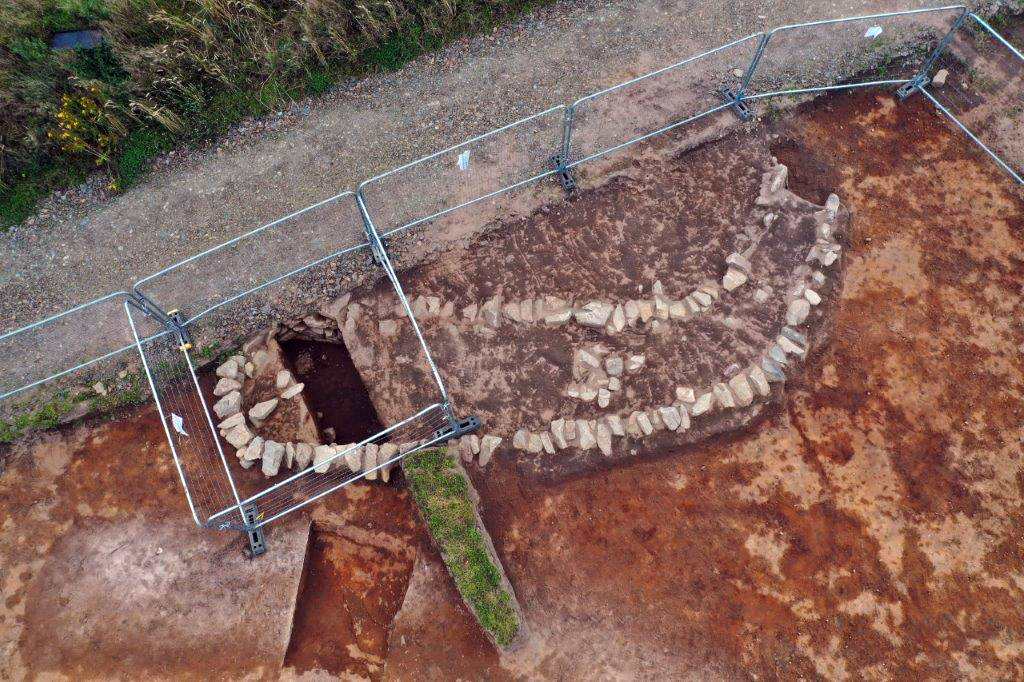
Overhead view of the Iron Age souterrain (which would have been used as an underground store over 1,500 years ago) midway through it’s excavation. Discovered ahead of the construction of a new cable route, Inverboyndie, Aberdeenshire. © CFA Archaeology Ltd.
Does the system work?
The system across the UK, which facilitates the employment of roughly 74% of all archaeologists in the country, works extremely well for two reasons.
For the developer and construction industry as a whole, it saves time and money. In 2017-18 it can be shown that the process greatly reduced any delay costs incurred during construction works, saving up to £1.3bn in that year alone for the industry. It also generates a huge boost for the economy, with a direct annual contribution of over £200m. Furthermore, on average only 0.01% of all planning applications are refused because of the potential impact on archaeological sites.
For the archaeology, it is a system which ensures that we save some of the elements of the historic environment that we see in our landscapes, such as drystone walls and old buildings being retained and incorporated into a new housing development. We can ensure that key sites have their setting (the surrounding landscape in which the site was meant to be seen from or be a part of) protected. We can even help tell the story about a site through new interpretation boards, walking trails or public art installations. All of this helps a local area retain its character, and its connection with its past.
Of course not everything can be saved, and that’s when the process allows for sites to be surveyed and excavated before they are destroyed. The resulting records ensures that the knowledge these sites hold, the stories they can tell us of our shared history, are made available to everyone.
How do planning archaeologists and commercial archaeologists work together?
In summary, local authority planning archaeologists review planning applications and recommend what Conditions (requirements for what work needs to be done that allow the development to proceed) are to be applied should the application be approved.
These decisions about a proposed development site are based on our professional judgement about the potential for unknown sites to be uncovered and the information we have within the local Historic Environment Record (otherwise known as the HER, a database containing all the information about archaeological sites within a particular local authority region).
A methodology (a Written Scheme of Investigation) is then agreed between the planning archaeologist and the commercial archaeologists employed by the developer for doing the mitigation works.
The commercial archaeologists will also write a report about their discoveries (a Data Structure Report), and post-excavation work is undertaken if required (via an agreed Post-Excavation Research Design with the planning archaeologist).
All the results are then published and used to update the local HER, regional research framework (research resources), and anyone who is interested.
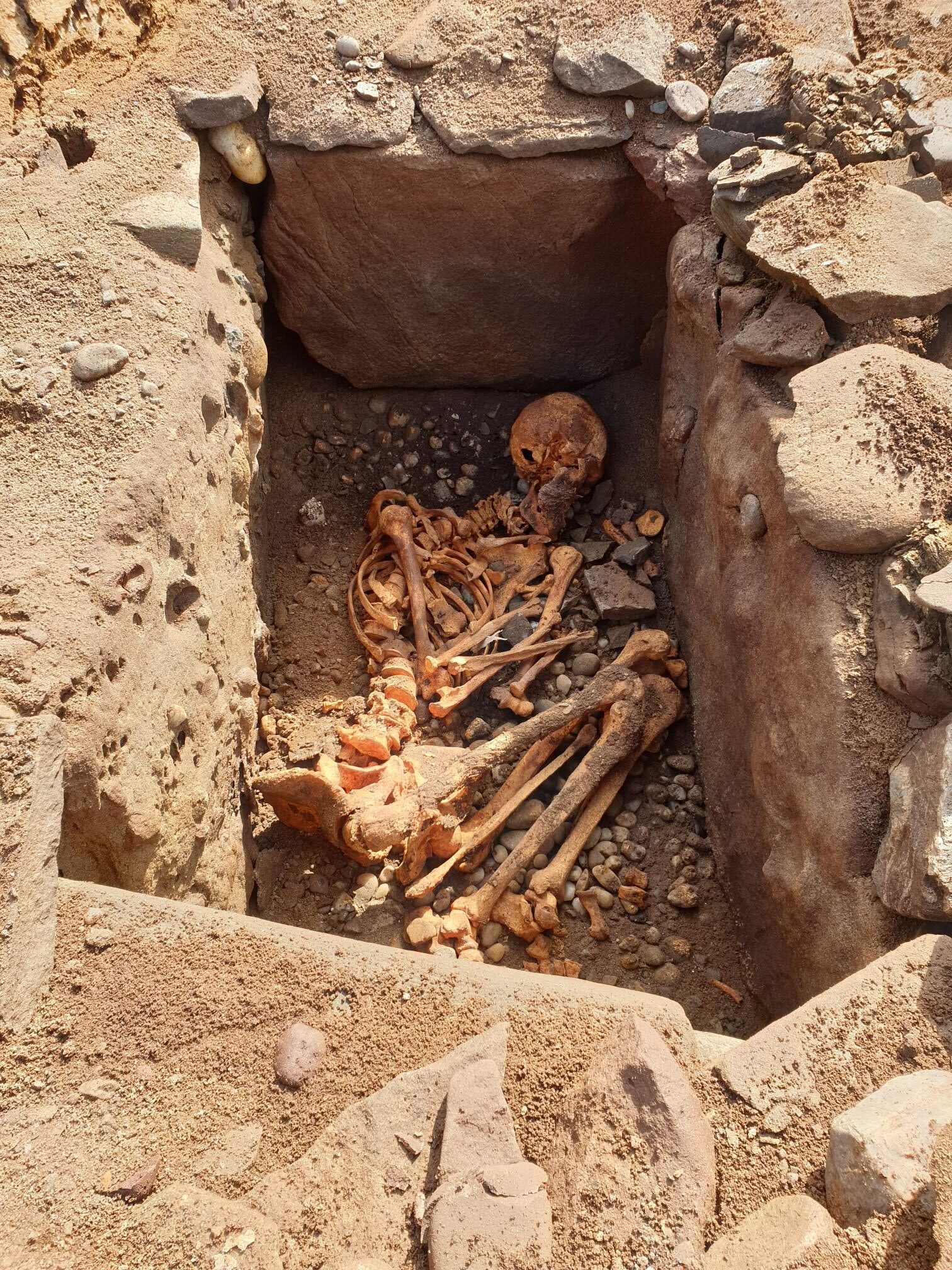
Cist 7 with surviving skeleton which was buried more than 2,800 years ago. Part of a Bronze Age cemetery found near to Carnoustie in Angus ahead of a new housing development. © AOC Archaeology Ltd.
Is anything interesting ever found?
Yes, all the time! There are hundreds of new sites found every year through developer-led archaeological work.
Taking north east Scotland as an example recent discoveries include a souterrain (an underground store dating to the Iron Age) excavated by CFA Archaeology Ltd on the Moray Firth coast near Banff, a Bronze Age cist cemetery excavated by AOC Archaeology Ltd on the outskirts of Carnoustie, and a huge prehistoric settlement next to Cruden Bay in Aberdeenshire, excavated by Cameron Archaeology Ltd.
Post-excavation work is continuing for all three sites (as of August 2020), but the fact that they were all unknown before development mitigation works found them shows just how important the system is.
Want to keep reading? Find out what else could happen when something is found, visit the Association of Local Government Archaeological Officers (ALGAO) website or follow @ALGAO_UK on X (Twitter).
By Bruce Mann, Archaeologist for Aberdeenshire, Moray, Angus and Aberdeen City Councils. He is also the current Vice-Chair of ALGAO UK (as of August 2020).
Header Image: The Bronze Age and Iron Age settlement (where people lived more than 2,800 years ago) at Cruden Bay in Aberdeenshire, during excavation ahead of a new housing development. © Cameron Archaeology Ltd.

This article was produced as part of Scotland Digs Digital. In the summer of 2020, we shone a spotlight on Scottish archaeology with the Scotland Digs Digital campaign which brought together online and offline events, as well as live updates from across the country for everyone to enjoy.
