Bunkers and Burials: The Archaeology of Scotland’s Golf Courses
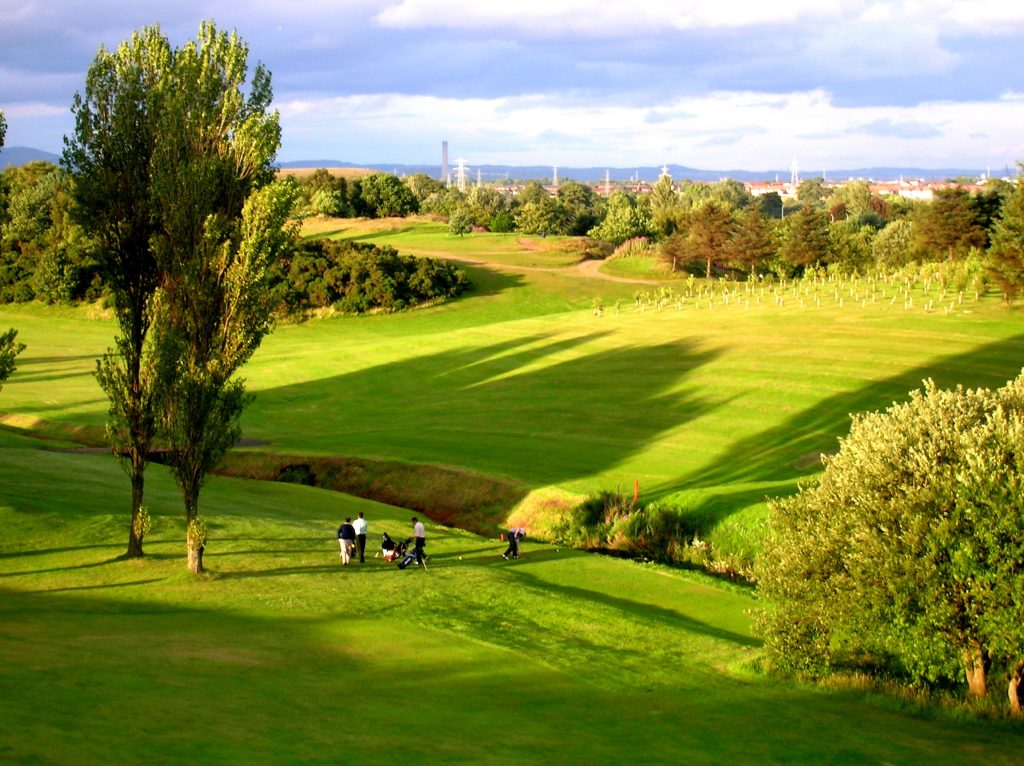
Ask for the name of something quintessentially Scottish and more than likely golf will be among the first responses (perhaps after tartan and haggis).
The “Home of Golf”
Indeed, the game of golf as we know it today first developed in fifteenth-century Scotland. Our first written evidence for the game being played is found in a 1457 Act of Scottish Parliament under James II. It seems that parliament had difficulty ensuring young men completed their military training, as golf and football were banned on the grounds that they were distractions from archery practice.
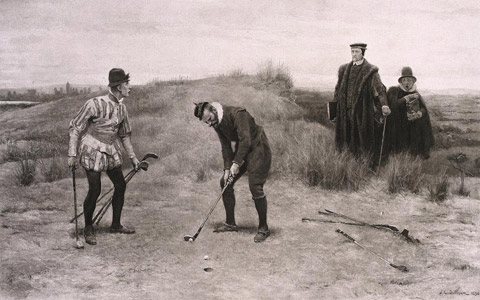
In the early days of the sport, people often played golf in enclosed public spaces, such as streets and churchyards which was considered dangerous and a nuisance. The Scottish church also prohibited golfing on the Sabbath (Sundays), but this didn’t stop everybody from playing.
Beneath the Green
Today, golf is a huge part of the Scottish tourism industry, and Scotland is now home to over 550 golf courses. With so many locations across the country, it is unsurprising that plenty of clues to Scotland’s past lie beneath the manicured greens and sandy bunkers.
For example, GUARD Archaeology’s work in Loch Lomond in the early 2000s uncovered 10,000 years of Scottish history at the Carrick Golf Course. Evidence of Mesolithic hunter-gatherers, Bronze Age cremations, farming and craft activity, and over 80 burials found beneath the present golf course paint the picture of a long period of ancient settlement at the site. The cremation urns dated to the early ninth and tenth century even contained artefacts from Norway, suggesting possible Viking settlement on Loch Lomond.
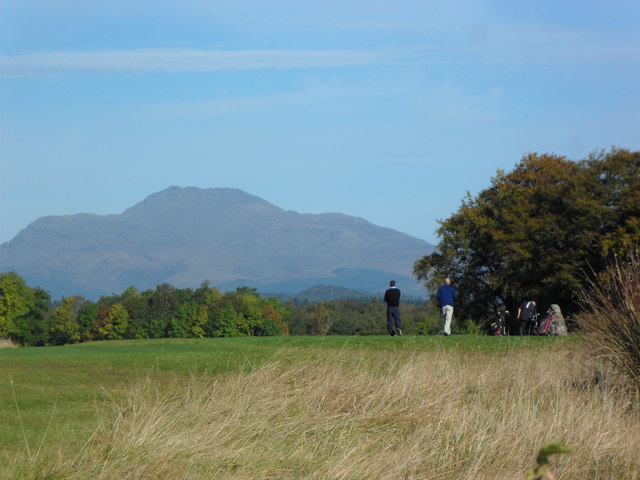
Ben Lomond looking over The Carrick Golf Course (cc-by-sa/2.0 – © Stephen Sweeney – geograph.org.uk/p/3219363)
Abandoned Courses
Unlike the long-established courses at St Andrews or Gleneagles, some golf courses would spring up just to cater for new people coming to an area, then disappear almost as quickly.
Roan Head Golf Course in Orkney was founded by The Royal Navy for troops stationed there during World War One, and it fell out of use soon after the war ended. Others didn’t survive changing land use, such as new housing, roads or railways. A course at Nigg on the Cromarty Firth disappeared after a coastal gun battery and associated camp was partially built over it.
Castlecraig GC, Nigg, Cromarty. 1890 – 1950s@HighGolfLinks #Golf #Highlands #Scottishhttps://t.co/eabz5U9QW9 pic.twitter.com/uoKhvsEMc5
— Golf’s Missing Links (@johnllewellyn84) 24 April 2016
Fort to “Fore!”
And then there are those golf courses which find themselves to be a part of a much earlier story.
Delvine course in Perthshire was founded in the 1920s, and elements of the course still survive today. It was partially built over the Roman Fort of Inchtuthil, and subsequently protected from development. Inchtuthil was the northern advance headquarters for the force led into Scotland by the Roman general Agrippa in the early 80s AD. However, before it could be finished Roman military priorities changed and the fort was dismantled and abandoned, its iron nails buried in order to stop them falling into hostile hands.
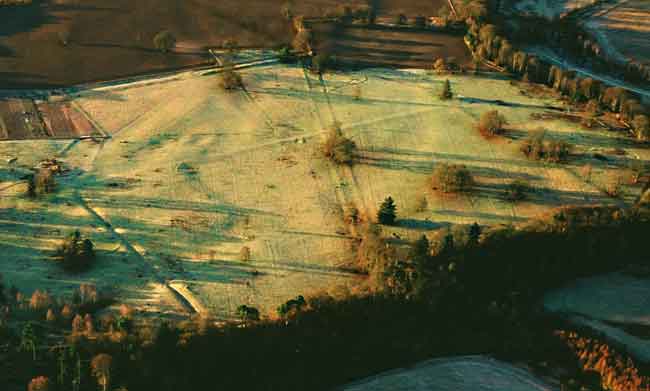
Aerial photograph of the fort site (By Baron Delvine – Own work, Public Domain, https://commons.wikimedia.org/w/index.php curid=6495006)
The remains of Scotland’s golf courses leave their own traces on the landscape which are often easier to spot from the air. The Britain from Above website showcases a selection of aerial photographs of courses past and present, which will continue to mark Scotland’s love of the game for years to come.
