Cannonballs and Counter-mines: The Archaeology of Scottish Sieges
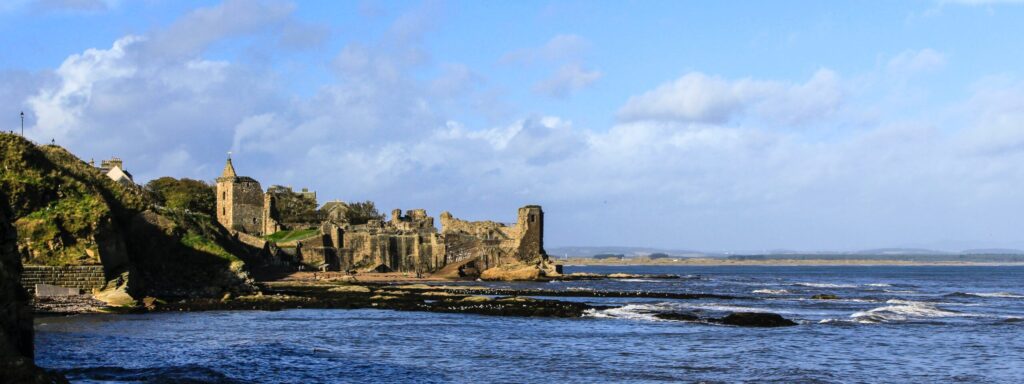
Stand your ground as you dig into sieges throughout Scottish history and explore the evidence that was left behind.
The Siege of St Andrews Castle
During the Siege of St Andrews Castle in Fife, the besiegers dug a mine under the castle walls in 1546/7 and the defenders responded by digging a counter-mine to forestall them. 332 years later, the tunnels were rediscovered at the junction opposite the castle and are now considered “among the most important medieval siege works surviving in Europe.”
The Siege of Haddington
During the Siege of Haddington (1548–9), an East Lothian church became a camp and offensive position and is still “covered with bullet holes and damage from the cannon fire”. The Siege of Haddington Research Group are hoping that a new 3D model will help them work out the location of the attackers and date the graffiti.
Guns weren’t only placed in the landscape but on the fabric of surrounding buildings as well. The church of St Mary’s was utilised as a camp and gun platform. On the exterior walls, gun shot and graffiti can be found from this time today! #HaddingtonHistory #ChurchConflict pic.twitter.com/Cr8SYeeMdT
— SHRG: Siege of Haddington Research Group (@ShrgOf) August 14, 2020
The Siege of Leith
Following the Siege of Leith, the Treaty of Edinburgh was arranged between Scotland, England and France on 6 July 1560. The French troops had been encamped at the port for twelve years after arriving by invitation until an English force arrived to help to remove them.
Hundreds of years later, archaeologists (including John Lawson, regional archaeologist for the City of Edinburgh Council) are still uncovering finds from the siege including the remains of horses’ heads (eaten to avoid starvation), cannonballs and evidence of fortifications.
The “Lang Siege” at Edinburgh Castle
David’s Tower at Edinburgh Castle was named after King David II and originally served as a royal residence. In the 16th century, it was partially destroyed by English gunners during the “Lang Siege” and the remains were levelled. The tower was “forgotten” until an excavation in 1912 which revealed the outer wall, as well as coins, fragments of pottery and glass, whole cannonballs and a soldier’s iron helmet.
#OnThisDay in 1912, an excavator was lowered through a hole to rediscover David’s Tower. Read more about the fascinating discover in our blog post. https://t.co/L56vZJ6Q65#EdinburghCastle #FlashBackFriday pic.twitter.com/EZAXcvWe3l
— Edinburgh Castle (@edinburghcastle) August 23, 2019
Kirkwall Castle Siege
Kirkwall Castle in Orkney was built in 1379 and said to be so strong that cannonballs “split like wooden golf balls against the walls”. In 1615, an order was given by the Scottish king to dismantle it after rebellious earls used it during a siege.
405 years later, a section of wall belonging to what was thought to be a castle was found by contractors and unearthed by ORCA Archaeology.
If you’d like to keep reading about Scottish archaeology, click here to uncover more stories on the Dig It! website.
By the Dig It! team
Header Image: St Andrews Castle – Photo by Laila Gebhard on Unsplash
