Dendrochronology and the Archaeology of Scotland’s Trees

Dendrochronology (or tree-ring dating) is the scientific method of dating tree rings to the exact year they were formed. The process can inform archaeologists about not only the date of a site, but the lifestyle of the people living there.
Wood in the Iron Age
An excavation at the Black Loch of Myrton in Dumfries and Galloway in 2013 discovered the preserved wooden floor of a prehistoric home. Further fieldwork revealed an incredible small Iron Age village, which the Whithorn Trust was able to partially rebuild with a replica roundhouse.
The settlement began with three houses, one of which was described as “a cathedral-like space”, built close together at the end of a wooden trackway. Dendrochronology work led by Dr Anne Crone of oak, hazel and ash wood shows that two of them were built in the same year, 435 BC, meaning that the preserved wood was close to 2,500 years old. Dendrodating also revealed that the dwelling was only in use for a few generations before it went out of use around 400 BC – why did the inhabitants leave?
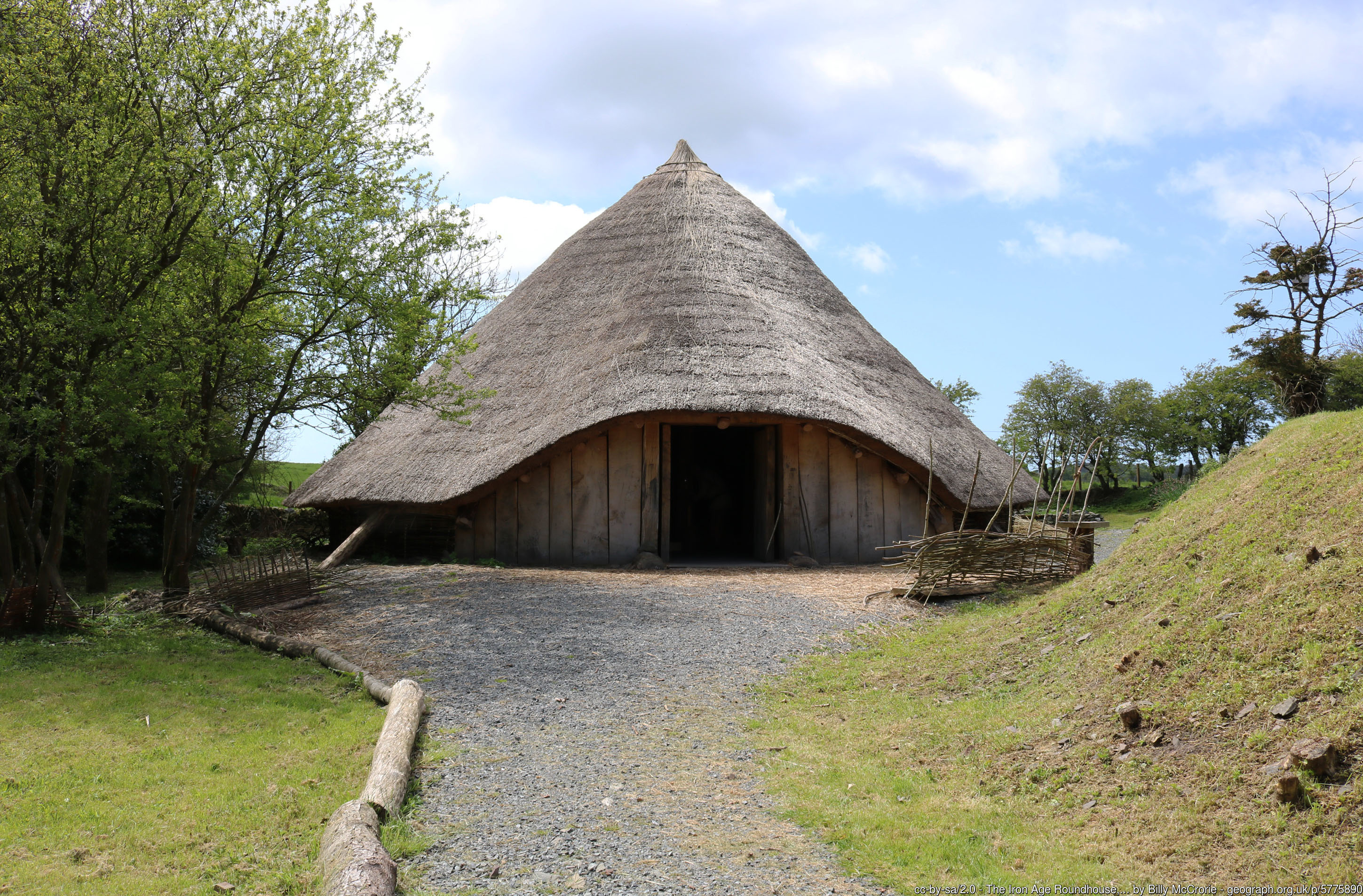
The Iron Age Roundhouse, Whithorn (Image Credit: © Billy McCrorie at geograph.org.uk/p/5775890, CC-BY-SA/2.0)
The Wallace Oak
This dendrochronology survey by Dr Coralie Mills made headlines when analysis was carried out on the so-called Wallace Oak.
A local legend told that knight and Guardian of Scotland, William Wallace was tied to the tree after his capture in August 1305 at what is now Robroyston, north of Glasgow. He was then taken to Dumbarton Castle, and from there to London to stand trial for treason where he was tortured and publicly executed.
A local heritage group thought they had found the very tree, identified by chains still wrapped around it from centuries of visitors symbolically marking the spot. The oldest known scientifically aged living trees in Scotland are mid-15th century, so it would have been miraculous to find one dated to the 14th-century. The oak sample was dated to 1763, centuries after Wallace’s death. However, this living tree had grown from the base of a much older tree which is now dead, could this have been the original Wallace Oak?
#OTD in 1298, William Wallace was titled “Guardian of Scotland” ⚔️
In 2017, dendrochronology dated a tree in Port Glasgow rumoured to have been the tree Wallace was chained to in 1305 after his capture by the English 🌳
Discover more 👉https://t.co/Kw4etvWCi7
(📸/@greenocktele) pic.twitter.com/Aw5PRx8N1r— Dig It! (@DigItScotland) March 29, 2019
Centuries in the Making
In 2020 it was announced that tree ring analysis of ancient timbers from St Giles’ Cathedral in Edinburgh had unlocked new details about the kirk as it approached its 900th birthday.
Using dendrochronology, Dr Coralie Mills of Dendrochronicle has been able to refine the date of the cathedral’s iconic bell tower, which was completed between 1460 and 1467 and not in the 14th century as many thought, the research undertaken as part of her HES-funded SE Scotland Oak Dendrochronology Project (SESOD).
She also identified that much of the timber came from oaks which would have been over 300 years old when they were felled in NE Scotland, probably in the Royal Forest of Darnaway in Moray; timbers from the very same source have also been identified in the Chapel Royal at Stirling Castle.

St Giles Cathedral (Image Credit: Gary Campbell-Hall via Flickr at https://bit.ly/38cFeWy, CC BY 2.0)
Plenty of wooden artefacts have also been found underwater, check out our post on Top 10 Artefacts Found in Scottish Waters to learn more.
