At the Water’s Edge: Top Archaeological Sites in Caithness
As we all know, water is something that Scottish people truly embrace and enjoy. Whether that is being rained on, going for a bit of open swimming or, well, getting rained on, we love it!
As a student of archaeology (and so a little wet behind the ears), it’s clear to me that Scotland has always had a strong affinity with water, lochs, and seas. After all, the history has been shaped by its coasts and waters. The passage of time runs through the country like the confluences of a river.
We can trace this relationship back many thousands of years. Mesolithic hunter-gatherers paddled their way around Na h-Eileanan A-Staigh (the Inner Hebrides) to collect food. Once people started to settle down, it tended to be near fresh water or the sea – they were providers of life, food and sustenance, after all. In the case of crannogs, they even settled on water.
So, let me take you on a wee journey of some of the finest archaeological sites in Caithness in the north-eastern corner of mainland Scotland, meandering through over 100 km of coastline and five fascinating archaeological and historical sites.
Westerdale Brochs (River Thurso)
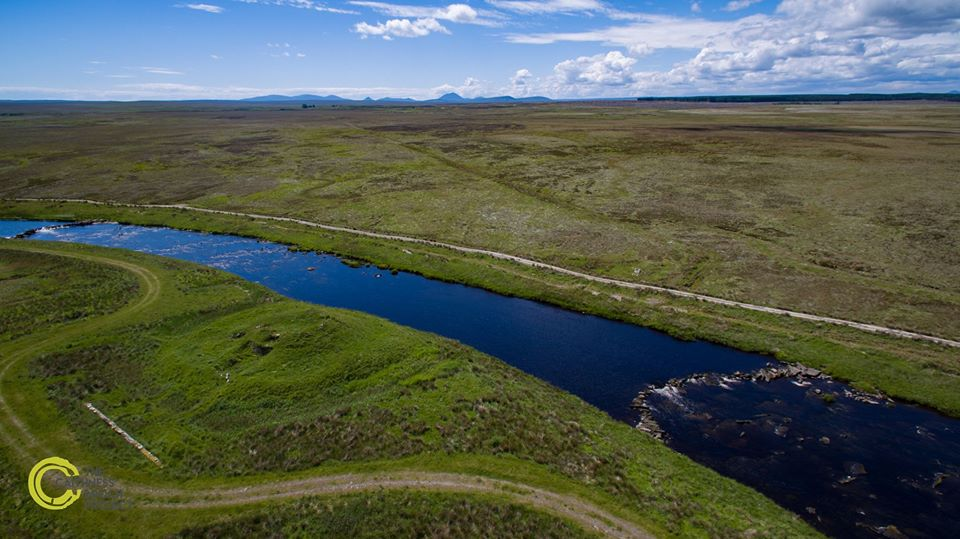
The River Thurso comprises 26 miles of the finest trout and salmon fishing, but we’re only interested in about three of them. Close to the photogenic Westerdale Bridge there are not one, not two, but FIVE brochs – 2,000-year-old drystone towers unique to Scotland – all situated close to the banks of the river. In fact, it has been suggested that one, Cairn Merk, even has a moat-like defence which fills in during a sudden flood – perhaps a unique feature of Caithness brochs.

River Thurso (Image Credit: Craig McIntosh of Highland Drones via Caithness Broch Project)
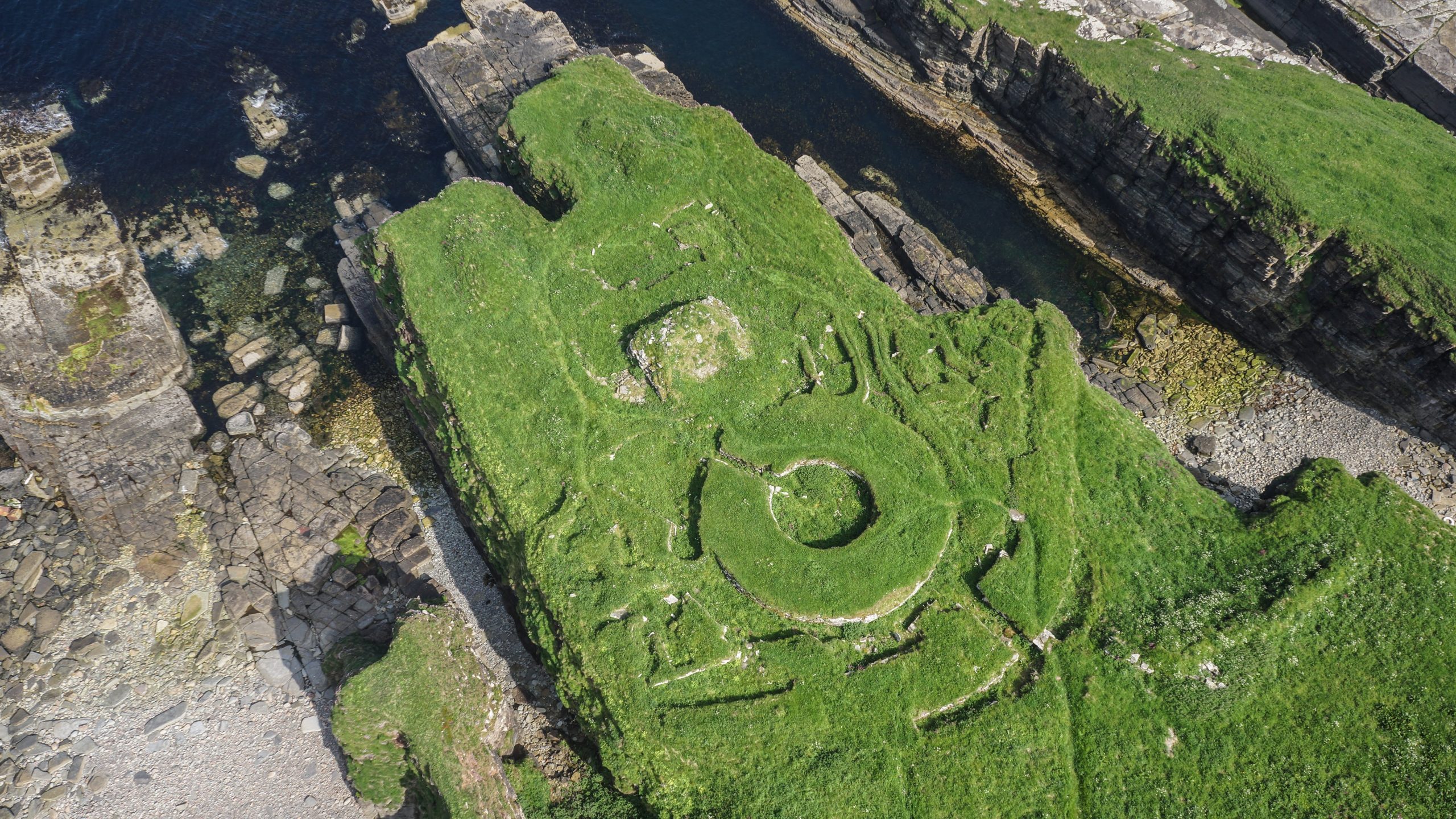
Nybster Broch
Nybster Broch could be considered the pearl of Caithness archaeology – it’s certainly one its most-investigated sites. Initially excavated by a wealthy 19th century-landowner and antiquarian, it was re-visited by Caithness Archaeological Trust and AOC Archaeology in 2011. Many finds have since been recovered from this broch, including a pair of tweezers and gaming pieces currently on display at the Caithness Broch Centre.
And are you wondering about those bizarre features around the circular broch? They were carved by a local farmer and archaeologist, John Nicolson, who also dabbled in watercolours. Thanks to John we have a number of illustrations and plans of the original 19th-century excavations.
Loch Watten Crannog
Loch Calder, Loch Yarrows and Loch Watten are all surrounded by archaeology. Loch Watten (Watten, by the way, comes from the Norse ‘Vatn’ which means ‘Water’) has a number of burial cairns (a mound of rough stones built as a memorial or landmark) and brochs nearby, but is perhaps most notable for what looks like a wee island at it’s far western edge.
This is the remains of a crannog – a prehistoric water dwelling – which are still visible to this day. This artificial island would have likely had some form of roundhouse-style home on top. If you want to know more about these prehistoric structures, the Scottish Crannog Centre at Loch Tay in Perthshire will provide you with an in-depth experience.
Sinclair Girnigoe Castle
One of Scotland’s coolest castles. You heard it here! This fortress, long associated with the Sinclair Earls of Caithness, clings to the east cliffs in an almost impossibly precipitous manner. It’s thought there were actually two castles at this site – the earlier ‘Castle Girnigoe’ to the west, dating to at least the 15th century, and ‘Castle Sinclair’ to the east, which was built at a later stage. The more complete remains of the earlier Castle Girnigoe can be enjoyed in from a safe distance nearby.
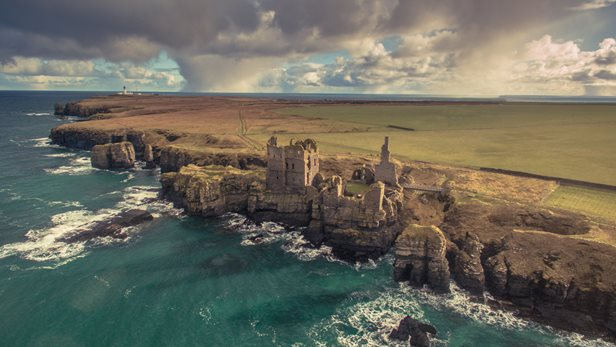
Gruesome fact: The 4th Earl of Caithness who lived at Castle Sinclair, imprisoned his own son in a dungeon there for seven years. After this time, the earl finally finished off his son by starving him for many days and then providing him with a diet of salted beef and no water, leaving him to die of dehydration.
Dunbeath Broch and Strath
A walk up Dunbeath Strath following the river into the heart of Caithness is always a memorable experience. This part of the county is beautiful, historic and atmospheric and full of archaeological gems, including Dunbeath Broch. Conservation work carried out at the site, as well as a small-scale excavation, turned up a brilliant wee gaming piece. After visiting this Iron Age structure, you can pop into Dunbeath Heritage Centre and enjoy some great archaeological exhibits, featuring everything from Bronze Age swords to medieval coins.

If you’d like to keep exploring the brochs of Caithness, visit the Caithness Broch Project website.
By Kenny McElroy, student of Archaeology at the University of Glasgow and Director of Caithness Broch Project.
This article was produced in support of Scotland’s Year of Coasts and Waters 2020-21.

