Carved in Stone
In 2021, Dig It! teamed up with Stout Stoat (formerly Dungeons on a Dime) to launch a crowdfunding campaign for Carved in Stone, which resulted in over £30,000 being raised by 877 backers in just a few weeks.
Four years later, thanks to the work of game designers, writers, archaeologists and a diverse group of artists, Carved in Stone: A Storyteller’s Guide to the Picts was made available for purchase.
Carved in Stone is an illustrated guide to the world of the Picts, an early medieval Scottish society, in the late 7th century. Packed with information on the weather, languages, settlements, cuisine, fashion, medicine, skills and more, cutting-edge research is presented in over 160 pages with more than 350 historically informed illustrations.
The book can be enjoyed by anyone aged 14+ with an interest in Scotland’s past. It can also be used by those who already play tabletop roleplaying games (TTRPGs) to build adventures where players explore the landscape, meet the Picts and their neighbours, and create their own stories.
TTRPGs are collaborative storytelling games where players use their imagination to invent characters, tackle problems, and immerse themselves in adventures within a world of their choosing. One of the most famous examples of a TTRPG is Dungeons & Dragons, which appeared in the hit TV show Stranger Things.
The project was led by Brian Tyrell of Stout Stoat Press, an Edinburgh-based games-and-book publisher, and ArchaeoPlays’ Dr Heather Christie FSAScot, an archaeologist, gamer and YouTuber, in partnership with Dig It!.
Read more about Carved in Stone or visit the Stout Stoat Press website to purchase your copy.
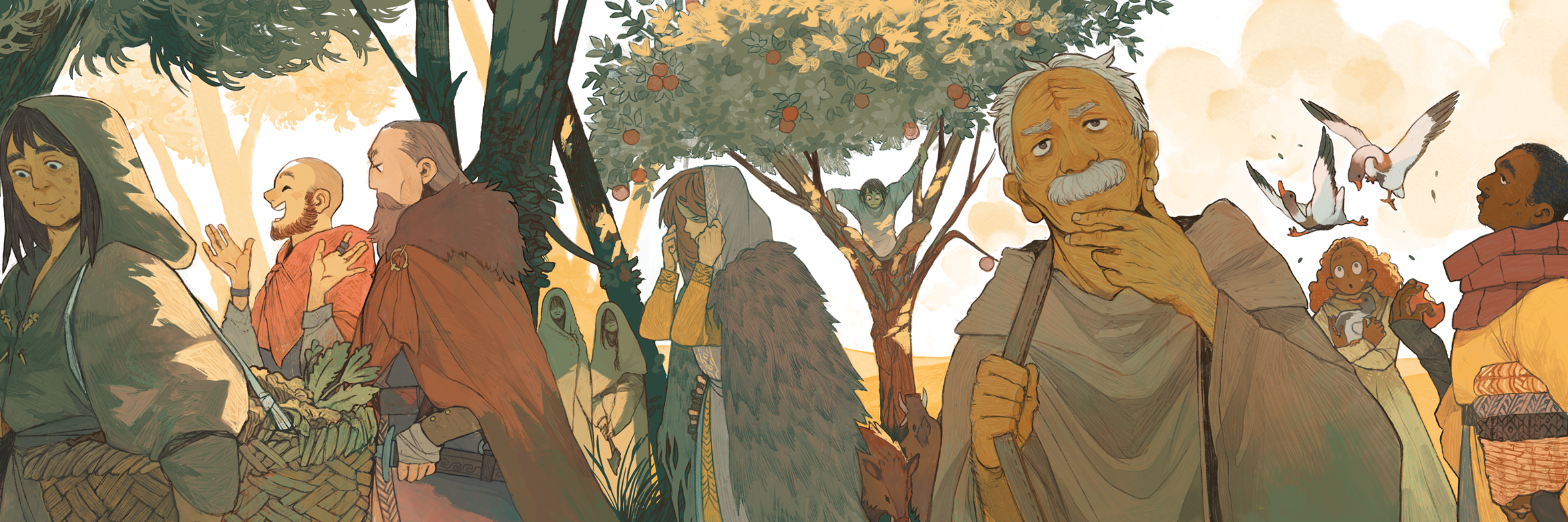
Illustration from Carved in Stone (Image Credit – VER artistver.carrd.co)
Archaeological Play and the Performance of Identity (APPI) Project
In 2023, we revealed that we’d be able to explore questions of archaeological play and identity with the University of Glasgow as part of this process thanks to the Royal Society of Edinburgh’s Research Awards Programme.
The team are now working with researchers spanning archaeology, history and post-colonial studies and practitioners within the games industry (including designers, artists and authors) to develop a new network, website and guide through the Archaeological Play and the Performance of Identity (APPI) Project.
This will help us develop this and future games and cement new relationships between academic researchers, third sector organisations and the games industry to ensure that the impact goes far beyond Carved in Stone.
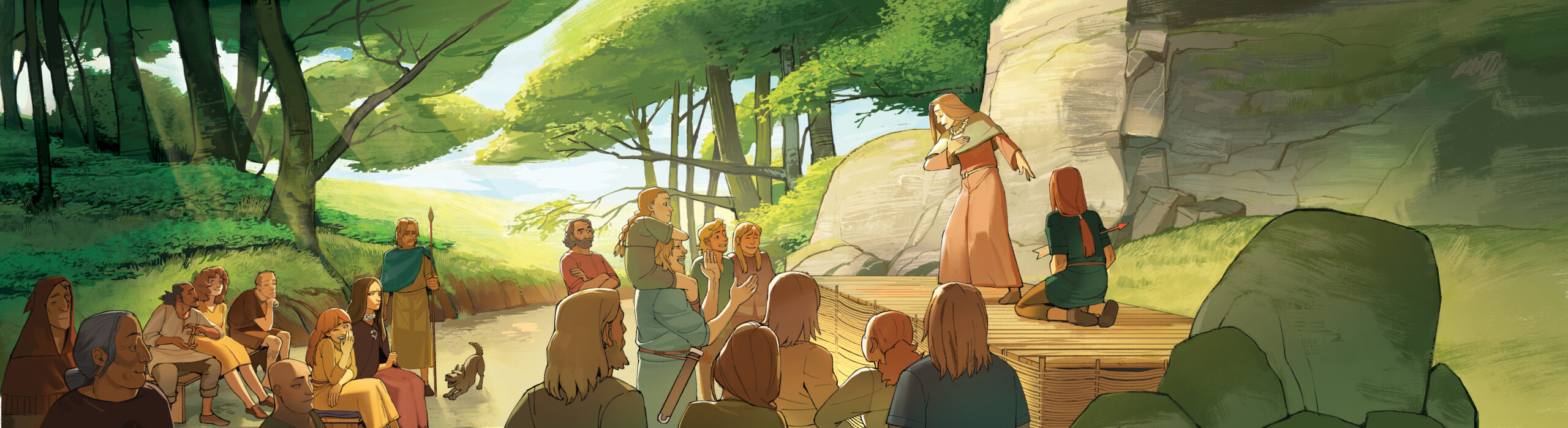
Bards’ performance in Carved in Stone (Image Credit – Nathaniel Santore gyrium.neocities.org)
Never Miss Out
