Did Scottish Archaeology Inspire Game of Thrones?
Game of Thrones fans who live in (or visit) Scotland are in luck – with many of its foundational pillars rooted in history, Scottish archaeology and historic sites give us an entire extended universe in our own backyard to revel in. Start your journey and discover the real-world Westeros below. *SPOILER ALERT *
Cup & Rings marks
The moment that Jon Snow led Daenerys into the cave beneath Dragonstone, Scottish historians were leaping from their seats, and not just because of the budding romance on display.
Jon shows her mysterious symbols carved into the cave walls thousands of years ago by the Children of the Forest. Anyone who has ever visited sites like Achnabreac or Ormaig in Kilmartin Glen will recognise the symbols immediately – they are almost exact reproductions of the enigmatic cup and rings marks etched into rocky canvases across Scotland and Europe over five thousand years ago.
Just like Jon we have no idea what these symbols might mean, though in Game of Thrones they seem linked to the arcane rituals that created the White Walkers.
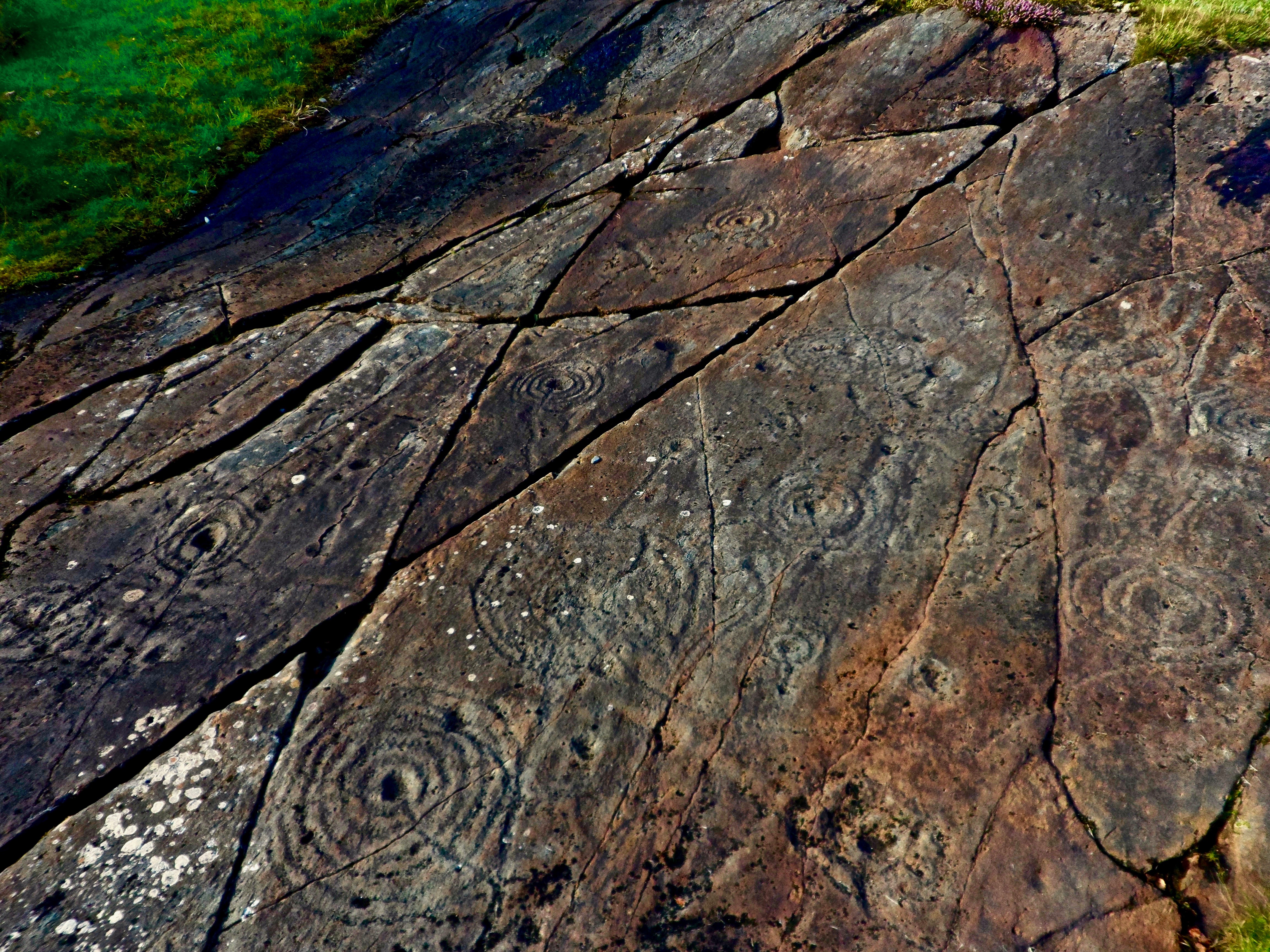
Achnabreck cup-and-ring marked stone. Image Credit: David C. Weinczok
Craigmillar Castle
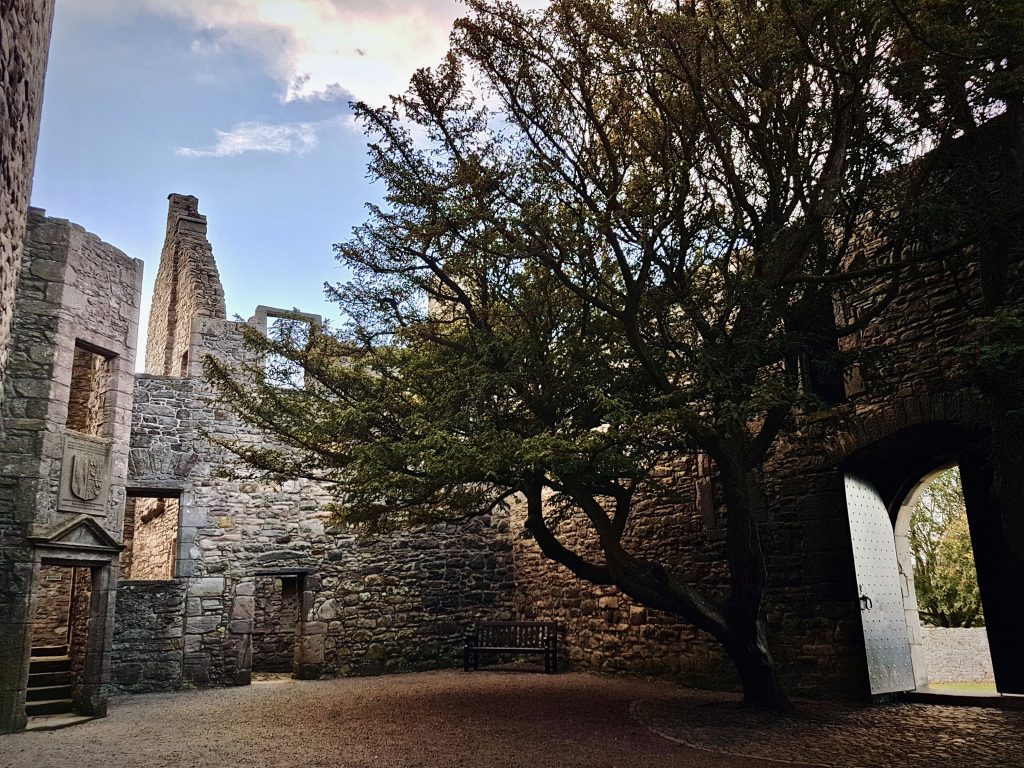
Two great curtain walls, the second taller than the first, surround a central keep with courtyards radiating out on all sides. A sacred tree grows within, one that has shadowed generations of the castle’s masters. The walls bristle with arrow slits, machicolations (features built into the walls through which stones or burning objects could be dropped on attackers), gun loops and other marks of war, protecting areas that once offered domestic comforts of every kind. The castle is raised upon a rocky bluff, and legendary animals like unicorns are emblazoned on its stones throughout.
Welcome to Craigmillar Castle, Scotland’s Winterfell. Almost everything about its construction perfectly mirrors the development of Winterfell, ancestral home of the Starks, right down to the magical ambience of the yew tree growing out of the stones of the innermost courtyard.
George R R Martin himself seems to agree, having re-tweeted the author’s post making this very point. It’s tempting to think of Edinburgh Castle as the Scottish equivalent of Winterfell, but it turns out the real location is just a few trebuchet shots away.
If you’re looking for a real-world Winterfell, it’s hard to top Craigmillar Castle in Edinburgh.
Developed over many generations? ✅
Two curtain walls and a big tower in the middle? ✅
A sacred tree (yew)? ✅
What do you reckon @GRRMspeaking? 🤓@welovehistory #GameofThrones pic.twitter.com/X7L9C6i5od— David C. Weinczok (@TheCastleHunter) 17 January 2019
The Antonine Wall
It all started with the Wall. Standing upon Hadrian’s Wall in 1981, Martin wondered what it would feel like to be a legionary stationed there imagining mist-shrouded horrors descending on you from the wrathful north.
Yet the even more extreme frontier is one hundred miles north at the Antonine Wall, which established the limits of ‘civilisation’ at the Forth-Clyde line. Game of Thrones’ Wall even mirrors the Antonine’s course, with both walls running straight as an arrow from their centre to the east but twisting and turning around natural obstacles to the west. The peoples beyond the Antonine Wall, the Caledonians, were described by Tacitus as having ‘massive limbs and red-gold hair’ – a compliment that would surely make everyone’s favourite Wildling, Tormund Giantsbane, grin ear to ear.
Martin’s process for writing fantasy is to smash history together and turn it up to eleven – hence how Scots became Wildlings riding bone chariots, and the walls of Rome became a 700-foot wall of ice.
BY DAVID C. WEINCZOK, writer, presenter and heritage professional
Weinczok (aka “The Castle Hunter”) expands on these and many more Westerosi connections with Scottish history in his book, ‘The History Behind Game of Thrones: The North Remembers’ from Pen & Sword Books.
Featured image is the courtyard of Craigmillar castle in Edinburgh. Image Credit: David C. Weinczok.
