Did Vikings Get Sick? Disease in the Viking World

Who were the Vikings?
The Vikings often capture the public imagination with tales of the warrior’s ferocious conquests, huge ships, far-flung travels and adventures being a firm favourite amongst children and adults alike.
They have an almost god-like, mythical status played upon by Hollywood. Tall, strong, accomplished yet terrifyingly barbaric and deadly, destroying anyone unfortunate enough to be within their sights. Rarely, if ever, are these warriors portrayed as people who could be sickly and unwell.
Yet in reality, the Vikings were normal people. Yes, many were warriors and mercenaries but many more were farmers, craftworkers and traders. Arable land and other resources were scare in early medieval Scandinavia and as such many took to the seas in search of new lands, trade and resources.
Many Scandinavians settled overseas, married locals and raised families. Indeed, the majority of Vikings were primarily interested in making living to support their families and improve their prospects (rather than raiding defenceless abbeys such as Iona).
The Viking period in Scotland began towards the end of the 8th century, dominating the three centuries that followed and influencing the country for even longer. Yet, apart from the writings from Iona and some Irish, English and Norse documents (such as the Orkneyinga Saga), as well as evidence derived from material culture and place names, there is very little historical information on Viking invasions and settlement in Scotland. This is one of the reasons why we’re turning to molecular evidence.
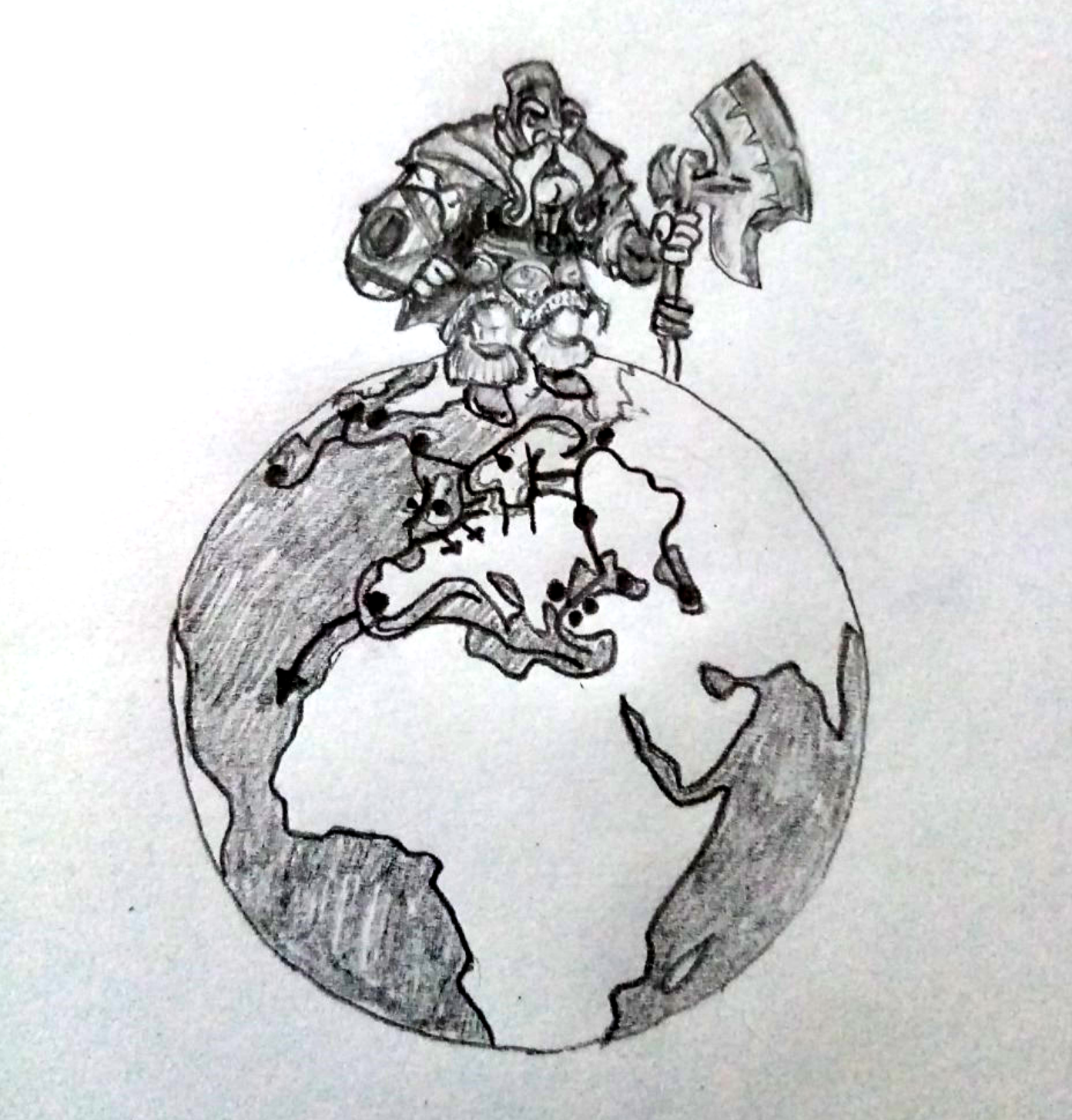
Figured 3: The Vikings travelled over large geographical establishing a network of long-distance trade routes (Artwork Credit: Author)
Why do Vikings Make Good Candidates for Studying Disease?
The Vikings are one of the most travelled and diverse group of people within history. The mode of travel is well documented in both the material culture and historical record. We know that they covered long-distance by standard longship (a naval vessel) and knarr (a cargo ship) with local journeys being made by karve (a smaller, general-purpose ship). If you’d like to board one of them for yourself, you can visit the Skidbladner, a full-size replica on Unst in Shetland which now sits alongside a reconstructed longhouse as a permanent visitor experience.
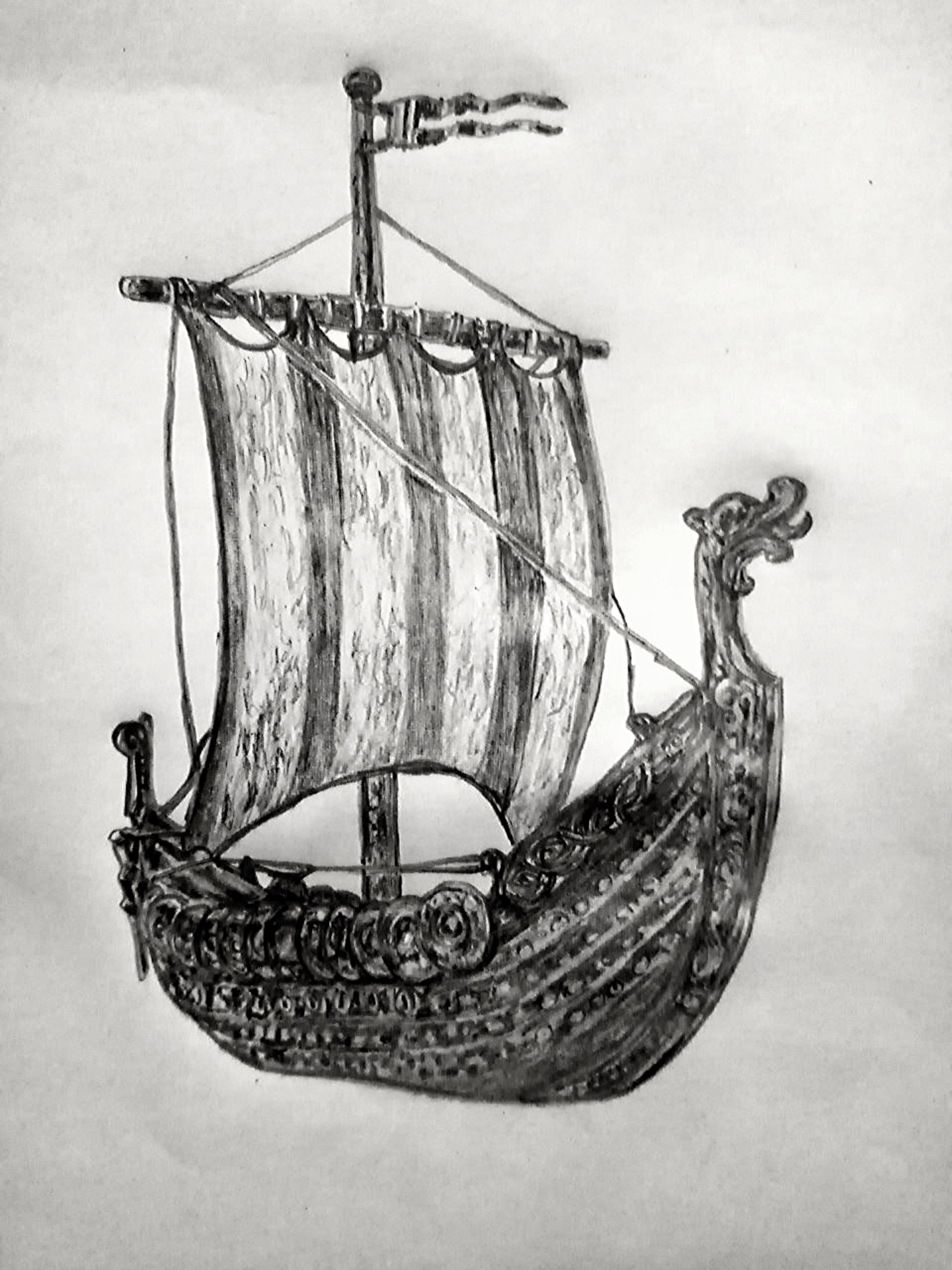
Figure 2: Viking longship (Artwork Credit: Author)
However, we have to turn to writings in Chronicles, Annals and Islamic travelogues to gain insights into the true conditions on those vessels (Fig. 2), which were cramped, dirty and often carried a combination of people, livestock, food supplies and trade goods such as furs.
Ibn Fadlan, an Islamic geographer, travelled on one such ship and noted how the Vikings had poor hygiene, were riddled with parasites and often fell sick with disease. These ships stopped at several trading stations along a long-distance trade route whereby people, animals and goods where uploaded and offloaded along with their hitchhiking, diseased-filled, parasites.
It’s this relationship between the environmental conditions, people, livestock and parasites combined with the geographical distances covered that make the Vikings ideal candidates for the study of illnesses caused by pathogens and parasites in human populations, known as vector-borne disease. In effect, they tick all the right boxes for disease transmission.
The Viking period is also chronologically situated in a very interesting window between the Justinian Plague (541-751 AD) and the Black Death (1347-1670 AD), which hit Scotland around 1349. Very little is known about the plague, its behaviour and expression, during this period. We know it simply didn’t disappear in 751 AD and re-emerge as another variant strain almost 600 years later. Where was it? What form was it taking? Who was it infecting and how was it being transmitted?
These are questions which are of interest for researchers. The Vikings may hold the answers to these questions and by identifying plague in fossilised organisms that transmits a disease or parasite from one animal or plant to another (known as vector sub-fossils), we may find the key to unlock part of an untold story of disease in their world.
Why Research Disease from Archaeological Remains?
The only way we can know definitively about disease in the past is through examining archaeological remains. Excitingly, the archaeological record contains a huge reservoir of information about disease that has not yet been accessed. Recent and developing technological advances are now allowing for the possibility of extracting this information.
Bioarchaeologists, for example, will be able to identify diseases that leave no visual trace on skeletal remains and have therefore remained undetected – who knows what we may find during analysis? This opens up many possibilities for future research and ultimately how we understand the effects that disease had on past societies.
How Can We Identify Disease in The Viking World?
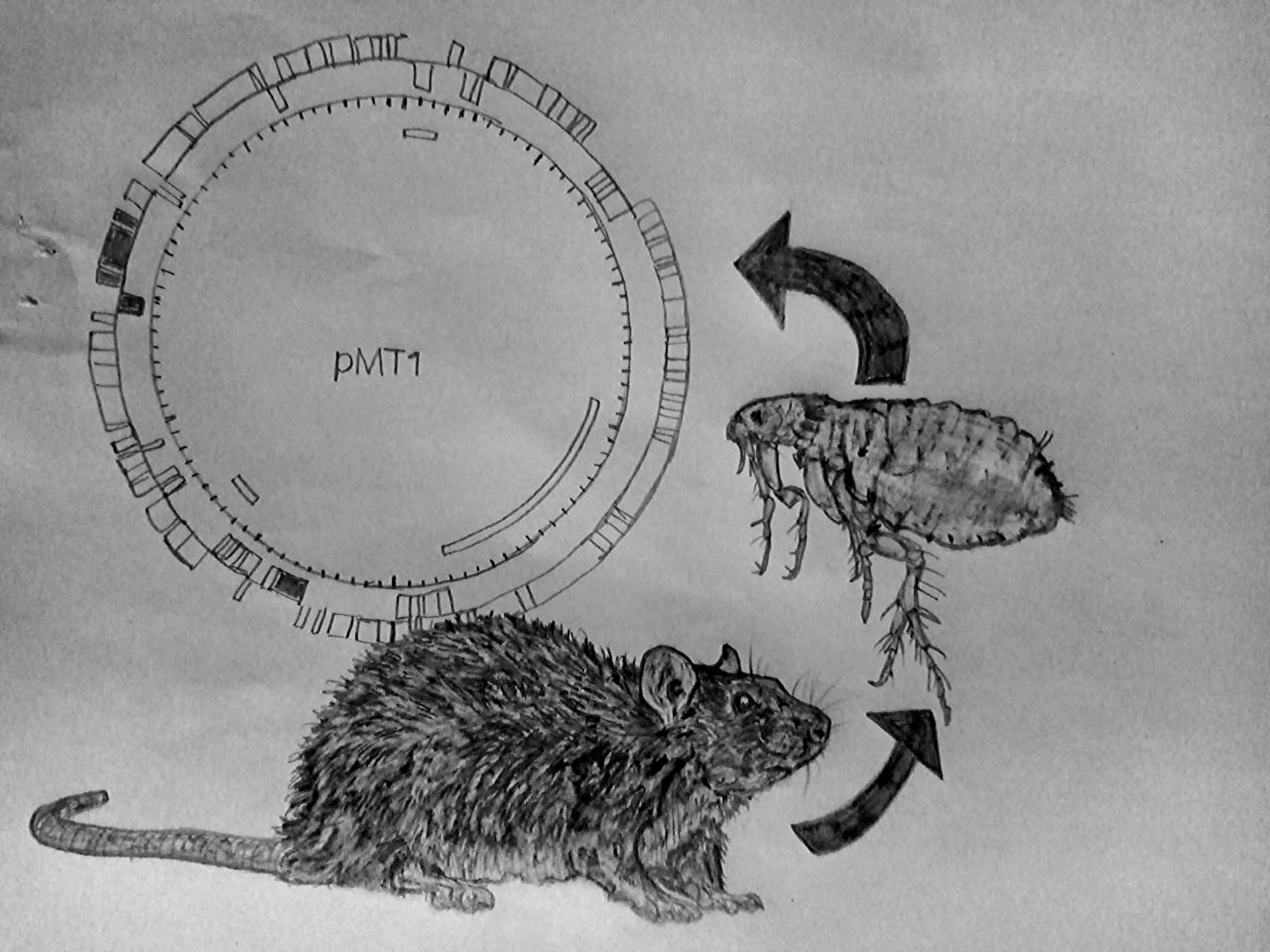
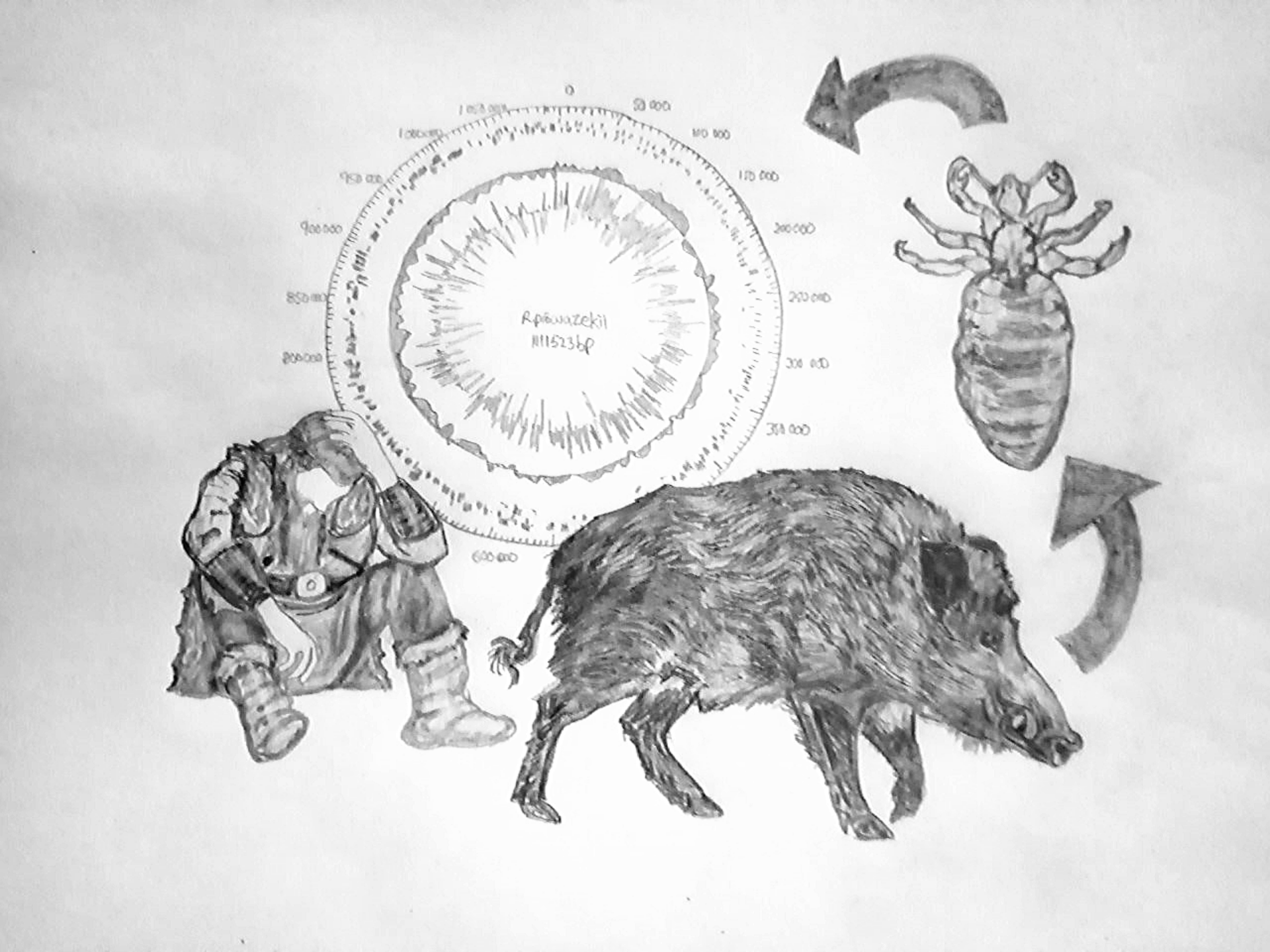
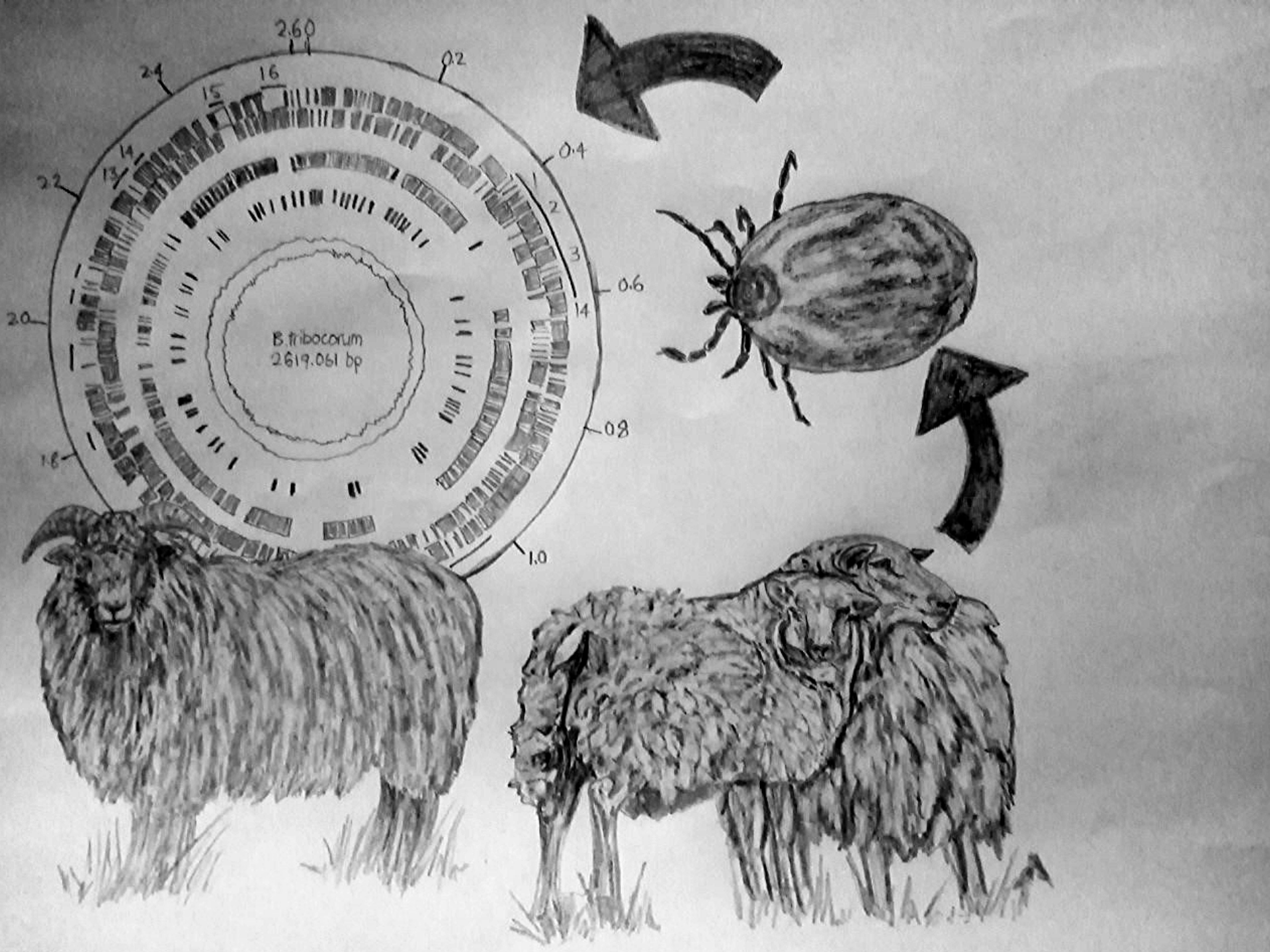
In order to identify plague and other pathogens (organisms that causes disease) in vectors (any organism that carries and transmits an infectious pathogen into another living host), we have to analyse the genetic material DNA and RNA contained within the parasite itself. Disease-transmitting parasites such as lice, fleas and ticks are reservoirs of pathogens including plague, relapsing fever and epidemic typhus, all of which may have infected the Vikings (Fig. 3). These parasites which live outside of their hosts, known as ectoparasites, can be recovered from sealed and undisturbed Viking burial and settlement sites.
Researchers are currently attempting to extract pathogens from parasites by targeting specific regions of the pathogen genome (the complete set of genes for the pathogen), and subsequently identifying the different strains present.
-
- Figure 3: The genetic material that can be extracted from vector remains (A) The Flea, transported on the rat, is a reservoir for several pathogens including the Plague.
-
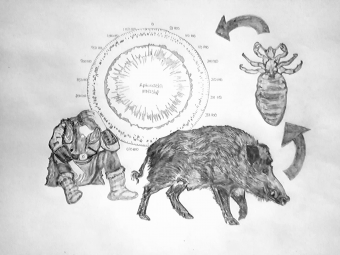
- (B) The Louse, transported on humans, swine and poultry, transmit Epidemic Typhus and are known to be reservoirs of Plague.
-
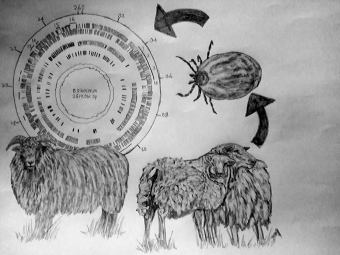
- (C) The Tick is a vector for several pathogens including Relapsing Fever. (Artwork Credit: Author)
It will be interesting to see what kind of contribution the analysis of ancient genetic material and identification of disease can make to Scottish archaeology – this could even extend beyond the Viking period. The identification of disease could shed light on many currently unanswered questions…
Thanks to advances in technology, subsequent successful analysis and the possibility of increased sample numbers, it’s a very exciting time in bioarchaeology.
If you’d like to know more about Vikings in Scotland, take a look at the events and articles on the Dig It! website.
