How You Can Help Find Prehistoric Hunter-Gatherers in the Scottish Mountains

Human use of the mountain and upland landscapes of Scotland is nearly as old as evidence for human use of Scotland as a whole. However, our ability to understand exactly what people were doing in mountain landscapes in early prehistory is constrained by the difficulty of finding sites. For the Mesolithic period, when Scotland was occupied by hunter-gatherers over 6,000 years ago, the most likely source of evidence comes in the form of small stone tools.
Peat formation since the Mesolithic in these landscapes means that the land surfaces that these artefacts were deposited on are also buried, sometimes deeply. Even once identified, sites in these landscapes can be remote, hard to access and exposed – challenging and sometimes dangerous conditions for fieldwork. Finding sites and evidence of hunter-gatherer use of mountain landscapes is therefore very difficult. But when we do, the results can be amazing.

Flint core
An 8,200-year-old tent
For example, a recent project on Mar Lodge Estate in the Cairngorms has demonstrated the complex and varied ways in which hunter-gatherers used this area – and how this changed over time. Once identified, sites can be very well preserved, because they have not been damaged by ploughing.
As part of this project, a team from University College Dublin’s School of Archaeology (UCD) excavated the location of a tent with a small fire in the centre and specific areas inside that seemed to have been used for processing animal materials. We think that the site was only used for one or two nights, possibly as a resting point on a journey around the high plateau, and that one key task that took place in the tent was repairing tools.
Startlingly, the site was occupied during a major climatic deterioration that took place about 8,200 years ago, which likely saw glaciers reforming in the high corries of the Cairngorms. It is a remarkable site, and our work there was only possible because of the National Trust for Scotland (NTS) footpath maintenance workers who spotted a small number of flints in an eroding path and reported them. These artefacts can be very small: at the end of our excavation the average maximum size of the stone tools we found was only 8.7mm. From (very) small stones we can tell big stories.
This excavation formed part of collaborative fieldwork undertaken in Mar Lodge by NTS, UCD and the Universities of Aberdeen and Stirling. Our results show us that there are very different kinds of sites in the Cairngorms, occupied for different purposes at different times. Hunter-gatherer use of mountain landscapes was complex – and remains very poorly understood. To understand the range of activities we need to find more sites!
-
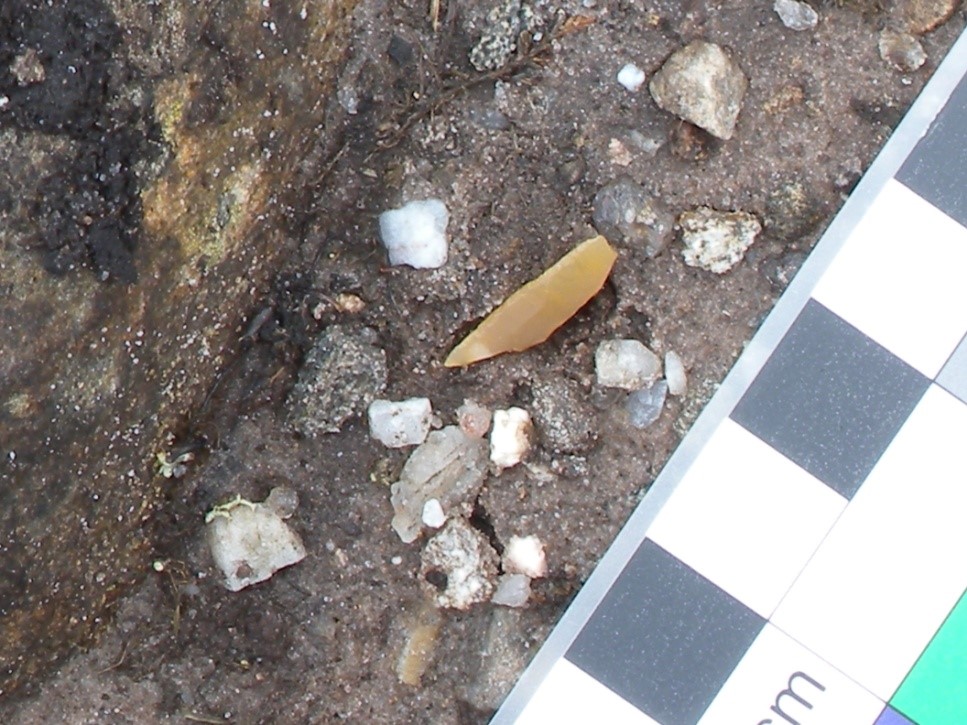
- A microlith (small stone) found on a footpath
-
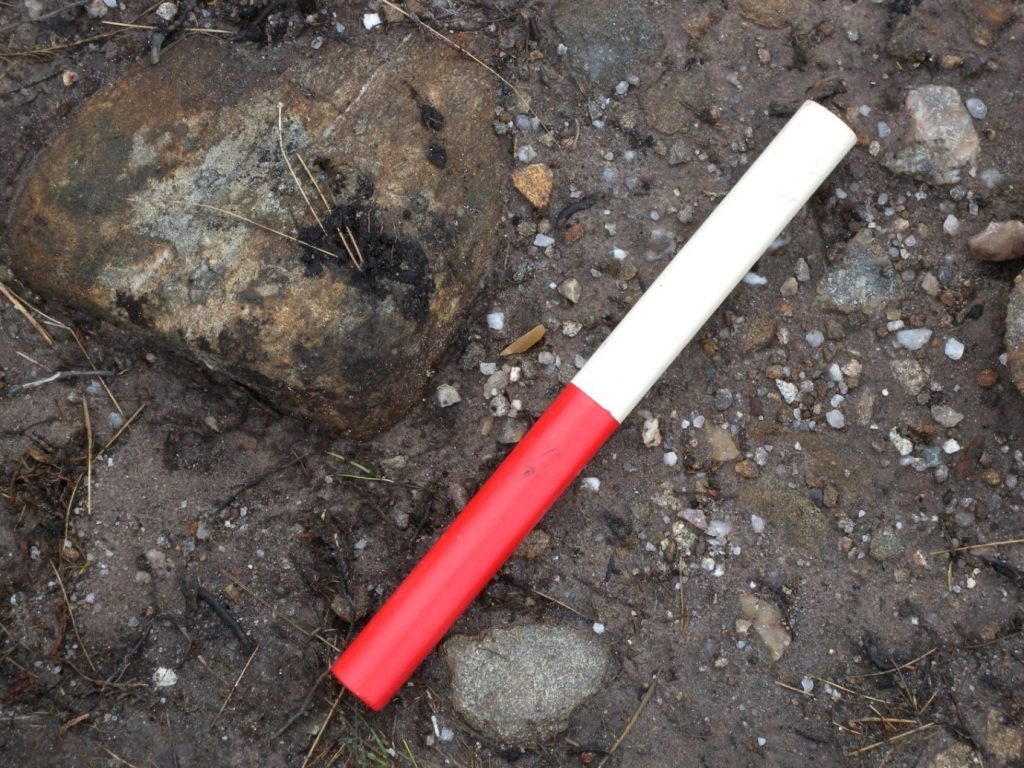
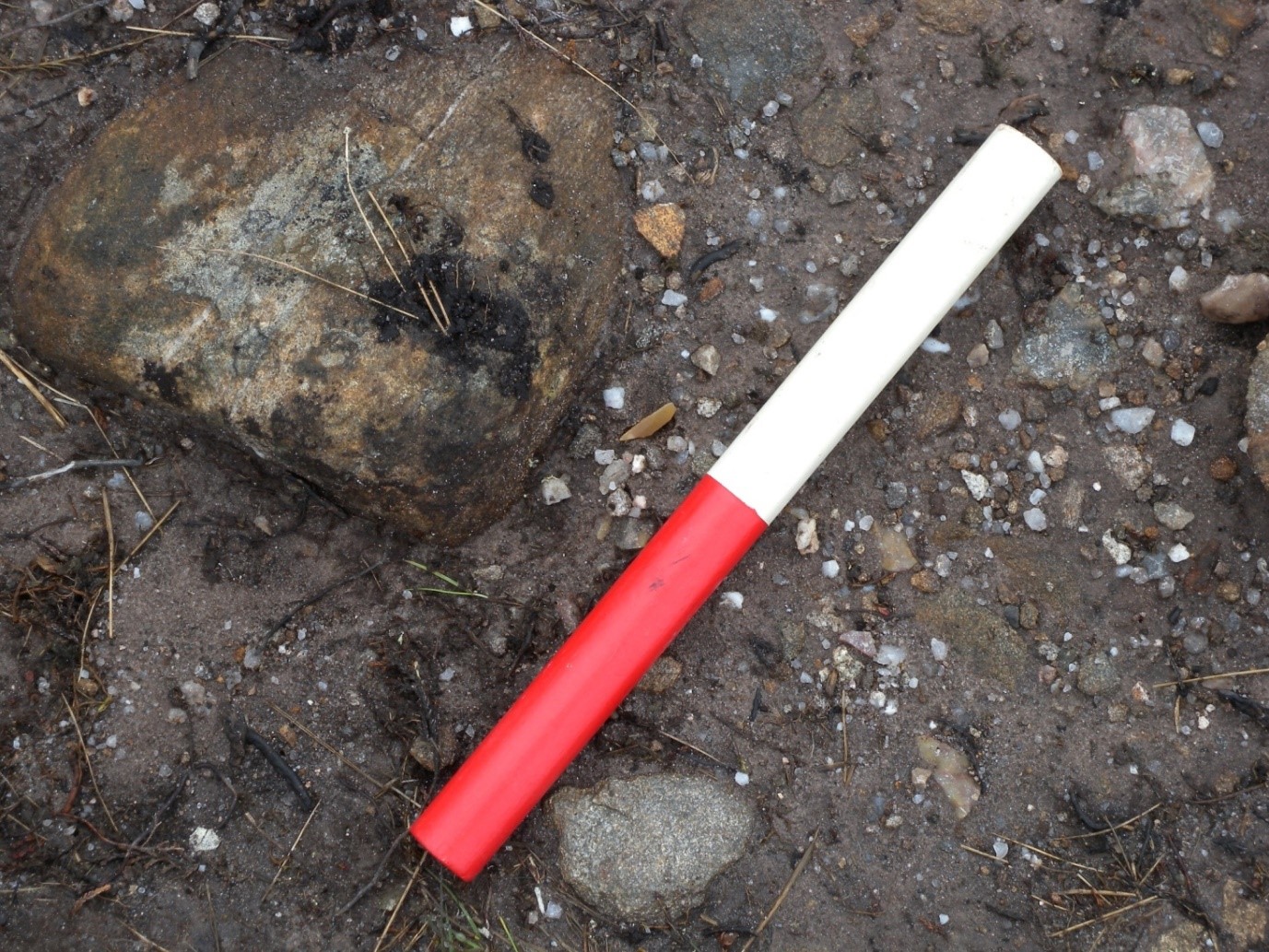
- The same microlith with a scale in 10cm divisions
How can I help?
Many of these sites are most likely to be found through identifying stone tools – typically small flakes and blades of flint (although other materials were used in prehistory these can be hard to identify). The use of flint offers us one benefit in trying to find these sites: because flint is not naturally present in the Scottish mountains it looks distinctive enough to catch the eye.
The people with the best chance of finding stone tools in the mountains of Scotland are those who spend the most time there – people who work in these landscapes or those who spend time hillwalking and exploring them. If you find something, please do the following:
1) Record its location with photographs – close ups and landscape settings.
2) Get spatial information about the find (grid reference, or tag position on a phone/GPS). Try to reduce as much as possible any potential damage to the object and do not clean it or attempt to apply any substances to it (but if an object is wet and made of wood or textile it is a good idea to keep it damp by keeping it with some of the soil in which it was found and keeping it in a plastic bag).
3) Most importantly, when you get back please report the find to Treasure Trove as quickly as possible using the online form. Objects can also be deposited with your local museum or Local Authority Archaeologist. As with any finds in Scotland, stone tools are subject to Treasure Trove. If you do find stone tools in the mountains, especially in the Cairngorms, please also email Graeme Warren, Head of UCD School of Archaeology, who has been researching finds made in these landscapes.
You can also help spread the word by sharing this article and distributing this poster where appropriate.
These tools can be transformative for our understanding of the earliest parts of Scotland’s prehistory. Many will be Mesolithic, but others could be later, dating to the Neolithic or Bronze Age – times when people still used mountains as part of their daily lives. If they’re appropriately recorded and reported, your chance finds can contribute to Scotland’s bigger archaeological picture.
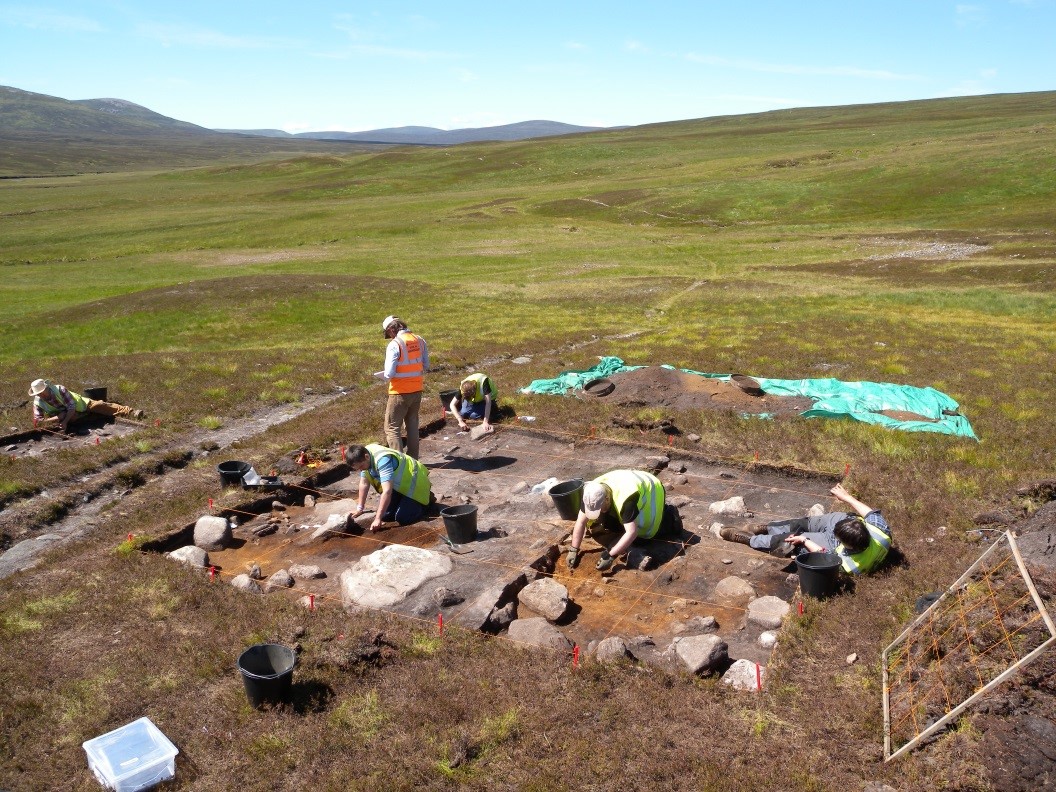
Excavations of an 8,200-year-old hunter-gatherer site
By Professor Graeme Warren, an expert on the archaeology of hunter-gatherers and keen mountain runner. He is currently directing a project exploring the early human use of the Cairngorms and can be followed on X (Twitter) or contacted over email.
Header Image: Broken and complete stone tools from an 8,200-year-old site in the Cairngorms. These are types of ‘microliths’ (lit. ‘small stones’): multiple microliths would have been hafted together to make an arrow, knife etc.
