Lost Lanarkshire Castle Site Investigated by Archaeologists and Local Volunteers
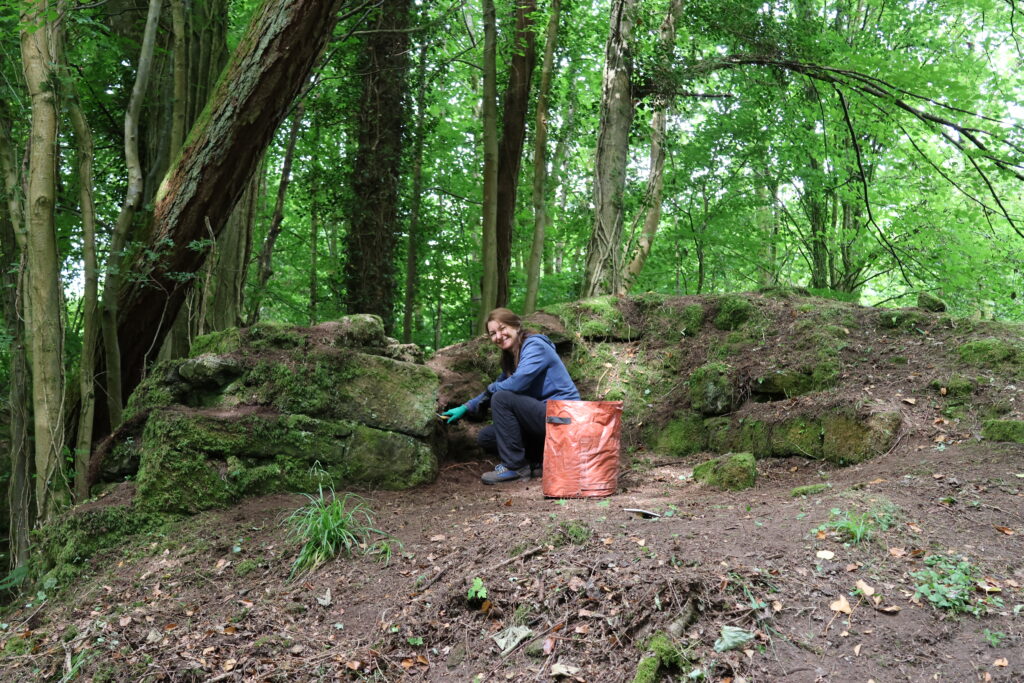
Volunteers have discovered artefacts in the Chatelherault Country Park forest near Hamilton which may help them confirm the location of a lost medieval castle.
In July 2024, a team of volunteers from Clutha Archaeology Group supported by experts from Archaeology Scotland and the Countryside Ranger Service opened three test pits to look for evidence of Eddlewood Castle. They uncovered a cobbled surface, a possible drain and pottery sherds which have now been dated to the late medieval period (14th or 15th century).
According to an 1889 account, Eddlewood Castle was dismantled after the Battle of Langside in 1568, which was fought between forces loyal to Mary, Queen of Scots and forces acting in the name of her infant son James VI. It states that the site of the castle ‘is marked by a mound of rubbish and the fragment of a wall’. The site is also marked on the estate plan of 1776 prepared for the Duke of Hamilton, which matches the later report.
A site matching the description and location has been identified, however, archaeological evidence has yet to corroborate this documentary evidence, which was written hundreds of years after the castle was reportedly destroyed and may be unreliable.
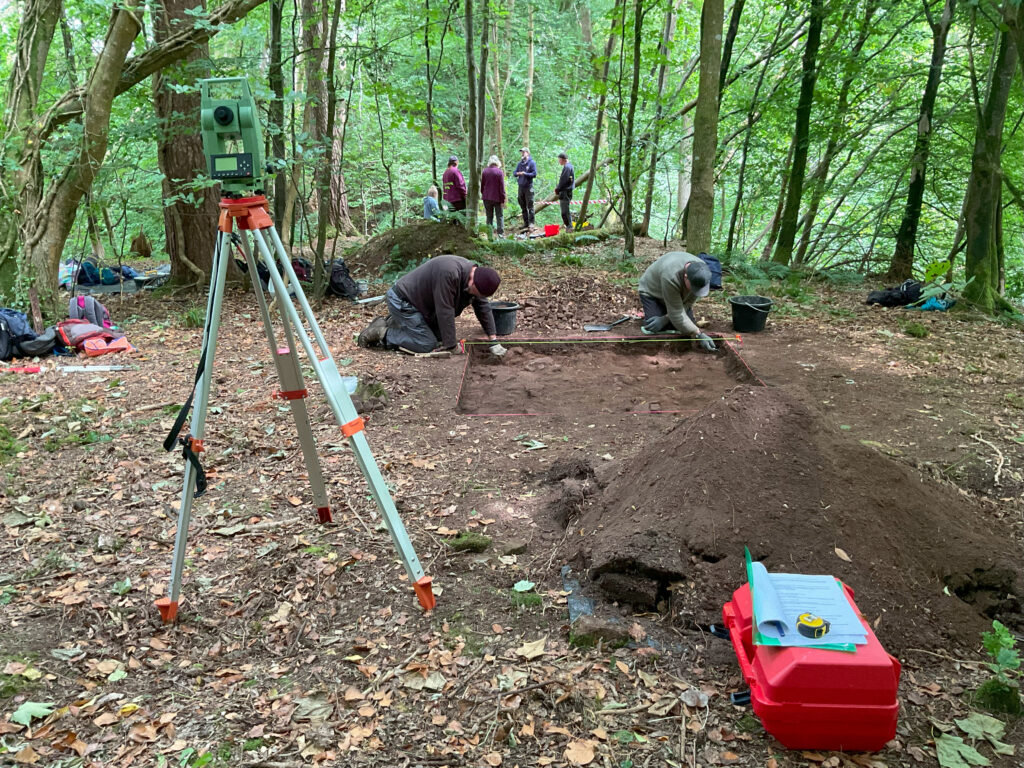
Volunteers and archaeologists are trying to confirm the site of a medieval castle in Chatelherault Country Park forest near Hamilton, a story which is featured in the latest Celebrating Archaeology in Scotland 2024 magazine (Credit: Clutha Archaeology Group)
According to Ed Smith, co-founder of Clutha Archaeology Group, “it is possible, for example, that the link between Eddlewood Castle and the Battle of Langside was created to make the site more interesting to visitors in the early days of tourism in Scotland.”
In addition to confirmation of the location, nothing is known of the castle’s appearance or when it was built.
According to Ailsa Smith, co-founder of Clutha Archaeology Group and Community Representative on the Scottish Strategic Archaeology Committee:
“As the pottery sherds have been confirmed as medieval, we plan to carry out another excavation in 2025 to explore the site further and hopefully find more artefacts and wall remains. In the meantime, we will continue our archival research to see if we can find earlier historic references to the castle and the Eddlewood estate. We will also follow up a lead from a local resident who told us that the building of the fence around the nearby housing estate disturbed cut stone blocks, which may have formed an outer wall of the castle”.
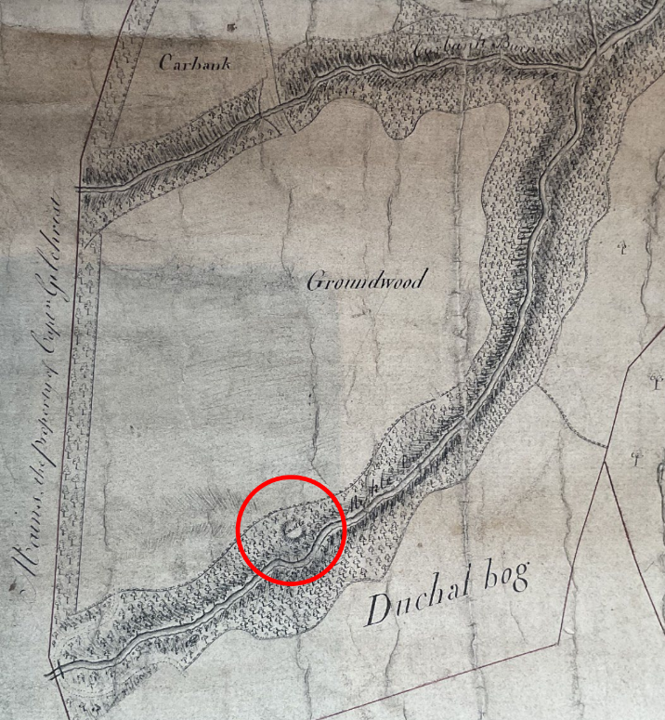
The plan of the estate produced for the Duke of Hamilton by William Douglas around 1776 shows the word “Castle” on the mound above the Meikle Burn. This image is the strongest evidence that Eddlewood Castle ever existed and now local volunteers are searching for material evidence to help prove it (Credit: Duke of Hamilton’s Estate Office)
This story and many others from across the country are collated in the Celebrating Archaeology in Scotland 2024 magazine which launched on 1 November 2024. The free online publication shows how Scotland’s Archaeology Strategy is being delivered by bringing together articles and comments from people and organisations across the country for anyone to read.
Other stories from this year’s magazine include new dating and isotope analysis as part of the investigation into the identity of ‘Trimontium Man’, a 2,000-year-old skeleton found on the site of a Roman fort in the Scottish Borders, and excavations at the twelfth-century remains of Lindores Abbey in Fife, potentially the site of Scotland’s first whisky production in 1494.
Launched in 2015, Scotland’s Archaeology Strategy is a ten-year process of making archaeology central to Scottish life. The strategy continues to be an open conversation about archaeology’s contribution to society in Scotland and the importance of situating our heritage in a global context.
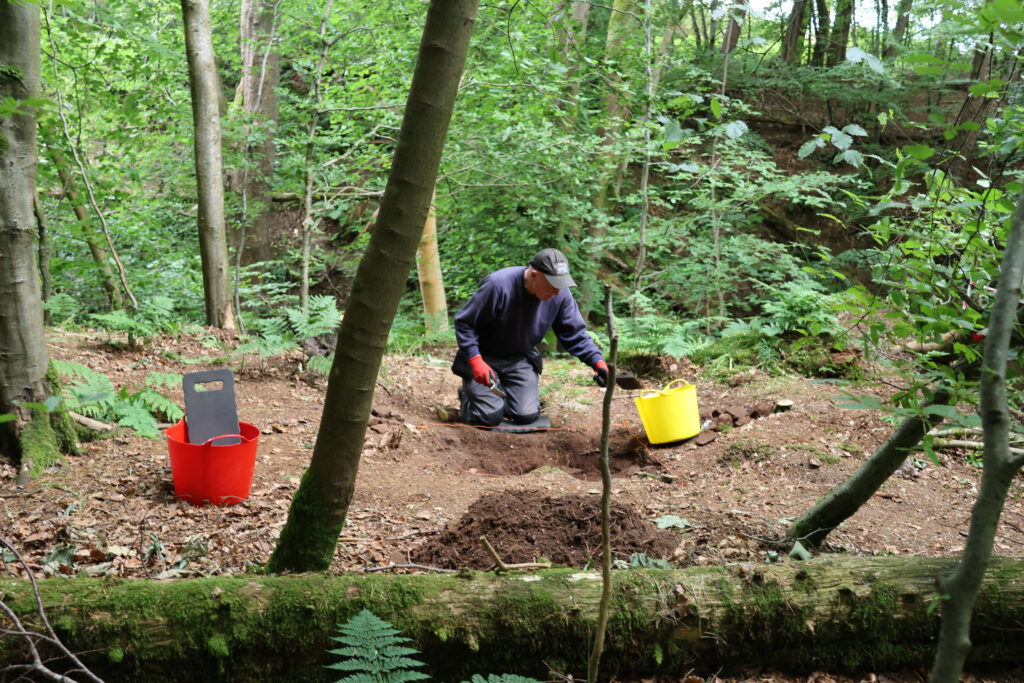
Clutha Archaeology Group is searching in a forest near Hamilton for the site of a lost medieval castle which may have been destroyed by forces opposing Mary, Queen of Scots, a story which is featured in the latest Celebrating Archaeology in Scotland 2024 magazine (Credit: Clutha Archaeology Group)
Dr Andy Heald FSAScot, Chair of the Scottish Strategic Archaeology Committee, said:
“These stories highlight the diverse nature of the sector and one of Scotland’s Archaeology Strategy’s core visions – inclusivity. As we begin to reflect on the last nine years of the Strategy and look to the future, we will continue to celebrate the great work being done throughout the sector and those that are doing it.”
Alex Adamson, Head of Heritage Research Service at Historic Environment Scotland, said:
“Archaeology brings alive Scotland’s past, helping us to better understand the world around us today. As we approach 2025, the current Scotland’s Archaeology Strategy is coming to an end and we look to the future. The Strategy has given us many successes to celebrate and much to build on as our focus turns to the contribution archaeology can make in the next decade. This year’s issue of Celebrating Archaeology in Scotland shows how archaeology is vital to delivering the goals of our wider sector strategy, Our Past, Our Future: the transition to net zero, empowering local communities, and building a wellbeing economy for residents all over the country.”
To read the magazine, visit the Scotland’s Archaeology Strategy website.
Tweet
Header Image: Clutha Archaeology Group
