Must-See Archaeological Sites in Uibhist (Uist)
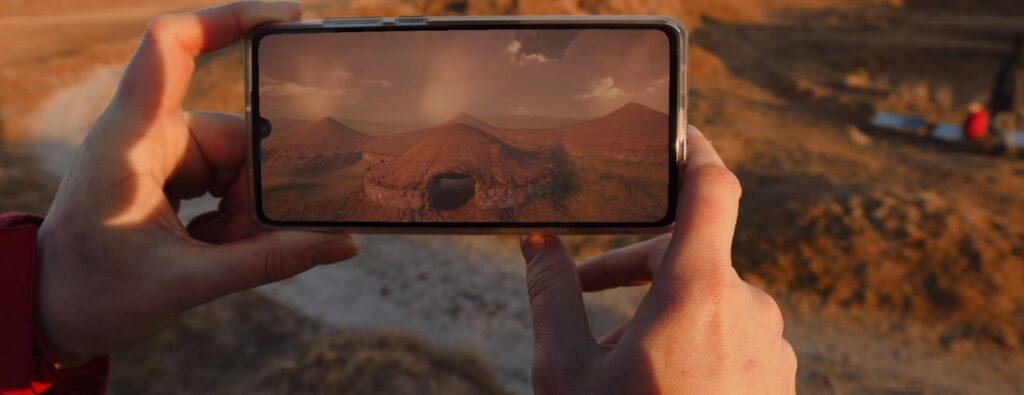
Uibhist in Na h-Eileanan Siar (the Western Isles) is home to some of the most spectacular archaeological sites in Scotland, although many lack upstanding remains or on-site interpretation.
But an exciting digital project has met these challenges head-on by launching a mobile app.
Uist Unearthed reimagines seven of Uibhist’s most spectacular archaeological sites and uses cutting-edge digital technology to bring decades of archaeological research to life, helping visitors learn more about life in Uibhist over the last 6,000 years.
Living on the Machair: Uibhist a Deas (South Uist)
The machair is the low-lying fertile plain making up much of the west coast of Na h-Eileanan Siar. Best known for its flora and fauna, the west coast has been a favourable settlement location for thousands of years. Uist Unearthed tells the story of four sites in this dynamic environment.
Stone Age Settlement at An Doirlinn
There is very little to see on the ground at An Doirlinn today, however, excavations in 2013 by the Universities of Reading and Southampton as part of the Neolithic Stepping Stones Project, revealed tantalising evidence of a 5,000-year-old Neolithic settlement, including Late Neolithic Grooved Ware pottery and stone tools. This site is particularly exciting as it is one of very few Neolithic settlement sites excavated in this landscape.
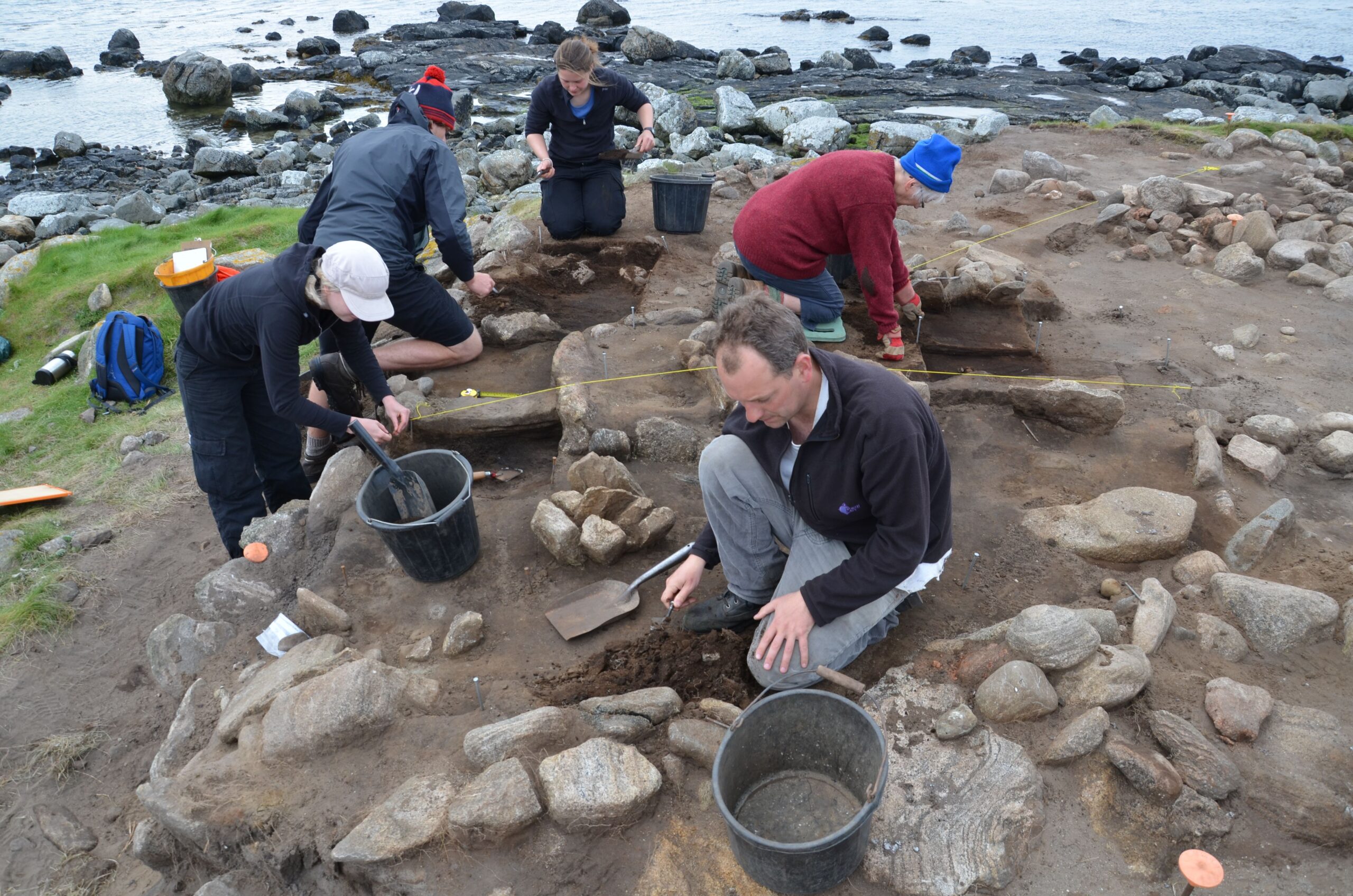
An Doirlinn (© Stepping Stones to the Neolithic)
Life, Death and Dogs at Cladh Hallan
The next site on the trail is undoubtedly one of the best known and is the first site to be revisualised by the project. Bronze Age Cladh Hallan was excavated by a team from the University of Sheffield and is famed for revealing some of the first evidence for mummification of human remains in northern Europe.
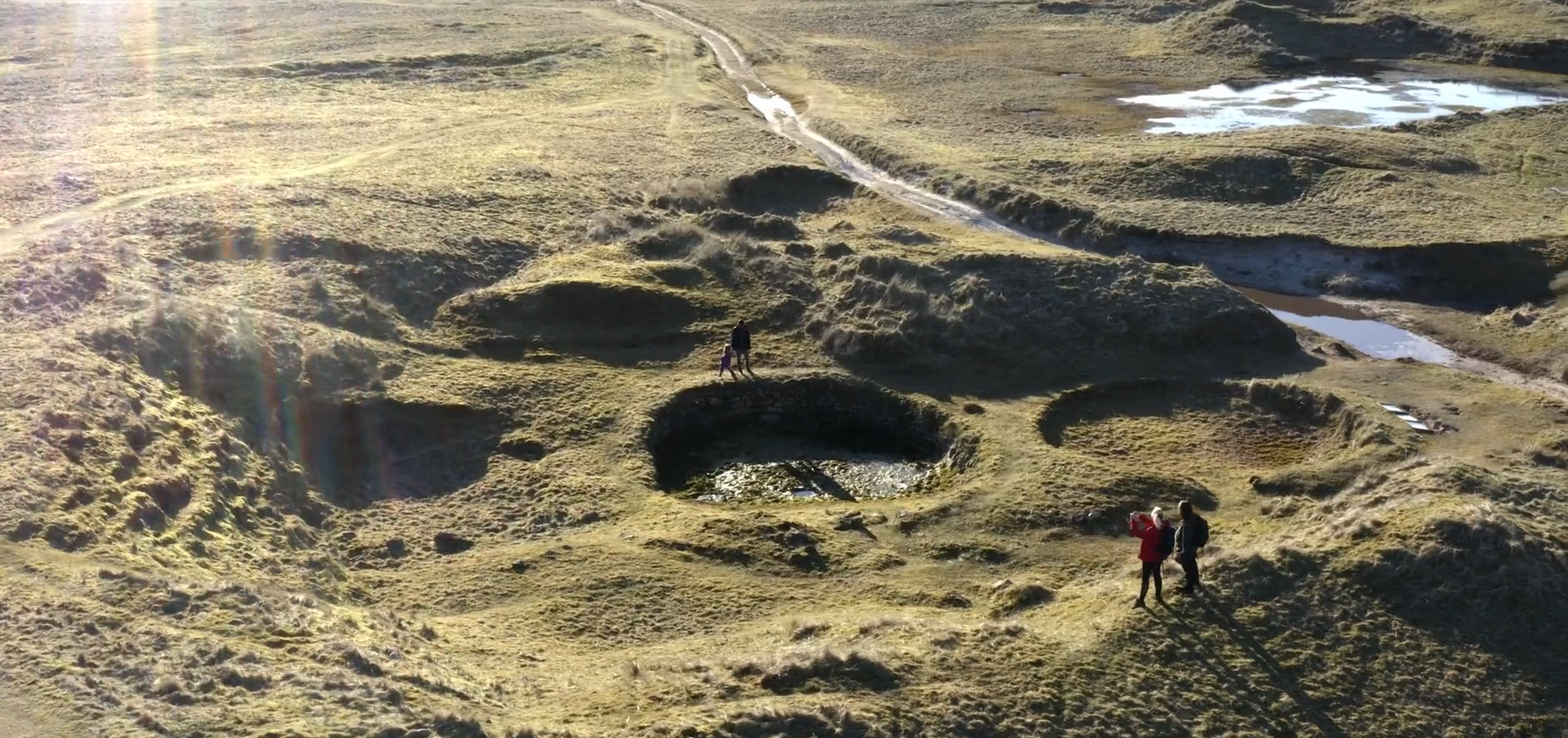
The site of the Cladh Hallan roundhouses (© Uist Virtual Archaeology Project)
As well as a stunning life-size Augmented Reality reconstruction of the conjoined Bronze Age roundhouses as they may have looked approximately 3,500 years ago, app explorers can also dig into Bronze Age agriculture, metalworking, and the Hallan’s resident pet dogs through animations, 3D models and audio.
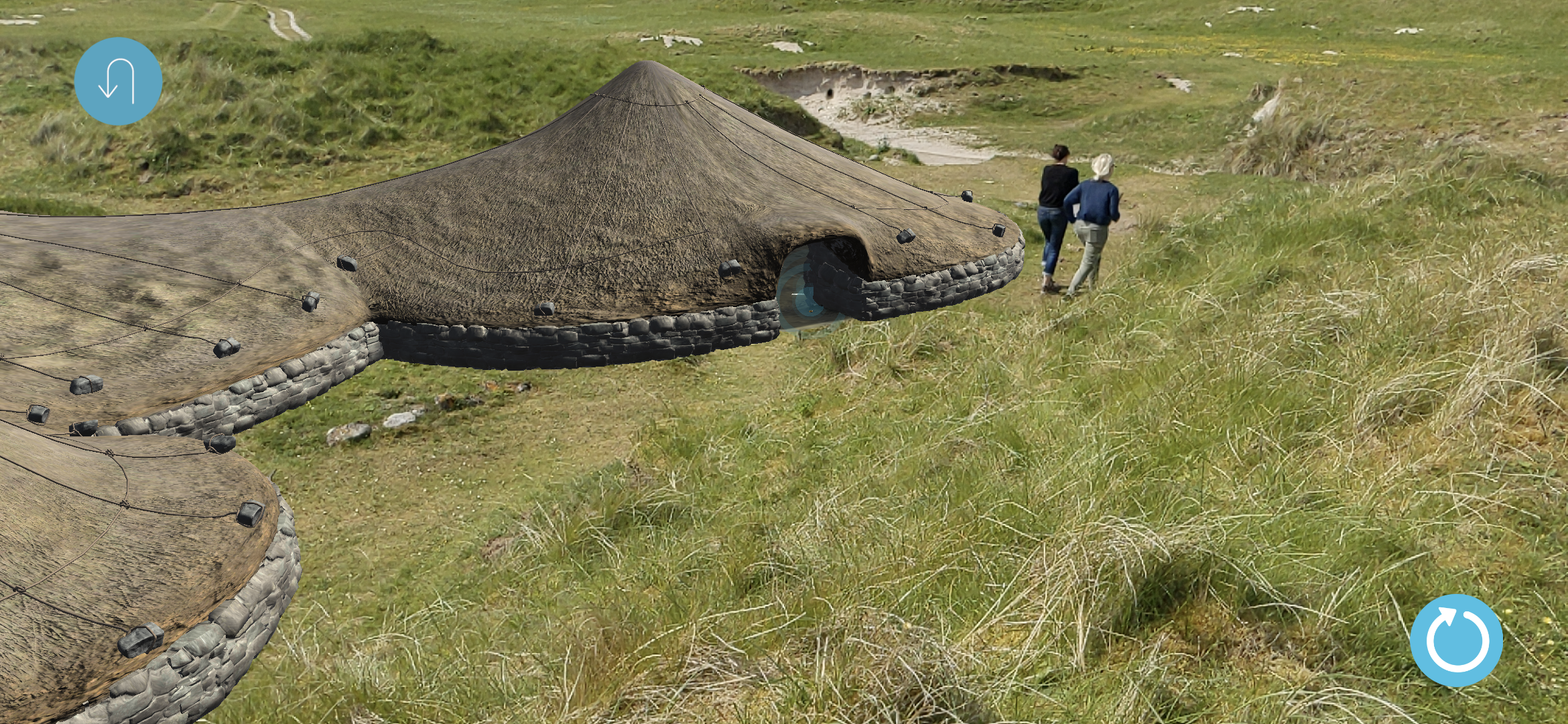
The roundhouses brought to life in virtual reality (© Uist Virtual Archaeology Project)
Living in the Round at Kildonan
Moving up the machair, the next site on the trail is the Kildonan wheelhouse. Wheelhouses are an iconic Iron Age domestic site, so-called due to the spoke-like arrangements of piers which jut out from the interior walls of the roundhouse constructed 2,000 years ago. The University of Sheffield’s excavations in the late 1980s unearthed evidence of centuries of occupation, with star finds including a Roman knee brooch and a walrus ivory pin.
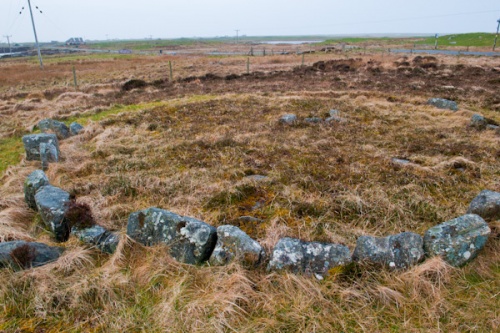
Kildonan Iron Age wheelhouse (© David Ross at Britain Express)
Vikings at Bornais
A short walk north takes you to three unassuming mounds rising up gently from the machair at Bornais – the remains of one of the largest Viking trading sites in Scotland in its heyday over 1,000 years ago. Excavated by Cardiff University, finds at this well-connected site included green porphyry (a type of decorative stone) from Greece, amber from the Baltic Sea, and coins from southern England. One of the most exciting discoveries was an antler cylinder in the distinctive Norse Ringerike style, characterized by large, ornamental animal depictions.
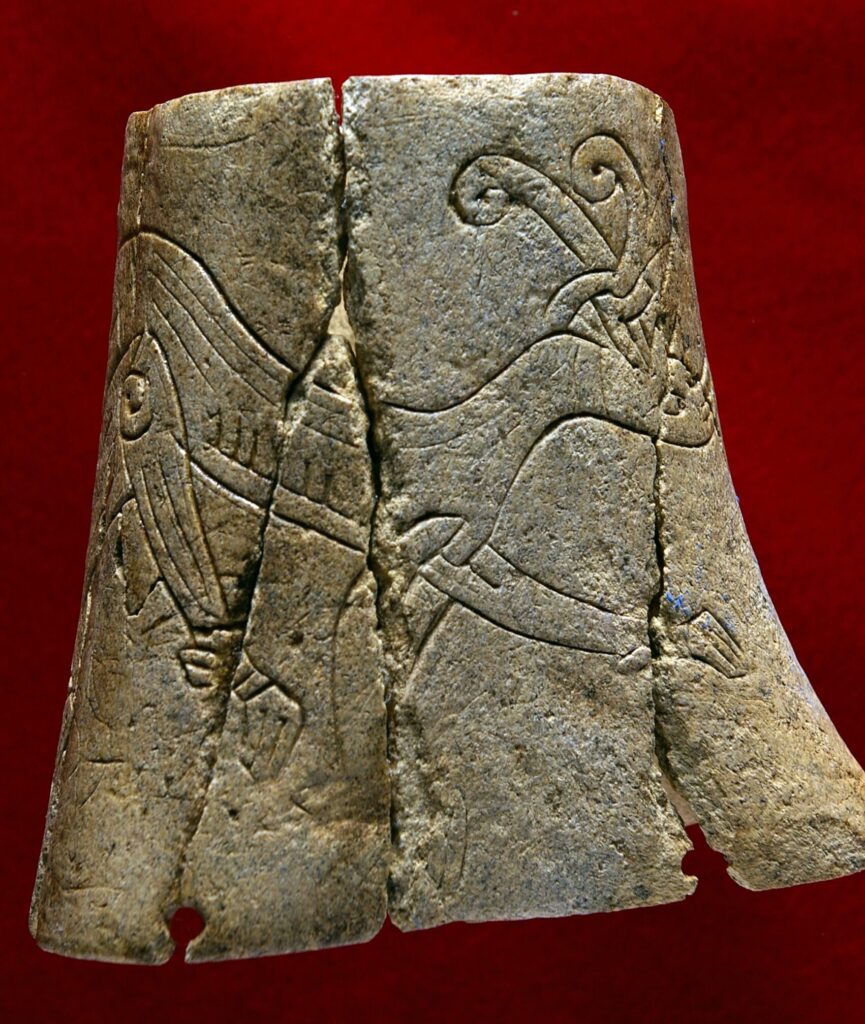
Antler cylinder (© Cardiff University)
Living on Water: Uibhist a Tuath (North Uist)
Moving to Uibhist a Tuath, the app tells the story of a different way of life. 2,000 years ago, away from the hustle and bustle of the machair, monumental stone roundhouses were being constructed on islet sites located in freshwater lochs dotting the moorland of the east coast.
Islet Experiences at Dun Torcuill
Dun Torcuill is one of Uibhist’s best preserved brochs, boasting visible internal stairs and chambers, as well as monumental walls surviving up to three meters high. Located in Loch an Duin, this atmospheric site was investigated by Erskine Beveridge, an antiquarian and Fellow of the Society of Antiquaries of Scotland who explored many of Uibhist a Tuath’s most iconic prehistoric sites.
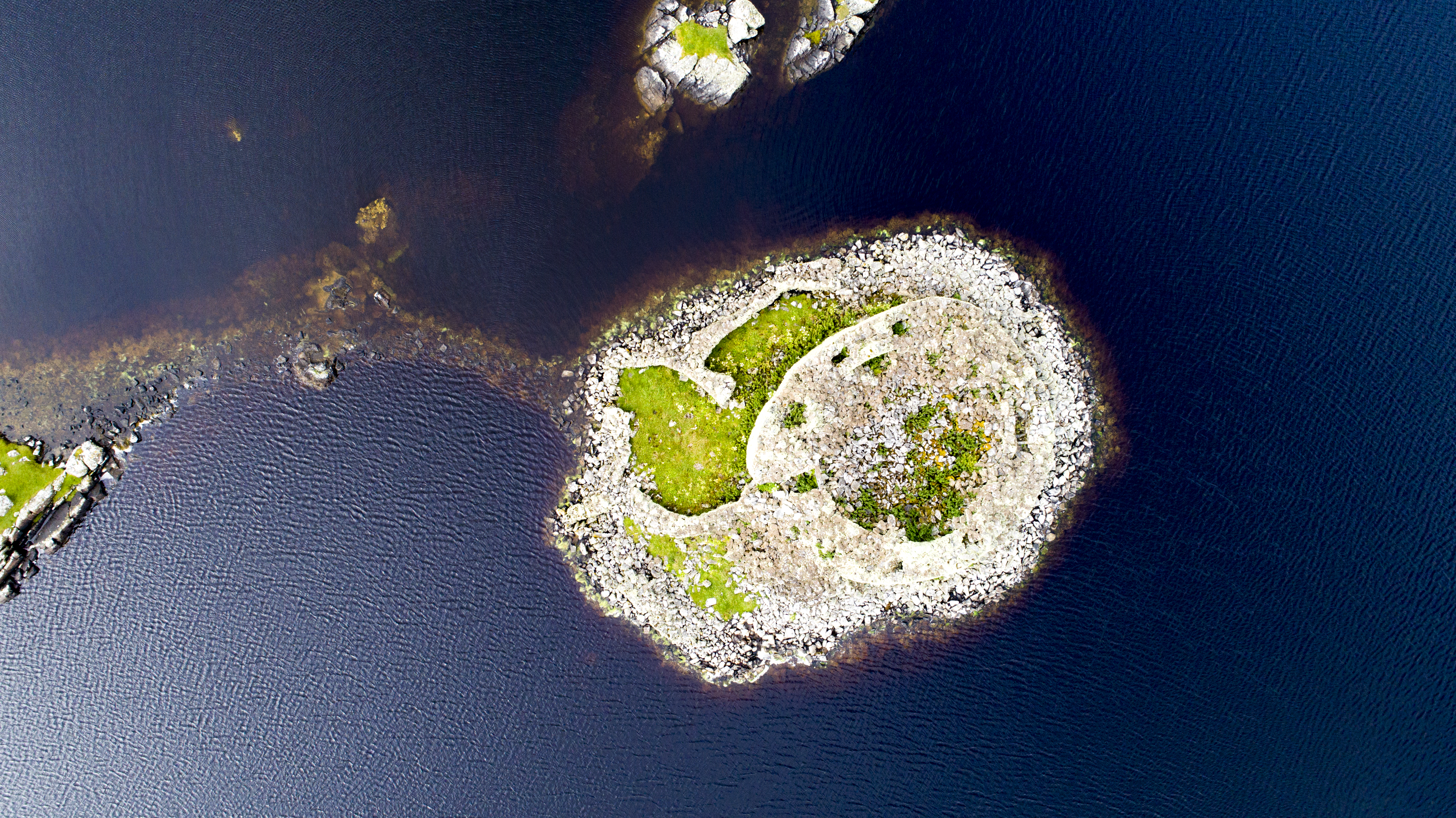
Dun Torcuill (© Historic Environment Scotland)
Causeways and Clans at Dun an Sticir
A well-preserved stone causeway leads to the final site on the trail – Dun an Sticir – or ‘Fort of the skulker’. A 500-year-old medieval tower or hall nestles within the remains of a much older Iron Age broch here, with the app reconstruction exploring a dynamic history of use spanning millennia. Centuries after its initial construction and occupation, the site was used as a refuge in the early 17th century by former factor to North Uist, Hugh MacDonald of Sleat, who hid here disguised as a woman after rebelling against his uncle.
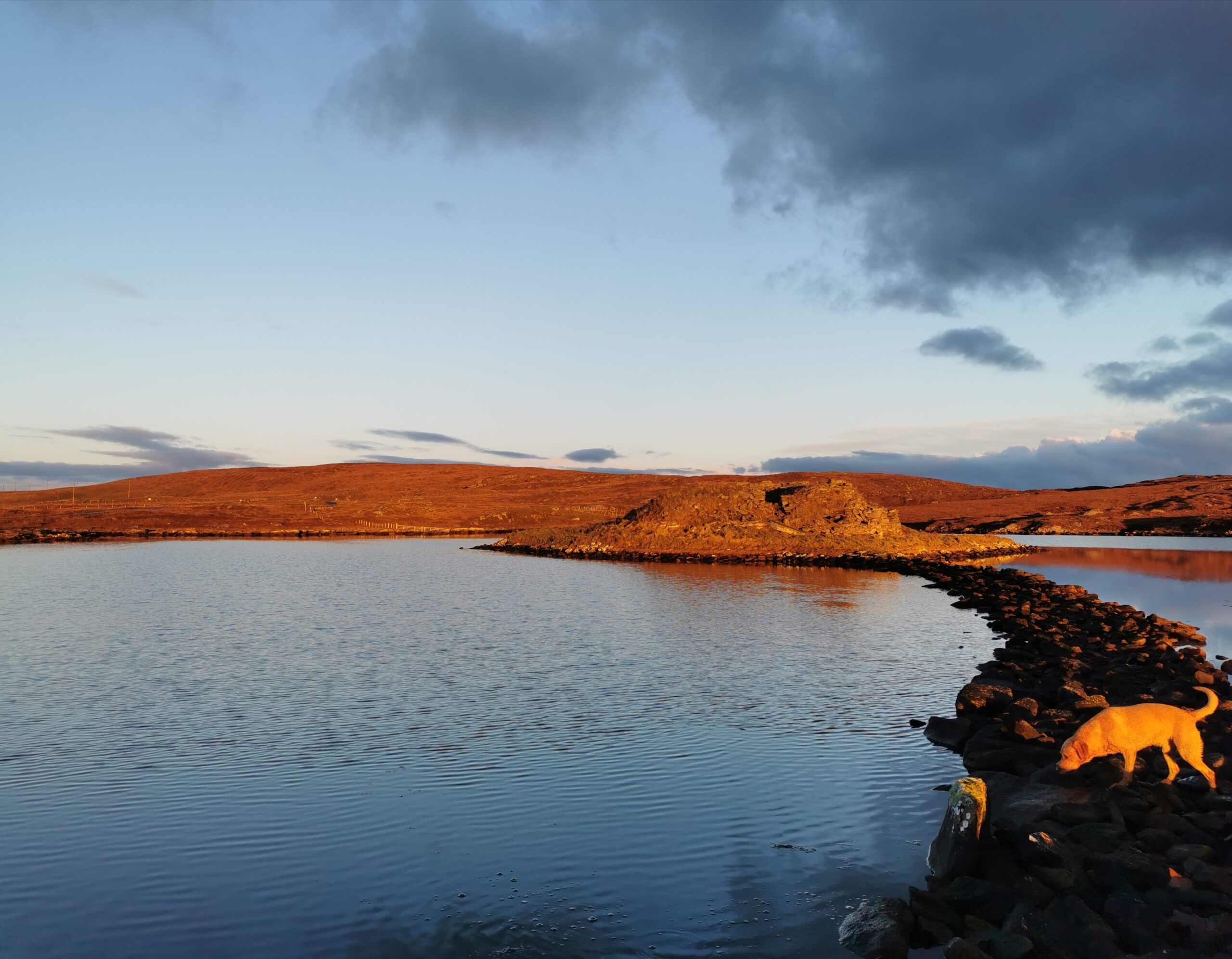
Dun an Sticir (© Uist Virtual Archaeology Project)
Ready to dig deeper? The app and first reconstruction of Cladh Hallan is now available to download: just search ‘Uist Unearthed’ in Apple and Android app stores. The rest of the sites will follow in 2022. You can also watch the promo video here: “Uist Unearthed” – Uist Archaeology Digital App – YouTube
By Emily Gal, Uist Unearthed Project Coordinator. Emily is an archaeologist at Lews Castle College UHI, based in Benbecula. She specializes in the prehistory of Scottish islands, the archaeology of sand dune landscapes and digital heritage. You can find her on Twitter. Learn more about Uist Unearthed and studying Archaeology at Lews Castle College UHI on Twitter and Instagram.
Header Image: (© Uist Virtual Archaeology Project)
Created and led by Lews Castle College UHI Archaeology staff supported by Comhairle nan Eilean Siar, this exciting heritage interpretation project is reimagining seven important archaeological sites along the Hebridean Way in stunning Augmented Reality, offering an exciting trail-based experience. In essence, the project is developing a series of archaeology ‘filters’, which appear over the modern environment when users reach each site. The project team work alongside Ceòlas Uibhist to develop bespoke Gaelic content for the bilingual app, including text and audio stories from local Gaelic speakers reflecting on the language, landscape and culture of Uist.
The Uist Virtual Archaeology Project is part-funded by the European Regional Development Fund (ERDF) Natural and Cultural Heritage Fund, administered by NatureScot. The project is also supported by The National Lottery Heritage Fund, Comhairle nan Eilean Siar, Crown Estate Ward Funds, Stòras Uibhist and Lews Castle College UHI

