No Experience Required: Volunteering at an Archaeological Dig for the First Time
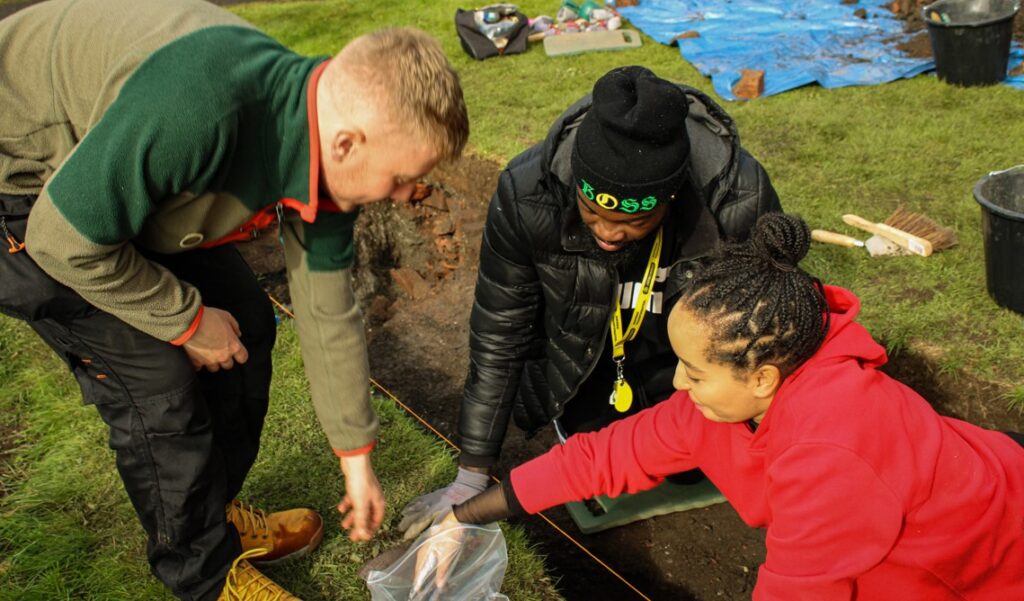
As someone who has never been to a dig before, the word “archaeology” conjures up “Indiana Jones-like” imagery with skulls and treasure being unearthed in vast valleys and burning deserts. Like many people, I did not consider the possibility of archaeological exploration in industrial areas or bustling cities.
What I Didn’t Expect as an Archaeology Volunteer
The location was the last place I would’ve expected for an archaeological dig. I anticipated travelling far out of Glasgow, not five minutes from where I stayed in the Southside, to a little public space called Kingsley Gardens.
This site was the location of the original Hampden Park of 1873-1884 (one of three stadiums to bear the same name), which was the world’s first purpose-built international football stadium, hosting games between countries like Scotland, England and Wales. It was demolished to make room for the expanding railway lines still in use today and the precise location was “lost” until Graeme Brown, a member of the Hampden Bowling Club at Kingsley Gardens, made the exciting discovery.
The idea that the remnants of such a place was buried underneath a garden I had admired on walks was baffling and hard to imagine. It made me realise how easily we can overlook the possibility of discoveries so close to us and how we may consider ourselves incapable of making these discoveries, believing that it takes experts or historians to make them.
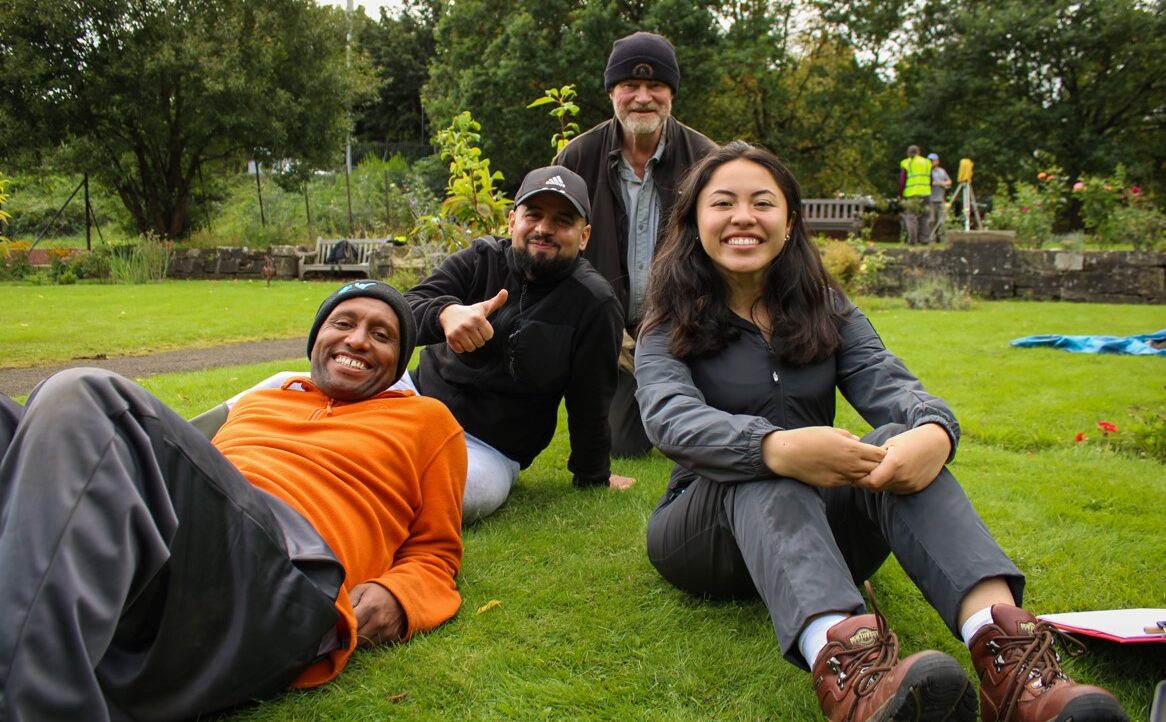
Image Credit: Archaeology Scotland
What I Learned at the Dig Site
Before visiting the site, I never considered archaeology as a space where everyday people could get involved, let alone those from displaced or marginalised communities, whether it’s doing something like helping document the process or offering to help excavate.
But the Hampden dig was such a place. There were so many people coming and going, including members of Jambo! Radio (the only radio station for people of African and Caribbean heritage in Scotland), football historians like Ged O’Brien and refugees from The Welcoming (an organisation based in Edinburgh helping displaced people build a new, sustainable life in Scotland).
As I was taken around the site by Kieran Manchip, the Project Officer with Archaeology Scotland, he told me about a scan that had been done using ground penetrating radar – a machine resembling a wheelbarrow which sent signals deep into the Kingsley Garden grounds and bounced back. The resulting image was then examined for what he described to me as ‘splotches’ which could be the rubble left over from the original 1873-1884 Hampden stadium.
Kieran then walked me through the digging of a new trench, emphasising the importance of accuracy (even going so far as to use the Pythagoras theorem!) and then the digging began, with sketches taken of the trench as it grew deeper as a form of record keeping. With the Hampden dig, it was discovered that the Kingsley Gardens grounds had been levelled with bricks (possibly decades ago) for tennis courts.
Since I was here not just to tour the site but to volunteer, I was given a run-down of the equipment used for digging, varying from trowels to spades, the sizes adjusting as the trenches grew deeper. There was also a rough thistle brush, which was better to use, I was told, for cleaning away stones and debris that couldn’t be dug out of the small crevices. Before I began though, I was given new pair of strong, workers gloves, and encouraged to ask for any other clothing I might need, like waterproof jackets or boots, as they had brought extras for volunteers from other projects.
As I worked in the trench, I learned about the people working with me, and despite the hard graft of digging and clearing away stones and soil, I found myself laughing at jokes about finding diamonds. During breaks, I listened to a volunteer’s stories about a garden they had, and the tomatoes and flowers that had once grown there before they fled their homes.
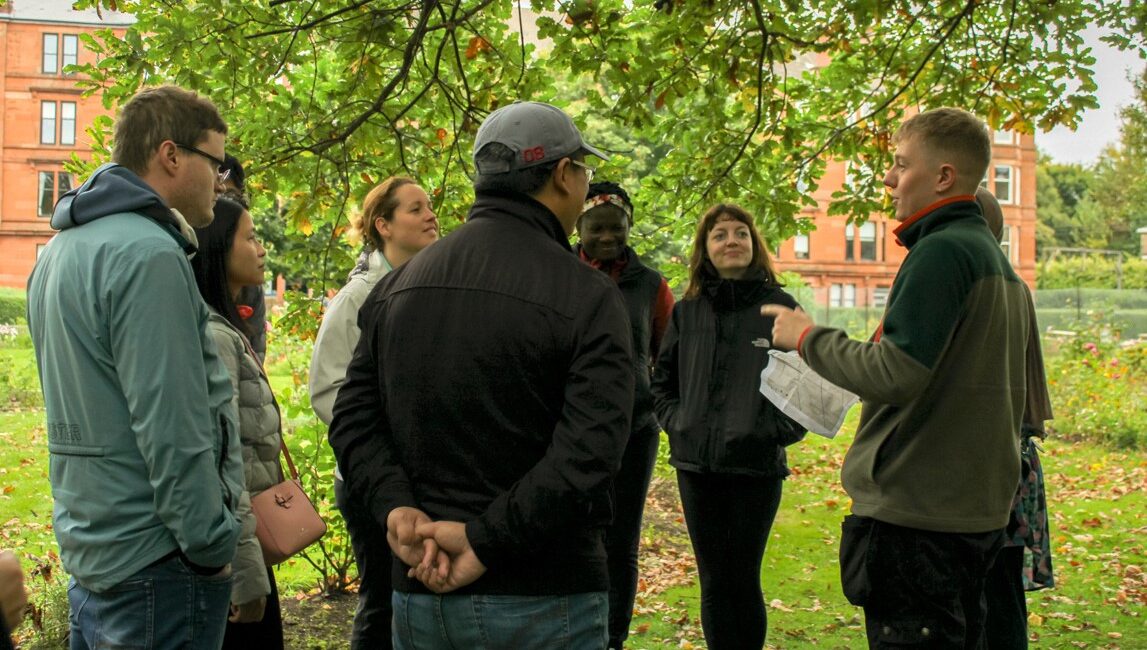
Image Credit: Archaeology Scotland
Why You Should Get Involved in Scottish Archaeology
Archaeology is often painted as an unrealistic pipe dream, especially if you come from a working class or immigrant background, however this idea is being dismantled by the efforts and works of organisations like Archaeology Scotland. This experience has opened up my eyes and made me appreciate the amount of work being done to make this field a more inclusive and accessible space for different people and communities.
Taking part in fieldwork with organisations like Archaeology Scotland gives you the unique chance to learn new skills and connect with different types of people. It is an excellent experience to talk about in your CV, applications and interviews, but most importantly it gives you a chance to engage with the history that surrounds you.
The dig I went to and what was being sought there, with waterproof jackets and misty rain, was distinctly not “Indiana Jones-like”, but there was an unexpected sense of shared camaraderie amongst the people at the site, and as the day went on they became friends and peers that I shared feelings of excitement and curiosity with.
They bought me in with their enthusiasm and dedication to use the site not simply as a source of academic information, but as a way of helping and connecting with the local community and with displaced and marginalised people.
Want to get started? Click here to dig into upcoming events.
By Sehar Mehmood. Sehar is a third-year student at the University of Dundee, studying English and Politics.
Forming part of Archaeology Scotland’s New Audience Project, funded by Historic Environment Scotland, the first Hampden project was designed to engage audiences that would not normally have access to heritage or archaeology. In this instance, the team were able to work in Glasgow’s southside with people from lots of different backgrounds, whether they had been born and brought up in the area or had just arrived. Over the course of the project, volunteers from 11 different countries learned more about their new city and archaeology while practicing their English and making new friends on site.
Header Image Credit: Archaeology Scotland
